Water hardness is the single most consequential factor in bathroom finish selection that most homeowners never consider. At 9.3 ppm — the Sweetwater number — Cool is in a category that most of Northern California cannot claim. The Central Valley runs 150 to 300 ppm. The Sierra foothills east of Cool, served by different sources, often run 50 to 100 ppm. The Folsom Lake system that serves Roseville and Folsom runs around 60 ppm. At 9.3 ppm, the mineral load on any surface the water contacts is essentially negligible.
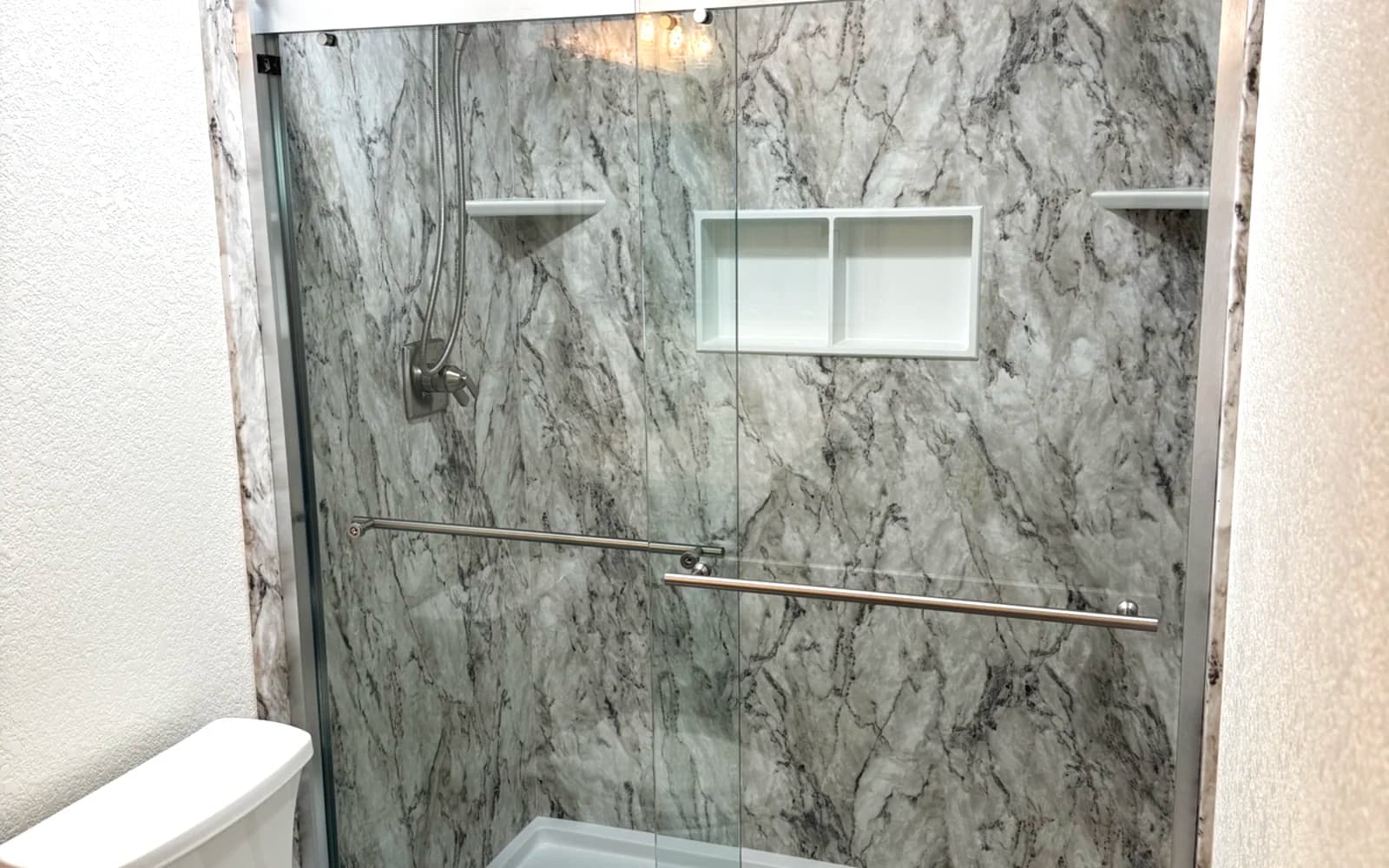
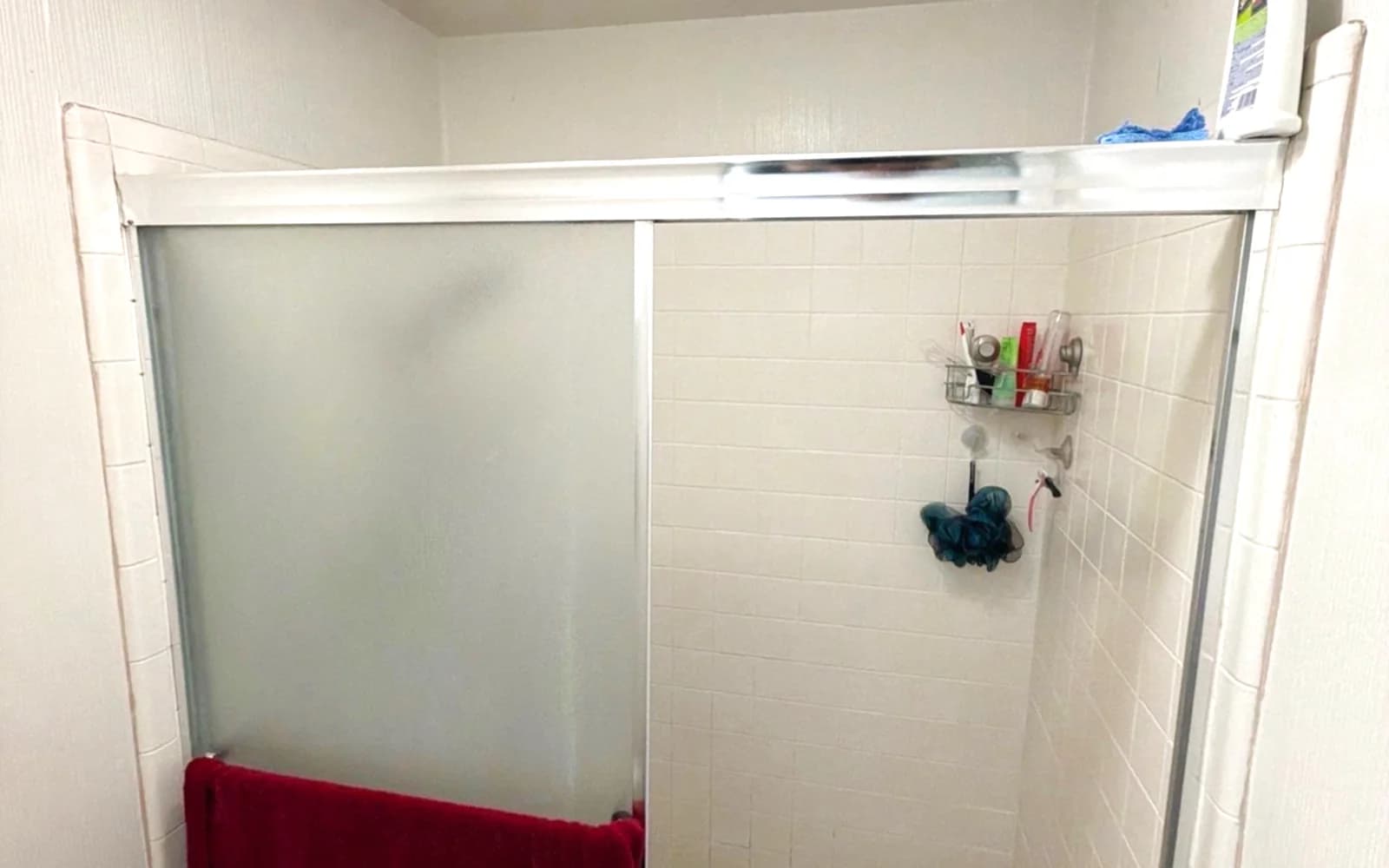
The practical implications for finish selection in Cool are significant. Polished chrome fixtures — which develop a white calcium haze within months in harder water areas and require acid-based cleaners to restore — stay bright with ordinary soap and water cleaning in Sweetwater-served homes. Clear frameless glass doors and panels — which accumulate an opaque white film from calcium carbonate precipitation in Sacramento or Roseville — show no meaningful mineral deposit in this water. In a harder-water market, we routinely recommend bronze or matte black fixtures and frosted glass because they hide the scale better; in Cool, that guidance does not apply. Polished chrome and clear glass are the right choice here, and they will stay that way.
Natural stone — marble, travertine, limestone — is porous and in hard water absorbs calcium from the water over time, which hazes the surface and is very difficult to remove without acid etching. At 9.3 ppm, that mechanism is not in play. Marble tile in a Sweetwater-served shower stays clean on routine maintenance. Cement grout, which wicks calcium in harder water and stains permanently within a year, also behaves well at this hardness level. The Pilot Hill project — on the same 9.3 ppm Sweetwater supply — used marble-look large-format tile with cement grout throughout, and that choice was made with confidence precisely because of the water quality.
The aggressive index of 8.75 means that the water has a mild tendency to absorb minerals from whatever it contacts — including metal piping — rather than depositing minerals onto surfaces. Georgetown Divide PUD addresses this directly by adding sodium carbonate, which raises the pH and makes the water effectively neutral to infrastructure. For bathroom finishes, the implication is that copper and chrome plumbing in a Sweetwater-served home are not at meaningful risk from the water chemistry; the district's treatment handles that. For private-well homes in the 5 off-grid grid points in the Cool area, the situation is different: well water chemistry in the El Dorado County foothills varies by aquifer and proximity to geological features, and a simple water test before finish selection is worth the cost. We can recommend a local lab and interpret the results in terms of what they mean for tile, fixtures, and grout choice. Read non-slip floor options and floor tile choices.