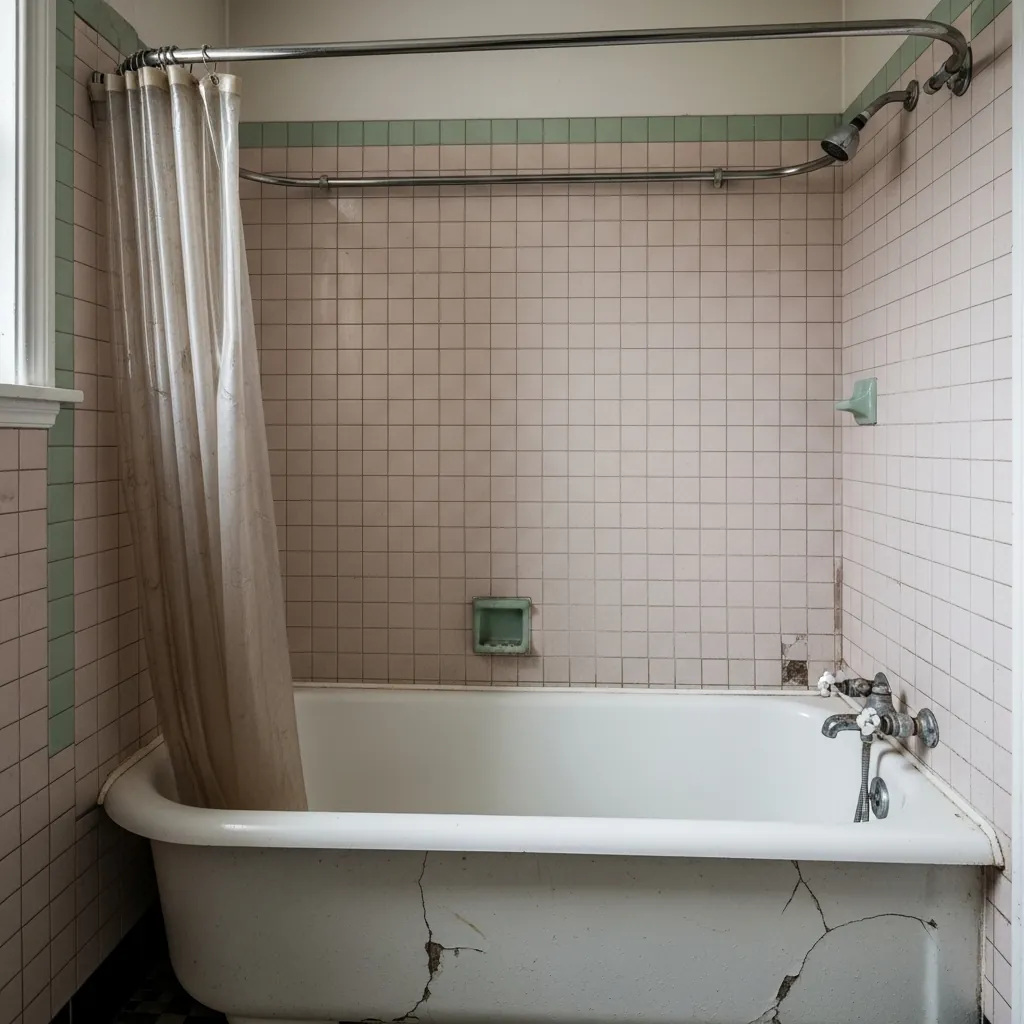
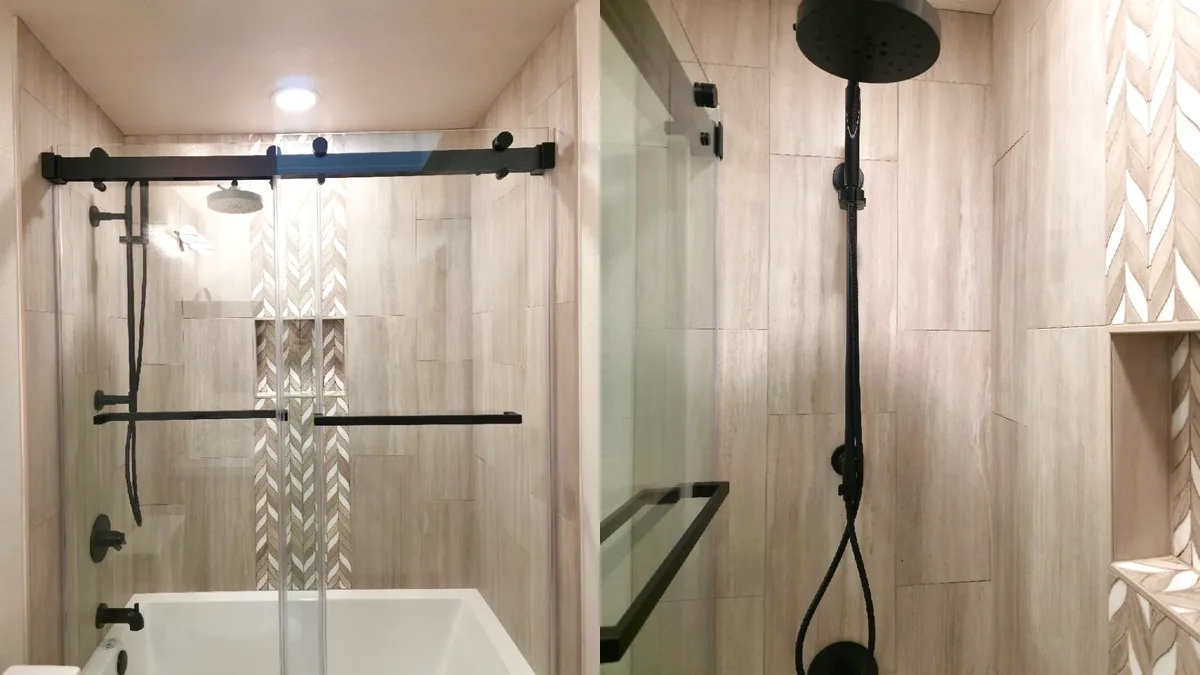
The historic downtown core — the Gold Hill and Main Street area, Bedford Avenue and the streets climbing from the canyon floor — holds the oldest housing in Placerville. Pre-1940 homes are most concentrated here: Victorian and Craftsman-era construction, narrower lots, irregular floor plans and the original plumbing infrastructure of a town built before indoor plumbing was standard. These are the homes most likely to present mortar-bed substrates, galvanized supply, cast-iron tubs and knob-and-tube wiring. They are also the homes most likely to be in the city's historic district, where design review may apply to exterior changes. Interior bathroom renovations here draw on the same period material vocabulary — subway tile, hex floors, chrome or nickel — that suits the original architecture.
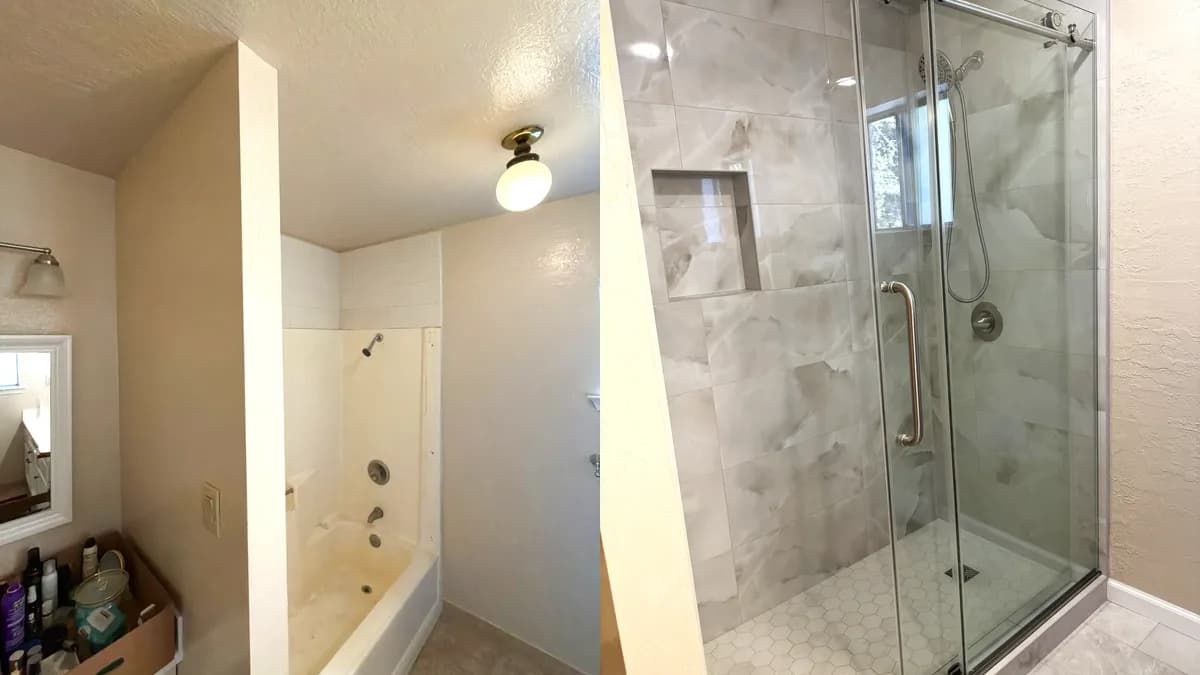
The residential hillside streets north and northeast of downtown — the neighborhoods climbing away from the creek canyon toward the ridge — represent the 1950s and 1960s growth of Placerville. Ranch houses and split-levels on larger lots, built when the city was expanding rapidly as a regional service center for the foothills. These homes carry the fiberglass-over-plaster bathroom condition most common in that era: an original surround installed without a proper substrate, a shower head added to a bathtub never designed to drain one, outlets without ground-fault protection. They permit through the City if they are inside city limits, through El Dorado County if they fall just outside.
The Mother Lode Drive and Ray Lawyer Drive corridor — the commercial and residential strip running along the highway east of the historic core — saw its primary residential development in the 1970s and 1980s. These are the split-level and bi-level homes on sloped foothill lots that make up the largest portion of the Placerville housing stock. Their bathrooms typically have ceramic tile on drywall backer, pressure-balancing valves that may or may not have been replaced, and exhaust fans that vent to the attic rather than outside. The rebuild sequence is well-defined: remove the tile and drywall, inspect the framing, install cement board and membrane, rough in new supply and valve, tile and finish.
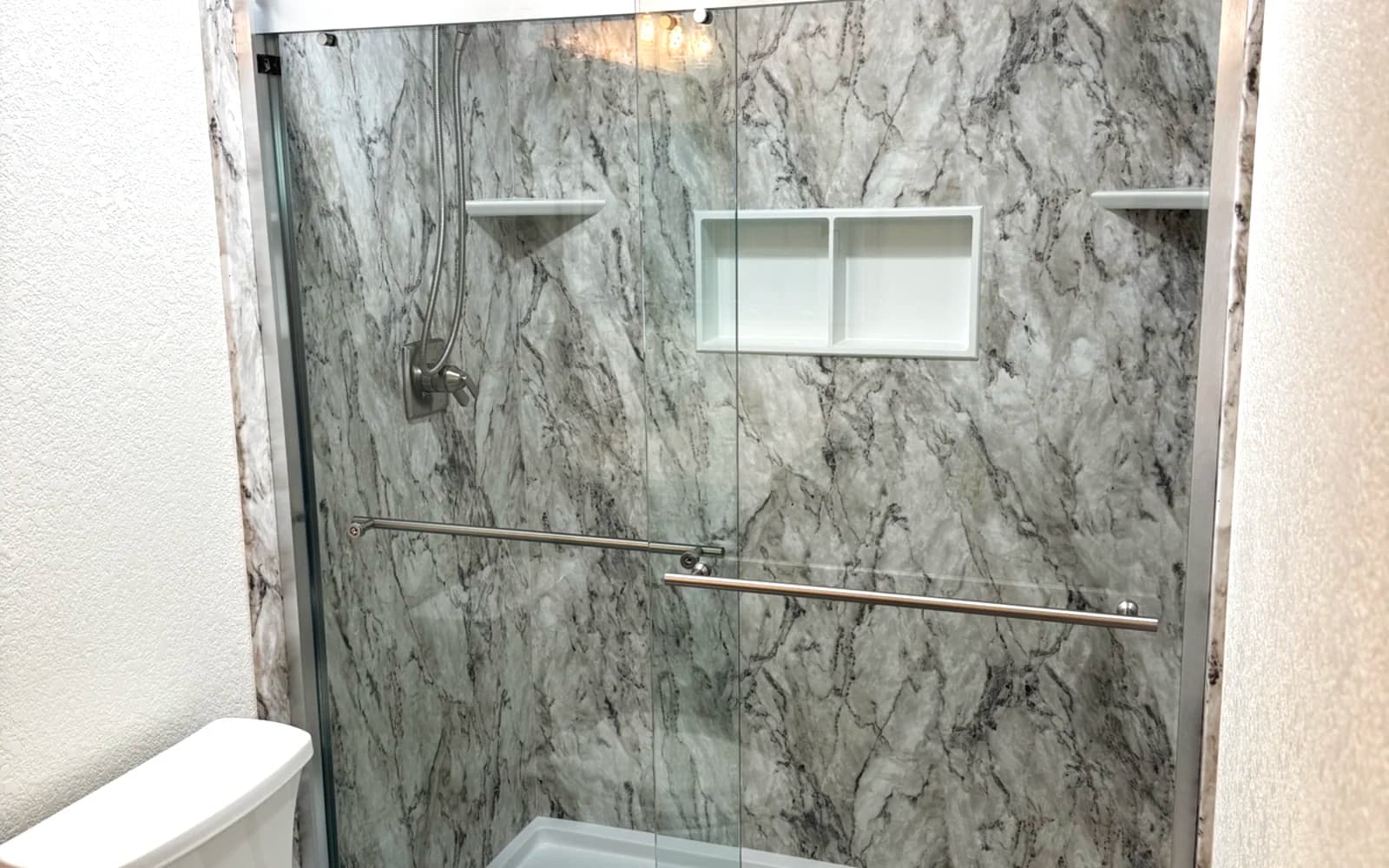
The newer construction east of downtown, toward the Shingle Springs Road area and the unincorporated county land beyond, includes 1990s and 2000s homes that present a different starting condition: builder-grade fiberglass units, pressure-balancing valves already in place, GFCI protection on outlets. These homes permit through El Dorado County rather than the City. The substrate work is lighter, the permit process is through the County, and the renovation tends to be finish-forward rather than systems-forward. The 18.1% of Placerville's housing stock built since 2000 falls largely in this zone.