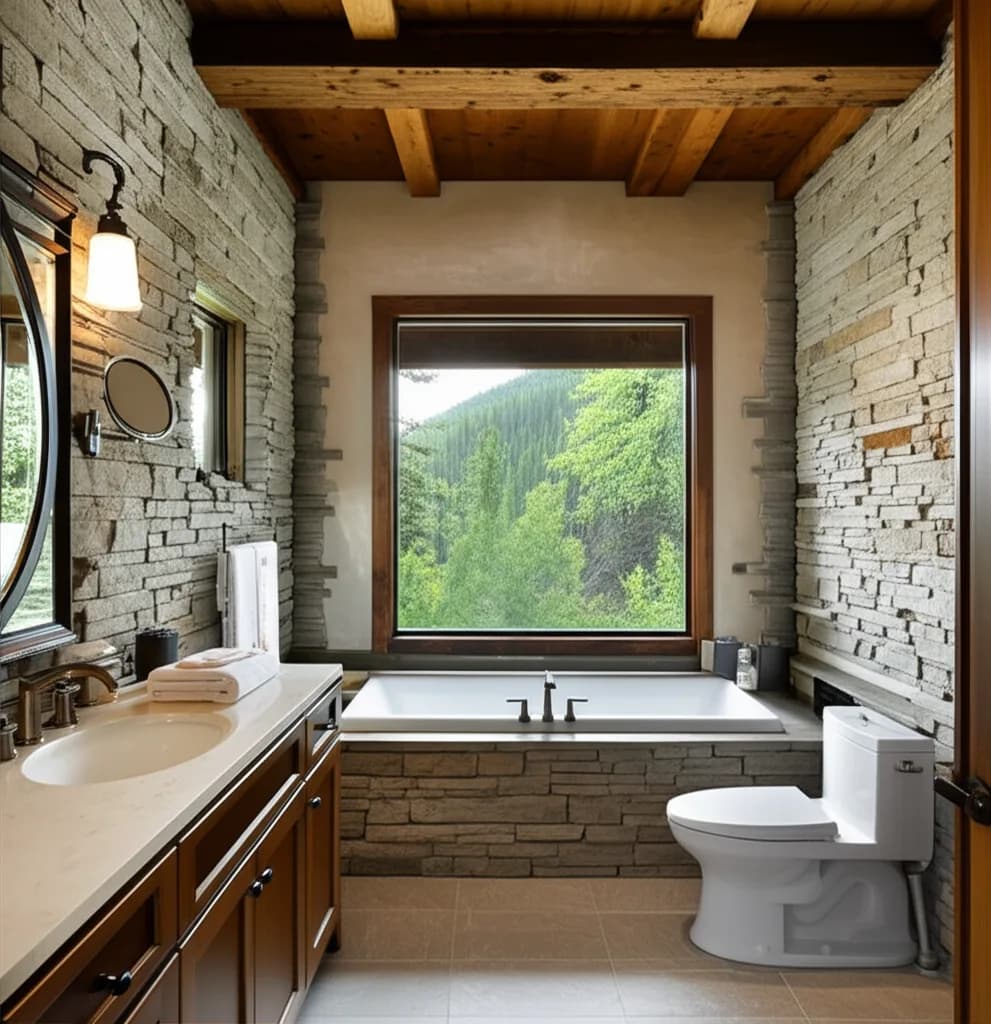
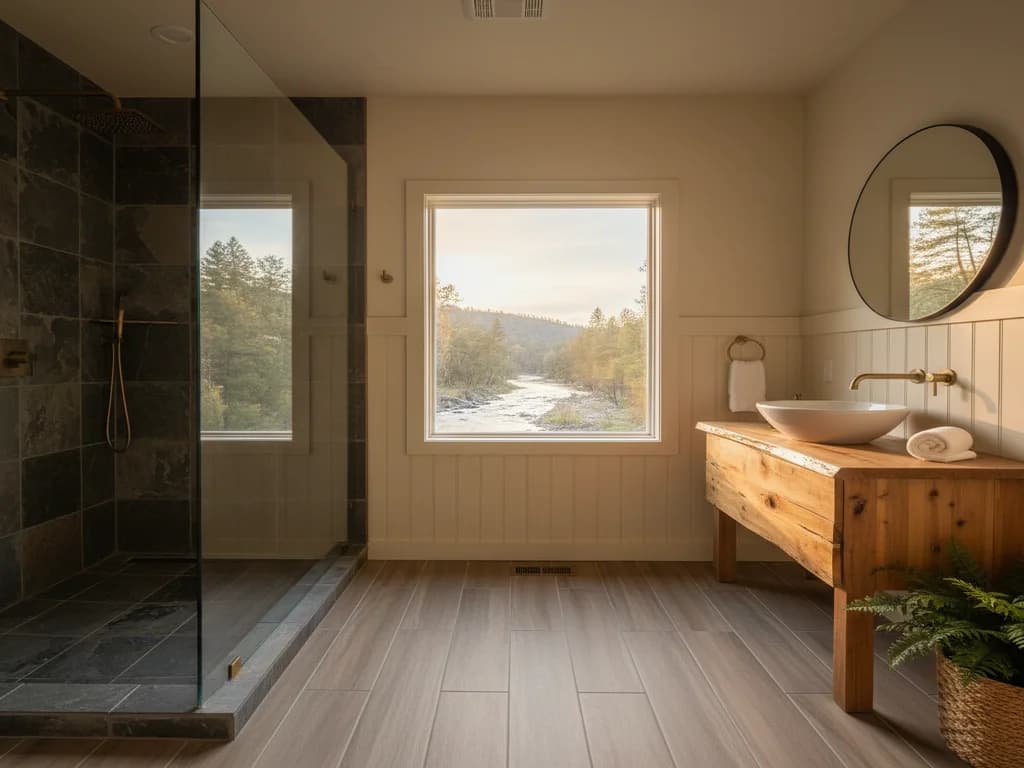
The three public water sources serving the Lotus area — GDPUD's Walton Lake plant (8.2 ppm), GDPUD's Sweetwater plant (9.3 ppm) and EID's Main system (13 mg/L) — all fall in the very soft range (0–17 mg/L). Soft water does not deposit calcium or magnesium scale on tile surfaces, glass panels or fixture finishes at meaningful rates. That means the full range of bathroom finishes is available without a hardness-driven performance penalty: matte black fixtures, unlacquered brass, polished chrome, dark grout in tight joints, large-format porcelain with minimal grout lines, natural marble, clear frameless glass. None of these require extra maintenance in soft water conditions.
For the 5 grid points with no public system, private-well hardness is unpredictable. Foothill wells in the American River canyon corridor can vary from very soft to moderately hard (70–120 mg/L) depending on depth and the geology of the aquifer. Before specifying unlacquered brass or natural stone for a well-supplied property, we recommend a basic hardness test. If results come back above 50 mg/L, we adjust recommendations: lacquered or PVD-coated fixtures hold up better, and large-format porcelain with epoxy grout reduces calcium accumulation in the joint lines.
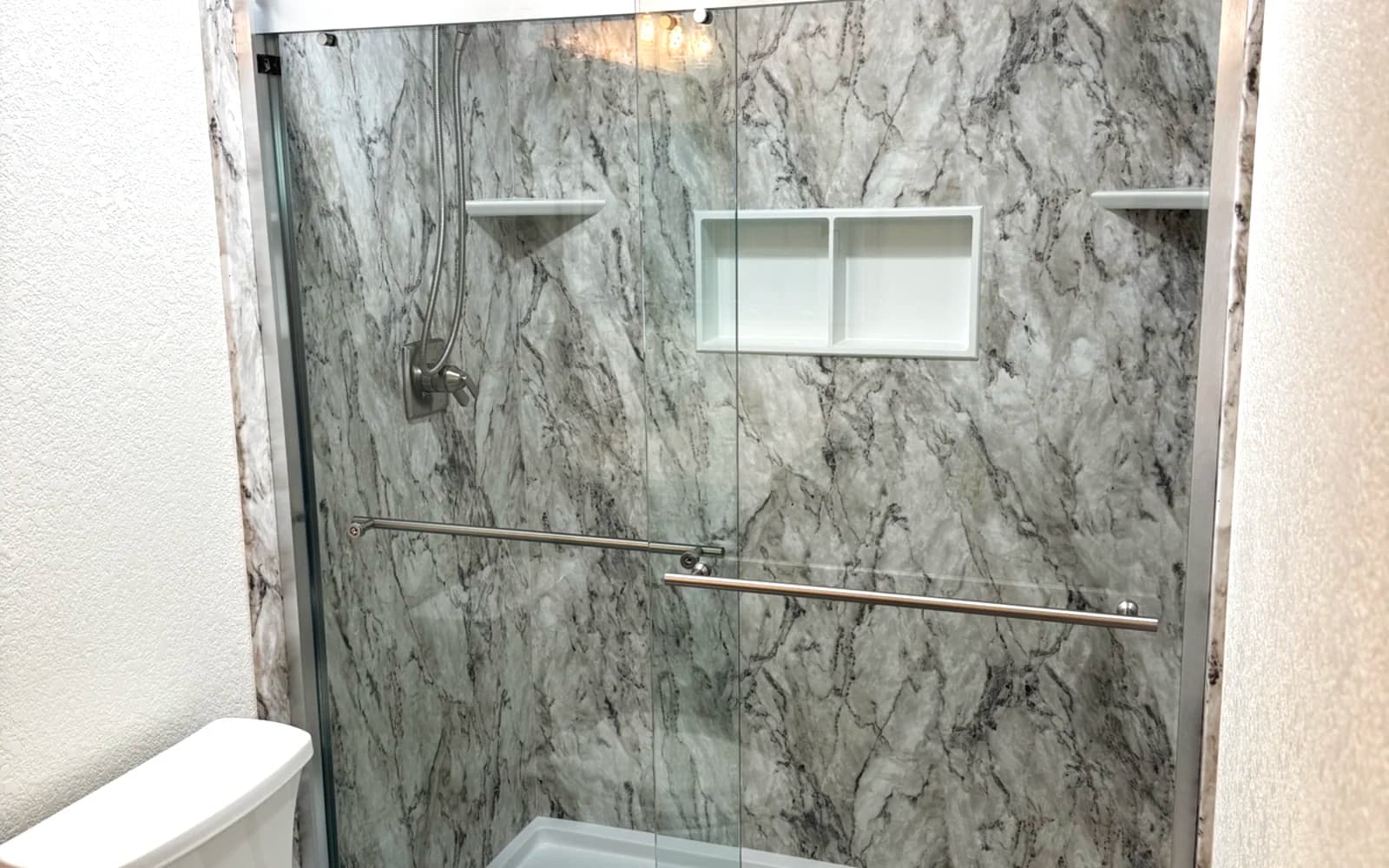
At 728 feet in a recreational and vacation-oriented canyon corridor, durability and ease of maintenance typically rank ahead of pure aesthetics for seasonal homes. The most practical combination for a Lotus vacation property is large-format porcelain tile on walls and floor (24 × 48 or 12 × 24), a simple niche rather than a recessed cabinet, a single-handle pressure-balanced valve (easier for infrequent guests to operate), and an acrylic or fiberglass panel system on secondary bathrooms if budget is a constraint. Acrylic panels require no grout, resist mold in an unoccupied space better than unsealed natural stone, and can be wiped clean quickly.
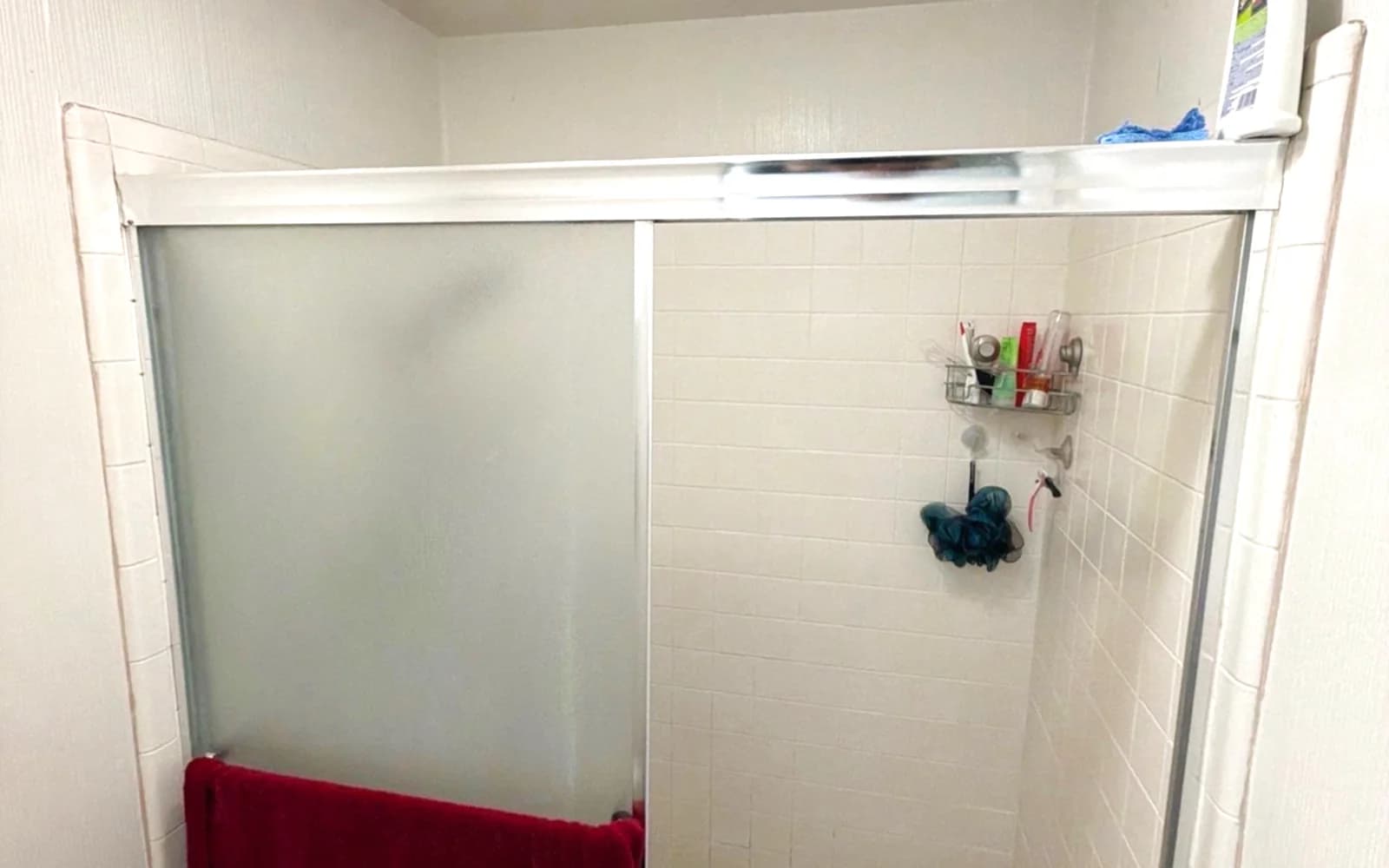
For primary bathrooms and full-time residences, or for owners who want to honor the historic cabin character of the area, the aesthetic case runs in the opposite direction: 3 × 6 subway tile in a brick pattern on shower walls, a 1-inch hex mosaic floor in white or off-white, chrome or unlacquered brass fixtures on exposed supply lines and freestanding or wall-mount hardware. This palette references late-19th and early-20th century bathrooms — appropriate for a community whose identity is tied to Gold Rush history — and holds up well in soft-water conditions without any finish degradation. Guides: tile vs fiberglass, shower styles and slip-resistant flooring.