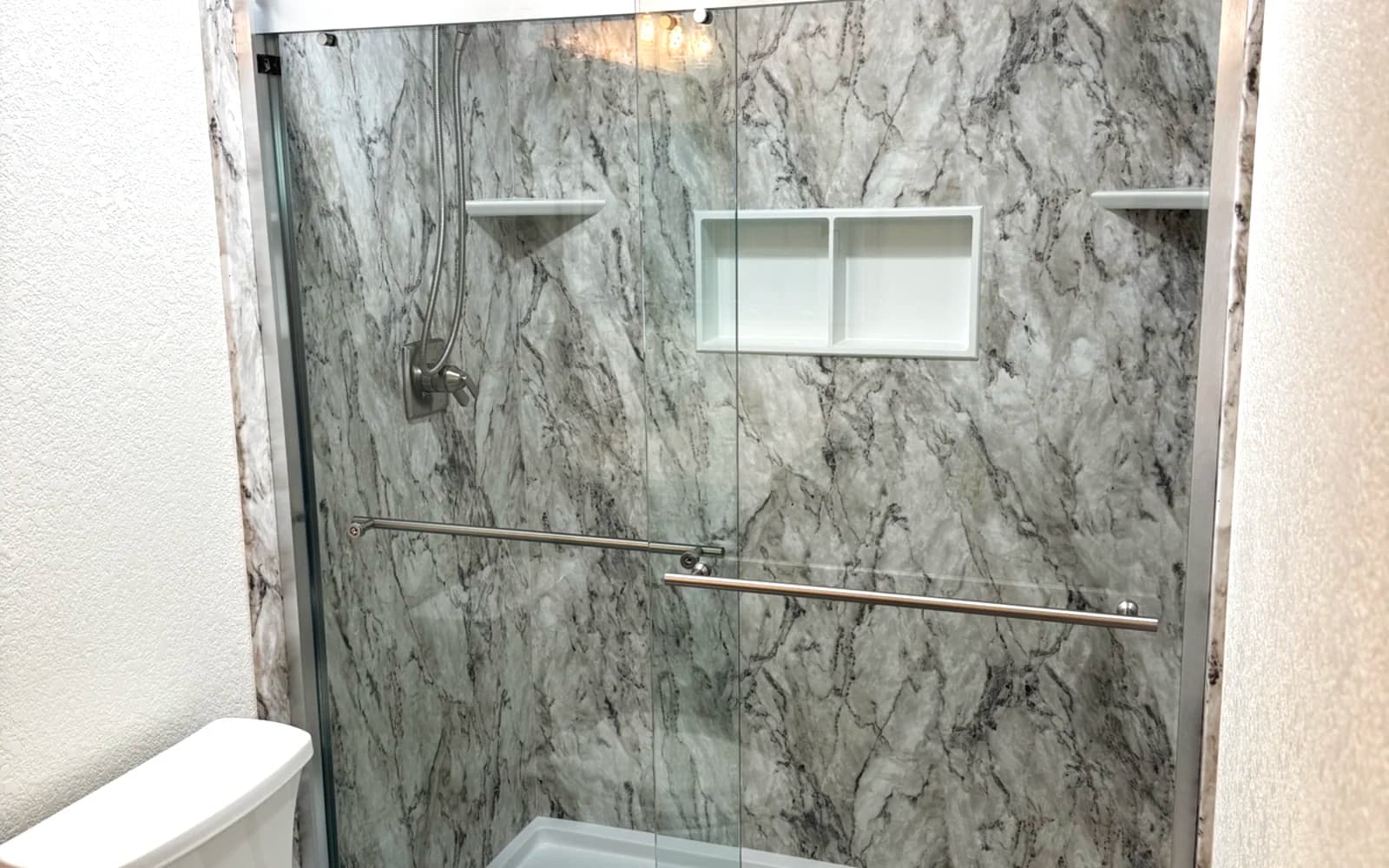
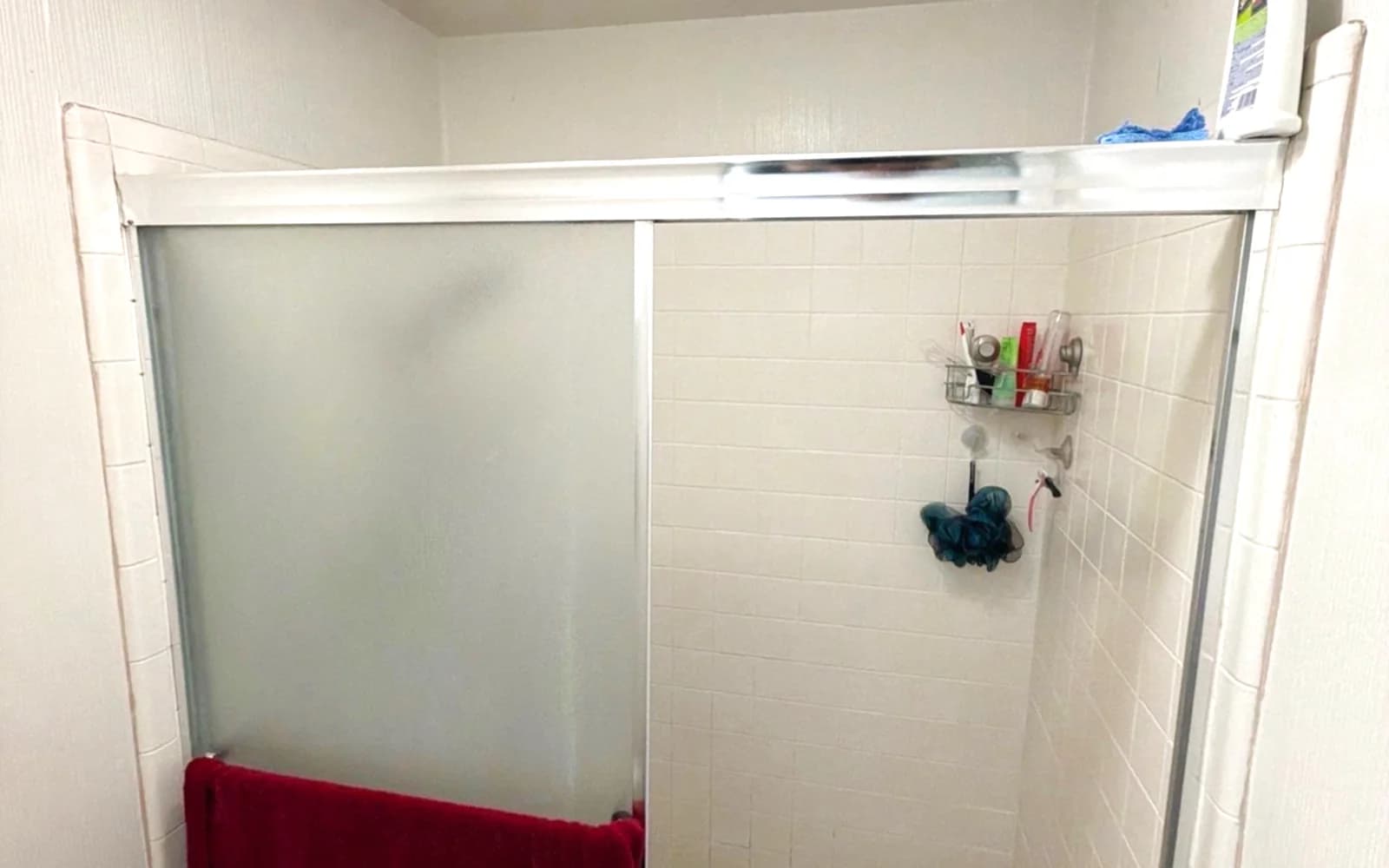
The first issue is the original construction. Bathrooms built in the 1950s and 1960s used gypsum board (standard drywall) or hardboard as the substrate behind shower and tub-surround tile. Neither material is waterproof. The mastic adhesive used to set the tile was not a waterproof barrier either. Over years of steam exposure, grout cracking and minor splash infiltration, water works its way to the substrate. Once a gypsum board substrate is wet, it cannot be dried back to a structurally sound state. It must come out.
In practice, this means that when we demo a 1950s Rio Linda tub surround or shower stall, we routinely find soft, discolored or visibly rotted backer behind the tile face. We have not yet found a case where the original drywall substrate in a pre-1975 Rio Linda shower was in acceptable condition. We budget for full backer removal as a standard item rather than a contingency. The replacement sequence is: new cement board or a rigid substrate product rated for wet areas, fastened to studs with corrosion-resistant screws; a liquid-applied or sheet waterproof membrane over the full wet area, lapped and flashed at the curb, corners and penetrations; thinset-adhered tile over the cured membrane.
The second issue is specific to the 9.3% of Rio Linda residents in Zone AE. Any bathroom that has experienced flooding — even a single event with standing water — requires a full substrate assessment before new tile is installed. The sequence of failure is predictable: water enters under a door or through a crack, reaches the subfloor, wicks into the cement board or drywall above it, and establishes mold in the wall cavity. Tile set over this substrate will delaminate. The correct repair is to remove all affected substrate, treat or replace the subfloor, allow adequate drying time (confirmed with a moisture meter), and then rebuild the wall assembly with the membrane system described above.
The membrane system we use in all Rio Linda wet areas — regardless of flood zone — is a bonded waterproof membrane applied continuously from the curb or floor pan edge up through the entire shower enclosure. Seams, inside corners and penetrations (valve, drain) are reinforced with fabric tape set in the uncured membrane. This creates a continuous waterproof layer that protects the structure independently of whether the tile grout remains sealed. See shower waterproofing systems for more detail on membrane options.