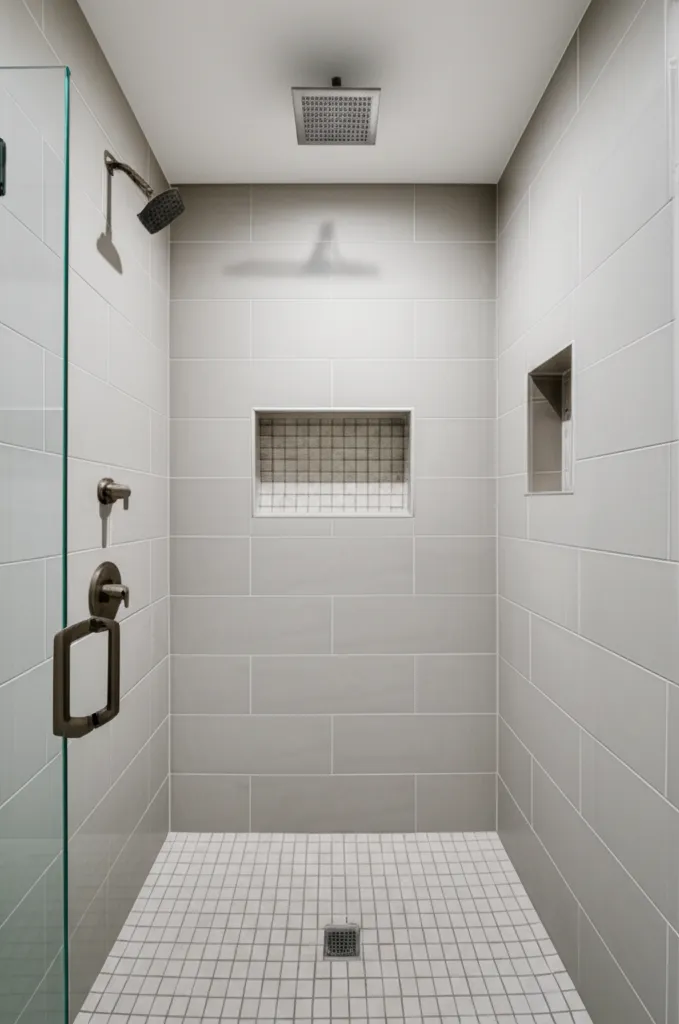
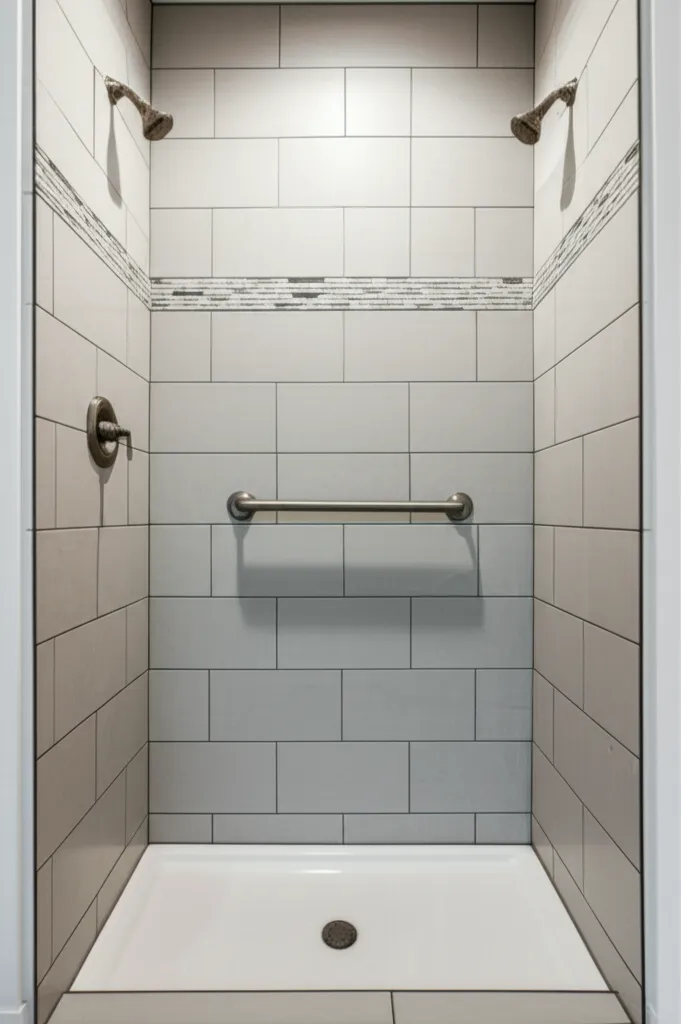
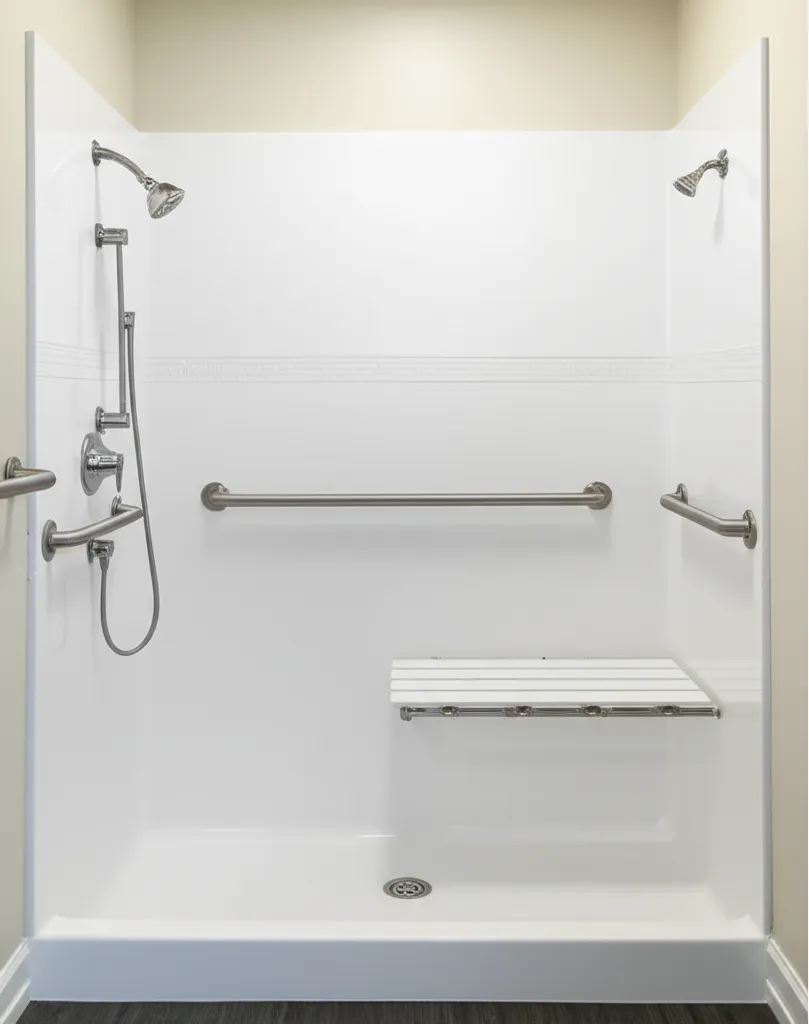
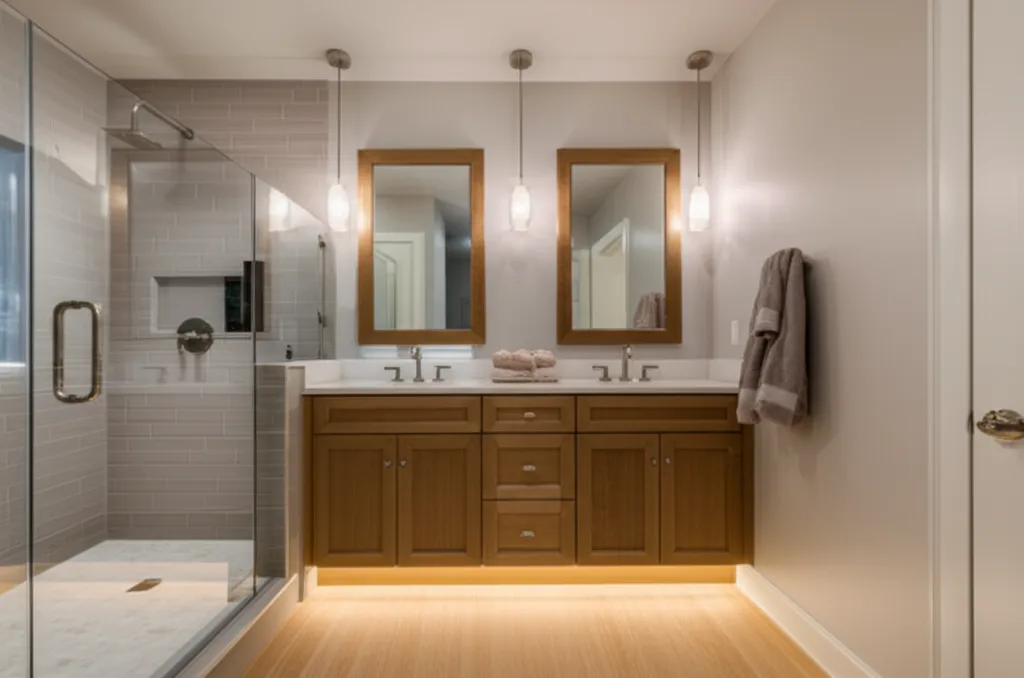
Bathroom remodeling contractor in Antelope, Sacramento County - modern shower design and renovation by Oakwood Remodeling Group

Sacramento County

Bathroom Remodeling in Antelope, CA

Builder-Grade to Custom Upgrades. Custom Showers, Tub Conversions & Full Renovations for All Antelope Neighborhoods.

  • 5-Star Rated
  • Lic #1125321
  • 0% Financing Available
5.0on Google
License #1125321
Warranty on All Work
0% Financing Available
(916) 907-8782
Serving ZIP Codes:95843

Antelope, CA · North Sacramento County

Antelope Bathroom Remodeling at a Glance

Antelope is an unincorporated suburb in northern Sacramento County with 48,733 residents at the 2020 Census. Two-thirds of its homes were built between 1980 and 1999, most are owner-occupied detached houses, and 37.9% of households include children. California American Water supplies most addresses with moderately hard well water, and permits come from Sacramento County. Oakwood Remodeling Group remodels bathrooms only, license #1125321.

38.6%
Antelope homes built in the 1990s

± 3.2 points · ACS 2020–2024

100 ppm
Average hardness, Cal Am Antelope system

Moderately hard · 2024 report

70.2%
Homes lived in by their owners

Census estimate

$7,000 – $28,500+
Tub-to-shower conversion

Engine-derived range

What do bathroom remodels cost in Antelope?

Engine ranges for Antelope: a tub-to-shower conversion runs $7,000 – $28,500+, a shower $8,000 – $34,500+, a compact bathroom $10,000 – $43,500+, a hall or guest bath $13,000 – $51,500+ and a primary bathroom $24,000 – $86,500+. An in-home measure sets the final price.

Who supplies water in Antelope?

Mostly California American Water. On the state's water-system map, 68.6% of residents are in Cal Am's Antelope system, 26.4% in Sacramento Suburban Water District and 4.3% in Cal Am's Lincoln Oaks system. No inhabited block is served by the county water agency.

How hard is Antelope tap water?

Cal Am's 2024 Antelope report averages 100 ppm (33–160), moderately hard on the USGS scale. In some years its wells are supplemented with Folsom Lake water bought from Sacramento Suburban Water District.

How old are the bathrooms in Antelope houses?

Two-thirds of homes (66.3%) were built between 1980 and 1999, the 1990s alone accounting for 38.6%, and only 12.3% predate 1980. A bathroom never redone since then is now roughly 27 to 46 years old.

Who permits bathroom remodels in Antelope?

Sacramento County Building Permits & Inspection. Antelope is unincorporated, so there is no city building department.

Which nearby areas do you also cover?

North Highlands, Foothill Farms, McClellan Park, Rio Linda, Elverta and Citrus Heights.

Reviewed against U.S. Census Bureau ACS 2020–2024 and 2020 Census figures, California American Water's 2024 Antelope and Lincoln Oaks reports, Sacramento Suburban Water District's 2025 report, and state water-system and FEMA maps tested at 339 census blocks. Pricing and permits: Oakwood Remodeling Group, license #1125321.

Housing age

Antelope Homes: Bathrooms From the 1980s and 1990s

Decade builtShare of Antelope homes (ACS 2020–2024)
Before 198012.3% ± 2.6
1980s27.7% ± 3.0
1990s38.6% ± 3.2
2000s17.1% ± 2.4
2010 or later4.4% ± 1.1
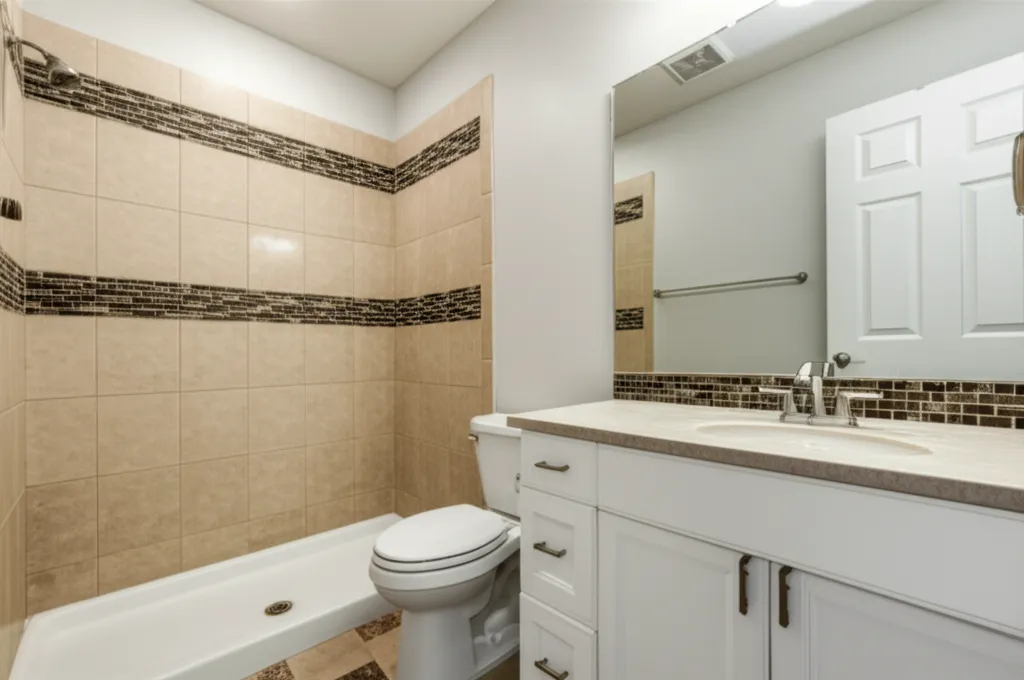
Classic 1990s Antelope tract bathroom with white ceramic tile and builder-grade fixtures

Antelope is an unincorporated Sacramento County community of 48,733 residents spread across 6.8 square miles at 125 feet elevation. It is one of the larger Sacramento suburbs, yet it has no city government, no city building department and no city codes separate from the county's. Every permit for an Antelope bathroom remodel routes through Sacramento County.

The defining characteristic of Antelope housing is era: 66.3% of homes were built in the 1980s and 1990s, with the 1990s (38.6%) as the single largest decade. These are tract-built single-family homes — typically 1,400 to 2,200 square feet, wood-frame construction, standard builder bathroom packages. The original builder finish was 4-by-4 white ceramic tile in the shower alcove, cultured marble or laminate vanity top, a single-handle Delta or Moen pressure-balance valve, a 50-cfm exhaust fan commonly vented into the attic rather than outdoors, and a fiberglass tub insert set into the wood curb. At 27 to 40 years old, those bathrooms are now at or well past the typical refresh cycle.

70.2% of Antelope homes are owner-occupied and 79.2% are detached single-family houses, so most remodels here are long-term investments rather than landlord refreshes. The community skews toward families — 37.9% of households are raising children — and toward multi-generational living, with 30.1% of households including someone 65 or older. That combination regularly puts two separate requirements on a single bathroom: hard-wearing surfaces that handle daily use by kids, and universal features like blocking for grab bars and a low-threshold shower entry that will still work in twenty years. Median home value is $489,800, which supports an investment-grade remodel but does not require imported stone to pencil out.

Before pricing a bathroom of this age we check three things before any tile is selected: the shower valve (original single-function valves are often worth replacing for thermostatic control and water efficiency), the subfloor around the tub and toilet (wood rot from a slow leak or an attic-vented fan is the most common hidden scope item), and whether the exhaust fan actually terminates outdoors. For planning resources, see replacing a builder-grade vanity and fiberglass to tile showers.

Water supply

Antelope Water: Three Suppliers, Moderately Hard Across the Board

SupplierAntelope residentsReported hardness
Cal Am – Antelope68.6%33–160 ppm, average 100 (2024)
Sacramento Suburban Water District26.4%Wells average 120 (North area) and 130 ppm (South area) (2025)
Cal Am – Lincoln Oaks4.3%25–240 ppm, average 121 (2024)

Unlike communities served by soft surface water from a reservoir, every tap in Antelope draws from groundwater blends — Cal Am's Antelope system uses deep wells supplemented in some years with Folsom Lake surface water purchased from Sacramento Suburban Water District and treated at the San Juan Water District plant. That groundwater origin makes mineral content consistent year-round and noticeable at the fixture level. Scale builds on showerheads and glass door tracks within months, not years.

The practical implication for a bathroom remodel is that the finish and material choices matter more here than in a soft-water community. Polished chrome fixtures look sharp at installation but show every water spot; brushed nickel and brushed chrome hold up significantly better with normal weekly wiping. Standard frameless glass with no factory coating requires squeegee discipline to stay clear; glass with a manufacturer-applied hydrophobic coating sheds water and requires far less maintenance at these hardness levels. Acrylic wall panels eliminate the grout joint entirely, removing the single largest mineral-buildup surface in a shower. Large-format porcelain with epoxy grout has far fewer joints per square foot than 4-by-4 or 4-by-8 ceramic, which reduces both cleaning effort and eventual regrouting.

Cal Am's 2024 report also lists strong base ion exchange to remove hexavalent chromium from the groundwater, which is the primary treatment driver for the Antelope system. This is a water-quality issue that Cal Am manages at the plant; it does not affect material selection for the bathroom itself. What does affect material selection is the 100 ppm average and the wide range of 33–160 ppm as different wells are drawn on at different times of year. The upper end of that range is when scale accelerates most noticeably.

SSWD's service area covers the eastern portions of Antelope near Elverta Road. Its 2025 report shows wells averaging 120 ppm in the North area and 130 ppm in the South area — slightly harder than Cal Am's Antelope average. Lincoln Oaks, serving a small western slice, averages 121 ppm with a range of 25–240 ppm. The finish recommendations are the same regardless of which bill you pay: brushed hardware, coated glass, and minimal grout surface. Compare frameless and semi-frameless glass or read about upgrading to frameless glass.

Questions? Talk to a bathroom remodeling expert today.

(916) 907-8782

Showers

Shower Remodeling in Antelope

Antelope Shower Snapshot

Build time

8–12 working days

Engine range

$8,000 – $34,500+

Plan around

Spotting at 100 ppm avg

Updated Antelope shower with large-format porcelain tile, recessed niche and frameless glass door

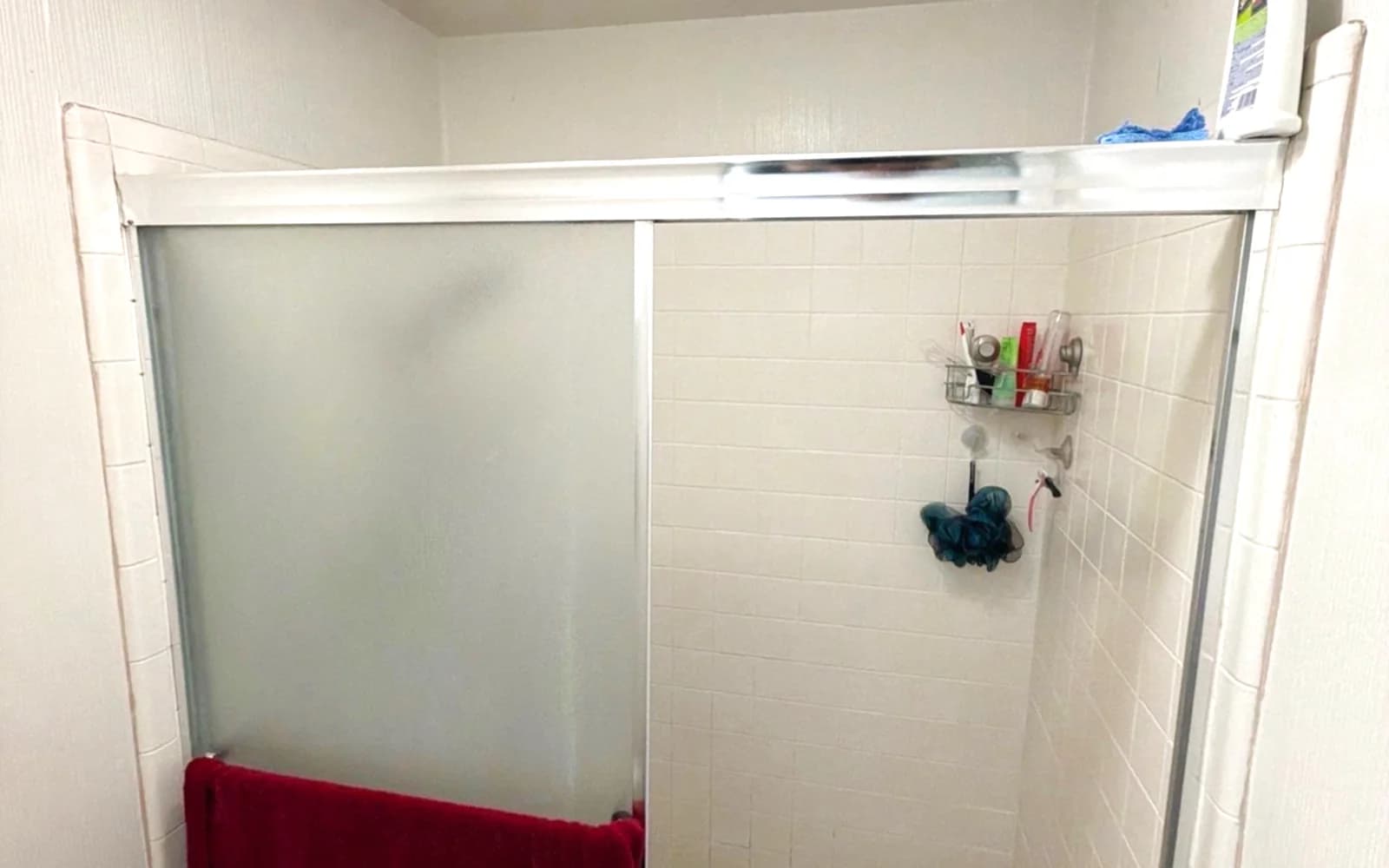
The standard 1990s Antelope builder shower is a 3-by-3 or 3-by-4 foot alcove or neo-angle stall with 4-by-4 white ceramic tile, a framed pivot or sliding door with a bottom track, an original single-function showerhead and a Delta or Moen pressure-balance valve. At 30 years old, the grout has commonly failed at the curb, the door track is scaled beyond cleaning, and the valve body may be worn enough that pressure-balance response is sluggish. The tile itself often looks intact but the waterproofing behind it — typically greenboard (moisture-resistant drywall) without a membrane — has been wet for a decade or more.

A full shower rebuild starts with complete demolition of tile, backer and the original pan liner. The framing is inspected for rot before anything new is installed. New cement board or foam backer goes on over studs that pass inspection, followed by a sheet or liquid waterproofing membrane that extends past the curb and up the walls behind the tile plane. The drain is reset to the new floor height. New tile — or acrylic panels in a cost-driven scenario — is installed over the membrane. The valve body is replaced, or a new thermostatic valve is roughed in if the homeowner is upgrading. Frameless glass with a coated surface closes the opening.

At Antelope's average of 100 ppm, the finish choice on the glass and hardware is not cosmetic preference — it is a maintenance decision. Polished chrome on the valve trim and towel bars shows every spot; brushed chrome or brushed nickel hides mineral deposits between cleanings. Frameless glass without a coating requires a squeegee after every use to stay presentable; glass with a factory hydrophobic coating can be wiped weekly rather than daily at this hardness level.

The 1990s builder shower in Antelope was sized around a single user and a standard 2.5 gpm showerhead. If the alcove footprint allows it, widening by a foot and adding a recessed bench and a second body spray creates a materially different daily experience for the same room. Footprint changes require re-routing the drain, which is straightforward in a slab-on-grade house, but Antelope has both slab and raised-floor homes and the framing type affects the cost of moving plumbing. Budget detail lives in our shower remodel cost guide, and fiberglass versus tile compares two popular wall choices.

Tub-to-shower

Tub-to-Shower Conversions in Antelope

Walk-in shower converted from a 5-foot tub alcove in an Antelope 1990s tract home

Nearly every 1990s Antelope home has a 5-foot fiberglass tub alcove in the primary bath or the hall bath, sometimes both. The original insert sits inside a wood-framed alcove with studs at the sides and a 2-by-4 curb at the floor. Removing the insert reveals the framing condition: 30 years of slow overflow wetting and attic-vented exhaust moisture occasionally leaves the bottom plate and lower studs with some softness, but outright rot is less common in 1990s Antelope homes than in pre-1980 construction. The structural scope is determined at demolition before any new material is ordered.

Once framing passes inspection, a tub-to-shower conversion in a 5-foot alcove replaces the 30-square-foot floor area with a tiled or acrylic shower pan, sets a new drain at shower height, installs a waterproof membrane on the floor and walls, tiles or panels the walls, and hangs a glass panel or door. A linear drain at the back wall creates a near-curbless floor surface. The 5-foot width is wide enough for a built-in bench at one end and a niche or two in the wall, leaving the shower body more functional than the original tub for everyday adults.

With 30.1% of Antelope households including someone 65 or older, the tub-to-shower conversion is frequently requested as an accessibility upgrade rather than a purely cosmetic one. A low-threshold or curbless entry removes the step-over that makes a standard tub risky for anyone with reduced mobility. Grab bars can be installed at the time of conversion using solid blocking in the walls — it costs little while the walls are open and avoids reopening them later. Transferring from a shower seat is also easier in a 5-foot walk-in than from a standard tub curb.

If young children in the household still need a bathtub, the common approach is to convert the primary bath first — where adults shower daily — and keep the fiberglass tub in the hall bath until the children are older. Layout options and drainage configurations are in tub-to-shower layout ideas and replacing a tub-shower combo.

Every age

Walk-In Showers for Every Age in Antelope

Curbless walk-in shower with built-in bench, grab bar blocking and large-format tile in an Antelope home

A curbless or low-threshold walk-in shower fits the existing 1990s tract footprint with more flexibility than a standard curbed shower. The floor slopes to a linear drain or a center drain without a raised curb at the entry, making step-over entry unnecessary. In the primary bath, where space typically allows at least a 36-by-36 or 3-by-5 shower, a curbless entry with a fixed glass panel rather than a door creates an open, accessible feel with no sacrifice to water containment when the floor slope is properly set.

Blocking for future grab bars is the highest-value addition that costs the least to add during a rebuild. Code-grade grab bars require solid blocking in the wall at the right heights — 33 to 36 inches for a horizontal bar beside the shower seat, higher for a vertical entry bar. Installing that blocking while the walls are already open costs a fraction of reopening finished tile later. We install it as standard practice on every Antelope shower project where the homeowner is over 50 or has an older household member.

With both children and older adults in many Antelope households, the walk-in shower sometimes needs to serve two generations simultaneously. A 5-foot-wide curbless shower with a folding or fixed seat at one end and a handheld showerhead on a slide bar works for a child who is not yet fully independent in the shower, for an adult who showers standing, and for an older adult who needs the seat and the grab bar — without any additional work between those uses.

Antelope's moderately hard water makes the floor surface choice worth considering too. Pebble mosaic tile floors look attractive but have many grout joints and rough texture that catches scale; large-format porcelain with a honed finish and epoxy grout on the floor offers better long-term cleanability. Explore curbless showers and aging-in-place remodels.

Full bathrooms

Primary and Hall Bathroom Remodels in Antelope

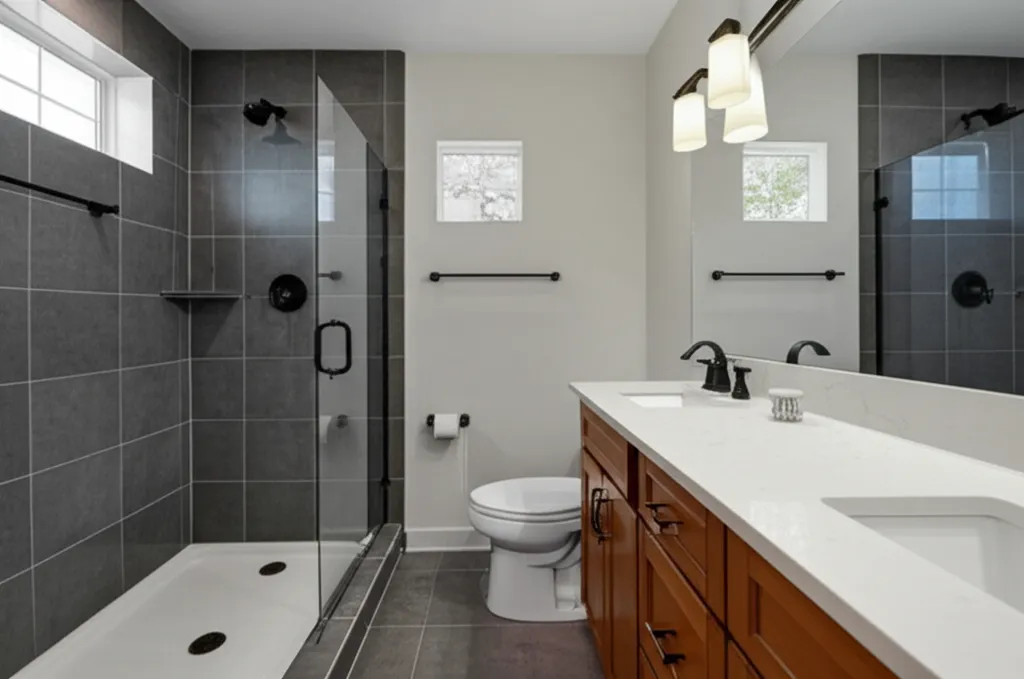
Renovated primary bathroom in an Antelope 1990s home with double vanity, walk-in shower and updated lighting

A full primary suite remodel in a 1990s Antelope home replaces every builder fixture in a single project: the walk-in shower or tub-shower combination, the vanity and mirror, the lighting, and the exhaust fan. The last item — the exhaust fan — is particularly important in Antelope 1990s construction because builder fans in that era were commonly vented into the attic rather than through the roof or a soffit to the exterior. That is a code violation under current California mechanical code, and it has been pumping moisture into the ceiling cavity above the bathroom for 30 years. We re-route the duct to a proper exterior termination and right-size the fan for the room volume.

The primary bath in a 1990s Antelope home is typically 70 to 100 square feet — large enough to add a double vanity where a single originally sat, but not so large that expanding the shower requires moving a wall. Most layout changes that homeowners want — removing the garden tub to create a larger shower, converting a single vanity to a double — can stay inside the existing wall envelope once the drain and vent routing is confirmed. Moving a drain is the most expensive plumbing change, so the design conversation starts with where the drain is and works outward.

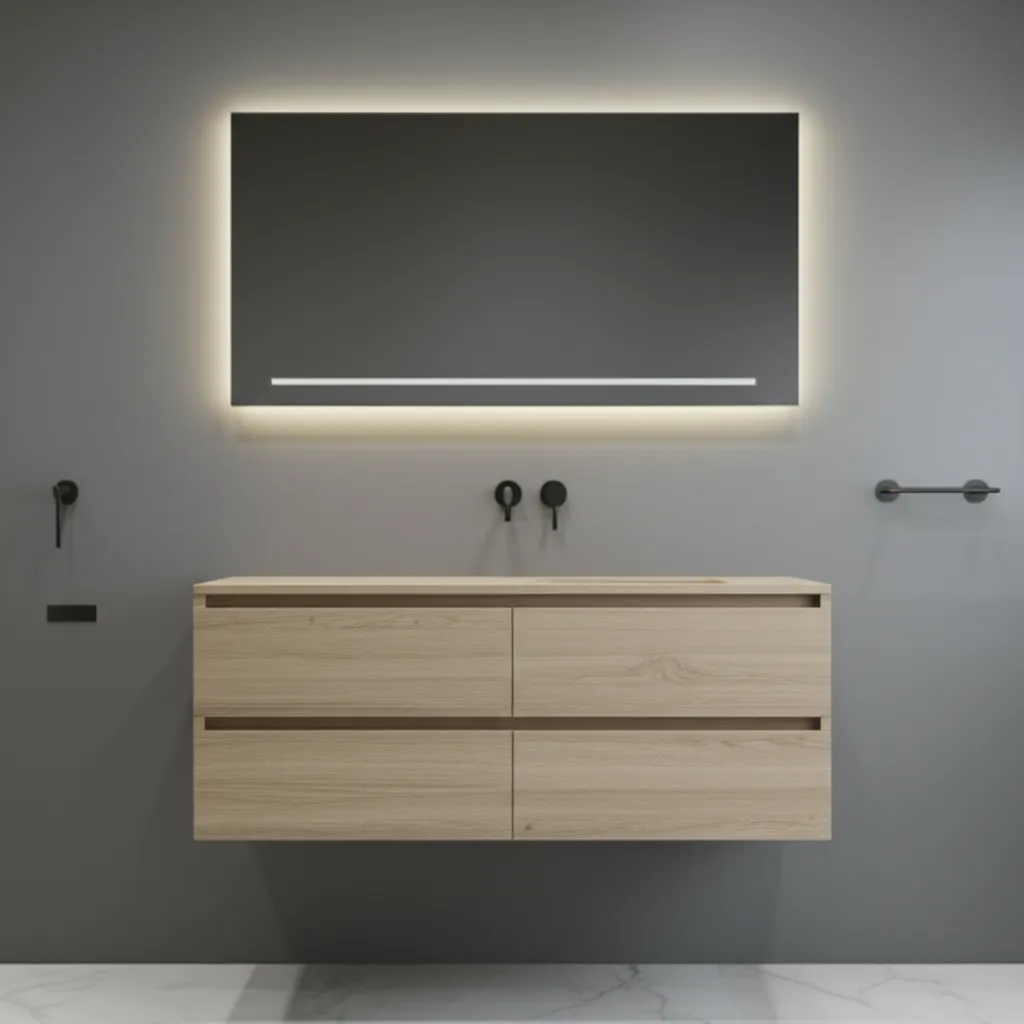
Builder lighting in 1990s Antelope bathrooms is usually a single bar fixture over the mirror, sometimes with a recessed light in the shower on a separate circuit. Task lighting at the vanity mirror matters more than overhead lighting for the daily getting-ready routine; replacing the bar with side-mounted sconces or a lit mirror eliminates shadows on the face. LED fixtures compatible with a dimmer give the room a different feel in the evening. All new circuits and relocated fixtures require an electrical permit from Sacramento County.

Swapping a single vanity for a double, or a garden tub for a larger shower, can usually stay inside the existing walls once drain and vent routing is confirmed. For cost guidance, see single to double vanity and the primary bathroom cost guide.

Ready to transform your Antelope bathroom?

Pricing

Antelope Bathroom Remodel Costs

Antelope projectEngine rangeTypical build time
Tile shower rebuild$8,000 – $34,500+8–12 working days
Tub converted to shower$7,000 – $28,500+About two weeks
Compact bath$10,000 – $43,500+Roughly two weeks
Hall or guest bath$13,000 – $51,500+Two to three weeks
Primary suite$24,000 – $86,500+Three to four weeks

Antelope's 1990s housing stock is generally predictable from a hidden-scope standpoint. These homes were built after the transition away from galvanized iron supply lines, so corroded water pipes are not a routine concern. Mortar-bed shower floors — which add demo weight and labor — are uncommon in 1990s production homes; most showers have either fiberglass inserts or thin-set tile over greenboard. The main variable that affects the final budget is the exhaust fan: if the existing fan vents into the attic rather than to the exterior, re-routing the duct through the ceiling and out a soffit or roof cap adds material and labor. That is discovered at the time of demo and quoted before any framing is touched.

A second variable is subfloor condition. Thirty years of an improperly sealed shower or a slow supply line drip can soften the plywood layer around the tub or toilet. This is the most common hidden scope item in Antelope bathrooms and the one most worth checking before signing a contract. We probe the subfloor at the pre-project walk-through and include a standard subfloor repair allowance in the base estimate, adjusted at demo if the actual condition is better or worse than expected.

Every Antelope project quote includes: waterproof membrane behind tile walls and pans, exhaust fan ducted to the exterior, GFCI protection on all bathroom receptacles, and permit application to Sacramento County. Coated glass, brushed hardware and epoxy grout are available upgrades that we recommend given Antelope's 100+ ppm water, but they are priced as line items rather than bundled into the base.

  • Waterproof membrane — behind every new tile wall and pan
  • Exhaust fan — ducted outdoors and sized to the room
  • GFCI protection — on bathroom receptacles
  • Coated glass — so spots rinse off instead of etching in

* Calculator-engine figures for a typical room, from basic to premium finishes. Hidden damage found at demolition is priced separately.

Free Planning Tool

Estimate Your Bathroom Remodel in 60 Seconds

Get a planning range tailored to your project type, finish level, and bathroom size — built from real Oakwood project pricing across Sacramento, Placer, and El Dorado counties.

Start the Calculator

No obligation • Free in-home estimate available

County permits

Antelope Bathroom Permits

Antelope Permit Checklist

Issued by: Sacramento County Building Permits & Inspection
Triggers: relocated plumbing, added circuits or altered framing
Flood review: not expected for the 99.3% of residents in Zone X
Codes applied: 2025 California codes for 2026 applications

Because Antelope is unincorporated Sacramento County, every building permit, plumbing permit and electrical permit for a bathroom remodel is applied for with the county rather than a city building department. The process is identical to other unincorporated Sacramento County communities: permit application, plan review (required when plumbing is relocated, new circuits are added or framing is altered), and a field inspection before drywall or tile closes the walls.

Standard bathroom remodel scope that requires a permit in Sacramento County: moving a drain or supply line, adding a circuit or outlet, adding or extending a GFCI circuit, relocating or replacing an exhaust fan duct to a new exterior termination, and any structural framing change. Simple cosmetic replacements of fixtures in the same location — vanity top, faucet, light fixture — generally do not require a permit, but anything involving the shower waterproofing system is always worth doing correctly whether or not a permit is technically required for the specific work.

We apply for the permit as part of the project, coordinate the inspection schedule and ensure the inspector signs off before tile or drywall closes the cavity. The county's permit portal: Sacramento County Building Permits & Inspection. License #1125321.

1990s construction

Waterproofing 1990s Builder Bathrooms

The exhaust fan issue is the less obvious of the two. A 50-cfm fan that vents into the attic rather than to the exterior does move air out of the bathroom — but it deposits that moisture-laden air directly into the ceiling cavity above the shower. At Antelope's mild climate, the attic does not get cold enough to condense the moisture into visible water most of the time, but the repeated cycling of humid exhaust air into the insulation and sheathing above the bathroom promotes mold in the insulation and softens the roof sheathing over years. This was a common practice in 1990s production building in the Sacramento region and is one of the most common pre-remodel discoveries we make in Antelope bathrooms. California mechanical code requires exhaust fans to terminate outside the building envelope, and we re-route the duct as part of any bathroom project where the existing fan does not comply.

The tile-over-greenboard issue is more widely understood now than it was in 1990. Greenboard is moisture-resistant gypsum — it resists incidental moisture better than standard drywall, but it is not waterproof. Tile set directly over greenboard in a shower alcove relies entirely on the grout joints and tile edges being perfectly sealed, which they are not after 30 years. Once water gets through a failed grout joint, it wicks into the greenboard, which swells and loses structural integrity, and the tile begins to hollow or delaminate. Behind that, the wood studs in a wet wall cavity begin to develop surface mold. The substrate often looks fine until the tile is removed. We open the cavity completely on any Antelope shower project rather than tiling over the existing backer.

Current waterproofing practice goes well beyond greenboard: cement board or foam backer provides a dimensionally stable, water-resistant substrate, and a sheet or liquid-applied waterproofing membrane is installed over it before any tile. The membrane extends past the curb, up the wall behind the tile plane, and into the corners and joints that are most likely to see movement. Kerdi, Wedi, RedGard and similar systems are all code-acceptable in Sacramento County; the choice between them affects cost and installation sequence rather than long-term performance at this climate and use level.

The combination of proper exhaust ventilation and a true waterproofing membrane is what separates a bathroom that will last another 30 years from one that will need attention again in ten. These are not upgrade options on an Antelope project — they are the baseline standard for every shower and tub-to-shower conversion we install.

Finish choices

Finish Choices for Antelope's Moderately Hard Water

Brushed nickel fixtures and coated frameless glass in an Antelope bathroom upgraded from builder grade
Material or finishBehavior at 100+ ppmRecommendation
Polished chrome fixturesShows every water spot; requires wiping after each useUse only if willing to wipe daily
Brushed nickel or brushed chromeTexture hides mineral deposits between weekly cleaningsRecommended for Antelope
Matte black fixturesHides spots well; check manufacturer finish qualityGood choice at this hardness
Standard frameless glass (uncoated)Requires squeegee after every shower to stay clearAcceptable with daily discipline
Coated frameless glassHydrophobic factory coating sheds water; weekly wipe sufficientRecommended for Antelope
Acrylic wall panelsNo grout joints; mineral buildup limited to panel surface onlyBest maintenance profile
Large-format porcelain + epoxy groutFewer joints per sq ft; epoxy resists staining and scaleGood tile option for Antelope
Small mosaic tile (grout-heavy)Maximum grout surface; catches scale in every jointUse sparingly as accent only

The reason finish choice matters so much in Antelope is that all three water suppliers draw from groundwater at 100+ ppm — there is no soft surface water option available to any Antelope address. This is unlike Sacramento proper or communities near the American River, where surface water blending softens the tap. Every Antelope household is working with moderately hard water at minimum, and portions served by SSWD or Lincoln Oaks are at the harder end of the range.

Polished chrome was the standard builder finish in 1990s Antelope homes because it was inexpensive and looked excellent in a showroom. In daily use at 100+ ppm, polished chrome requires wiping after every shower to prevent white mineral residue from building up in the recesses of the trim. Brushed finishes work by having a texture that breaks up the water droplet footprint; the deposits are still there, but the matte surface does not show them between cleaning cycles. This is not a subtle difference — brushed nickel in a hard-water bathroom looks clean a week after the last cleaning; polished chrome in the same bathroom looks spotted within a day.

The glass question is similar. A standard frameless glass shower looks striking, but at 100+ ppm it develops white mineral haze that is visible from across the bathroom within a week of installation without daily squeegee use. A factory-applied hydrophobic coating — Rain-X applied at the manufacturer, or a glass coating from a supplier like Diamon-Fusion or EnduroShield — changes the maintenance cycle from daily to weekly at Antelope hardness levels. The coating adds cost, but it is a fraction of the labor cost of re-polishing badly scaled glass three years after installation.

For homeowners who want the lowest possible maintenance profile, acrylic panels eliminate the grout joint entirely. The panel surface still collects mineral film, but the cleaning motion is simple (one surface, no joints to chase). Acrylic is less design-flexible than tile and has a different surface aesthetic, but it performs reliably in hard-water environments and does not require regrouting. Large-format porcelain with epoxy grout is the middle path: better design range than acrylic, fewer grout joints than small tile, and epoxy grout that resists mineral staining far better than cement grout.

Real work nearby

Nearby Real Projects: Roseville

Contemporary bathroom remodel similar to completed Roseville projects near Antelope

We do not yet have a completed case study in Antelope's Census-defined boundary. Roseville, 4.7 miles to the east, represents the closest body of completed and photographed work. Roseville shares the same Sacramento County water-supply context for projects near the county line, and its 1990s housing stock is nearly identical in construction type to Antelope's dominant era.

One completed Roseville project is an accessible shower conversion with the removal of a non-load-bearing half-wall between the tub and the adjacent vanity area, 12-by-24 marble tile on the walls, dual showerheads on a thermostatic valve, a linear drain and a curbless entry. That project is documented at Roseville accessible shower: wall removal and marble tile. The design decisions — curbless entry, coated glass, brushed hardware — are the same ones we recommend for Antelope based on the water hardness profile.

For the full range of Roseville work and to understand what projects look like at this distance from Antelope, visit the Roseville service area page. Antelope homeowners are welcome to reference any Roseville project photos during the design conversation.

Where we work

Antelope Areas We Serve

Core Antelope along Antelope Road and Don Julio Boulevard. This is the geographic and commercial center of the community, running roughly from Antelope Road on the north to the Highway 80 frontage on the south, between Walerga Road and Elverta Road. Homes here are predominantly 1990s tract construction — the era where 38.6% of Antelope housing was built — on lots of roughly 6,000 to 7,500 square feet. Most of these addresses fall in Cal Am's Antelope system at the 100 ppm average. Builder bathroom packages here are the most common starting point for a first-time Antelope remodel.

Eastern Antelope near Elverta Road. The eastern portion of Antelope, approaching the Elverta Road corridor, was developed slightly later than the Don Julio core but is still predominantly 1990s stock. Water service here transitions to Sacramento Suburban Water District for many addresses, with well averages of 120–130 ppm — slightly harder than the Cal Am Antelope average. Homes in this area are often on slightly larger lots with more garage-forward designs, and the primary bath is sometimes larger than in the denser core. The remodel scope and waterproofing needs are identical, though finish choice is even more relevant at SSWD hardness levels.

Western Antelope transitioning toward North Highlands. The western edge of Antelope, near the North Highlands boundary approximately 2.1 miles to the southwest, has a slightly older housing mix. The 1980s share (27.7% countywide in Antelope) is more concentrated in this western zone. Homes here may have original copper supply lines and original builder showers that predate the 1990s fiberglass insert era — some have mortar-bed pans or early acrylic units. Cal Am Lincoln Oaks serves a small number of addresses in this western slice at an average of 121 ppm and a range of 25–240 ppm. Mortar beds are heavier to demo but otherwise straightforward; the finish recommendations are the same.

We work throughout all of Antelope and do not limit service to any particular street or subdivision. If you are not certain which water district your address falls in, your water bill or the state's SAFER water system map will show the supplier name. For adjacent communities, see the North Highlands and Elverta service area pages.

Nearby

Antelope and Neighboring Communities

See The Dramatic Difference We Make

Drag to compare. Every project is real work completed by our Sacramento team.

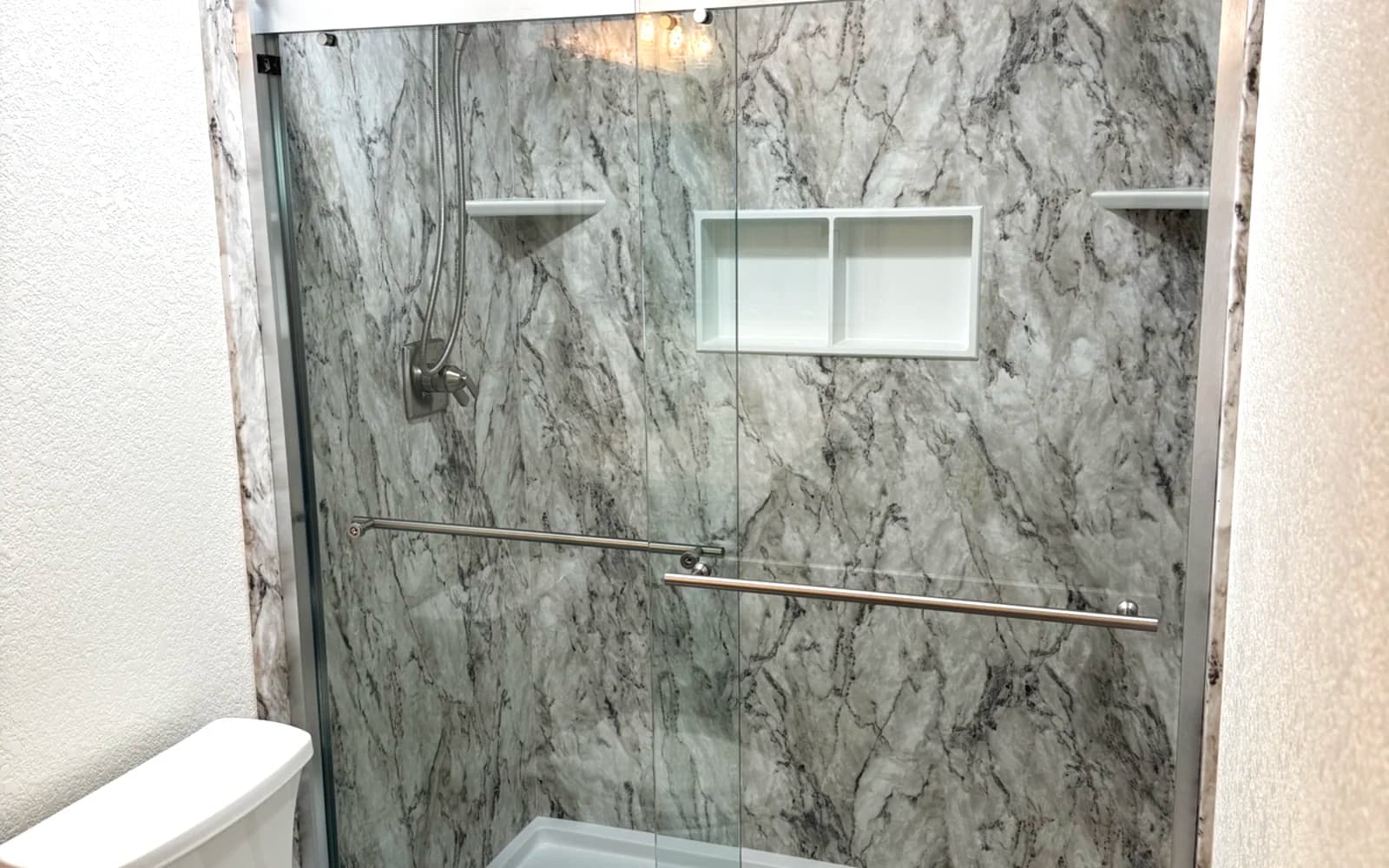
After: Dated Tile Shower to Marble-Look Master Bath - bathroom remodeling Citrus Heights, CA by Oakwood Remodeling Group
Before: Dated Tile Shower to Marble-Look Master Bath - bathroom remodeling Citrus Heights, CA

Dated Tile Shower to Marble-Look Master Bath

Small-tile shower and cloudy framed doors replaced with grout-free marble-look acrylic walls, a twin niche and a low-threshold base.

Citrus Heights, CA|See the full before & after
5.0

What Sacramento-Area Clients Say

47 verified Google reviews · Straight from Google

8 months ago

Denis, Alex, and his team did a fantastic job on my project! It was a full gut, bathroom, laundry, and kitchen remodel. I even added a siding replacement on part of the house, along with some wood rot repairs. There were a ton of details throughout the various projects that they helped with or had suggestions on how to complete them, if there was a delay, they were on it, trying to find alternative vendors. If there were any changes or things that I didn't care for, they took care of it. I am very pleased with the final product and Oakwood Remodeling Group. I would highly recommend them for any of your remodeling needs.

5 months ago

I just purchased my first home in Loomis and Denis, Alex and the crew at Oakwood Remodeling Group did a wonderful job completely remodeling our bathroom. The quality of the work, attention to detail, and smooth process made a huge difference for us as new homeowners. We highly recommend anyone looking for bathroom remodeling in Loomis to get a free quote from Oakwood Remodeling Group.

3 months ago

From the very beginning Oakwood Remodeling Group has been extremely professional and Denis provided a reasonable quote to put up a set of very heavy barn doors. Artem, who came to our home was also very professional, funny, and did an outstanding job. In addition, they left our home very clean after the work was done and I was very impressed with their quality of work. I highly recommend them if you are interested in using them for a remodel job or just to put up barn doors.

2 months ago

I spent 35 years in the commercial construction industry as a carpenter, superintendent, then president of my own company and later as a senior project and construction manager building mostly offices, hospitals and schools. I know quality work when I see it, and I’m happy to report that Oakwood Remodeling Group does quality work. We contracted with Oakwood to replace out tub/shower with a walk-in shower. Their estimator Denis was courteous and thorough, and after several days clarifying details, he gave us a very competitive and firm price. One great advantage of using Oakwood is that their crews tend to do all the work themselves instead of scheduling and calling in a series of subcontractors. Illya and his helper did the demolition, plumbing, new tile, drywall, electrical and flooring themselves. No waiting for subs. Alex and all members of the firm were courteous, cooperative and a pleasure to work with. I highly recommend Oakwood Remodeling Group.

5 months ago

We’ve used Oakwood Remodeling Group for several remodeling projects and have been really happy with their work on every project. Alex and Denis were always professional, friendly, and very courteous throughout the whole process. Their pricing was fair and the quality of their work was excellent. It was great working with a team that was reliable and easy to communicate with. We’d definitely use them again and highly recommend them to anyone looking for remodeling work!

Antelope Bathroom Remodeling FAQ

Get Your Free Estimate

Ready to transform your Antelope bathroom? Contact us today!

By submitting this form, you agree to receive calls, texts, and emails from Oakwood Remodeling Group at the number and email provided. Consent is not a condition of purchase. Message and data rates may apply. You can opt out at any time. We collect your name, phone, email, and project details to respond to your inquiry — we do not sell your information. California residents may request deletion at any time. See our Privacy Policy and Terms of Service.

Transform Your Antelope Bathroom Today

Expert bathroom remodeling in Antelope, Sacramento County. Call (916) 907-8782 for your free estimate!

CallFinancingEstimate