Auburn Small Bathroom Remodel: Space-Saving Solutions for Compact Foothill Homes
How to transform Auburn's notoriously compact vintage bathrooms into functional, beautiful spaces that feel twice their size
Looking for bathroom remodeling in Auburn? View our Auburn service area page →
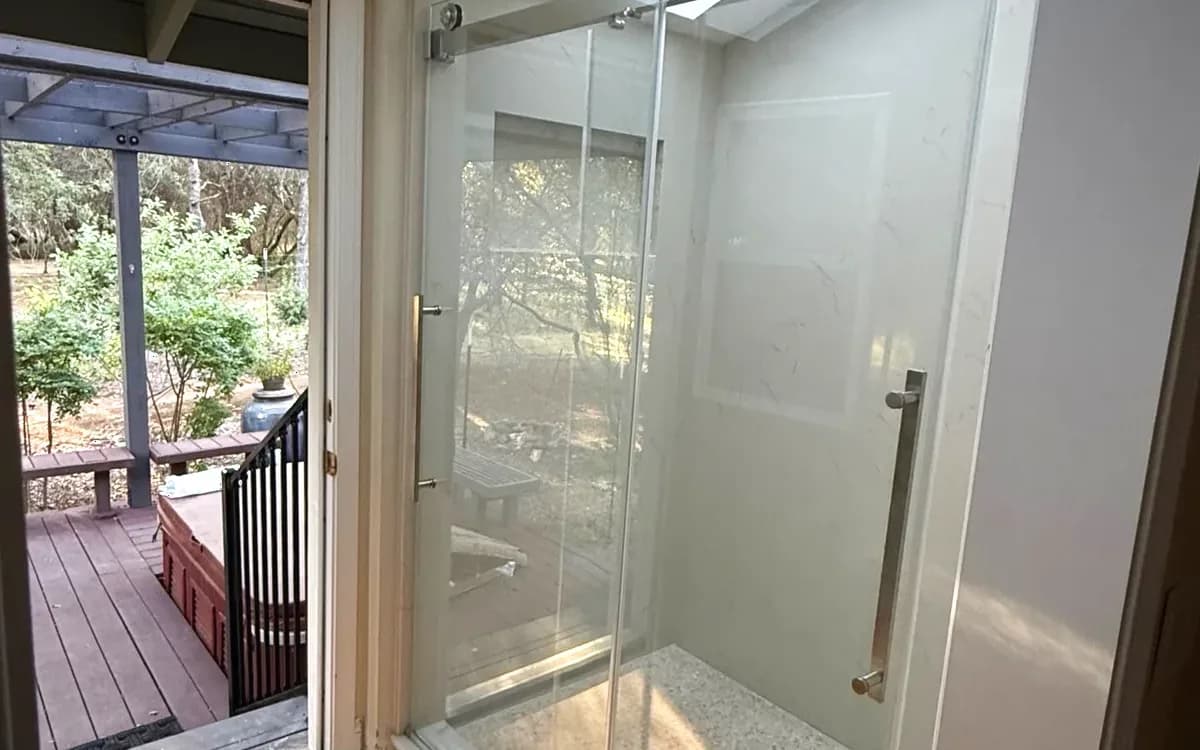
A transformed small bathroom in an Auburn foothill home — proving that compact doesn't have to mean compromised
Auburn's Small Bathroom Challenge
If you own a pre-1970 home in Auburn — and a significant percentage of Auburn's housing stock falls in this category — your bathrooms are probably small. Not "cozy" small. Not "charming" small. More like "how did they expect a full-grown adult to use this room?" small.
Historic homes in Old Town Auburn, the Historic District, and along the Lincoln Way corridor commonly have bathrooms as compact as 35 to 45 square feet. That's a 5x7 or 5x8 room crammed with a 60-inch tub, a pedestal sink, and a toilet — with perhaps 18 inches of clear floor space to maneuver. Ranch homes from the 1960s and 1970s throughout the Bell Road corridor and Bowman area are slightly more generous at 45 to 55 square feet, but they still feel inadequate by modern standards.
The good news: a small bathroom remodel in Auburn can transform these cramped spaces into rooms that feel dramatically larger and function significantly better — without adding a single square foot. The key is understanding that small bathroom design is an engineering problem, not just an aesthetics problem. Every inch matters. Every material choice affects spatial perception. Every fixture either opens the room or closes it down.
Auburn Small Bathroom Quick Stats
- Pre-1950s homes (Old Town, Historic): 35 - 45 sq ft bathrooms typical
- 1960s-1970s ranch homes (Bell Road, Bowman): 45 - 55 sq ft bathrooms typical
- 1980s-1990s homes: 55 - 70 sq ft bathrooms typical
- Remodel cost range: $12,000 - $25,000
- Most impactful single upgrade: Tub-to-shower conversion with frameless glass
Layout Optimization for 35-50 Sq Ft Rooms
In a small bathroom, layout isn't just important — it's everything. Moving a fixture 6 inches in the wrong direction can make the room feel impossibly tight, while moving it 6 inches in the right direction can create breathing room you didn't think possible.
The 5x7 Layout (35 sq ft)
Auburn's smallest bathrooms follow this footprint. The optimal layout places the shower at the short wall (using the full 5-foot width), the toilet on one long wall, and a compact vanity (24 inches) on the opposite long wall. The critical dimension is the clear space between the toilet and vanity — aim for a minimum of 24 inches. Using a wall-mounted toilet gains 8 to 10 inches of floor depth compared to a standard floor-mounted model.
The 5x8 Layout (40 sq ft)
The extra foot of depth makes a significant difference. With 8 feet of length, you can fit a 32-inch or even 36-inch shower (rather than the minimum 30-inch in a 5x7), a standard toilet, and a 30-inch vanity with room to spare. This is the most common small bathroom size in Auburn's 1960s-era ranch homes, and it responds beautifully to renovation because there's just enough room for modern fixtures without extreme compromise.
The L-Shape Layout (45-50 sq ft)
Some Auburn homes have L-shaped bathrooms where a nook accommodates the tub or shower and the main rectangle holds the vanity and toilet. These layouts are the easiest to optimize because the shower is architecturally separated from the other fixtures. Converting the nook to a walk-in shower with frameless glass creates a distinct showering zone while keeping the main area open and functional.
The Corner Shower Option
For bathrooms where the standard alcove layout doesn't work, a neo-angle (diamond-shaped) or quadrant (quarter-round) corner shower saves significant floor space. A 36x36-inch corner shower uses only 9 square feet of floor area compared to 15 square feet for a standard 60x30-inch tub alcove. That recovered 6 square feet — nearly a 20 percent increase in usable floor area in a 35 sq ft bathroom — can be allocated to a larger vanity, additional storage, or simply breathing room.
Shower Solutions for Compact Auburn Bathrooms
The shower is the single most impactful element in a small bathroom remodel. Getting it right transforms the entire room. Getting it wrong wastes your most important design opportunity.
For Auburn's small bathrooms, the tub-to-shower conversion is the most powerful move. Removing the 60-inch tub and replacing it with a walk-in shower with frameless glass creates an immediate visual expansion. The tub, even when not in use, visually fills and closes down the short wall. A glass-enclosed shower opens that same wall to sight and light, making the room feel nearly twice as spacious.
Frameless glass is non-negotiable in small bathrooms. Framed shower doors with their thick metal borders create visual barriers that chop the room into segments. Frameless glass — particularly a fixed panel with no door (where size permits) — allows the eye to travel uninterrupted through the shower space. The shower becomes part of the bathroom rather than a separate enclosure within it.
For the smallest Auburn bathrooms (35-40 sq ft), consider a curbless shower design. Eliminating the curb removes the last visual division between shower and bathroom floor, creating a seamless plane that maximizes the perception of space. Combined with a linear drain and consistent floor tile, a curbless shower in a small bathroom creates an almost spa-like openness despite the compact dimensions.
Floating Vanities and Compact Fixtures
Every fixture in a small bathroom should earn its place. The days of a bulky floor-standing vanity consuming 30 inches of wall and 21 inches of depth in a 5x7 bathroom are over. Modern fixtures designed for compact spaces work dramatically better in Auburn's vintage bathrooms.
Floating (Wall-Mounted) Vanities
A floating vanity is the single best fixture upgrade for a small Auburn bathroom. By mounting the vanity to the wall with no contact with the floor, you expose 8 to 12 inches of floor space underneath. This visible floor dramatically changes the room's proportions — the bathroom reads as wider because the eye perceives floor space extending behind the vanity. In a 5x7 bathroom, this one change can make the difference between a room that feels impossibly tight and one that feels workable.
Size recommendations for Auburn small bathrooms: 24-inch floating vanity for 5x7 rooms, 30-inch for 5x8 rooms, up to 36-inch for rooms 6 feet wide or larger. Choose drawers over doors — in a narrow cabinet, drawers provide better access to stored items without requiring clearance space for a swinging door.
Compact Toilets
Standard toilets project 28 to 30 inches from the wall. Compact elongated toilets reduce this to 25 to 27 inches — a 3-inch savings that matters enormously in a 5-foot-wide bathroom. Wall-mounted toilets project only 21 to 22 inches and expose floor space underneath, visually enlarging the room. The wall-mounted option costs more ($800 to $1,500 installed vs $400 to $800 for floor-mounted) but gains 6 to 8 inches of floor depth — valuable real estate in Auburn's smallest bathrooms.
Wall-Mounted Faucets
Installing the faucet on the wall above the vanity rather than on the vanity top frees up countertop space — particularly important on a 24-inch vanity where the sink already consumes most of the surface area. Wall-mounted faucets also simplify cleaning and add a modern design element that elevates the entire bathroom. Budget an additional $300 to $600 for the wall-mount installation versus standard deck-mount faucets.
Visual Expansion Tricks That Actually Work
Visual expansion isn't about tricks or illusions — it's about understanding how the human eye perceives space and designing to leverage those perceptions. Here are the strategies that produce measurable impact in Auburn's small bathrooms:
- Large-format tile. Use 12x24-inch tile minimum, oriented horizontally on walls. Fewer grout lines mean fewer visual interruptions, and the eye reads each tile as a larger continuous surface. In a 5x7 bathroom, switching from 4x4 tile to 12x24 tile can make the room feel 15 to 20 percent larger.
- Continuous floor tile. Run the same floor tile from the bathroom into the shower (especially effective with curbless design). The unbroken floor plane eliminates the visual division between shower and room.
- Large mirror. Mount the largest mirror the wall will accommodate — ideally spanning the full vanity wall from countertop to ceiling. The mirror doubles the visual depth of the room and reflects light from opposite windows or fixtures.
- Light color palette. White, cream, light gray, and soft warm neutrals reflect light and make walls appear to recede. Save dark accents for small doses — a niche interior, a thin accent strip, or fixture finishes.
- Vertical emphasis. Floor-to-ceiling tile on the shower walls, full-height glass panels, and vertically oriented mirrors draw the eye upward, emphasizing ceiling height rather than floor area.
Tile Strategy for Small Auburn Bathrooms
Tile selection in a small bathroom is a strategic decision, not just an aesthetic one. The wrong tile can make a compact room feel smaller; the right tile can expand it visually. For Auburn homes, tile must also perform well in the foothill climate with its extreme temperature swings and hard water conditions.
Size matters most. Large-format tile (12x24, 16x32, or even 24x24) reduces the number of grout lines and creates a cleaner, more expansive visual. In a small bathroom, grout lines create visual clutter that makes the room feel busy and fragmented. Rectified (precision-cut) tile allows for narrow 1/16-inch grout lines that nearly disappear, amplifying the spacious effect.
Color strategy. A monochromatic or closely tonal color scheme creates visual continuity that expands space. Use the same or complementary tile on floors and walls — dramatic contrast between floor and wall tile visually shortens the room. If you want an accent, limit it to one feature — a niche interior, a single accent strip, or the shower floor.
Finish considerations for Auburn. For shower walls, a smooth or semi-polished finish reflects more light into the room and is easier to clean in Auburn's hard water. For floors, a matte or textured finish provides necessary traction. Choose lighter grout colors — dark grout on light tile creates a grid pattern that visually fragments the surface.
Storage Solutions for Tight Spaces
Storage is the most common complaint in Auburn's small bathrooms. Vintage homes with pedestal sinks and no cabinetry offer essentially zero storage. Modern solutions put storage where it belongs — inside walls, behind mirrors, and in overlooked spaces.
- Recessed medicine cabinet: Mounted inside the wall rather than surface-mounted, a recessed cabinet provides 4 to 6 inches of storage depth without protruding into the room. Full-height recessed cabinets (48 to 60 inches tall) provide substantial storage while appearing flush with the wall surface. Cost: $300 to $1,200 installed.
- Built-in shower niches: Recessed into the shower wall during construction, niches provide shampoo and soap storage without floor-standing caddies or hanging organizers. A standard single niche costs $200 to $400 during remodel. Double-stacked niches provide twice the storage for $300 to $600.
- Vanity with drawer organization: A 24 or 30-inch floating vanity with soft-close drawers and internal dividers stores more organized essentials than a larger vanity with a single cabinet door. The key is vertical organization — stacked drawers access items from the top rather than requiring you to reach into the back of a deep cabinet.
- Above-toilet shelving: The wall above the toilet is typically unused space. Open shelving, a compact cabinet, or a ladder shelf adds storage for towels, toiletries, and decorative items without consuming floor space.
- Towel hooks vs towel bars: Towel bars require 24 to 30 inches of wall space and project 3 to 4 inches from the wall. Hooks use 3 inches of wall space each and project only 2 inches. In a small bathroom, this difference matters — hooks accommodate multiple towels in a fraction of the space.
Lighting That Opens Up Small Rooms
Light is the most powerful space-expanding tool in any small bathroom. A well-lit small bathroom feels significantly larger than a poorly lit one, regardless of other design choices.
Recessed ceiling lights eliminate the visual bulk of hanging fixtures while providing even, ambient illumination. In a 5x7 bathroom, two 4-inch recessed LED fixtures (one over the vanity, one over the shower) provide adequate ambient light. Place a shower-rated recessed light inside the shower enclosure to illuminate the space rather than leaving it in shadow.
LED vanity lighting at the sides of the mirror (rather than above) provides the best task lighting for grooming while casting fewer shadows. Slim sconces or LED strips flanking the mirror add light without consuming wall space. For the smallest bathrooms, a backlit mirror combines ambient and task lighting in one fixture while creating a floating, modern aesthetic.
Natural light is invaluable in small bathrooms. If a window exists, maximize its impact with frosted glass for privacy without curtains or blinds. If no window exists, a tubular skylight (solar tube) channels natural daylight into the room through the roof — a $500 to $1,500 addition that transforms a dark interior bathroom. Auburn's abundant sunshine makes solar tubes particularly effective in foothill homes.
Small Bathroom Remodel Costs in Auburn: $12,000 to $25,000
| Scope | Cost Range | Includes |
|---|---|---|
| Cosmetic Refresh | $5,000 - $10,000 | New vanity, paint, fixtures, mirror, hardware |
| Standard Remodel | $12,000 - $18,000 | New tile, shower/tub, vanity, toilet, lighting |
| Premium Remodel | $18,000 - $25,000 | Curbless shower, floating vanity, heated floors, luxury finishes |
Auburn's older homes typically add $1,500 to $3,000 to these ranges for plumbing updates (cast-iron to PVC drains, galvanized to PEX supply), subfloor repair, and electrical upgrades. For complete pricing across all project types, see our Auburn bathroom remodel cost guide.
The counter-intuitive truth about small bathroom remodels: the cost per square foot is actually higher than for larger bathrooms. While you buy less material, the labor intensity per square foot increases because tradespeople work more slowly in confined spaces. Expect $240 to $500 per square foot for a complete small bathroom remodel in Auburn, compared to $200 to $400 per square foot for a standard-sized bathroom.
Common Auburn Small Bathroom Layouts and Solutions
The Classic 5x7 (Old Town / Historic District)
Problem: 60-inch tub fills the short wall, pedestal sink provides no storage, toilet is squeezed against the wall. The room feels like a closet.
Solution: Replace tub with a 60-inch walk-in shower with frameless glass panel (no door — the opening faces away from the spray). Install a 24-inch floating vanity with quartz top and drawers. Add a recessed medicine cabinet. Replace pedestal sink area with above-toilet storage. Cost: $14,000 to $20,000. Result: the bathroom feels nearly twice as large despite identical dimensions.
The 1970s Ranch 5x8 (Bell Road / Bowman)
Problem: Builder-grade tub/shower with frosted glass sliding doors, vanity with dated laminate top, single overhead light. Functional but aesthetically exhausting.
Solution: Convert tub to walk-in shower with semi-frameless glass, install 30-inch floating vanity with quartz countertop, upgrade toilet to comfort height, add recessed LED lighting, install 12x24 porcelain tile on floors and walls. Cost: $15,000 to $22,000. Result: a bathroom that matches the home's updated kitchen and living areas.
Frequently Asked Questions
Transform Your Small Auburn Bathroom
Every small bathroom has untapped potential. Contact Oakwood Remodeling Group for a free in-home consultation where we'll measure your space, discuss layout options, and show you what's possible within your budget.
Call us at (916) 907-8782 or request your free estimate online.
Related Reading
Auburn Bathroom Remodel Cost 2026
Complete pricing guide for every project type.
Auburn Tub-to-Shower Conversion
The most popular upgrade in foothill homes.
Auburn Vanity Upgrade Guide
Styles, materials, and sizing for every budget.
Auburn Walk-In Shower Installation
Zero-threshold options for compact bathrooms.
Small Bathroom Remodel Services
Our compact bathroom renovation services.
Get Your Free Estimate
Schedule your consultation today
Related Articles
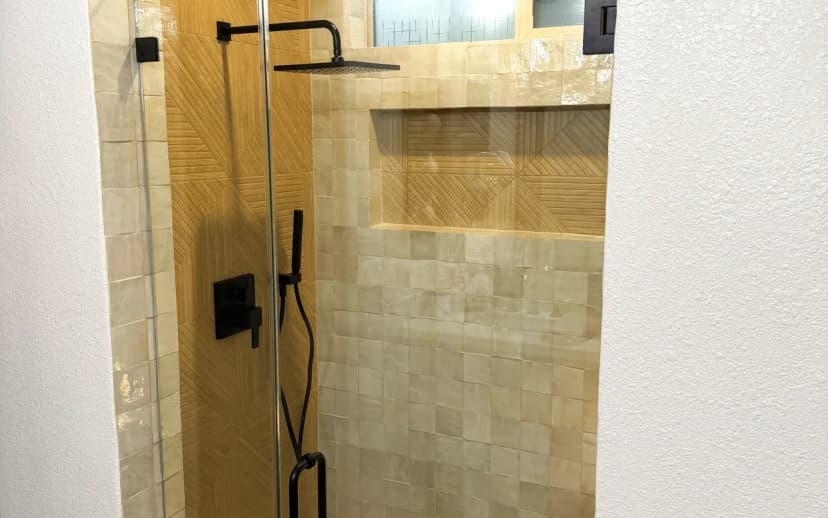
El Dorado Hills Small Bathroom Remodel: Smart Solutions for Guest and Secondary Baths

Galley Bathroom Layout: How to Maximize a Long, Narrow Space

Corner Shower Ideas for Small Bathrooms: Neo-Angle, Square & Curved Options
Get a Free Estimate
Call us at (916) 907-8782 or fill out our contact form.