Auburn Tub-to-Shower Conversion: The Most Popular Upgrade in Foothill Homes
Why Auburn homeowners are converting underused bathtubs into spacious walk-in showers — and how to do it right for your foothill home
Looking for bathroom remodeling in Auburn? View our Auburn service area page →
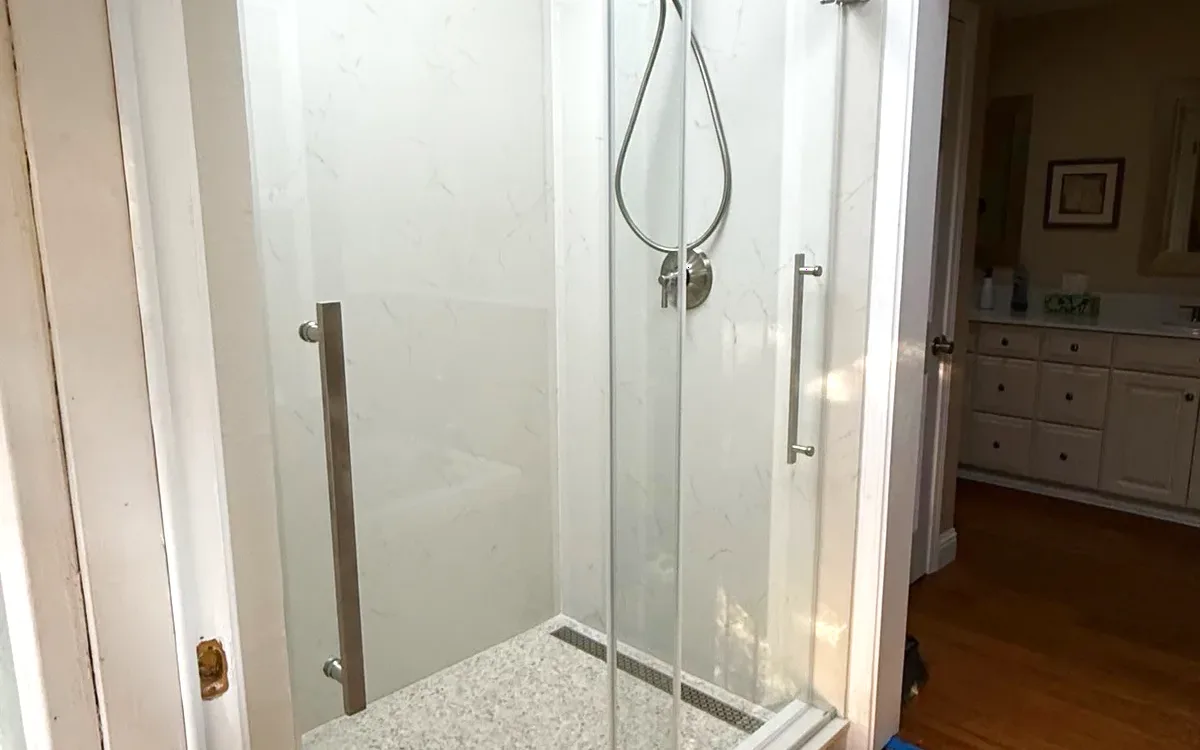
Tub-to-shower conversion in an Auburn home — the most requested upgrade we perform in the foothills
Why Auburn Homeowners Are Converting Tubs to Showers
Of all the bathroom upgrades we perform in Auburn, the tub-to-shower conversion generates the most consistent demand. It's not a trend — it's a practical response to how Auburn's population actually uses their bathrooms. And the reasons are deeply tied to Auburn's specific demographics, housing stock, and lifestyle.
Auburn has a significant and growing 55+ population. Many residents bought their homes decades ago when bathtubs were considered essential in every bathroom. Now, those same homeowners step over a tub wall every day to take a shower they wish were easier to access. The tub sits unused for bathing — it's become a shelf for shampoo bottles and a barrier to comfortable daily use. For aging Auburn residents, that tub wall isn't just inconvenient — it's increasingly dangerous.
The housing stock reinforces this pattern. Ranch homes from the 1960s through 1980s that populate neighborhoods along Bell Road, in Bowman, and throughout the broader Auburn area were built with a tub/shower combo in every bathroom. A typical 3-bedroom, 2-bath Auburn ranch home from 1975 has two tubs — and the family living there uses neither one for actual bathing. That's 20+ square feet of prime bathroom real estate dedicated to a fixture nobody uses.
Historic homes in Old Town Auburn and the Historic District face an additional challenge. Bathrooms in these pre-1960 homes are already small — often under 50 square feet. A 60-inch tub consumes the entire short wall and makes the room feel claustrophobic. Removing it and installing a walk-in shower with glass enclosure transforms the spatial perception of the entire bathroom, making it feel nearly twice as large.
The Auburn Tub Usage Reality
In our pre-project consultations with Auburn homeowners, we ask how often the tub is used for actual bathing (not showering). The answer is remarkably consistent: 85%+ of Auburn households with adults only report using their tub fewer than 5 times per year. For the 55+ demographic, that number drops to essentially zero. The tub-to-shower conversion simply aligns the bathroom with how it's actually used.
Which Bathroom to Convert: Master vs Guest Strategy
The strategic question every Auburn homeowner faces: which tub should go first? The answer depends on your household composition and long-term plans, but for most Auburn homes, the right sequence is clear.
Convert the Master Bathroom First
The master bathroom tub should be converted first in almost every scenario. This is the bathroom you use daily — it's where a walk-in shower has the greatest impact on your quality of life. A spacious, curbless or low-threshold shower with a rain head and handheld wand replaces a cramped tub/shower combo that you step over twice a day. The improvement is immediate and profound.
Keep One Tub for Resale and Function
The universal recommendation from real estate agents in Placer County is to maintain at least one tub in the home. Families with young children need a tub, and buyers with kids will notice if a home doesn't have one. In Auburn's market, where the median home price sits around $550,000 and family buyers are a significant segment, removing all tubs can narrow your buyer pool.
The ideal Auburn strategy: convert the master tub to a walk-in shower, keep the hall or secondary bathroom tub. If you have three or more bathrooms, you can safely convert two tubs and retain one. This approach maximizes your daily comfort while preserving resale flexibility.
The Exception: Single-Bathroom Homes
Some older Auburn homes — particularly cottages and bungalows in Old Town — have only one bathroom. Converting the sole tub to a shower is a personal decision that weighs daily convenience against resale. If you plan to stay long-term and don't need a tub, convert it. If resale is within 5 years, consider a tub/shower combo upgrade instead of full removal.
Step-by-Step Tub-to-Shower Conversion Process
Understanding what happens during a conversion helps you plan for the disruption and make informed decisions about scope and materials. Here's the process as we execute it in Auburn homes:
Day 1-2: Demolition
The existing tub, surround tile (or one-piece surround), and often the subfloor beneath the tub are removed. In Auburn's older homes, this is where we frequently discover cast-iron drain lines, galvanized supply pipes, and subfloor damage from decades of minor moisture exposure. This discovery phase is critical — it determines whether additional plumbing work and subfloor repair are needed before proceeding.
Day 3-4: Plumbing Modification
The tub drain is repositioned to the new shower drain location (typically center or linear along the back wall). The shower valve is relocated from the tub-height position to the appropriate shower-height position. In homes with older plumbing, we replace supply lines and drain connections with modern PEX and PVC. This is the phase that requires Placer County inspection.
Day 5: Subfloor and Waterproofing
The subfloor is reinforced or replaced as needed, then the shower pan is formed and waterproofed. We use Schluter KERDI or Laticrete Hydro Ban systems — sheet membrane or liquid-applied waterproofing that provides a continuous barrier beneath the tile. This is the most important step in the entire conversion. Waterproofing failure leads to structural damage, mold, and expensive repairs. It's also the step that separates professional installations from handyman-quality work.
Day 6-9: Tile Installation
Shower walls and floor are tiled over the waterproofing membrane. In Auburn's climate, we pay careful attention to thinset selection and cure times — summer temperatures above 100°F can flash-dry adhesive if the work area isn't controlled. Grouting follows tile installation with appropriate cure time between. Built-in niches and accent features are installed during this phase.
Day 10-12: Glass and Fixtures
The glass enclosure is measured (after tile is complete for precision fit), ordered, and installed. Frameless glass typically requires 5 to 10 business days for fabrication after measurement. Shower fixtures, trim, and accessories are installed. Final caulking and silicone sealing complete the waterproofing envelope.
Day 13-14: Finishing and Inspection
Touch-up paint, final accessories, and cleanup. Placer County final inspection confirms all work meets code. A thorough walkthrough ensures every detail meets your expectations before we consider the project complete.
Complete Cost Breakdown: $7,500 to $25,000
| Component | Budget | Mid-Range | Premium |
|---|---|---|---|
| Demolition & Disposal | $600 - $1,000 | $800 - $1,200 | $1,000 - $1,500 |
| Plumbing Modifications | $1,200 - $2,000 | $2,000 - $3,000 | $2,500 - $4,000 |
| Waterproofing & Pan | $800 - $1,500 | $1,500 - $2,500 | $2,000 - $3,500 |
| Tile (Walls & Floor) | $1,800 - $3,000 | $3,000 - $5,000 | $5,000 - $8,000 |
| Glass Enclosure | $800 - $1,500 | $1,500 - $3,000 | $3,000 - $5,000 |
| Fixtures & Trim | $500 - $1,000 | $1,000 - $2,000 | $2,000 - $3,500 |
| Total Range | $7,500 - $12,000 | $12,000 - $18,000 | $18,000 - $25,000 |
These ranges reflect actual Auburn project costs including the foothill premium. For a detailed breakdown of all bathroom remodel costs in Auburn, see our comprehensive Auburn bathroom remodel cost guide.
Design Options for Auburn Tub-to-Shower Conversions
Auburn homeowners tend toward design styles that complement their foothill setting — warm, natural, and grounded rather than cold and ultra-modern. Here are the most popular design approaches we see in Auburn conversions:
Rustic-Modern
The dominant aesthetic in Auburn bathroom design combines natural textures with clean modern lines. Wood-look porcelain tile on the shower floor or accent wall, paired with large-format neutral wall tile, creates warmth without sacrificing water resistance. Brushed gold or brushed nickel fixtures complement the natural palette. This style resonates with Auburn's character — it feels connected to the foothill landscape without being literally rustic.
Transitional
For Auburn homes that blend historic character with modern updates, a transitional design bridges both worlds. Subway tile with a twist — perhaps a 4x12 format in a warm white with a decorative border — paired with traditional-profile fixtures in modern finishes. This approach is particularly popular in homes along Lincoln Way and in the Historic District, where the bathroom should feel updated without clashing with the home's vintage architecture.
Contemporary
Newer homes in Auburn Lake Trails and Lake of the Pines lean toward cleaner, more contemporary design. Large-format rectified tile (24x48 or larger) in concrete or stone tones, linear drains, frameless glass from floor to ceiling, and matte black fixtures create a spa-like statement. These conversions typically fall in the premium cost tier but deliver dramatic visual impact. Check our Auburn design trends guide for more inspiration.
Curbless vs Standard Threshold: What Works in Auburn Homes
The curbless (zero-threshold) shower is the premium option that combines accessibility with modern aesthetics. But it's not right for every Auburn home. Here's how to decide:
Curbless works well when: The home has a raised foundation with crawl space access (common in older Auburn homes), allowing the subfloor to be modified for proper drainage slope. The bathroom floor area is large enough to accommodate the gradual slope from the shower area to the drain without creating a noticeable ramp. The homeowner values accessibility for current or future mobility needs.
Standard threshold works better when: The home is on a concrete slab where lowering the drain is expensive. The bathroom is very small (under 45 sq ft) where a curb provides necessary water containment. The budget is constrained — curbless engineering adds $1,500 to $3,000 to the conversion cost.
For Auburn's aging-in-place homeowners, the curbless option provides barrier-free shower entry that becomes increasingly valuable over time. It's an investment in long-term independence that also happens to look stunning.
Special Considerations for Older Auburn Homes
Auburn's housing stock includes a large number of homes built between the 1890s and 1960s, particularly in Old Town, the Historic District, and along the Lincoln Way corridor. These homes present specific challenges during tub-to-shower conversions:
- Cast-iron drain lines: Heavy, corroded, and often partially blocked. Replacement with PVC is typically necessary and adds $800 to $2,200.
- Galvanized supply lines: Corroded internally, reducing water pressure. Replacement with PEX adds $500 to $1,500 for the bathroom section.
- Inadequate subfloor: Original tongue-and-groove subfloors may be 3/4-inch or less, insufficient for tile without reinforcement. Adding cement board or plywood overlay costs $300 to $800.
- Non-standard framing: Older homes may have unusual stud spacing or wall construction that requires custom solutions for shower valve installation and waterproofing.
- Limited electrical: Many pre-1960 bathrooms lack dedicated circuits, GFCI outlets, and adequate ventilation. Code-compliant updates are required during renovation.
These aren't obstacles — they're standard considerations that experienced Auburn remodelers plan for. We budget for these discoveries and account for them in our project timelines. The result is a conversion that brings a historic Auburn home's bathroom into the 21st century while preserving the home's character.
Resale Impact in Auburn's Market
In Auburn's real estate market, a well-executed tub-to-shower conversion is one of the highest-impact upgrades you can make. Local real estate agents consistently report that updated walk-in showers are among the top features Auburn buyers look for — particularly in the $450,000 to $650,000 price range that represents the bulk of Auburn's market.
The ROI on a tub-to-shower conversion depends heavily on execution quality. A mid-range conversion ($12,000 to $18,000) in an Auburn home typically returns 65 to 75 percent of its cost at resale — better than most bathroom upgrades. A budget conversion with prefab shower pan and framed glass returns less because buyers can see the compromise. A premium conversion in a mid-range Auburn home risks over-improvement, where the cost exceeds what the market will return.
The sweet spot for Auburn resale is a mid-range conversion with porcelain tile, semi-frameless or frameless glass, quality fixtures, and a built-in niche. It photographs well for listings, appeals to a broad buyer demographic, and signals that the home has been thoughtfully maintained. For a full analysis, see our Auburn bathroom ROI guide.
Project Timeline and Scheduling in Auburn
A standard tub-to-shower conversion in Auburn takes 8 to 14 working days once construction begins. Add 7 to 14 business days for Placer County permit processing, 2 to 4 weeks for design consultation and material selection, and 5 to 10 business days for glass fabrication after tile is complete. Total elapsed time from initial consultation to completed project is typically 6 to 10 weeks.
Scheduling matters in Auburn. The peak construction season (May through September) sees the highest contractor demand and the longest lead times. If your project is flexible on timing, scheduling for October through March can mean faster availability and occasionally better pricing. However, be aware that winter rain can delay projects requiring exterior access, and Auburn's cold winter mornings (sometimes below freezing) can affect early-morning work schedules.
Common Mistakes to Avoid in Auburn Tub-to-Shower Conversions
- Removing all tubs. Keep at least one in the home for resale value and functional versatility.
- Choosing standard chrome fixtures. Auburn's hard water from PCWA degrades electroplated chrome quickly. Invest in PVD-coated finishes — the extra $200 to $600 per fixture saves hundreds in premature replacement costs.
- Skipping the permit. Placer County inspections catch plumbing deficiencies that could cause water damage later. The $400 to $700 permit cost is cheap insurance.
- Undersizing the shower. If the tub alcove is 60 inches, use the full 60 inches for the shower. Don't reduce it to add storage or extend the vanity — a spacious shower is the whole point of the conversion.
- Ignoring ventilation. Removing a tub and installing a larger shower area increases moisture production. Ensure the exhaust fan is rated for the room size and vented to the exterior, not into the attic.
- Choosing tile before choosing the drain. The drain type (center point vs linear) affects tile layout, floor slope, and the overall design. Decide on drainage first, then select tile that works with that system.
Frequently Asked Questions
Ready to Convert Your Auburn Tub to a Walk-In Shower?
Every tub-to-shower conversion starts with understanding your specific bathroom, your home's plumbing, and your design vision. Contact Oakwood Remodeling Group for a free in-home consultation where we'll assess your bathroom, discuss options, and provide a detailed quote.
Call us at (916) 907-8782 or request your free estimate online.
Related Reading
Auburn Walk-In Shower: Zero-Threshold Options
Curbless shower engineering for foothill homes.
Auburn Bathroom Remodel Cost 2026
Complete pricing guide for foothill bathrooms.
Auburn Aging-in-Place Bathroom Design
Safe, accessible, and beautiful bathroom solutions.
Auburn Bathroom Remodel ROI
How renovations impact foothill home values.
Tub-to-Shower Conversion Services
Our professional tub conversion services.
Get Your Free Estimate
Schedule your consultation today
Related Articles


Get a Free Estimate
Call us at (916) 907-8782 or fill out our contact form.