Auburn Walk-In Shower Installation: Zero-Threshold Options for Foothill Living
How curbless and zero-threshold showers are transforming Auburn bathrooms — engineering, design, and installation for foothill homes
Looking for bathroom remodeling in Auburn? View our Auburn service area page →
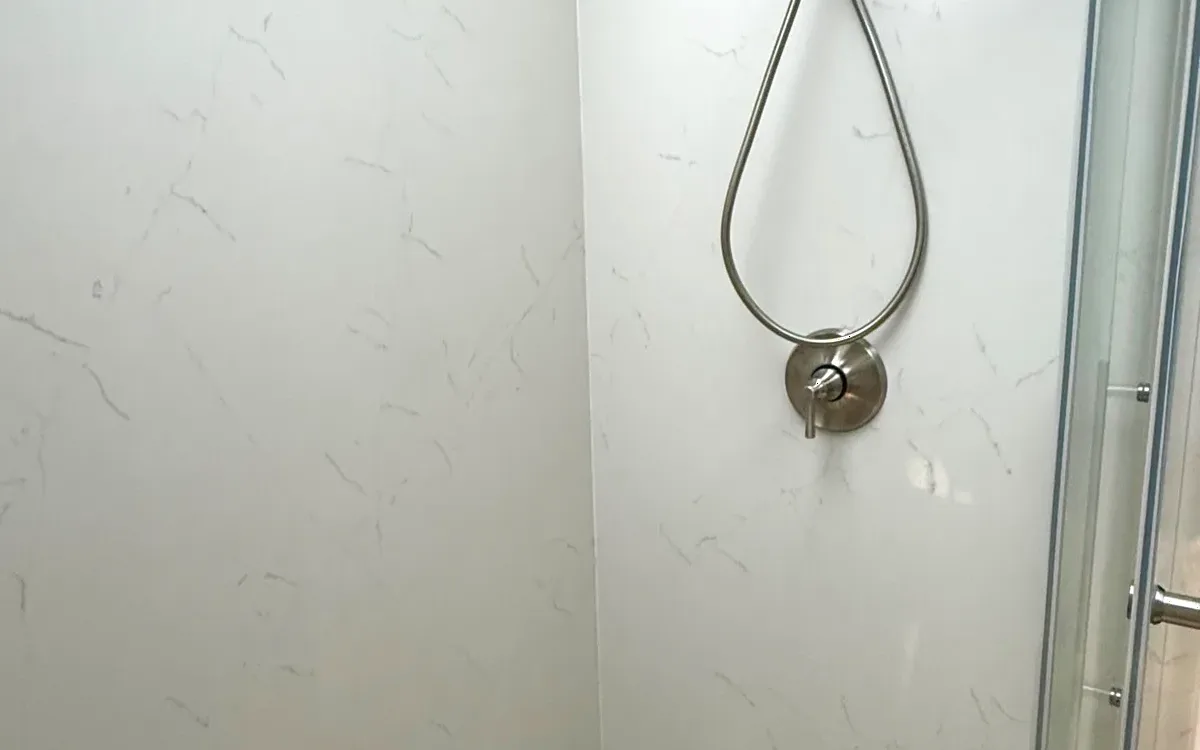
A zero-threshold walk-in shower in an Auburn home — seamless entry with modern design
What Is a Zero-Threshold Shower?
A zero-threshold shower — also called a curbless shower or barrier-free shower — eliminates the traditional raised curb or lip at the shower entry. Instead of stepping over a 4 to 6-inch barrier to get in and out, you walk (or roll) directly from the bathroom floor into the shower at the same level. The shower floor slopes gently toward a drain, typically a linear drain running along the back wall or threshold, capturing water before it can escape into the greater bathroom.
This isn't just an accessibility feature — it's a fundamental design philosophy that's reshaping how Auburn homeowners think about their bathrooms. A curbless shower makes a 60 square-foot bathroom feel like 80 square feet because the visual plane is uninterrupted. There's no line on the floor that divides "shower" from "bathroom." The entire room reads as one continuous space, especially when paired with frameless glass panels and consistent floor tile that runs from wall to wall.
For walk-in shower installations in Auburn, the zero-threshold option has moved from luxury exception to popular standard. Approximately 40 percent of our Auburn shower projects now include curbless design, up from roughly 15 percent five years ago. The demand is driven equally by aesthetic preference and practical accessibility needs.
Why Auburn Homeowners Choose Curbless Showers
Auburn's demographics and housing stock create a perfect environment for curbless shower demand. The town's significant 55+ population — many of whom bought their foothill homes decades ago and plan to age in place — sees barrier-free showers as essential for long-term independence. But the appeal extends far beyond accessibility.
Compact Bathrooms Need Visual Space
Auburn's historic homes and 1960s-1970s ranch homes often have bathrooms under 60 square feet. In these compact rooms, every visual trick matters. A curbless shower with frameless glass eliminates the visual barriers that make small bathrooms feel cramped. The continuous floor plane tricks the eye into perceiving a larger room. For Auburn's small bathroom remodels, this visual expansion is transformative.
Foothill Lifestyle Alignment
Auburn residents tend toward a lifestyle that values simplicity, natural materials, and spaces that feel connected to the outdoors. A curbless shower with natural stone or wood-look tile, paired with warm-toned fixtures, feels aligned with foothill living in a way that a boxy tub/shower combo never does. It's the bathroom equivalent of open-concept living — removing unnecessary barriers to create flow.
Future-Proofing Investment
Even Auburn homeowners in their 40s and 50s are choosing curbless design proactively. The reasoning is practical: if you're investing $15,000 to $30,000 in a shower remodel, why install a curb you may need to remove in 10 to 15 years? Building barrier-free from the start costs only $1,500 to $3,000 more than a curbed design — far less than retrofitting later.
Engineering a Curbless Shower in Auburn Homes
The engineering challenge of a curbless shower is straightforward in concept but demanding in execution: the shower floor must slope toward the drain while the surrounding bathroom floor remains level, and no water can escape the shower area. Here's how this is achieved in Auburn's different home types:
Raised Foundation Homes (Most Common in Auburn)
The majority of Auburn's older homes sit on raised foundations with crawl space access. This is actually the ideal scenario for curbless shower installation. The subfloor can be lowered in the shower area by notching or modifying floor joists from below, creating the necessary slope without raising the surrounding bathroom floor. A skilled framing crew can create a recessed shower pan area that accommodates 1/4-inch-per-foot slope across a 5-foot shower depth — a total drop of 1.25 inches — entirely within the existing floor system.
Slab Foundation Homes
Homes on concrete slabs — more common in Auburn's newer developments — require a different approach. The slab must be cut and excavated to lower the shower drain and create the slope. This involves concrete cutting, removal, new drain installation, and concrete patching. The process adds $1,500 to $3,000 to the project but produces excellent results. An alternative approach is to raise the bathroom floor slightly around the shower, creating a gradual ramp that transitions to the shower level.
The Slope Equation
The International Residential Code (IRC) requires a minimum slope of 1/4 inch per foot toward the shower drain. For a 5-foot deep shower, that means the shower floor drops 1.25 inches from the entry to the drain. This slope must be consistent and precise — too little slope causes water pooling, and too much slope feels uncomfortable to stand on and makes tile installation challenging. The ideal range for comfort and function is 1/4 to 3/8 inch per foot.
Engineering Note
The slope in a curbless shower is imperceptible when standing in it — you won't feel like you're on a ramp. A 1/4-inch-per-foot slope translates to roughly a 2-degree angle, which is below the threshold of human perception while standing. The water, however, responds to gravity at this slope perfectly, flowing consistently toward the drain without pooling.
Linear Drain Options and Selection
Linear drains are the cornerstone of modern curbless shower design. Unlike traditional center-point drains that require the floor to slope from all four directions (creating complex tile cuts and a "pyramid" floor), linear drains allow the floor to slope in a single direction. This simplifies engineering, improves tile aesthetics, and provides superior water capture at the shower threshold.
Threshold-Position Linear Drain
The most effective position for a curbless shower is at the shower entry — the threshold between the shower and the bathroom floor. Water flows from the back wall toward the entry and is captured by the linear drain before it can escape. This configuration provides the strongest defense against water migration and allows the entire shower floor to slope in one direction. For Auburn bathrooms where water containment is the priority, threshold-position drains are our standard recommendation.
Back-Wall Linear Drain
A linear drain positioned along the back wall creates a clean, hidden look — the drain is behind you while showering and less visible from the bathroom. However, this position means water must travel the full shower depth before reaching the drain, and the slope points away from the entry rather than toward a capture point at the threshold. This configuration works well in larger showers (48+ inches deep) where water has enough distance and slope to reach the drain before reaching the entry edge.
Drain Grate Styles for Auburn
Linear drain grates come in several styles, and Auburn's hard water conditions should influence your choice. Tile-insert grates (where a tile piece sits inside the grate, making the drain nearly invisible) look stunning but trap mineral deposits in the narrow channels. Slotted or wedge-wire grates are easier to clean and maintain in hard water areas. Brushed stainless steel grates resist corrosion from PCWA water and complement the warm metal tones popular in Auburn bathrooms.
Waterproofing: The Critical Layer You Never See
Waterproofing in a curbless shower is more critical — and more complex — than in a traditional curbed shower. Without a curb to act as a secondary water barrier, the waterproofing membrane is your sole defense against moisture migration into the subfloor, walls, and surrounding structure.
We use two primary waterproofing systems in Auburn curbless installations:
Schluter KERDI system: A sheet membrane bonded directly to the substrate with unmodified thinset. KERDI provides a continuous waterproof barrier across the shower floor, walls, and the critical transition zone at the shower entry. The system includes prefabricated corners, pipe collars, and drain interfaces that create a fully integrated waterproof envelope. It's our preferred system for most Auburn installations because it's been proven in thousands of applications and provides immediate waterproofing — no cure time required.
Laticrete Hydro Ban: A liquid-applied membrane that cures into a flexible, crack-bridging waterproof layer. Hydro Ban is applied by roller or brush and conforms to irregular surfaces, making it excellent for older Auburn homes with uneven subfloors. It requires 24 hours of cure time before tile installation but provides exceptional adhesion and flexibility. Particularly effective in homes where subfloor movement is a concern.
The waterproofing system must extend beyond the shower area in a curbless design. We waterproof a minimum of 6 inches beyond the shower boundary on the bathroom floor side, ensuring that any water that reaches the threshold zone encounters the waterproof membrane before it contacts unprotected subfloor. This "overlap zone" is what separates a properly engineered curbless shower from one that develops moisture problems over time.
ADA Compliance and Accessibility Features
For Auburn homeowners planning for aging in place, incorporating ADA-compliant elements during a walk-in shower installation is the most cost-effective approach. Retrofitting accessibility features later is significantly more expensive and disruptive.
Key ADA-compliant elements for residential walk-in showers include:
- Zero-threshold entry: No curb or barrier at the shower entrance.
- Minimum dimensions: 36x36 inches for transfer-type showers, 30x60 inches for roll-in showers.
- Grab bars: Installed in blocking-reinforced walls at specific heights (33-36 inches) and positions.
- Fold-down bench or built-in seat: At 17-19 inches above the shower floor.
- Handheld shower head: On an adjustable slide bar, reachable from a seated position.
- Anti-slip flooring: Tile with a coefficient of friction (COF) of 0.60 or higher.
- Lever-handle controls: Operable with one hand without tight grasping or twisting.
Smart Planning Tip
Even if you don't need grab bars today, install blocking (reinforced backing) inside the walls during your remodel. Blocking costs $100 to $300 during construction but saves $1,000+ if you need to add grab bars later without opening walls. It's invisible, costs almost nothing during an active remodel, and provides options for the future.
Design Options for Foothill Aesthetic
Auburn's design preferences lean toward materials and styles that reference the natural foothill landscape — warm tones, organic textures, and a connection to earth and stone. Here are walk-in shower designs that resonate with Auburn homeowners:
Natural Stone Look
Porcelain tile that replicates the look of natural stone — slate, travertine, limestone — in large-format sizes (12x24, 24x24, or larger) creates a grounded, organic feel. Warm gray and beige tones reference the granite and schist found throughout Auburn's foothills. Paired with brushed gold or oil-rubbed bronze fixtures, this approach creates a shower that feels like a natural grotto rather than a clinical enclosure.
Wood-Look Tile
Wood-look porcelain tile brings warmth to the shower without the moisture vulnerability of real wood. Used as an accent wall or shower floor, it creates visual warmth that complements Auburn's woodland setting. Popular formats are 6x36 or 8x48 planks in weathered oak or walnut tones. Pair with white or cream wall tile for contrast that keeps the shower feeling bright.
Minimal Contemporary
For Auburn's newer homes — particularly in Auburn Lake Trails and Lake of the Pines — a minimalist approach with large-format rectified tile (24x48 or 48x48), near-invisible grout lines, frameless glass from floor to ceiling, and recessed niches creates a spa-like experience. Matte finishes in concrete or stone tones pair with matte black or brushed nickel fixtures for a refined, contemporary look. See our 2026 design trends guide for more inspiration.
Glass Enclosure Options
Curbless showers work beautifully with several glass configurations. A full frameless enclosure (fixed panel + swinging door) provides maximum water containment. A single fixed glass panel (no door) creates an open, airy feel — this works in larger showers where splash doesn't reach the bathroom floor. A glass half-wall combines containment with openness. The choice depends on shower size, layout, and how much water containment your configuration requires.
Curbless Showers in Older Auburn Homes
Installing a curbless shower in a pre-1970 Auburn home requires specific expertise but is absolutely achievable. These older homes — found throughout Old Town, the Historic District, and along the Lincoln Way corridor — present unique challenges and unexpected advantages:
Advantage: raised foundations. Most pre-1970 Auburn homes have raised foundations with crawl space access. This allows the subfloor to be modified from below, making curbless shower engineering easier than in slab homes.
Challenge: older subfloors. Original tongue-and-groove subfloors may be only 3/4-inch thick and may have softened from decades of bathroom moisture. These subfloors typically need reinforcement (additional plywood layer) or selective replacement before a curbless shower can be installed on top.
Challenge: non-standard framing. Older homes may have irregular joist spacing or balloon framing that requires custom solutions for creating the shower pan slope. An experienced installer assesses the framing during demolition and adapts the engineering accordingly.
Advantage: compact bathrooms benefit most. The smaller the bathroom, the greater the visual impact of a curbless design. In a 40 square-foot bathroom, removing the tub curb and creating a seamless floor can make the room feel 50 percent larger. For Auburn's characteristically compact vintage bathrooms, this is the single most impactful design choice.
Cost by Configuration: $10,500 to $35,000
| Configuration | Cost Range | Includes |
|---|---|---|
| Standard Walk-In (low threshold) | $10,500 - $16,000 | Low curb entry, center drain, ceramic/porcelain tile, framed glass |
| Curbless with Linear Drain | $16,000 - $24,000 | Zero-threshold, linear drain, porcelain tile, semi-frameless glass |
| Premium Curbless | $24,000 - $35,000 | Zero-threshold, large-format tile, frameless glass, multiple heads, bench |
| ADA-Compliant (roll-in) | $18,000 - $30,000 | Zero-threshold, 30x60 min, grab bars, fold-down bench, handheld wand |
For comprehensive Auburn bathroom pricing across all project types, see our 2026 cost guide.
Maintenance in Auburn's Hard Water Conditions
Curbless showers in Auburn require slightly different maintenance approaches than in soft-water areas. PCWA's moderately hard water (3-7 grains per gallon) deposits calcium and magnesium on tile, glass, and drain grates. Here's how to maintain your walk-in shower in Auburn's conditions:
- Glass treatment: Apply a professional-grade glass protectant (EnduroShield or similar) at installation and reapply annually. This nano-coating causes water to sheet off rather than bead and dry, reducing mineral deposit formation by 70 to 80 percent.
- Linear drain cleaning: Remove and clean the linear drain grate monthly. Auburn's hard water deposits minerals inside the drain channels that can restrict flow over time.
- Grout sealing: Seal all grout lines at installation and reseal every 12 to 18 months. Auburn's hard water can penetrate unsealed grout and cause discoloration.
- Tile selection matters: Choose porcelain tile with a polished or semi-polished surface for walls — mineral deposits wipe off smooth surfaces more easily than textured ones. For floors, use textured tile for safety but choose lighter colors that camouflage white mineral deposits.
Frequently Asked Questions
Design Your Auburn Walk-In Shower
Every walk-in shower installation starts with understanding your bathroom's structure, your accessibility needs, and your design vision. Contact Oakwood Remodeling Group for a free in-home assessment.
Call us at (916) 907-8782 or request your free estimate online.
Related Reading
Auburn Tub-to-Shower Conversion
The most popular upgrade in foothill homes.
Auburn Aging-in-Place Bathroom Design
Safe, accessible bathroom solutions for Auburn.
Best Bathroom Tile for Auburn Homes
Materials that handle foothill climate conditions.
Auburn Bathroom Remodel Cost 2026
Complete pricing guide for foothill homes.
Walk-In Shower Installation Services
Our professional walk-in shower services.
Get Your Free Estimate
Schedule your consultation today
Related Articles
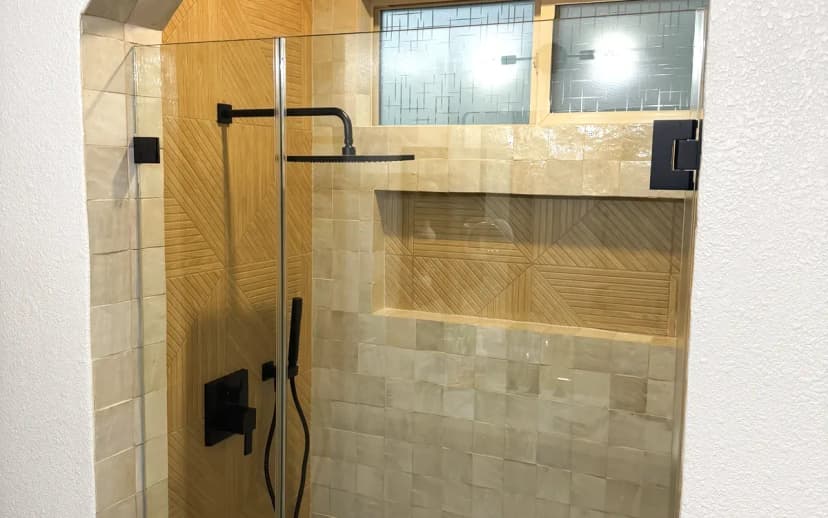
El Dorado Hills Walk-In Shower Installation: Curbless, Zero-Threshold & Barrier-Free

Vacaville Walk-In Shower Installation: Curbless and Barrier-Free Options

Fairfield Walk-In Shower Installation: Accessible and Modern Options
Get a Free Estimate
Call us at (916) 907-8782 or fill out our contact form.