How Auburn's Hard Water Affects Your Shower Fixtures (And What to Do About It)
Understanding mineral buildup, comparing fixture finishes, and protecting your investment in Auburn's hard water conditions
Looking for bathroom remodeling in Auburn? View our Auburn service area page →
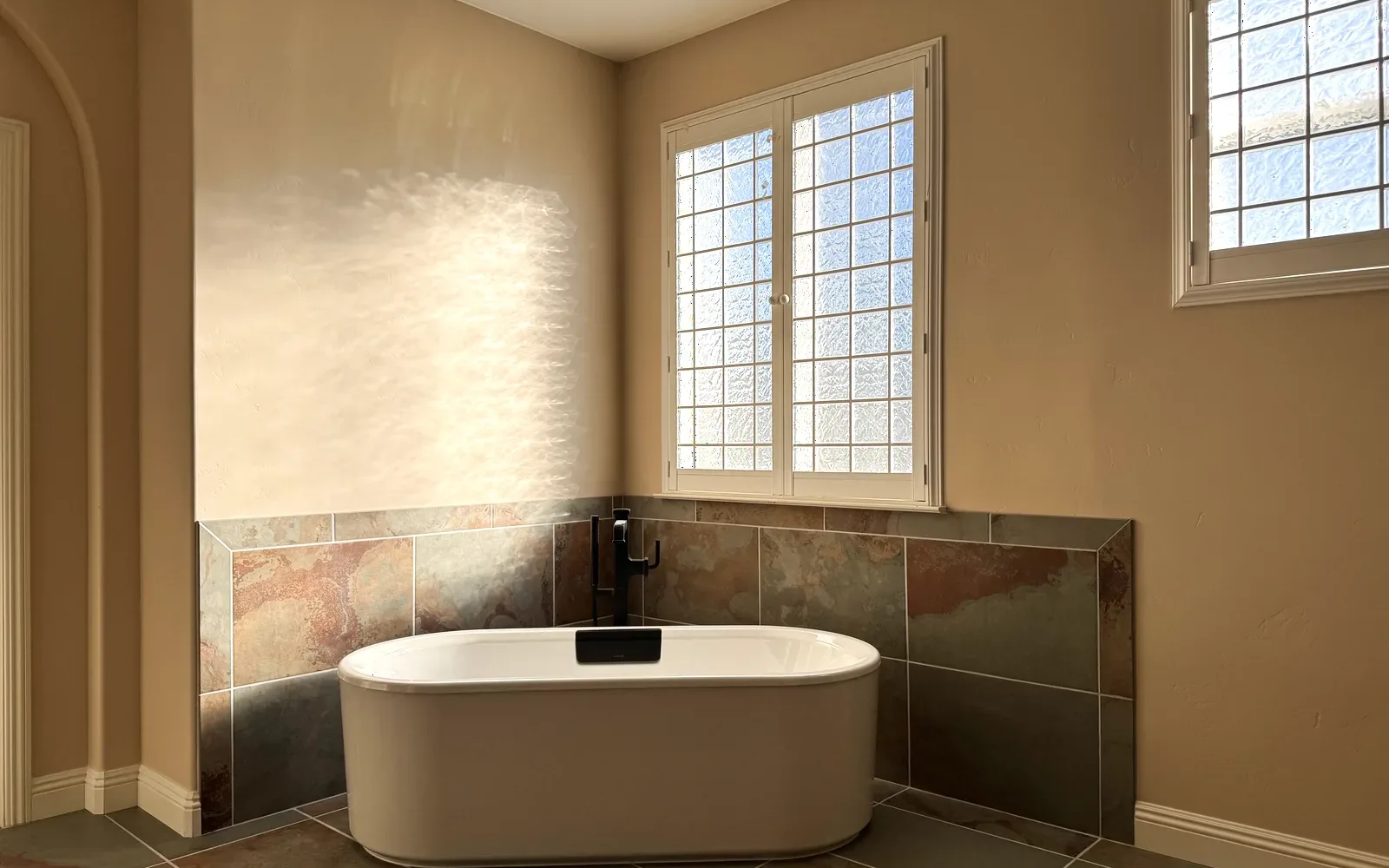
Hard water mineral deposits on Auburn shower fixtures: understanding the problem and choosing the right finish
Auburn's Water Supply: Where the Minerals Come From
If you've lived in Auburn for any length of time, you've noticed the chalky white film that gradually coats shower heads, faucets, and glass doors. That residue isn't dirt—it's dissolved calcium and magnesium left behind every time water evaporates from a surface. And in Auburn, the water carries enough of those minerals to make fixture selection one of the most consequential decisions in any shower remodeling project.
Auburn sits at the intersection of two major water providers. The Placer County Water Agency (PCWA) delivers treated surface water sourced primarily from the American River watershed, including water stored in French Meadows and Hell Hole reservoirs high in the Sierra Nevada. The Nevada Irrigation District (NID) serves portions of the Auburn area with water drawn from the Yuba and Bear River systems, stored in reservoirs like Scotts Flat and Rollins Lake. Both agencies deliver water classified as moderately hard—typically ranging from 3 to 7 grains per gallon (gpg) for PCWA and 2 to 5 gpg for NID service areas.
What makes Auburn's water hardness particularly variable is its seasonal fluctuation. During spring snowmelt, reservoirs fill with relatively soft runoff. By late summer and fall, water levels drop, concentrating dissolved minerals. Homeowners often notice more aggressive buildup on fixtures during autumn months—the same period when Auburn's hot, dry climate accelerates water evaporation on shower surfaces. This seasonal cycle means your fixtures endure months of heavier mineral exposure each year, accumulating damage that becomes visible over time.
Understanding Water Hardness in Auburn:
Water hardness is measured in grains per gallon (gpg). Auburn's PCWA supply averages 3-7 gpg and NID averages 2-5 gpg, placing both in the "moderately hard" category. For comparison, water below 1 gpg is considered soft, while anything above 10 gpg is very hard. Auburn's moderate hardness won't damage plumbing infrastructure quickly, but it deposits enough calcium carbonate on exposed fixture surfaces to cause cosmetic damage, reduce flow through shower heads, and degrade finishes prematurely if fixtures aren't selected and maintained appropriately.
How Calcium and Magnesium Damage Shower Fixtures
Hard water damage isn't just cosmetic—it's a progressive chemical and mechanical process. When Auburn's mineral-laden water contacts a fixture surface and evaporates, it leaves behind calcium carbonate (CaCO3) and magnesium deposits. Initially, these deposits appear as faint spots. Left unchecked, they build into thick, crusty layers that bond with the fixture finish at a molecular level.
The damage mechanism varies by fixture type. On shower heads, mineral deposits gradually obstruct spray nozzles, reducing water pressure and creating uneven spray patterns. Internal buildup can restrict flow enough to affect shower performance noticeably within 12 to 18 months in Auburn's water conditions. Shower valves and diverters accumulate deposits on internal cartridges and sealing surfaces, eventually causing stiff operation, dripping, or failure to maintain temperature settings.
On visible fixture surfaces—handles, trim plates, shower arms, and hand-held shower wands—mineral deposits attack the protective finish layer. Electroplated chrome and nickel finishes are most vulnerable because the plating is typically only 0.25 to 0.5 microns thick. Calcium deposits create micro-abrasion points where moisture gets trapped against the finish, accelerating corrosion underneath the plating. Over time, homeowners notice pitting, discoloration, and finish peeling—damage that's irreversible without fixture replacement.
Glass shower enclosures face their own hard water challenge. Mineral deposits etch into glass surfaces over time, creating permanent clouding that no amount of cleaning can remove. This is particularly problematic with frameless glass installations, where crystal-clear panels are the entire design aesthetic. Once etching occurs, the glass requires professional restoration or replacement—an expensive consequence of inadequate protection.
Chrome vs. Brushed Nickel vs. Matte Black: How Each Finish Handles Auburn's Water
When planning Auburn bathroom remodeling projects, fixture finish selection directly impacts long-term maintenance demands and appearance retention. Here's how the three most popular finishes perform in Auburn's hard water conditions:
Polished Chrome
Chrome remains the most common shower fixture finish, and for good reason—it's affordable, widely available, and coordinates with virtually any design style. In Auburn's hard water, chrome has a distinct advantage and disadvantage. The advantage: its mirror-like surface is non-porous and extremely smooth, making mineral deposits relatively easy to wipe away before they bond permanently. A quick post-shower wipe keeps chrome looking pristine.
The disadvantage: chrome's reflective surface makes every water spot and mineral trace immediately visible. Even a single shower without wiping leaves noticeable spots. For Auburn homeowners who prefer low-maintenance fixtures, this visibility creates a perpetual cleaning obligation. Traditional electroplated chrome is also the thinnest common finish—typically just 0.25 microns of chromium over a nickel base layer. Aggressive scrubbing to remove hardened mineral deposits can wear through the plating within a few years, exposing the dull nickel underneath.
Brushed Nickel
Brushed nickel has emerged as the preferred finish for Auburn-area shower remodels, and hard water performance is a primary reason. The directional brushed texture serves dual purposes: it diffuses light rather than reflecting it sharply, and it creates a surface pattern that visually camouflages water spots and light mineral deposits. Where chrome demands daily wiping, brushed nickel fixtures in Auburn homes can go several days between cleaning without looking neglected.
The warm, muted tone of brushed nickel also masks the yellowish cast that calcium deposits sometimes create on lighter finishes. Standard electroplated brushed nickel offers decent performance, but PVD (Physical Vapor Deposition) brushed nickel is dramatically superior in hard water conditions—a distinction we'll explore in detail below. For bathroom remodeling projects where clients want a finish that performs well with minimal effort, brushed nickel consistently delivers the best balance of aesthetics and practicality.
Matte Black
Matte black fixtures have surged in popularity for contemporary bathroom designs throughout Auburn and Placer County. In hard water conditions, matte black presents an interesting paradox. The dark, non-reflective surface doesn't show water spots the way chrome does—a significant daily maintenance advantage. However, dried calcium and magnesium deposits appear as white, chalky rings and streaks that create stark contrast against the dark finish.
The visual impact of hard water on matte black is arguably the most dramatic of any finish. While chrome shows subtle spots and brushed nickel hides them, matte black fixtures with mineral buildup look conspicuously neglected. The deposits stand out like white chalk marks on a blackboard. Regular cleaning prevents this, but Auburn homeowners choosing matte black should commit to consistent maintenance—typically wiping fixtures dry after every shower and performing thorough cleaning weekly.
Durability is another consideration. Many matte black finishes use powder coating or paint-based application methods rather than metallic plating. These organic coatings are more susceptible to chemical damage from acidic hard water cleaners. Using vinegar or commercial lime removers on powder-coated matte black fixtures can permanently damage the finish, creating a frustrating situation where the cleaning products needed to address hard water deposits can themselves harm the fixtures.
How different fixture finishes show hard water deposits: chrome (left), brushed nickel (center), and matte black (right)
PVD Coating: The Game-Changer for Auburn's Hard Water
Physical Vapor Deposition (PVD) represents the most significant advancement in fixture finish technology for hard water environments. Unlike traditional electroplating, which deposits a thin chemical layer onto a base metal, PVD uses a vacuum chamber process to bond finish material to the fixture at a molecular level. The result is a coating 10 to 20 times thicker than standard electroplating—typically 3 to 5 microns compared to 0.25 to 0.5 microns for conventional chrome.
For Auburn homeowners, PVD's advantages are substantial. The denser, harder surface resists mineral deposit adhesion, meaning calcium and magnesium don't bond as aggressively as they do to electroplated surfaces. When deposits do form, they release more easily with gentle cleaning—no abrasive scrubbing required. PVD finishes resist scratching, tarnishing, and corrosion far beyond traditional finishes, maintaining their original appearance through years of Auburn's hard water exposure.
Major fixture manufacturers including Moen (LifeShine), Delta (Brilliance), and Kohler (Vibrant) offer PVD finish lines. These finishes typically carry lifetime warranties against tarnishing and discoloration—warranties that manufacturers can confidently offer because PVD durability is genuinely exceptional. The premium over standard finishes runs 15-30%, but for Auburn's water conditions, the investment returns itself through dramatically reduced maintenance, longer fixture life, and sustained aesthetic quality.
When we install fixtures during bathroom remodeling in Auburn, we consistently recommend PVD finishes for any client who wants to minimize hard water maintenance. The upfront cost difference is modest compared to the long-term value of fixtures that still look new after a decade of daily use.
Ceramic-Coated Glass: Protecting Your Shower Enclosure
Frameless glass shower enclosures are the focal point of modern shower design, but they're also the most visible victim of hard water damage. Auburn homeowners who invest $1,500 to $3,000+ in frameless glass panels deserve protection against mineral etching and clouding. Ceramic-coated glass—sometimes marketed as "easy-clean glass" or by brand names like EnduroShield, Diamon-Fusion, and ShowerGuard—provides that protection.
Ceramic glass coatings work by filling the microscopic pores in glass surfaces with a hydrophobic (water-repelling) compound. Untreated glass appears smooth but is actually covered in tiny pits and valleys at the microscopic level—perfect anchoring points for mineral deposits. Ceramic coatings create a genuinely smooth surface that causes water to bead and sheet off rather than sitting and evaporating in place.
Factory-applied coatings like Guardian ShowerGuard are baked into the glass during manufacturing, creating permanent protection that never needs reapplication. After-market coatings like EnduroShield and Diamon-Fusion are applied to installed glass and typically last 3 to 10 years before requiring reapplication. Both approaches dramatically reduce mineral deposit formation in Auburn's water conditions, cutting cleaning time by an estimated 70-90% compared to untreated glass.
For Auburn shower remodeling projects, we strongly recommend factory-coated glass panels. The additional cost—typically $200 to $400 for a standard shower enclosure—prevents the permanent etching that untreated glass develops within 2 to 3 years of Auburn's hard water exposure. Once glass is etched, no coating can restore clarity. Protection must be applied before damage begins.
Maintenance Tips for Auburn Homeowners
Even with the best fixture finishes and coated glass, Auburn's hard water requires consistent maintenance habits to keep your shower looking its best. These practices protect your investment and prevent the progressive damage that leads to premature fixture replacement:
- • Daily Squeegee Habit: Keep a squeegee in the shower and wipe glass panels after every use. This single habit prevents 90% of hard water buildup on glass surfaces. It takes 30 seconds and saves hours of scrubbing later
- • Dry Fixtures After Use: A quick wipe with a microfiber cloth removes water from fixture surfaces before minerals can deposit. This is especially important for chrome and matte black finishes
- • Weekly Deep Clean: Use a pH-neutral bathroom cleaner (not vinegar or acidic products on stone or powder-coated finishes) to clean all fixture surfaces and glass. Spray, let sit 2-3 minutes, then wipe with a soft cloth
- • Monthly Shower Head Soak: Remove the shower head or submerge it in a bag of white vinegar for 2-4 hours to dissolve internal mineral deposits and restore full water flow
- • Avoid Abrasive Tools: Never use steel wool, abrasive pads, or powdered cleansers on fixture finishes. These scratch through protective coatings and accelerate corrosion in Auburn's mineral-rich water
- • Ventilation Matters: Run your bathroom exhaust fan during showers and for 20 minutes afterward. Reducing humidity speeds drying and minimizes the mineral residue left on surfaces
- • Inspect Caulk and Grout: Hard water deposits can hide deteriorating caulk joints. Check silicone caulk around fixtures and glass quarterly, recaulking when gaps appear
Cleaning Products to Avoid in Auburn's Hard Water:
Many Auburn homeowners reach for vinegar or CLR when they see mineral buildup—and for chrome or stainless steel, these acidic cleaners work fine. But never use acidic products on natural stone tile (marble, travertine, limestone), powder-coated matte black fixtures, or unsealed grout. Acid dissolves calcium in stone and grout just as readily as it dissolves calcium from water deposits. For stone showers with hard water buildup, use a stone-safe mineral deposit remover specifically formulated for natural stone surfaces.
Water Softener Considerations for Auburn Homes
The most effective way to protect shower fixtures from hard water damage is to treat the water itself before it reaches your bathroom. For Auburn homeowners investing in quality shower remodeling, a whole-house water softener can be the difference between fixtures that look new after ten years and fixtures that need replacement after five.
Salt-Based Ion Exchange Softeners
Traditional ion exchange softeners remain the gold standard for hard water treatment. These systems replace calcium and magnesium ions with sodium ions, producing genuinely soft water that leaves zero mineral deposits on fixtures and glass. For Auburn's moderate hardness levels, a properly sized salt-based softener runs efficiently with minimal salt consumption—typically 40 to 80 pounds of salt per month for a four-person household.
Installation costs range from $1,500 to $3,500 depending on system capacity and plumbing configuration. Auburn homes with accessible garage or utility room plumbing run toward the lower end. Homes requiring extensive plumbing modifications run higher. Annual operating costs—salt, water for regeneration, and occasional resin replacement—average $150 to $300.
Salt-Free Water Conditioners
Salt-free systems (technically "water conditioners" rather than softeners) use template-assisted crystallization (TAC) or catalytic media to alter the structure of calcium and magnesium molecules. Rather than removing minerals, they change the mineral crystal structure so deposits don't adhere to surfaces as aggressively. These systems cost $1,000 to $3,000 installed, require no salt, produce no wastewater, and need minimal maintenance.
For Auburn's moderate hardness, salt-free conditioners provide meaningful improvement—reducing visible deposits by an estimated 50 to 80%. They won't eliminate spots entirely the way a true softener does, but they significantly reduce maintenance burden and fixture wear. Many Auburn homeowners prefer salt-free systems because they maintain the mineral content of drinking water (some people prefer the taste) while still protecting fixtures and appliances.
Point-of-Use Shower Filters
For Auburn homeowners who aren't ready to invest in whole-house treatment, shower-specific filters offer a budget alternative. KDF and carbon-based shower filters ($20 to $80 per unit, with replacement cartridges every 2 to 6 months) reduce some mineral content and remove chlorine—improving both fixture longevity and the feel of shower water on skin and hair. However, shower filters are less effective at hardness reduction than whole-house systems and don't protect other bathroom fixtures, faucets, or glass.
The best approach for many Auburn homeowners: combine a whole-house water conditioner with PVD-finished fixtures and coated glass. This layered strategy addresses hard water at the source, uses finishes engineered for mineral resistance, and protects glass surfaces from etching. The total investment is moderate, and the combined result is a shower that maintains its like-new appearance with minimal ongoing effort.
Choosing the Right Fixtures for Your Auburn Shower Remodel
Based on years of experience with Auburn bathroom remodeling projects and observing how fixtures perform in local water conditions, here are our specific recommendations for Auburn homeowners:
- • Best Overall: PVD brushed nickel fixtures (Moen LifeShine, Delta Brilliance, or Kohler Vibrant lines). Superior hard water resistance, excellent aesthetics, lifetime finish warranties
- • Best for Modern Design: PVD matte black from reputable manufacturers (avoid unbranded imports with thin powder coatings). Ensure the finish is PVD-applied, not painted or powder-coated
- • Best Budget Option: Standard chrome from major manufacturers (Moen, Delta, Kohler). Chrome is affordable, easy to clean, and replacement cost is low when finishes eventually wear
- • Best Shower Head: All-metal construction with silicone spray nozzles. Silicone jets allow mineral deposits to be rubbed off with a finger—dramatically easier maintenance than fixed plastic nozzles
- • Best Glass Protection: Factory-coated glass panels (ShowerGuard or equivalent) with EnduroShield applied as secondary protection. Double-layer protection maximizes longevity in Auburn's water
The fixtures you choose during your shower remodel will interact with Auburn's water every single day for the next 10 to 20 years. Spending an additional $200 to $500 on PVD finishes and coated glass is one of the highest-return investments in any Auburn shower project—not because it adds resale value directly, but because it preserves the beauty and function of every other dollar you've invested.
Frequently Asked Questions About Hard Water and Shower Fixtures in Auburn
Planning a Shower Remodel in Auburn?
We help Auburn homeowners select fixtures, finishes, and glass coatings engineered to perform beautifully in local water conditions. Every shower remodel we install is designed with Auburn's water chemistry in mind.
Call (916) 907-8782 or request a consultation for your Auburn shower remodeling project.
Get Your Free Estimate
Schedule your consultation today
Related Articles
Get a Free Estimate
Call us at (916) 907-8782 or fill out our contact form.