Auburn Bathroom Vanity Upgrade: Styles, Materials & Storage for Every Budget
How to choose the right vanity for your Auburn foothill home — from countertop materials that resist hard water to styles that complement your home's character
Looking for bathroom remodeling in Auburn? View our Auburn service area page →
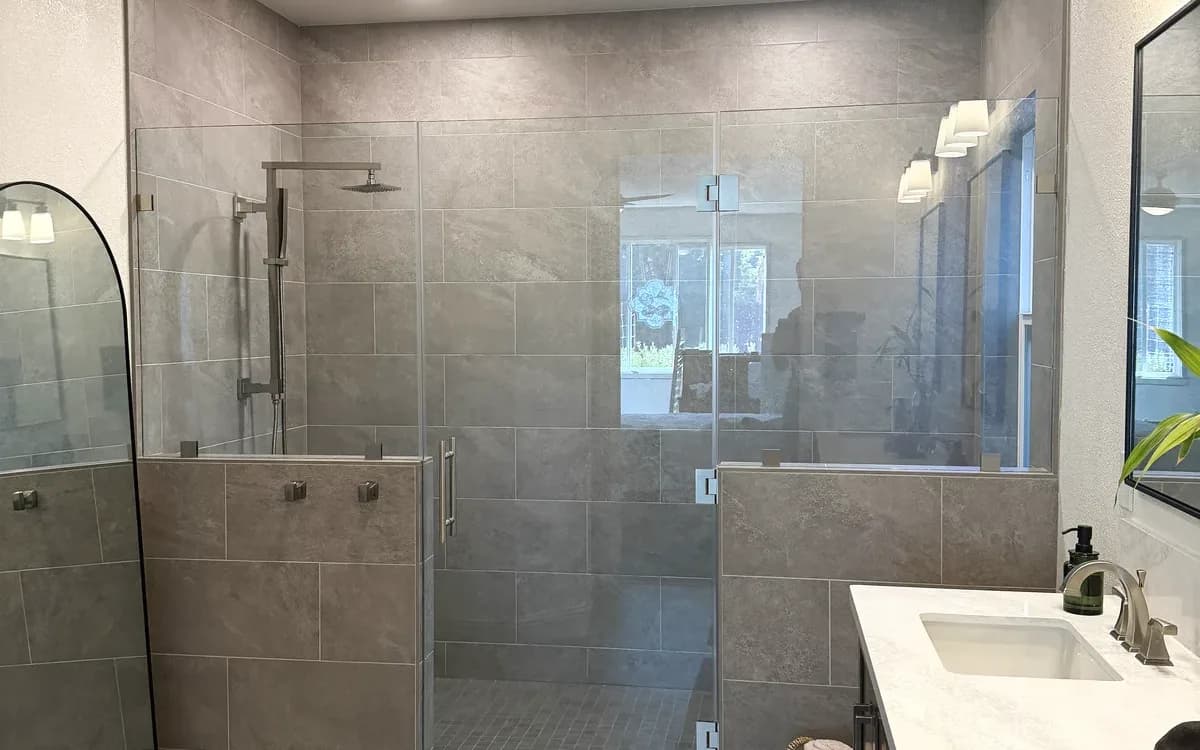
A rustic-modern vanity upgrade in an Auburn home — warm wood tones and quartz countertop suited to foothill living
Why the Vanity Is Your Bathroom's Centerpiece
Walk into any bathroom and your eye goes to the vanity first. It's the largest single fixture in the room, the one you face every morning and evening, and the one that sets the design tone for everything else. In Auburn bathrooms — whether it's a compact vintage bathroom in Old Town or a generous master bath in Auburn Lake Trails — the vanity is the anchor piece that defines the room's character.
A vanity upgrade is also one of the most impactful bathroom remodeling investments you can make. Unlike tile work or shower installations that require days of labor, a vanity swap can transform the entire look and feel of a bathroom in a fraction of the time. And in Auburn's real estate market, an updated vanity is one of the first things prospective buyers notice during a showing.
But choosing the right vanity for an Auburn home isn't just about aesthetics. It's about selecting a countertop material that handles Auburn's hard water from PCWA, choosing a size that works in Auburn's characteristically compact bathrooms, picking a style that complements your home's architecture, and maximizing storage in rooms where every inch counts.
Vanity Styles for Auburn Homes
Rustic-Modern (Most Popular in Auburn)
The dominant vanity style in Auburn homes combines warm natural materials with clean, modern lines. Think reclaimed wood or wood-look finishes in warm oak, walnut, or hickory tones, paired with simple hardware in brushed gold or matte black. The cabinet lines are clean — no ornate details — but the materials bring organic warmth that connects the bathroom to Auburn's foothill setting. This style works exceptionally well in homes throughout the Bell Road corridor, Bowman, and Christian Valley.
Transitional
For Auburn's historic homes — particularly in Old Town and the Historic District — transitional vanities bridge the gap between vintage character and modern function. Shaker-style door panels in warm white, soft gray, or navy blue provide classic structure while modern hardware and countertops bring the design into the present. Furniture-style legs or a console-style base give a freestanding, period-appropriate look. This style respects the home's history without making the bathroom feel dated. See our guide to 2026 design trends in Auburn for more style inspiration.
Contemporary
Newer Auburn homes — especially in Auburn Lake Trails and Lake of the Pines — gravitate toward contemporary vanities with flat-panel (slab) door fronts, integrated undermount sinks, and minimal hardware (push-to-open or finger-pull edge details). Colors tend toward warm neutrals — greige, taupe, soft white — rather than the stark white common in urban contemporary design. Wall-mounted floating installation is standard for contemporary vanities, creating the visual lightness that defines this style.
The Auburn Difference
Compared to Sacramento, Roseville, or Folsom, Auburn homeowners consistently choose warmer tones and more organic textures. Where a Roseville master bath might feature a bright white shaker vanity, the Auburn equivalent is more likely to be a warm wood tone or soft green. This preference reflects Auburn's foothill identity — bathrooms that feel connected to the natural landscape rather than disconnected from it.
Countertop Materials for Auburn's Hard Water Area
Auburn's water from PCWA is moderately hard (3-7 grains per gallon), which means the countertop material you choose will affect your daily maintenance burden significantly. Here's how each popular material performs in Auburn's conditions:
Quartz (Recommended for Auburn)
Quartz is the clear winner for Auburn bathrooms. As an engineered stone, quartz is completely non-porous — PCWA's mineral-laden water cannot penetrate the surface, and calcium deposits wipe off with a damp cloth. No sealing is required, ever. Quartz resists staining from cosmetics, toiletries, and cleaning products. It's available in hundreds of colors and patterns, including convincing marble and granite lookalikes. Cost: $50 to $120 per square foot installed. Our strong recommendation for any Auburn bathroom remodel.
Marble
Marble is undeniably beautiful, and it's the default aspiration for luxury bathrooms. In Auburn's hard water, however, marble demands significant maintenance. It's porous and must be sealed every 6 to 12 months. Hard water deposits bond to marble more aggressively than to quartz, and the acidic cleaners needed to remove calcium deposits (vinegar, lime removers) can etch the marble surface. If you choose marble for your Auburn vanity, commit to consistent maintenance — or consider quartz that mimics marble's appearance. Cost: $60 to $150 per square foot installed.
Granite
Granite performs reasonably well in Auburn's hard water when properly sealed. It's more forgiving than marble — less susceptible to etching from cleaning products — but still requires annual sealing to maintain stain resistance. Granite remains popular in Auburn homes for its natural beauty and durability. However, quartz has overtaken granite in new installations because it offers similar aesthetics with zero maintenance. Cost: $50 to $100 per square foot installed.
Solid Surface (Corian)
Solid surface countertops are non-porous, seamless (when integrated with the sink), and repairable if scratched. They perform well in hard water areas because mineral deposits can't penetrate the surface. The aesthetic range is more limited than quartz or natural stone, but for budget-conscious Auburn homeowners who want hard water resistance without the price of quartz, solid surface is a smart choice. Cost: $40 to $80 per square foot installed.
| Material | Hard Water Resistance | Sealing Required | Cost/Sq Ft |
|---|---|---|---|
| Quartz | Excellent | Never | $50 - $120 |
| Granite | Good (when sealed) | Annually | $50 - $100 |
| Marble | Fair | Every 6-12 months | $60 - $150 |
| Solid Surface | Excellent | Never | $40 - $80 |
Sizing Guide for Auburn Bathroom Layouts
Choosing the right vanity size for your Auburn bathroom is a balance between storage needs and maintaining adequate clearance. Here's our sizing guide based on Auburn's most common bathroom dimensions:
- 35-40 sq ft (Old Town vintage): 24-inch vanity maximum. Consider a wall-mounted sink console for the most compact spaces — it provides a countertop surface without the visual bulk of a full cabinet.
- 40-50 sq ft (1960s-70s ranch): 24 to 30-inch vanity. A 30-inch vanity with drawers provides meaningful storage while maintaining minimum 21-inch clearance in front.
- 50-65 sq ft (secondary bath): 30 to 36-inch vanity. This is the comfort zone where storage and space coexist easily.
- 65-90 sq ft (master bath): 36 to 48-inch single vanity, or 48 to 60-inch double vanity if the room width permits.
- 90+ sq ft (large master): 60 to 72-inch double vanity. Common in Auburn Lake Trails and newer developments.
Depth matters too. Standard vanity depth is 21 inches, but in tight Auburn bathrooms, an 18-inch depth vanity with a vessel or semi-recessed sink saves 3 inches of floor space without sacrificing functionality. Those 3 inches can be the difference between a bathroom that feels cramped and one that feels comfortable.
Freestanding vs Floating: What Works for Older Auburn Homes
Freestanding Vanities
Freestanding vanities sit on the floor like furniture — no wall mounting required. They're the simpler installation in Auburn's older homes where wall composition may be plaster over lath, non-standard framing, or degraded drywall. A freestanding vanity hides the plumbing connections behind its back panel and provides a finished, furniture-like look. Furniture-style vanities with exposed legs add visual lightness, though less than a floating vanity.
Floating (Wall-Mounted) Vanities
Floating vanities mount to the wall with a heavy-duty steel cleat or bracket system, leaving 8 to 12 inches of floor visible underneath. The visual impact in small Auburn bathrooms is dramatic — the room reads as wider and more open because the eye follows the floor plane under the vanity. Cleaning is easier too — no dust-collecting junction between vanity base and floor.
The installation caveat in older Auburn homes: floating vanities must attach to wall studs or blocking that can support the vanity weight plus a full countertop of water and toiletries (typically 100 to 200 pounds). Older plaster walls may need reinforcement. During a full bathroom remodel, this is straightforward — blocking is added during the rough-in phase. For a vanity-only swap in an older home, verify wall structure before committing to a floating design.
Sink and Faucet Options for Auburn Bathrooms
Sink Types
Undermount sinks are the most popular choice in Auburn vanity upgrades. The sink mounts below the countertop, creating a seamless edge that's easy to clean — water and debris wipe directly from counter to sink with no lip or rim to catch buildup. This is particularly valuable in Auburn's hard water, where mineral deposits accumulate at any edge or junction.
Vessel sinks sit on top of the countertop, adding visual height and creating a sculptural focal point. They work well on smaller vanities because the sink doesn't consume counter depth below the surface. However, vessel sinks create a higher overall work surface (counter height plus sink height), which may not suit all users. They also create an exposed junction between sink and counter where hard water deposits accumulate.
Integrated sinks — where the sink and countertop are one continuous piece — eliminate all junctions and seams. Available in solid surface and some quartz applications, integrated sinks are the most sanitary and lowest-maintenance option for Auburn's hard water. There's literally no edge or junction where minerals can build up.
Faucet Selection for Hard Water
For Auburn vanity upgrades, faucet finish matters as much as style. Brushed nickel and brushed gold in PVD finishes resist mineral deposits far better than standard electroplated chrome. Read our detailed guide on hard water fixture selection for Auburn. Wall-mounted faucets save countertop space and add a modern element — they're increasingly popular in Auburn remodels, particularly on 24 to 30-inch vanities where counter space is at a premium.
Storage Solutions and Organization
Storage is the make-or-break feature of any Auburn vanity. Many vintage Auburn bathrooms have pedestal sinks or basic builder-grade vanities with a single door and no organization — a dark cavern where toiletries go to get lost. Modern vanity design takes storage seriously:
- Soft-close drawers: Drawers provide better access than doors — you see everything from above without bending to peer into the back of a cabinet. Choose full-extension drawer slides so the entire drawer is accessible. Two stacked drawers organize items by type (daily use on top, reserves on bottom).
- Interior drawer dividers: Customizable dividers keep brushes, cosmetics, hair tools, and grooming supplies organized. Some vanity manufacturers offer built-in electrical outlets inside drawers for charging electric toothbrushes and razors.
- Pull-out trays: For vanities with door-style cabinets, pull-out trays convert the cabinet interior from an inaccessible cave to organized, visible storage.
- U-shaped drawer around plumbing: Well-designed vanities include a U-shaped cutout in the drawer behind the sink that wraps around the drain pipe, maximizing usable drawer space without compromising plumbing access.
Double Vanity Considerations for Auburn Master Baths
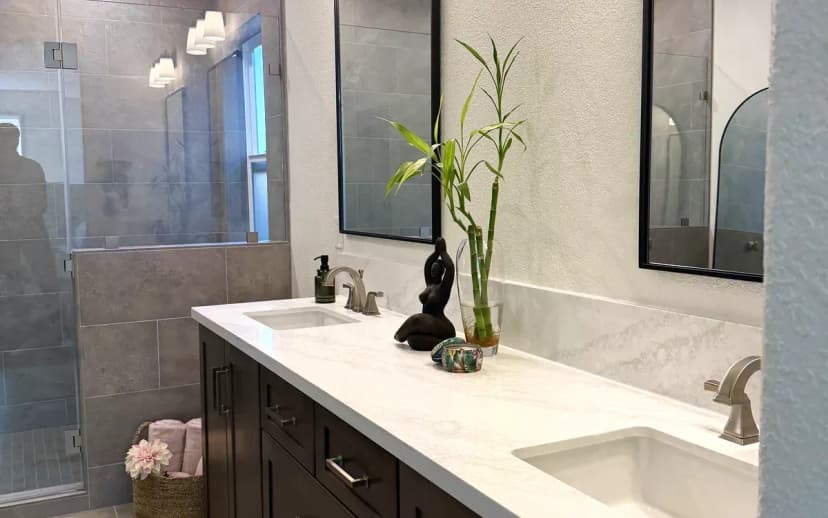
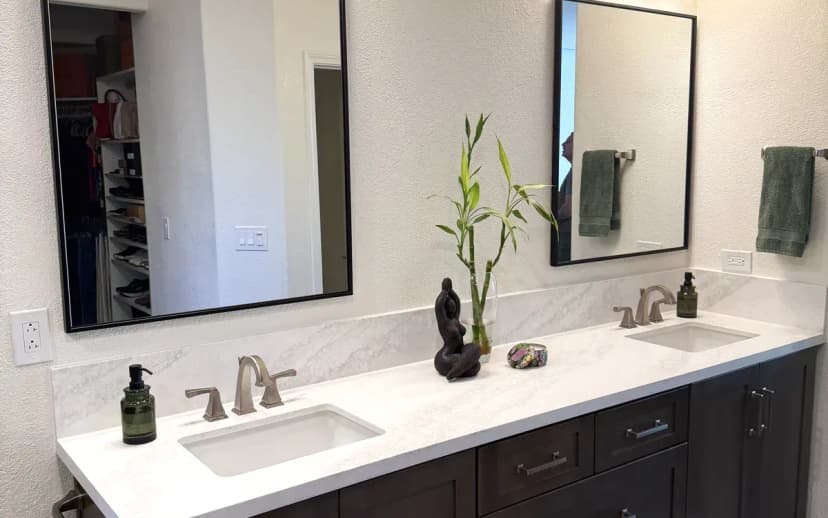
A double vanity is one of the most requested features in Auburn master bathroom remodels. Having dedicated space eliminates the morning routine competition and adds significant resale appeal. But a double vanity requires specific conditions:
Minimum wall width: A 48-inch double vanity is the smallest practical option, but 60 to 72 inches provides much more comfortable daily use. The vanity wall needs to be at least 6 inches wider than the vanity itself for proper installation and visual balance.
Plumbing considerations: A double vanity requires two drain connections and four supply lines (hot and cold for each sink). If your Auburn master bath currently has a single vanity, adding the second set of plumbing adds $1,500 to $3,000 to the project cost. In older Auburn homes, this may also require upgrading supply lines from galvanized to PEX.
Alternative: the "his and hers" layout. For Auburn master baths where a single long vanity wall isn't available, two separate single vanities on adjacent or opposite walls provide the same "my space" functionality in a different configuration. This layout can actually work better in irregularly shaped master baths common in Auburn's custom-built and older homes.
Complete Vanity Upgrade Cost Breakdown
| Vanity Tier | Vanity + Top | Sink + Faucet | Installation | Total |
|---|---|---|---|---|
| Budget | $500 - $1,200 | $150 - $400 | $300 - $500 | $950 - $2,100 |
| Mid-Range | $1,200 - $3,500 | $400 - $900 | $400 - $600 | $2,000 - $5,000 |
| Premium/Custom | $3,500 - $8,000 | $900 - $2,500 | $500 - $800 | $5,000 - $12,000 |
If plumbing needs to be relocated (different drain or supply locations than existing), add $1,500 to $3,500. For a comprehensive pricing overview, see our Auburn bathroom remodel cost guide.
Vanity-Only Upgrades: The Quick Win
Not ready for a full bathroom remodel? A vanity-only upgrade is one of the most cost-effective bathroom improvements available. If your existing tile, shower, and toilet are in acceptable condition, swapping the vanity alone can transform the bathroom's appearance in 1 to 2 days for $1,500 to $5,000.
The key requirements for a smooth vanity-only swap: the new vanity connects to the same drain and supply locations (no plumbing relocation), the wall behind the vanity is in good condition, and the floor beneath can be patched or is covered by the new vanity's footprint. When these conditions are met, the swap is quick, clean, and delivers an outsized visual impact for the investment.
Pair the vanity swap with a new mirror and light fixture for maximum impact with minimal cost. This three-element upgrade — vanity, mirror, lights — changes the entire visual plane of the bathroom for $2,000 to $6,000. It's a particularly popular approach in Auburn for homeowners preparing their homes for sale.
Frequently Asked Questions
Find the Perfect Vanity for Your Auburn Bathroom
From material selection to sizing to installation, we'll help you choose a vanity that looks beautiful, performs in Auburn's hard water, and fits your bathroom perfectly. Contact Oakwood Remodeling Group for a free consultation.
Call us at (916) 907-8782 or request your free estimate online.
Related Reading
Auburn Bathroom Design Trends 2026
What Auburn homeowners are choosing this year.
Auburn Hard Water Fixture Guide
Choosing fixtures that resist mineral buildup.
Auburn Small Bathroom Solutions
Space-saving strategies for compact bathrooms.
Auburn Bathroom Remodel Cost 2026
Complete pricing guide for foothill homes.
Bathroom Remodeling Services
Our complete bathroom renovation services.
Get Your Free Estimate
Schedule your consultation today
Get a Free Estimate
Call us at (916) 907-8782 or fill out our contact form.