Corner Shower Ideas for Small Bathrooms: Neo-Angle, Square & Curved Options
When floor space is limited, corners become your most valuable real estate. The right corner shower configuration can free up square footage you did not know you had while delivering a shower experience that feels anything but compact.
Looking for bathroom remodeling in Sacramento? View our Sacramento service area page →
Table of Contents
- 1. Why Corner Showers Work for Small Bathrooms
- 2. Neo-Angle Corner Showers
- 3. Square Corner Showers
- 4. Curved (Quadrant) Corner Showers
- 5. Corner Shower Sizing Guide
- 6. Glass Enclosure Options
- 7. Tile Strategies for Corner Showers
- 8. When Corner Beats Alcove
- 9. Cost Comparison by Configuration
- 10. Frequently Asked Questions

Here is a geometry lesson that pays off handsomely: every bathroom has four corners, and most of them are doing nothing. In a small bathroom — 40 to 60 square feet — reclaiming even one corner for a purpose-built shower can free up 6 to 10 square feet of usable floor space compared to a standard alcove tub or shower. That recovered floor area is enough for a wider vanity, more comfortable toilet clearance, or simply the ability to move around without bumping elbows.
Corner showers have evolved dramatically from the cheap fiberglass units of the 1990s. Today's corner shower configurations feature frameless glass, custom tile, linear drains, and thoughtful lighting that make them a genuine design feature rather than a space compromise. As part of our complete guide to small bathroom remodeling, this article covers every corner shower option, from neo-angle to curved, with real pricing from Sacramento-area projects.
Why Corner Showers Work for Small Bathrooms
The fundamental advantage of a corner shower is spatial efficiency. A standard 60-inch alcove tub occupies an entire wall — typically 60 inches of linear wall space and 30 to 32 inches of depth. That consumes roughly 13 square feet of floor area. A 36x36-inch corner shower occupies 9 square feet (or less with a neo-angle configuration), freeing 4+ square feet while keeping the two adjacent walls available for other fixtures.
In square or near-square bathrooms (6x6, 6x7, 7x7), a corner shower is almost always the best layout choice. Placing the shower in a corner pushes the wet zone into the least-trafficked area of the room while leaving the longest walls available for the vanity and toilet. This creates a natural traffic flow from the door to the vanity to the toilet to the shower — each fixture has its own zone without overlap.
Corner showers also create diagonal sight lines. When you enter the bathroom, your eye travels diagonally from the door to the opposite corner — the longest possible distance in a rectangle. A glass-enclosed corner shower at the end of that diagonal allows the eye to travel the full distance uninterrupted, which makes the room feel significantly larger than its dimensions suggest.
Neo-Angle Corner Showers
The neo-angle shower is the classic corner shower configuration, and for good reason — it makes the most efficient use of corner space while providing a comfortable entry angle. The shape consists of two walls meeting in the corner (your existing bathroom walls) and a single angled glass panel with a hinged or pivoting door.
Geometry and dimensions. A standard neo-angle shower has equal-length walls (36x36, 38x38, or 42x42 inches) with the front panel cut at a 45-degree angle. The angled panel is typically 24 to 30 inches wide, depending on the base size. This angled entry directs you into the center of the shower rather than forcing a straight-in step, which feels more natural in tight spaces.
Best for. Neo-angle showers work best in bathrooms where the door is on one of the walls adjacent to the shower corner. The angled opening faces the center of the room, providing easy access without blocking other fixtures. They also excel in very small bathrooms (under 45 square feet) because the diamond-shaped footprint minimizes wall consumption.
Pros. Efficient space use, distinctive architectural look, angled entry works well in tight layouts, available in sizes from 32x32 to 42x42 inches.
Cons. The angled footprint makes it harder to install a rectangular bench. Shower head placement requires careful planning to avoid spraying the door opening. Custom glass panels cost more than standard rectangular cuts.
Square Corner Showers
A square corner shower uses two walls plus two glass panels meeting at a 90-degree angle, forming a square enclosure in the corner. One of the glass panels serves as the door (sliding or hinged), while the other is a fixed panel.
Geometry and dimensions. Square corner showers typically range from 32x32 to 48x48 inches. The most common sizes for small bathrooms are 36x36 and 42x42 inches. Some installations use a rectangular variation (36x42 or 36x48) where the two glass-side dimensions differ.
Best for. Square corner showers provide the most interior volume per square foot of floor space. If you want room for a built-in bench, dual shower heads, or simply more elbow room, the square configuration delivers more usable interior space than a neo-angle of the same footprint. They work particularly well when paired with a sliding glass door, which eliminates the swing radius that a hinged door requires.
Pros. Maximum interior space, rectangular benches fit naturally, simpler glass fabrication (lower cost), works with sliding doors.
Cons. The 90-degree glass corner can feel like a visual barrier if the glass is framed. Requires slightly more floor space than a neo-angle of the same wall dimensions. The straight entry can feel abrupt in very tight layouts.
Curved (Quadrant) Corner Showers
Curved or quadrant corner showers replace the straight glass panels with a single curved glass panel. The shape is a quarter-circle when viewed from above, with the two straight sides against the walls and the curved glass forming the room-facing enclosure.
Geometry and dimensions. Curved corner showers are typically 36x36 or 38x38 inches at the wall dimensions, with the curved glass panel sweeping from one wall to the other. The curve reduces the effective floor area compared to a square of the same dimensions (roughly 78 percent of a full square), but the shape is more forgiving to traffic flow.
Best for. Bathrooms where the shower corner is near a traffic path. The curved glass eliminates sharp corners that you might bump into when moving past the shower. This makes curved showers an excellent choice for bathrooms with the toilet directly adjacent to the shower — the curve creates additional clearance where you need it most.
Pros. No sharp glass corners, smooth traffic flow past the enclosure, elegant appearance, softer visual profile than angular options.
Cons. Curved glass costs 30 to 50 percent more than flat panels. Less interior space than square configuration. Fewer base and door options available. Curved tile work inside the shower requires skilled installation. Replacing curved glass panels is more expensive than flat panels.
Corner Shower Sizing Guide
Choosing the right corner shower size depends on your bathroom dimensions and how much space you can allocate. Here is a practical sizing guide based on hundreds of Sacramento-area installations:
- 32x32 inches: Minimum size. Functional but tight. Best for powder room conversions or secondary bathrooms where the shower is used infrequently. No room for a bench.
- 36x36 inches: The sweet spot for small bathrooms. Comfortable for daily use by one person. Fits a small corner shelf or recessed niche but not a bench. This is our most popular size for bathrooms under 50 square feet.
- 38x38 inches: A meaningful upgrade from 36x36. The extra 2 inches per side adds roughly 1.5 square feet of shower floor area. Can accommodate a small triangular built-in bench. Works well in bathrooms of 50 to 60 square feet.
- 42x42 inches: A luxurious corner shower that rivals mid-size alcove showers in comfort. Room for a rectangular bench, dual niches, and comfortable movement. Requires a bathroom of at least 55 to 65 square feet to maintain adequate clearance around other fixtures.
The key measurement is clear floor distance between the shower enclosure and the nearest fixture (usually the toilet or vanity). Maintain at least 24 inches of clearance for comfort and 30 inches for code compliance in front of the toilet.
Glass Enclosure Options
The glass enclosure defines the visual impact of your corner shower. In a small bathroom, the right glass choice can make or break the sense of spaciousness.
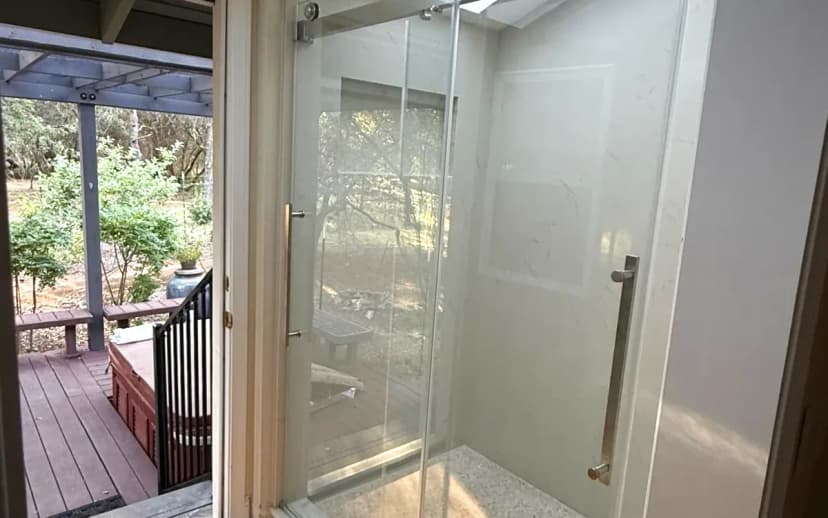
Frameless glass ($1,800 - $3,500). Frameless enclosures use 3/8-inch or 1/2-inch tempered glass with minimal hardware. The result is a nearly invisible barrier that allows the eye to see the tile work behind the glass. In a small bathroom, frameless glass is the most impactful upgrade because it eliminates the visual weight of metal framing. This ties directly into the visual expansion strategies that make small bathrooms feel bigger.
Semi-frameless glass ($1,200 - $2,200). Semi-frameless enclosures have a frame around the perimeter but frameless panels and doors. This provides more structural rigidity than fully frameless while maintaining a relatively clean look. A good middle-ground option for budget-conscious projects.
Framed glass ($800 - $1,500). Traditional framed enclosures have metal channels around every panel. They are the most affordable and easiest to install but create the most visual bulk. In small bathrooms, framed glass can make the shower feel like a separate compartment, which shrinks the perceived room size.
Tile Strategies for Corner Showers
Tile selection and layout inside a corner shower significantly affect how the shower and the overall bathroom feel. The primary goals are visual continuity, easy maintenance, and appropriate slip resistance.
Continue the bathroom wall tile into the shower. Using the same tile on bathroom walls and shower walls eliminates the visual boundary between the two areas. The shower becomes part of the room rather than a separate enclosure. This is one of the most effective design moves in a small bathroom.
Large-format wall tiles. A 12x24-inch tile on shower walls means fewer grout lines, which means less maintenance and a cleaner visual plane. In a 36x36 corner shower, you need only 6 to 8 tiles per wall course, compared to 18+ with a 4x4 tile. The visual difference is striking.
Shower floor tile. Use 2x2-inch mosaic or penny round tile for the shower floor. These small tiles conform to the slope toward the drain and provide excellent traction when wet. Linear drains allow slightly larger floor tiles (up to 4x4) because the floor slopes in only one direction.
Niche placement. In a corner shower, the best location for a built-in niche is on the wall opposite the shower head, at chest height. This keeps toiletries within easy reach without placing them in the direct water stream. Standard niche sizes (12x24 or 12x36 inches) fit between studs and integrate cleanly into the tile layout.
When Corner Beats Alcove
The choice between a corner shower and an alcove shower is not just about preference — it is about room geometry. Here is a decision framework based on the layouts we see most often in Sacramento-area homes:
Choose corner when: The bathroom is roughly square (6x6, 6x7, 7x7, 6x8). The door is on a long wall and a tub currently fills the opposite long wall. You want to add a vanity wider than 30 inches. The current layout feels cramped despite adequate total square footage.
Choose alcove when: The bathroom is a narrow galley shape (5x9, 5x10). The short end wall is the natural shower location. A galley bathroom layout with a full-width alcove shower at the end creates the best proportions. The existing plumbing is centered on the short wall.
Either works when: The bathroom is 7x8 or 8x8, providing enough space for either configuration. In these mid-size small bathrooms, the decision comes down to aesthetic preference and where the plumbing currently sits.
Cost Comparison by Configuration
Here is what each corner shower type costs installed in the Sacramento region in 2026, including demolition, waterproofing, tile, glass, fixtures, and labor:
- Neo-angle 36x36, framed glass, ceramic tile: $4,500 - $6,000
- Neo-angle 36x36, frameless glass, porcelain tile: $7,000 - $9,500
- Square 36x36, semi-frameless, porcelain tile: $5,500 - $7,500
- Square 42x42, frameless glass, porcelain tile: $8,500 - $11,000
- Curved 36x36, frameless curved glass, porcelain tile: $8,000 - $11,500
- Curved 38x38, frameless curved glass, large-format tile: $9,500 - $13,000
These costs are for the shower only. A complete small bathroom remodel that includes the shower, vanity, toilet, flooring, lighting, and finishing typically runs $12,000 to $25,000 depending on materials and scope. For the tightest budgets, see our micro bathroom renovation under $10K guide.
Frequently Asked Questions
Find the Right Corner Shower for Your Bathroom
Oakwood Remodeling Group designs and installs corner showers throughout the Sacramento region. We will measure your bathroom, evaluate plumbing positions, and recommend the configuration that maximizes your specific layout. Every corner shower installation includes custom waterproofing, precision tile work, quality glass, and our 3-year warranty.
Related Reading
Small Bathroom Remodel: The Complete Guide
Comprehensive guide to maximizing bathrooms under 60 sq ft.
Galley Bathroom Layout Guide
Optimizing long, narrow bathroom spaces.
Small Bathroom Storage Solutions
Creative storage for compact spaces.
12 Visual Tricks for Small Bathrooms
Design strategies that expand perceived space.
Shower Remodel Services
Our professional shower renovation services.
Get Your Free Estimate
Schedule your consultation today
Related Articles

Galley Bathroom Layout: How to Maximize a Long, Narrow Space

Small Bathroom Storage Solutions: Where to Put Everything in Under 50 Sq Ft
Auburn Small Bathroom Remodel: Space-Saving Solutions for Compact Foothill Homes
Get a Free Estimate
Call us at (916) 907-8782 or fill out our contact form.