5 Tile Patterns That Transform Orangevale Bathrooms
Looking for bathroom remodeling in Orangevale? View our Orangevale service area page →
Table of Contents
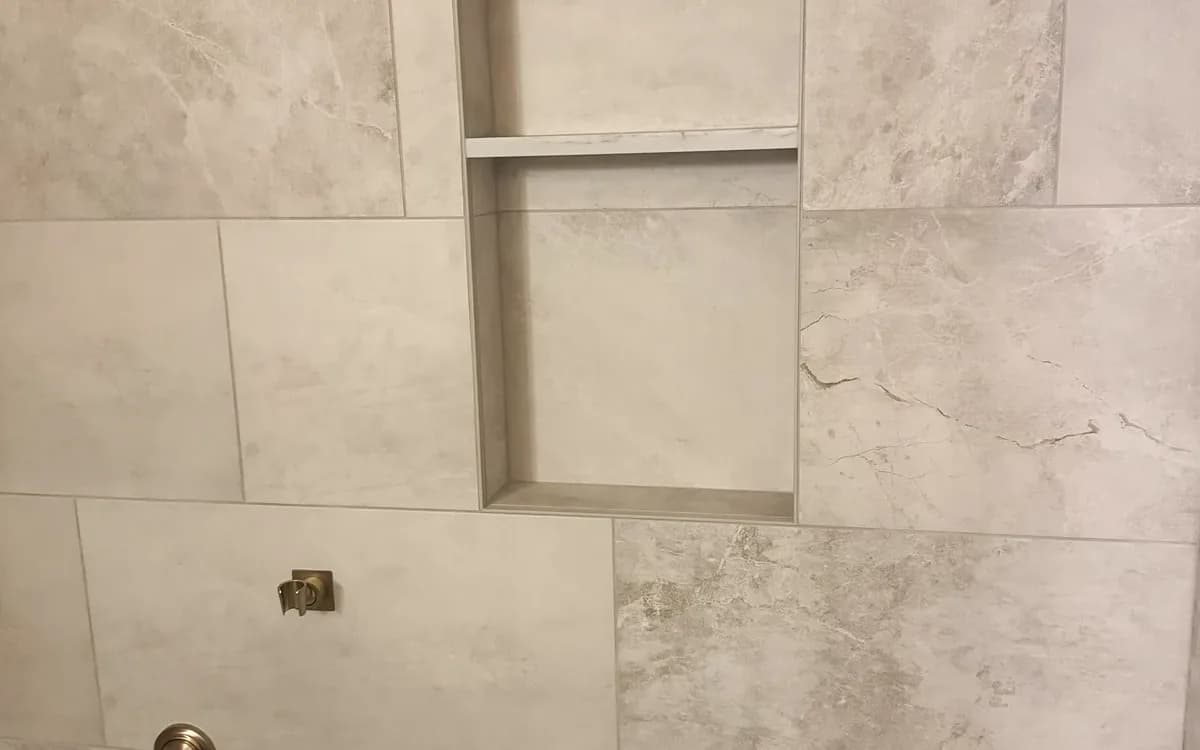
The right tile pattern can completely transform the look and feel of your Orangevale bathroom, turning ordinary spaces into design-forward retreats.
Walk into two bathrooms with the exact same tile—same color, same size, same material. Now lay one in a standard running bond and the other in herringbone. The difference is remarkable. The herringbone bathroom feels sophisticated, dynamic, and intentionally designed. The running bond bathroom feels... fine. Functional. Forgettable.
That's the transformative power of tile patterns. In Orangevale, where homes range from 1970s ranch-style houses along Hazel Avenue to newer builds in the Fair Oaks–Orangevale corridor, the right tile pattern can elevate a standard bathroom into something that feels custom-designed and magazine-worthy. And here's the exciting part: the tile itself often costs the same regardless of pattern. It's the installation method that creates the transformation.
We've installed thousands of square feet of tile in bathrooms across Orangevale and the greater Sacramento region. These five patterns consistently deliver the biggest visual impact for the investment, and each creates a distinctly different mood in the finished bathroom remodel.
The Power of Tile Patterns
Before diving into specific patterns, let's understand why patterns matter so much in bathroom design. Tile is typically the largest visual element in a bathroom—covering the shower walls, floor, and often accent areas. Unlike paint (which is flat and uniform) or wallpaper (which is two-dimensional), tile has physical depth, texture, and dimension created by grout lines. The arrangement of those grout lines is what creates the pattern, and the pattern is what gives the bathroom its character.
Patterns also affect spatial perception. Horizontal patterns make spaces feel wider. Vertical patterns draw the eye upward, making ceilings feel taller. Diagonal patterns create visual energy and can make small spaces feel larger. Large-format tiles with minimal grout lines create a seamless, spa-like feel. Small tiles with more grout lines add texture and visual interest.
Choosing the right pattern is one of the most impactful decisions in your bathroom design. Let's explore the five patterns that consistently transform Orangevale bathrooms.
Pattern #1: Herringbone — The Timeless Showstopper
Herringbone arranges rectangular tiles in a V-shaped zigzag pattern, with each tile set at a 45-degree angle to the one beside it. Named for its resemblance to the skeleton of a herring fish, this pattern has been used in architecture for centuries—from ancient Roman roads to European parquet floors. In 2026, it's the most requested tile pattern for bathroom remodels across the Sacramento region.
Why Herringbone Works
- Visual movement: The zigzag pattern creates dynamic energy that draws the eye and makes the surface feel alive. A plain white subway tile in herringbone pattern looks completely different from the same tile in a standard running bond.
- Timeless appeal: Unlike trendy patterns that date quickly, herringbone has centuries of design heritage. It feels both classic and contemporary, ensuring your bathroom looks relevant for decades.
- Versatility: Herringbone works on shower walls, bathroom floors, accent walls, and backsplashes. It works equally well in traditional, transitional, and modern bathroom designs.
- Scale flexibility: Small subway tiles (3x6) in herringbone create a delicate, intricate pattern. Larger tiles (4x12 or 3x12) create a bolder, more dramatic herringbone. Even large-format tiles (6x24) work in herringbone for a contemporary effect.
Best Applications in Orangevale Bathrooms
Herringbone is most impactful as a shower feature wall—the wall you see when you look into the shower. Using herringbone on all three shower walls can feel busy; save it for the focal wall and use a complementary running bond on the side walls. On floors, herringbone creates a beautiful effect but requires more cuts and generates more waste (budget an extra 15-20% for material).
Installation Considerations
Herringbone is more labor-intensive than straight patterns. Each tile must be precisely cut at 45 degrees where it meets walls, corners, and edges. The pattern requires careful planning to ensure the V-pattern stays centered and symmetrical. A skilled tile installer can complete a herringbone shower wall in 1.5-2 days versus 1 day for a running bond pattern. This adds approximately 20-30% to installation labor costs.
Pattern #2: Chevron — The Modern Edge
Chevron is often confused with herringbone, but there's a key difference. In herringbone, rectangular tiles meet to form a broken zigzag. In chevron, tiles are cut at an angle so they meet to form a continuous V or arrow shape. The result is a cleaner, more modern look with sharper lines and a stronger directional feel.

Chevron tile patterns create a sharp, modern aesthetic with clean V-shaped lines that add directional energy to bathroom walls and floors.
Why Chevron Works
- Contemporary edge: Chevron feels more modern and intentional than herringbone. The continuous V-lines create a graphic quality that appeals to design-forward homeowners.
- Directional control: Vertical chevron draws the eye upward, making ceilings feel taller. Horizontal chevron creates a sense of width. This directional control is powerful in small bathrooms where spatial perception matters.
- Statement-making: Chevron is bold enough to serve as the primary design element in a bathroom. Pair it with simple, solid-color tiles on other surfaces and let the chevron do the talking.
Installation Notes
Chevron requires specialty tiles that are pre-cut at specific angles (typically rhombus or parallelogram shapes). These cost more per square foot than standard rectangular tiles because of the manufacturing process. Installation labor is similar to herringbone—approximately 20-30% more than straight patterns. The precision required for chevron's clean lines means this pattern demands an experienced installer.
Pattern #3: Hexagonal — The Character Builder
Hexagonal tiles—six-sided shapes that tessellate naturally—bring an organic, honeycomb-like quality to bathroom surfaces. Available in sizes from tiny 1-inch penny hexagons to dramatic 10-inch large-format hexagons, this pattern offers tremendous design flexibility.
Why Hexagonal Works
- Vintage charm with modern appeal: Small hexagonal tiles (1-2 inch) evoke the classic bathrooms of the early 1900s. Large hexagonal tiles feel contemporary and edgy. Mid-size hexagons offer a balanced, transitional look.
- Natural flow: Unlike rectangular tiles that create rigid grid lines, hexagonal tiles create a softer, more organic visual pattern. The six-sided shape produces an interesting interplay of grout lines that adds depth without feeling busy.
- Color play: Hexagonal tiles are available in mixed-color packs that create random, mosaic-like patterns within the hexagonal layout. This creates unique, one-of-a-kind floors that become conversation pieces.
- Shower floor excellence: Small hexagonal tiles (1-2 inch) are ideal for shower floors because they conform to the slope toward the drain and provide excellent traction through their numerous grout lines.
Best Applications
Large hexagonal tiles (6-10 inch) work beautifully on bathroom floors, creating a bold geometric statement. Small hexagonal tiles excel on shower floors where slip resistance and drain conformity are critical. Mid-size hexagons (3-4 inch) can serve as accent bands in showers or as a feature on one wall. For Orangevale bathrooms in older homes, small white hexagonal floor tile with dark grout creates a classic look that complements the home's character while feeling completely fresh.
Pattern #4: Large-Format Stacked — The Spa Minimalist
Large-format tiles (typically 12x24 inches or larger) arranged in a simple stacked pattern—where grout lines align perfectly in a grid—create a clean, modern, spa-like aesthetic. This pattern has surged in popularity as homeowners seek the minimalist luxury feel of high-end hotel bathrooms.
Why Stacked Large-Format Works
- Fewer grout lines: Larger tiles mean fewer grout joints, creating cleaner visual planes and making the space feel more expansive. A 12x24 tile covers four times the area of a 6x12 tile, meaning 75% fewer grout lines.
- Space enhancement: In smaller Orangevale bathrooms (common in homes built in the 1970s-1990s), large-format tiles trick the eye into perceiving more space. The continuous surface reads as larger than the same area covered in small tiles.
- Easier maintenance: Less grout means less grout to clean and maintain. For busy Orangevale families, this practical advantage is significant.
- Material showcase: Large tiles show more of the tile's surface pattern. This is especially impactful with natural stone looks, marble veining, and concrete-effect porcelain where the beauty is in the tile's surface design rather than the pattern layout.

Hexagonal tiles bring organic character to bathroom floors, combining vintage charm with modern design sensibility in Orangevale bathroom remodels.
Installation Precision
Stacked patterns demand perfect alignment. Any deviation in grout line straightness is immediately visible because the human eye naturally follows the grid. This means the wall substrate must be perfectly flat (no waviness), the tile must be set with precise leveling systems, and cuts at edges must be exact. A quality tile leveling system (like Levtec or Raimondi) is essential for stacked large-format installation.
Large tiles also require a large-notch trowel and full back-buttering to ensure complete adhesion—partial adhesion can lead to cracked tiles under load. For shower wall applications, the weight of large tiles requires faster-setting thinset to prevent slippage during installation.
Pattern #5: Basket Weave — The Artistic Statement
Basket weave pattern alternates pairs of rectangular tiles in perpendicular orientations, creating a woven appearance that resembles interlaced strips of a basket. It's one of the most visually intricate tile patterns and creates an immediate focal point in any bathroom.
Why Basket Weave Works
- Artistic sophistication: Basket weave immediately reads as a custom, designer choice. It tells visitors that thought and intention went into the bathroom design—not just a standard tile layout.
- Texture creation: The alternating perpendicular tiles create a subtle three-dimensional quality that catches light differently across the surface, adding visual depth that flat patterns lack.
- Two-tone potential: Basket weave looks particularly stunning with two contrasting colors—for example, white tiles for the horizontal pairs and gray for the vertical pairs. This creates a bold geometric effect that defines the space.
Best Applications
Basket weave works best as an accent—a shower niche, a feature strip in the shower, or a bathroom floor. Using it on an entire large wall can feel overwhelming. The sweet spot is a 12-24 inch accent band running horizontally through the shower at eye level, framed by simpler tiles above and below. This creates a jewelry-like effect that elevates the entire design without overwhelming it.
Choosing the Right Pattern for Your Orangevale Bathroom
The right pattern depends on your bathroom's size, your design style, and your budget. Here's a decision guide:
| Your Situation | Best Pattern | Why |
|---|---|---|
| Small bathroom | Large-format stacked | Fewer grout lines enlarge the space |
| Traditional style home | Herringbone or small hex | Classic patterns honor the home's character |
| Modern/contemporary | Chevron or stacked | Clean lines, bold geometry |
| Want a statement piece | Basket weave accent | Maximum visual impact as a focal point |
| Budget-conscious | Herringbone | Uses standard tiles, dramatic result |
| Low maintenance priority | Large-format stacked | Minimum grout to clean |
Cost Comparison by Pattern
Here's how tile pattern choice affects your Orangevale bathroom remodel budget (installation labor only—tile material cost remains the same):
| Pattern | Install Cost/sqft | Waste Factor | Difficulty |
|---|---|---|---|
| Running bond (standard) | $8–$12 | 10% | Standard |
| Large-format stacked | $10–$14 | 10% | Moderate |
| Herringbone | $10–$16 | 15–20% | Advanced |
| Chevron | $10–$16 | 12–15% | Advanced |
| Hexagonal | $10–$15 | 12–15% | Moderate |
| Basket weave | $12–$20 | 15–20% | Expert |
For a typical 100-square-foot master bathroom, the difference between the simplest and most complex patterns is approximately $400-$800 in installation costs—a modest premium for a dramatically more impressive result.
Orangevale Style Trends
Orangevale's housing stock and community character create specific tile pattern preferences. Here's what we're seeing in the most popular Orangevale neighborhoods:
- Fair Oaks Village–adjacent areas: Homeowners in these older, character-rich neighborhoods tend to gravitate toward herringbone and hexagonal patterns that honor the home's vintage character while feeling thoroughly updated.
- Oak Avenue–Greenback corridor: Homes in this area often have mid-century and 1980s layouts. Large-format stacked tiles work beautifully here, creating a spa-like feel that contrasts nicely with the home's existing character.
- Newer Orangevale builds: Contemporary homes benefit from chevron accents and bold geometric patterns that complement modern architecture.
Regardless of pattern choice, the Sacramento region's current design preferences lean toward neutral color palettes—whites, grays, warm beiges, and natural stone looks. These neutrals pair beautifully with all five patterns and ensure your bathroom maintains broad appeal for years to come.
Frequently Asked Questions
Transform Your Orangevale Bathroom with Expert Tile Design
Oakwood Remodeling Group's tile specialists help Orangevale homeowners choose the perfect pattern for their bathroom style and budget. See the difference expert tile installation makes.
Get a Free Estimate
Call us at (916) 907-8782 or fill out our contact form.