Walk-In Tub Installation
Walk-in bathtubs installed honestly across Sacramento and Placer County — $5,500 to $15,000 for the real job, not the door-to-door sales price. Soaker, hydrotherapy, bariatric and wheelchair-accessible models. We also tell you when a walk-in shower is the better call.
Walk-In Tubs Are Oversold — Here Is Who They Actually Fit
The walk-in tub industry is dominated by national lead-generation and door-to-door sales companies that quote $18,000 to $30,000 for a basic installation and work from a one-size-fits-all script. Most of those homeowners would be better served by a walk-in shower at roughly the same cost or less. We say this on the page you are reading because the aging-in-place bathroom work we do is deliberately honest about which solution fits which homeowner.
A walk-in tub is the right call when the resident specifically wants to continue soaking (not just showering) as mobility declines, does not use a wheelchair, has the water heater capacity for the fill cycle (minimum 50 gallons; 75 gallons for a jetted model), and is willing to accept that the user must sit inside the sealed tub during the 8-to-15-minute fill and the 3-to-8-minute drain. For that specific homeowner, a well-installed walk-in tub is a genuine quality-of-life upgrade.
For wheelchair users, for anyone willing to shower seated, and for anyone who does not strongly value soaking, a zero-threshold walk-in shower is the better installation — fewer failure points, no fill cycle, and lower total cost of ownership.
Walk-In Tub vs Walk-In Shower at a Glance
Walk-In Tub
- • 4-to-7-inch step-in threshold (door-sealed)
- • 8-to-15-minute fill while seated inside the tub
- • Door gasket is a maintenance item (7–12 year life)
- • Hydrotherapy jets available ($1,500–$3,500 add)
- • Requires 50 gal (plain) or 75 gal (jetted) water heater
- • Installed: $5,500 to $15,000
- • Fits residents who specifically want to soak
Walk-In Shower (Zero-Threshold)
- • No threshold — roll-in or walk-in flush with floor
- • No fill cycle
- • No door seals to fail
- • Fold-down or built-in bench seating available
- • Standard residential water heater is sufficient
- • Installed: $13,000 to $32,000 (new tiled build)
- • Fits wheelchair users and anyone willing to shower
Types of Walk-In Tubs We Install
Soaker Walk-In Tub
The simplest and most reliable walk-in tub: a watertight inward-opening door, a seated bathing position, no jets, no electrical. Lowest total cost of ownership. Installed: $5,500–$9,000.
Hydrotherapy Walk-In Tub
Soaker tub plus water jets, air jets, or both. Requires a dedicated 110V or 220V circuit with GFCI. Genuinely therapeutic for arthritis and circulation when used daily. Installed: $8,000–$13,000.
Bariatric Walk-In Tub
Reinforced shell rated for occupants up to 500–600 pounds, wider interior seat, lower side wall at the entry. Required for bariatric users; otherwise standard walk-in tubs are adequate. Installed: $10,000–$15,000.
Wheelchair-Accessible Walk-In Tub
Side door opens wider for transfer from a wheelchair or transfer bench. Lower step-in threshold (3–4 inches). For most wheelchair users, a zero-threshold walk-in shower is still the better fit, but a chair-accessible walk-in tub is a valid option for soaking preference. Installed: $10,000–$15,000.
Dual-Use Walk-In Tub with Shower Column
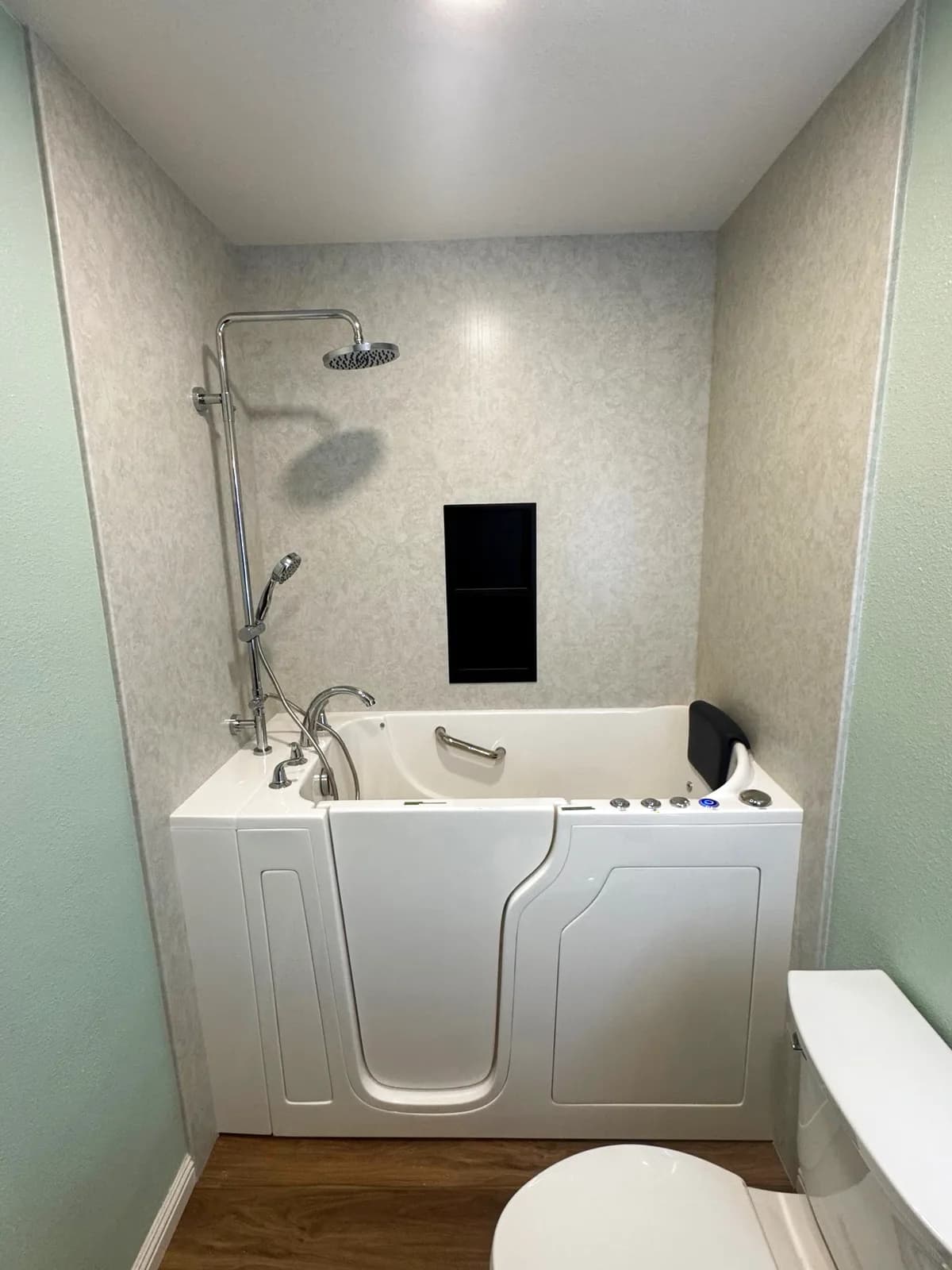
A soaker or hydrotherapy walk-in tub paired with a wall-mounted shower column (rain head and handheld on a slide bar), so the alcove serves as both a seated shower and a bath. The Roseville project we document on this site uses this configuration.
Outward-Opening Walk-In Tub
The door swings outward instead of inward, requiring more floor clearance in front of the tub but allowing entry without stepping around the door. Not standard; we specify this model when the bathroom layout benefits from it.
What a Walk-In Tub Installation Actually Includes
A walk-in tub installation is more than swapping one tub for another. The new tub will have different drain and fill locations than a standard alcove tub, so the plumbing is re-routed. If the tub includes jets or an air blower, we pull a dedicated 20-amp electrical circuit from the panel and install a GFCI. The floor framing is inspected and reinforced if needed — a filled walk-in tub holds 50 to 90 gallons of water (420 to 750 pounds plus the user), which exceeds the live load some older framing was designed for. We finish the surrounding walls in your choice of acrylic panels, large-format porcelain tile, or your original surround if it is in good condition.
Typical Installation Timeline
Most walk-in tub installations take 3 to 7 working days from demo to finished bathroom. Day 1: remove the existing tub and surround. Day 2: rough plumbing to new drain and fill locations, run electrical for jets or air blower if included, reinforce floor framing if required. Day 3: set the walk-in tub, connect plumbing and electrical, pressure-test the door seal, verify fill and drain cycles. Days 4 to 7: install the wall surround (acrylic panels or tile), set the shower column where included, final finishes and punch-list. The homeowner can shower in another bathroom or at a neighbor's house during the first 2 to 3 days of the install.
Honest Realities to Plan Around
Door seals. Expect to inspect the door gasket annually and plan for a replacement at year 7 to 12. Harder water (common in parts of Rocklin, Lincoln, and Folsom) shortens the gasket life. Replacement is a $150 to $400 service — not catastrophic, but a recurring cost that the sales materials rarely mention.
Fill time while seated. The single most-overlooked reality of walk-in tub use: the door seals before the tub fills, so the user is already inside during the entire fill (8–15 minutes) and drain (3–8 minutes). The water starts cold and gradually warms, then drains in a cool bath. For a resident who finds the seated-with-door-sealed experience uncomfortable, a walk-in shower is a materially better choice.
Water heater capacity. A standard 50-gallon water heater will fill most plain walk-in tubs. Jetted tubs with 65-to-90-gallon capacity may need a 75-gallon water heater or an on-demand supplement to avoid running cold mid-fill. We verify the home's water heater during the site visit before quoting a jetted model.
What Makes Our Walk-In Tub Installation Different
We are a bathroom remodeling contractor, not a walk-in tub reseller with a flat sales commission. The differences show up in the install:
- Honest fit assessment during the site visit. If a walk-in shower would serve you better, we will tell you — before you sign anything. Our clientele includes homeowners we talked out of walk-in tubs because the shower was the right answer.
- Dedicated 20-amp GFCI circuit for jetted models. Not a shared circuit, not a daisy chain from the existing bath receptacle. This is NEC 422.13 and 406.4(D) territory and we pull the permit for it.
- Floor framing inspection and reinforcement. A filled walk-in tub plus a user can exceed 850 pounds concentrated over a small footprint. We open the subfloor to inspect the joists before installing the tub, and we sister or add blocking if the span calls for it.
- Door-seal pressure test on day one. Before we close up walls or finish the surround, we fill the tub, seal the door, and verify no weep anywhere. This catches factory-defective seals while the surround is still open.
- 3-year workmanship warranty. On everything we installed — plumbing, electrical, framing, surround, finishes. Manufacturer warranties on the tub itself go through the manufacturer; we broker those claims if they arise.
Sacramento Service Area for Walk-In Tubs
We install walk-in tubs across Sacramento County, Placer County, El Dorado, Yolo and Solano. Specific concentration in active-adult communities including Sun City Lincoln, Sun City Roseville (in Roseville), Heritage in El Dorado Hills, Heritage Solera in Folsom, plus standard residential service in Rocklin, Granite Bay, Auburn and surrounding cities.
Related Resources
Our companion pages on accessibility and aging-in-place bathroom design: aging-in-place bathroom remodel, walk-in shower installation, ADA bathroom remodel, walk-in shower vs bathtub comparison, and a completed Roseville walk-in tub installation with before and after photos. On the shower side, see our Roseville wheelchair-accessible roll-in shower project. For verifying Medicare coverage claims, consult the official Medicare.gov coverage lookup. For VA home modification grants, see the VA Specially Adapted Housing program.
Frequently Asked Questions
How much does a walk-in tub cost installed in Sacramento?+
A walk-in tub typically runs $5,500 to $15,000 installed in the Sacramento region. The tub itself is $2,000 to $8,000 depending on type (soaker, hydrotherapy with jets, bariatric, or wheelchair-accessible). Installation adds $3,000 to $7,000 and covers removing the old tub, roughing plumbing for the new fill and drain positions, electrical for jets or air blower (walk-in tubs with motors require a dedicated 20-amp circuit per NEC 422.13), framing adjustments to carry the heavier tub weight when full, and finishing the surrounding walls. Watch out for door-to-door sales companies quoting $18,000 to $30,000 for a basic walk-in tub — the price difference is almost entirely commission.
Who should actually consider a walk-in tub?+
Walk-in tubs make sense for a narrow slice of homeowners: a resident who specifically wants to continue bathing (not showering) as mobility declines, who does not use a wheelchair (so the step over the door threshold is still safe), who is willing to accept the 8-to-15-minute fill time with the door sealed, and who has the home infrastructure for the hot water load (a 50-gallon water heater minimum, 75 gallons for a hydrotherapy tub with jets). For wheelchair users or anyone who prefers showering, a zero-threshold walk-in shower is almost always the better choice.
Walk-in tub vs walk-in shower — which is right for me?+
Walk-in tubs serve bathers who want to remain able to soak. Walk-in showers serve bathers who are willing to shower and want fewer failure points. The practical differences: a walk-in tub requires sitting inside the sealed tub during the fill (8–15 minutes) and drain (3–8 minutes) cycles in gradually warming or cooling water; a walk-in shower has no fill cycle. A walk-in tub has a door seal that becomes a maintenance item (annual gasket inspection, replacement every 7–10 years); a walk-in shower has no seals. A walk-in tub has a 4-to-7-inch step-in threshold; a true zero-threshold shower has none. A walk-in tub appeals to roughly 15 to 25 percent of our accessibility-focused clients; the rest choose a walk-in shower. We install both and recommend based on your bathing preference, not our margin.
How long does a walk-in tub take to fill and drain?+
Fill time depends on your home's water heater output and tub capacity. A typical 50-gallon walk-in tub fills in 8 to 12 minutes with a standard residential water heater (50 gallons at 40 gallons per minute delivery), and drains in 3 to 6 minutes through a standard 1.5-inch drain line. Hydrotherapy tubs with jets hold 65 to 90 gallons and may need 12 to 15 minutes to fill — occasionally requiring a 75-gallon water heater to avoid running cold mid-fill. During the fill cycle, the user is already inside the closed tub (otherwise the water would escape past the door) — which is the single most-overlooked reality of walk-in tub use.
Can I shower in a walk-in tub?+
Most quality walk-in tubs include a chrome shower column with a rain head and a handheld on a slide bar mounted on the wall above the tub, so the same alcove can be used as a seated shower when the door is sealed. The handheld slides down to seated height for use from the integrated bench. A walk-in tub is still fundamentally designed around bathing, not showering — if the primary use will be showering, a dedicated walk-in shower is the correct installation and costs less.
Are hydrotherapy jets worth the extra cost?+
Hydrotherapy jets add $1,500 to $3,500 to the tub price and require 110V or 220V electrical service with a dedicated breaker and a GFCI. They can be genuinely therapeutic for arthritis, muscle pain, and circulation issues when used regularly. They are also the single highest failure-point category: pumps, air blowers, and controller electronics are the components most likely to fail within the first 7 years. For a homeowner who will actually use hydrotherapy daily, the jets justify themselves. For a homeowner who will use them occasionally, a plain soaker walk-in tub is often the smarter purchase.
Does Medicare pay for a walk-in tub installation?+
Medicare Part A and Part B do not cover walk-in tub installation, regardless of any sales claim to the contrary. Walk-in tubs are classified as home modifications, not durable medical equipment. In narrow cases, a Medicare Advantage plan may offer a limited home modification benefit — contact your specific plan to verify, and get the authorization in writing before signing any installation contract. For veterans, the VA Specially Adapted Housing (SAH) grant and Special Housing Adaptation (SHA) grant can cover walk-in tubs for service-connected mobility impairments. Long-term care insurance and some state Medicaid HCBS waivers may also apply. We are not benefits advisors; verify any reimbursement in writing before relying on it.
How does the door seal work and will it leak?+
Walk-in tub doors seal through a rubber or silicone gasket compressed against a stainless steel or molded acrylic rim when the door latch is engaged. The seal is reliable for the first 5 to 7 years with no maintenance, and 7 to 12 years with annual inspection and periodic silicone-safe cleaning. After that, the gasket compresses permanently and requires replacement (a $150 to $400 service, 1 to 2 hours of labor). Hard-water deposits on the sealing surface accelerate failure — in Rocklin, Lincoln and Folsom (harder water areas), expect to inspect the gasket every 12 months. Door seal replacement is the single most common walk-in tub maintenance item.
How tall is the step-in threshold on a walk-in tub?+
Entry thresholds on standard walk-in tubs range from 4 inches to 7 inches high depending on model. Low-threshold models at 3 to 4 inches require more floor-level framing and may need the subfloor cut to accommodate the inset tub shell. The 4-to-7-inch step is still a barrier for wheelchair users and for anyone with limited leg lift strength. For true zero-threshold entry, a curbless walk-in shower is the only option — walk-in tubs cannot physically eliminate the threshold because the door must seal against the tub shell.
Can you install a walk-in tub in a standard alcove tub footprint?+
Yes, in most cases. A standard 60-inch alcove tub footprint accommodates most residential walk-in tubs (which run 48 to 60 inches long and 28 to 32 inches wide). We remove the existing tub, cap and relocate the plumbing to the walk-in tub's drain and fill positions (which are typically different from a standard tub), run electrical for jets or an air blower where included, repair the subfloor and framing to support the greater filled weight, and finish the surrounding walls. For installations in narrower alcoves or where structural framing must be modified, we provide a specific written estimate after a site visit.
What warranty should I expect on the walk-in tub and the installation?+
Manufacturer warranties on quality walk-in tubs run 10 years on the tub shell, 5 years on the door and seal, and 2 to 3 years on jets, pumps and electrical components. Avoid any tub sold with a lifetime shell warranty that excludes the door and seal — those are marketing warranties, not useful ones. Our installation warranty is 3 years on all workmanship, consistent with our standard bathroom remodel warranty. We will service the installation (plumbing, electrical, framing, finishes) under warranty; manufacturer defects on the tub itself go through the tub manufacturer.
Do you install walk-in tubs in Roseville, Rocklin and the surrounding Placer County area?+
Yes. We install walk-in tubs throughout Roseville, Rocklin, Lincoln, Loomis, Granite Bay, Auburn and the rest of Placer County, plus Folsom, El Dorado Hills, Cameron Park and the broader Sacramento region. A completed Roseville walk-in tub installation we did recently is documented at /projects/roseville-walk-in-tub-conversion-acrylic-walls-led-mirror — before and after photos, full scope and the fixture set we specified.
A real client who chose the walk-in shower route
When a walk-in shower is the right call: a Navy veteran who could not use a tub at all
“As a disabled Navy Veteran and paraplegic, I hadn’t been able to get into my own shower for three years. I needed a complete remodel done right so I could finally roll my shower wheelchair in. That was the whole point of the project.”
“Denis gave me an honest quote up front and built the plan around my priorities: quality first, speed second, cost third. No bait-and-switch, no surprise add-ons, no pressure. He listened, explained the work, and stuck to what we agreed.”
“The crew delivered. Alex, Artem, Tim, Yuri, and the rest of the team showed up, did clean professional work, and finished a job that actually functions for a wheelchair user—not just a nicer-looking bathroom. I couldn’t be happier with the results. Oh, and they work fast!”
“If you need a shower or bathroom done by people who tell you the truth and then do the work, I highly recommend Denis and Oakwood Remodeling Group.”
Explore More Bathroom Remodeling Resources
Helpful resources, related bathroom services, and nearby service areas.
Related Bathroom Services
Nearby Service Areas
Get a Free Estimate
Call us at (916) 907-8782 or fill out our contact form.