Sacramento ADU Bathroom Addition Guide: Everything You Need to Know in 2026
California code requirements, JADU sharing rules, plumbing cost breakdowns, permit timelines, SMUD rebates, and design strategies for your Sacramento ADU bathroom
Looking for bathroom remodeling in Sacramento? View our Sacramento service area page →
Table of Contents
- 1. Sacramento's ADU Boom — Why Bathrooms Are the #1 Cost Variable
- 2. Minimum Bathroom Requirements for Detached ADUs in California
- 3. JADU Rules — When You Can Share a Bathroom
- 4. Navigating Sacramento's ADU Permit Process
- 5. Plumbing Rough-In: Cost Breakdown
- 6. Wet-Wall Strategy — Cut Plumbing Costs by 30%
- 7. Low-Flow Fixture Requirements and SMUD Rebates
- 8. Slab vs Raised Foundation: Plumbing Differences
- 9. ADU Bathroom Design That Maximizes Small Spaces
- 10. Converting a Garage to ADU: Bathroom-Specific Challenges
- 11. Frequently Asked Questions
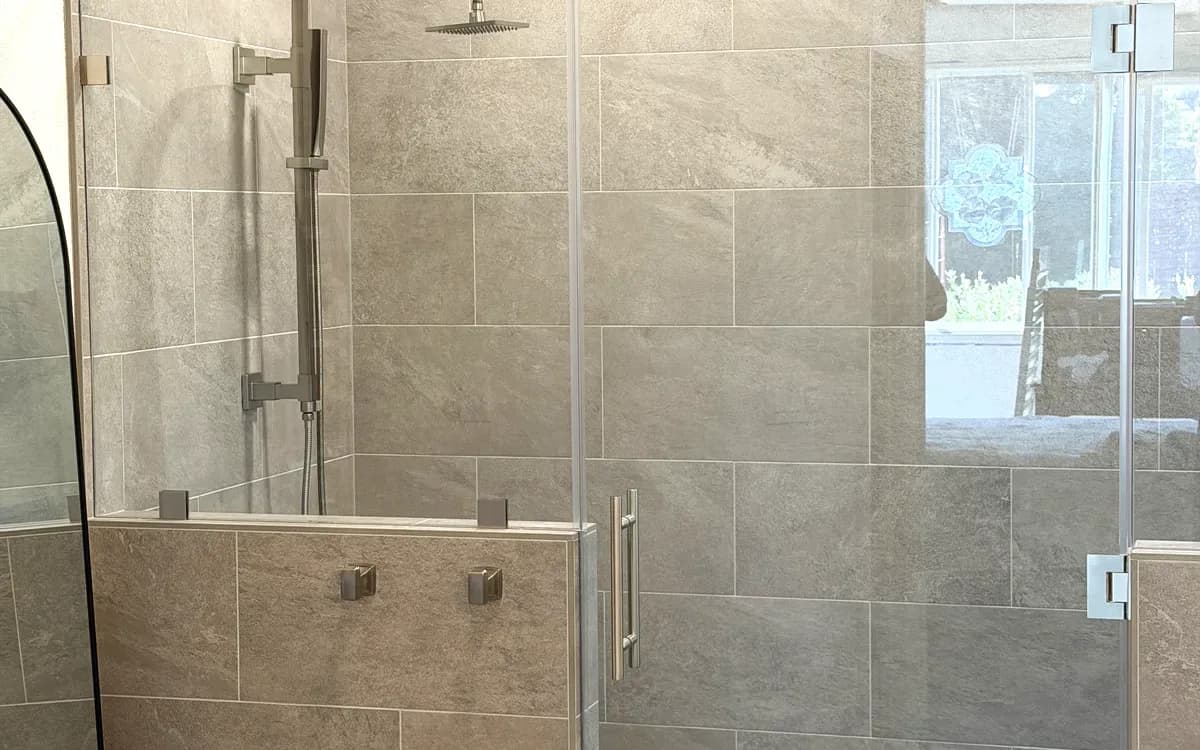
A well-planned Sacramento ADU bathroom combines code compliance with smart design to maximize every square foot
Sacramento's ADU Boom — Why Bathrooms Are the #1 Cost Variable
Sacramento has become one of the fastest-growing ADU markets in California, and for good reason. A wave of state legislation — including AB 68, AB 881, and SB 13 — stripped away the zoning barriers that once made accessory dwelling units nearly impossible to build. Single-family lots across the city can now accommodate a detached ADU, an attached ADU, or even a Junior ADU without the conditional use permits and parking mandates that used to kill projects before they started.
The City of Sacramento leaned into this shift. Between 2023 and 2025, Sacramento streamlined its ADU review process, launched pre-approved plan sets, and created a dedicated ADU resource portal to walk homeowners through every step. The result: ADU permit applications in Sacramento have surged, with hundreds of new units entering the pipeline each year.
But here is the reality that catches most homeowners off guard. The bathroom is the single most expensive room per square foot in any ADU. While kitchenettes and living areas can be built relatively affordably, a Sacramento ADU bathroom typically consumes 25 to 35 percent of the entire project budget — and that percentage can swing dramatically based on one critical decision: placement.
Where you position the bathroom inside your ADU determines how much sewer lateral work you need, whether you can share a wet wall with the kitchen, how far supply lines must travel from the water heater, and whether you need to cut into a slab or run lines under a raised foundation. A bathroom placed 40 feet from the sewer connection costs thousands more than one placed directly above or beside it.
That is why this guide exists. Whether you are building a brand-new detached ADU in Sacramento or converting an existing garage, understanding bathroom requirements, costs, and smart design strategies will save you significant money — and prevent costly change orders once construction begins.
Below, we break down everything from California code minimums and JADU bathroom sharing rules to plumbing rough-in pricing, wet-wall strategies, SMUD rebates, and the unique challenges of garage conversions. Consider this your complete Sacramento ADU bathroom playbook for 2026.
Minimum Bathroom Requirements for Detached ADUs in California
Every detached ADU in California must include a complete bathroom. The California Residential Code spells out exactly what "complete" means: a toilet, a lavatory (sink), and a bathtub or shower. There are no exceptions for small units, studio layouts, or budget builds. If it is a detached ADU, it needs all three fixtures.
Beyond the fixture list, the code mandates specific clearances that directly impact your floor plan. These minimums are non-negotiable and will be verified during inspection:
- Toilet to wall: 15 inches from the toilet centerline to any side wall or obstruction
- Front of toilet: 21 inches of clear floor space in front of the toilet
- Shower entry: 24 inches of unobstructed access in front of the shower opening
- Minimum shower size: 30 by 30 inches per code, though 36 by 36 inches is the practical minimum for comfortable daily use
Ventilation is another requirement that trips up first-time builders. Your Sacramento ADU bathroom needs either a mechanical exhaust fan rated at 50 CFM or higher, or an operable window with at least 1.5 square feet of ventilated area. Most ADU designers spec both — a fan for daily moisture control and a window for natural light and emergency egress.
Electrical requirements add another layer. All bathroom receptacles must be GFCI-protected, and dedicated circuits are required for high-draw fixtures like exhaust fans and electric heaters. If you are installing a whirlpool tub or heated towel rack, each needs its own circuit per California electrical code. For a deeper look at bathroom electrical rules, see our guide on California bathroom electrical code.
Finally, CalGreen — California's green building code — mandates low-flow fixtures in all new construction, including ADUs. Your toilet must flush at 1.28 gallons per flush (GPF) or less, showerheads at 1.8 gallons per minute (GPM) or less, and lavatory faucets at 1.2 GPM or less. These are not optional upgrades. They are code requirements that your inspector will verify before signing off.
If you are designing an ADU bathroom that also needs to serve aging family members or tenants with mobility needs, review our ADA bathroom requirements guide for California residential properties to understand the additional clearances, grab bar placements, and fixture heights that apply.
JADU Rules — When You Can Share a Bathroom
Not every accessory unit needs its own bathroom. If your project qualifies as a Junior Accessory Dwelling Unit (JADU), you may be able to skip the dedicated bathroom entirely — and that is a game-changing cost savings.
A JADU is defined by California law as a unit of 500 square feet or less that is located within or attached to the existing primary dwelling. Think: a converted bedroom suite, a sectioned-off portion of a large home, or an attached addition that shares at least one wall with the main house. The key distinction is that a JADU is not freestanding.
Under state law, a JADU can share a bathroom with the primary dwelling. The occupant simply uses the existing bathroom in the main house. This eliminates the need for a second toilet, shower, sink, all associated plumbing rough-in, and a dedicated water heater circuit — a savings that typically lands between $8,000 and $15,000.
There are trade-offs, of course. A JADU must have its own separate entrance from the outside. It is allowed to have an efficiency kitchen (small sink, cooking appliance, and counter space) rather than a full kitchen. And because it shares space with the primary home, privacy can be limited — a consideration if you plan to rent the unit rather than house a family member.
From a financial perspective, the JADU bathroom-sharing provision is one of the most underutilized cost-saving tools available to Sacramento homeowners. If your floor plan allows it, sharing a bathroom with the main house lets you redirect that $8,000 to $15,000 into better finishes, a larger kitchen, or higher-quality insulation.
For design ideas on making a shared or compact ADU bathroom feel larger than its footprint, check out our small bathroom remodel guide for Sacramento.
Navigating Sacramento's ADU Permit Process
Permitting is where many Sacramento ADU projects stall — not because the process is impossible, but because homeowners underestimate the documentation required. The good news: Sacramento has genuinely streamlined ADU permitting compared to most California cities. The better news: understanding the steps upfront prevents delays that cost you weeks and thousands in carrying costs.
Start with a pre-application meeting. The City of Sacramento offers free pre-application consultations where a planner reviews your property, confirms zoning eligibility, and flags potential setback, height, or utility issues before you invest in architectural plans. This single meeting can save you from submitting plans that get rejected for an issue you could have addressed in the design phase.
Once your plans are ready, submit through the SacGov online permitting portal. Your application package needs to include a complete floor plan showing bathroom layout and fixture locations, a plumbing riser diagram detailing all drain-waste-vent and supply runs, an electrical layout for the bathroom (circuits, GFCI locations, fan wiring), and structural details if you are modifying a foundation or cutting into a slab.
Plan review timelines in Sacramento currently run 2 to 6 weeks for a complete ADU application. California state law caps the review period at 60 days, and Sacramento generally meets or beats that deadline. Incomplete applications — missing the plumbing riser, unclear fixture schedules, or inconsistent dimensions — are the number-one cause of delays. Double-check every page before you submit.
Permit fees for Sacramento ADU projects typically total $2,000 to $5,000, covering building, plumbing, electrical, and mechanical permits. The bathroom component represents roughly 20 percent of that total. One major savings opportunity: ADUs under 750 square feet are exempt from development impact fees in Sacramento, which can save you thousands in additional charges.
For a detailed breakdown of Sacramento permit fees, inspection schedules, and common mistakes to avoid, read our complete Sacramento bathroom remodel permits and timeline guide.

A complete permit application with detailed floor plans and plumbing diagrams speeds up Sacramento ADU approvals
Plumbing Rough-In: Cost Breakdown
Plumbing is the largest single expense in a Sacramento ADU bathroom. Understanding exactly where your money goes helps you make informed decisions about fixture placement, material choices, and design trade-offs. Here is a detailed cost breakdown based on 2026 Sacramento-area pricing:
| Component | Cost Range | Details |
|---|---|---|
| Sewer Lateral | $2,000 - $6,000 | Connection from ADU to main sewer line; distance-dependent |
| DWV Rough-In | $3,000 - $5,000 | Drain, waste, and vent piping within bathroom walls and floor |
| Water Supply Lines | $1,500 - $3,000 | Hot and cold supply to all fixtures; PEX or copper |
| Fixtures | $1,500 - $5,000 | Toilet, shower/tub, sink, faucets; budget to premium tier |
| Labor | $3,000 - $6,000 | Licensed plumber installation, testing, and inspection prep |
| Total | $10,000 - $25,000 | Complete ADU bathroom plumbing |
The sewer lateral is the wild card. If your ADU sits close to the existing sewer connection — within 20 feet — lateral costs stay near the low end. But a detached unit at the back of a deep Sacramento lot can require 60 to 100 feet of new lateral, pushing costs toward $6,000 or higher. Sacramento also requires a backflow preventer on ADU sewer connections, adding $300 to $800 to the lateral cost.
The DWV (drain-waste-vent) rough-in is your second-largest plumbing expense. This includes all the drain pipes under the floor, the waste lines behind the walls, and the vent stack that exits through the roof. A well-designed layout that groups all fixtures on a single wall minimizes DWV complexity and keeps costs at the lower end of the range.
Water supply lines are relatively straightforward. Most Sacramento ADU builders use PEX tubing for supply runs, which is faster to install and less expensive than copper. For a comparison of material options and long-term performance, see our PEX vs copper plumbing comparison.
Fixture costs vary dramatically based on your finish level. A builder-grade toilet, fiberglass shower insert, and basic pedestal sink can be installed for under $1,500. Step up to a comfort-height toilet, acrylic shower base with tile walls, and a 30-inch vanity with stone top, and you are looking at $3,000 to $5,000 in fixtures alone.
For a deeper dive into rough-in specifics including drain slopes, vent sizing, and inspection checklists, read our complete bathroom plumbing rough-in guide.
Wet-Wall Strategy — Cut Plumbing Costs by 30%
If there is one design decision that consistently delivers the biggest plumbing savings in a Sacramento ADU bathroom, it is the wet-wall strategy. The concept is simple: concentrate all plumbing fixtures — toilet, sink, and shower — on a single wall. Instead of running pipes across the entire floor and through multiple walls, everything shares one plumbing chase.
A single wet wall means fewer pipe runs, fewer fittings, fewer penetrations through the building envelope, and less labor. In a typical Sacramento ADU bathroom, this approach reduces total plumbing costs by 25 to 35 percent compared to a layout with fixtures spread across two or three walls.
The savings compound when you share the wet wall with an adjacent kitchen. In many ADU floor plans, the bathroom backs up to the kitchenette. By placing the kitchen sink on the opposite side of the same wall, both rooms share drain lines, supply pipes, and the vent stack. One wall does double duty, and your plumber installs one plumbing chase instead of two.
For two-story ADUs, the wet-wall strategy becomes even more powerful. Stacking a second-floor bathroom directly above the first-floor bathroom (or kitchen) allows vertical drain and supply runs that are fast to install, easy to service, and dramatically cheaper than running horizontal lines across the building.
Back-to-back bathrooms are another variation. If your ADU design includes two bathrooms — for instance, a primary suite and a guest half-bath — placing them on opposite sides of the same wall lets both rooms share the drain-waste-vent system. This adds a second bathroom for a fraction of the cost of plumbing a completely separate location.
For a technical explanation of how drain systems work within a wet-wall layout, check out our guide on bathroom drain systems explained.

A wet-wall layout concentrates all plumbing on one wall, reducing pipe runs and labor costs by 25-35%
Low-Flow Fixture Requirements and SMUD Rebates
Every Sacramento ADU bathroom must comply with CalGreen — California's mandatory green building code for new construction. The fixture flow rates are not suggestions; they are hard requirements your inspector will verify:
- Toilets: 1.28 GPF (gallons per flush) maximum — look for WaterSense-labeled models
- Showerheads: 1.8 GPM (gallons per minute) maximum at 80 PSI
- Lavatory faucets: 1.2 GPM maximum
The good news: WaterSense-labeled fixtures that meet these standards are widely available at every price point. You are not sacrificing performance or comfort. Modern low-flow toilets use pressure-assist or gravity-fed engineering that outperforms the older 3.5 GPF models they replace. Low-flow showerheads use aerated or laminar flow technology that delivers a satisfying shower experience at a fraction of the water usage.
SMUD offers rebates on heat pump water heaters that can meaningfully offset your ADU bathroom costs. A heat pump water heater is two to three times more efficient than a standard electric tank heater, and SMUD's incentives are designed to encourage the switch. Visit SMUD's Rebates and Savings page for current program details and application instructions.
Beyond SMUD, the Regional Water Authority and local Sacramento-area water utilities offer their own rebates for WaterSense toilets, high-efficiency showerheads, and other water-saving fixtures. Combined rebate values typically range from $100 to $500 or more, depending on which fixtures you install and which utility serves your property.
For budget-friendly fixture options that meet CalGreen requirements without overspending, see our guide on bathroom material alternatives that save money.
Slab vs Raised Foundation: Plumbing Differences
Your ADU's foundation type has a direct and significant impact on bathroom plumbing costs. This is one of the first decisions you will make, and it affects every line item in your plumbing budget.
Raised foundations (crawl space or pier-and-beam) are the plumber's best friend. With 18 to 36 inches of accessible space beneath the floor, your plumber can run drain lines, supply pipes, and vent connections without touching the structure above. Changes during construction are straightforward. Future repairs or modifications are simple. Labor costs stay lower because the work is faster and less destructive.
Slab foundations are a different story. All drain and waste lines must be installed before the concrete is poured — or cut into the slab after the fact. If you are adding a bathroom to an existing slab (common in garage conversions), that means sawcutting, jackhammering, trenching, installing pipes, and re-pouring concrete. This process adds $3,000 to $8,000 to your bathroom plumbing costs compared to a raised-foundation build.
Slab work also introduces scheduling complications. Concrete cutting creates dust, noise, and debris. The slab must cure before finish work can begin. And any errors — a drain line at the wrong slope, a toilet flange in the wrong position — are extremely expensive to correct once the concrete is back in place.
Above-slab alternatives can reduce or eliminate slab cutting in some situations. Raised platform systems create a false floor 4 to 6 inches above the existing slab, allowing drain lines to run between the platform and the concrete. Macerating toilet systems use a pump to push waste upward into an overhead drain line, eliminating the need for below-slab drainage entirely. Both approaches have trade-offs — raised platforms reduce ceiling height, and macerating systems require electricity and periodic maintenance — but they can save thousands in slab work.
For a detailed comparison of pipe materials for your ADU supply lines, read our PEX vs copper bathroom plumbing comparison.

Sawcutting a garage slab for drain lines adds $3,000-$8,000 to ADU bathroom plumbing costs
ADU Bathroom Design That Maximizes Small Spaces
Most Sacramento ADU bathrooms fall in the 35 to 50 square foot range — compact by any standard, but entirely workable with the right design strategy. The key is selecting fixtures, finishes, and layout techniques that make the room feel larger than its footprint.
Corner showers are one of the most effective space savers in an ADU bathroom. A neo-angle or quadrant shower fits into a corner, freeing up wall space for the toilet and vanity. Pair it with a frameless glass panel instead of a framed door, and you eliminate the visual barrier that makes small bathrooms feel cramped.
Wall-mount toilets save 8 to 10 inches of floor depth compared to standard floor-mount models. The tank is concealed in the wall cavity, and the visible bowl appears to float — creating a sleek, modern look while making the floor easier to clean. The carrier frame adds cost ($200 to $400 more than a standard toilet), but the space savings are worth it in a tight ADU layout.
Floating vanities serve the same purpose. A wall-hung vanity with open space beneath it creates a visual sense of depth and makes the floor area feel larger. Choose a 24-inch model with integrated storage — a single drawer and open shelf provide enough space for daily essentials without dominating the room.
Pocket doors eliminate the 30 inches of floor space that a swinging door occupies. In a 35-square-foot bathroom, that recovered space can be the difference between a usable layout and one that feels impossibly tight. Barn-style sliding doors are an alternative if your wall cavity cannot accommodate a pocket door.
Lighting matters enormously in windowless ADU bathrooms. Many ADU designs place the bathroom in an interior location without natural light. Compensate with layered lighting: a flush-mount ceiling fixture for general illumination, LED strips under the vanity for ambient warmth, and a backlit mirror that serves as both task lighting and a design statement.
For more small-space strategies including vertical storage and visual expansion tricks, explore our small bathroom remodel guide for Sacramento and our small bathroom storage solutions guide.
Converting a Garage to ADU: Bathroom-Specific Challenges
Garage-to-ADU conversions are among the most popular ADU projects in Sacramento, and for good reason. The structure already exists, the foundation is in place, and you skip the cost of framing a new building. But adding a bathroom to a garage creates a unique set of challenges that you need to plan for upfront.
Floor slope is the first issue. Garage slabs are intentionally sloped toward the door for water drainage — typically a quarter-inch per foot or more. A bathroom requires a level floor with precise drain slopes in the opposite direction. Correcting the slope means either pouring a self-leveling overlay or grinding the high side, both of which add cost and schedule time.
Moisture barriers are critical. Garages were never designed to contain water. The slab likely has no vapor barrier, and the walls may lack the waterproofing details required for a wet environment. Your contractor needs to install a proper moisture barrier beneath any new flooring, apply waterproof membrane in the shower area, and ensure the wall assembly prevents moisture migration into the framing.
Sewer distance is often the biggest cost variable in a garage conversion. Most Sacramento garages sit at the front of the lot while the sewer cleanout is near the house at the mid-lot or rear. Running a new sewer lateral 40 to 80 feet from the garage bathroom to the existing connection can cost $4,000 to $6,000 or more, depending on depth, obstacles, and whether a backflow preventer is required.
Water heater placement requires careful thought. If the garage ADU has its own water heater (required for detached units), it needs adequate clearance from combustible materials, proper venting to the exterior, and proximity to the bathroom to minimize hot-water wait times and pipe heat loss. A tankless unit saves space and provides on-demand hot water, but costs more upfront.
Ventilation and insulation round out the challenge list. Garage walls are typically uninsulated, and the ceiling may be open to the rafters. For an ADU bathroom to pass inspection, you need R-13 or higher wall insulation, R-30 or higher ceiling insulation (per Sacramento climate zone requirements), and a properly ducted exhaust fan vented to the exterior — not into the attic.
For a comprehensive look at moisture control and insulation requirements for bathroom environments, read our bathroom insulation and moisture barrier guide.

A completed garage-to-ADU bathroom conversion in Sacramento showing code-compliant fixtures and finishes
Frequently Asked Questions
Plan Your Sacramento ADU Bathroom With Confidence
Adding a bathroom to your Sacramento ADU is a significant investment — typically $10,000 to $25,000 depending on foundation type, fixture selections, sewer lateral distance, and design complexity. But with the right planning, smart design decisions like wet-wall layouts, and a clear understanding of California code requirements, you can build a bathroom that serves your ADU occupants comfortably for decades while keeping costs controlled.
Sacramento's ADU-friendly permitting environment, combined with SMUD rebates and impact fee exemptions for smaller units, makes 2026 an excellent time to move forward with your project. The key is partnering with a contractor who understands ADU-specific plumbing challenges, Sacramento's permit process, and the code requirements that apply to new construction versus renovations.
Oakwood Remodeling Group has helped Sacramento homeowners plan and build ADU bathrooms across the region — from ground-up detached units to garage conversions to JADU additions. We handle every aspect of the bathroom remodeling process, including design, permitting, plumbing, electrical, tile, and finish work.
Ready to Plan Your ADU Bathroom?
Oakwood Remodeling Group specializes in ADU bathroom construction and bathroom remodeling in Sacramento. We provide free in-home consultations with detailed, line-item estimates so you know exactly what your ADU bathroom will cost before a single pipe is cut.
- ✓ Free ADU bathroom consultation and estimate
- ✓ Complete permit handling through the City of Sacramento
- ✓ Licensed, insured, and bonded in California
- ✓ Wet-wall design optimization to reduce plumbing costs
- ✓ CalGreen-compliant fixtures with rebate assistance
- ✓ Comprehensive labor and material warranties
Call (916) 907-8782 or request your free estimate online to start planning your Sacramento ADU bathroom today.
Get Your Free Estimate
Schedule your consultation today
Explore all our bathroom remodeling services in Sacramento.
Related Articles
12 Mid-Century Modern Bathroom Ideas for Sacramento Ranch Homes
1950s Ranch Home Bathroom Remodel in Sacramento: Slab, Pipes & Modern Code (2026)
East Sacramento Bathroom Remodel Guide: Craftsman, Tudor & Historic Homes (2026)
Get a Free Estimate
Call us at (916) 907-8782 or fill out our contact form.