1950s Ranch Home Bathroom Remodel in Sacramento: What Every Homeowner Must Know
Your essential guide to slab foundation plumbing, galvanized pipe replacement, cast iron drains, code compliance, and realistic cost tiers for Pocket, Tahoe Park, Arden-Arcade, and every other Sacramento ranch neighborhood
Looking for bathroom remodeling in Sacramento? View our Sacramento service area page →
Table of Contents
- 1. Sacramento's 1950s Ranch Stock — Where They Are and What They Share
- 2. Slab Foundation Plumbing — The Biggest Cost Variable
- 3. Galvanized Pipe Replacement: When to Patch vs Full Replacement
- 4. Cast Iron Drain Lines: Lifespan, Inspection, and Replacement
- 5. Small Original Layouts — Opening Up Without Full Demo
- 6. Title 24 Compliance Triggers for 1950s Remodels
- 7. Reroute vs Sawcut vs Above-Slab — Plumbing Options Compared
- 8. Cost Reality: Budget, Mid-Range, and Premium Tiers
- 9. Before-and-After Project Walkthroughs
- 10. Frequently Asked Questions
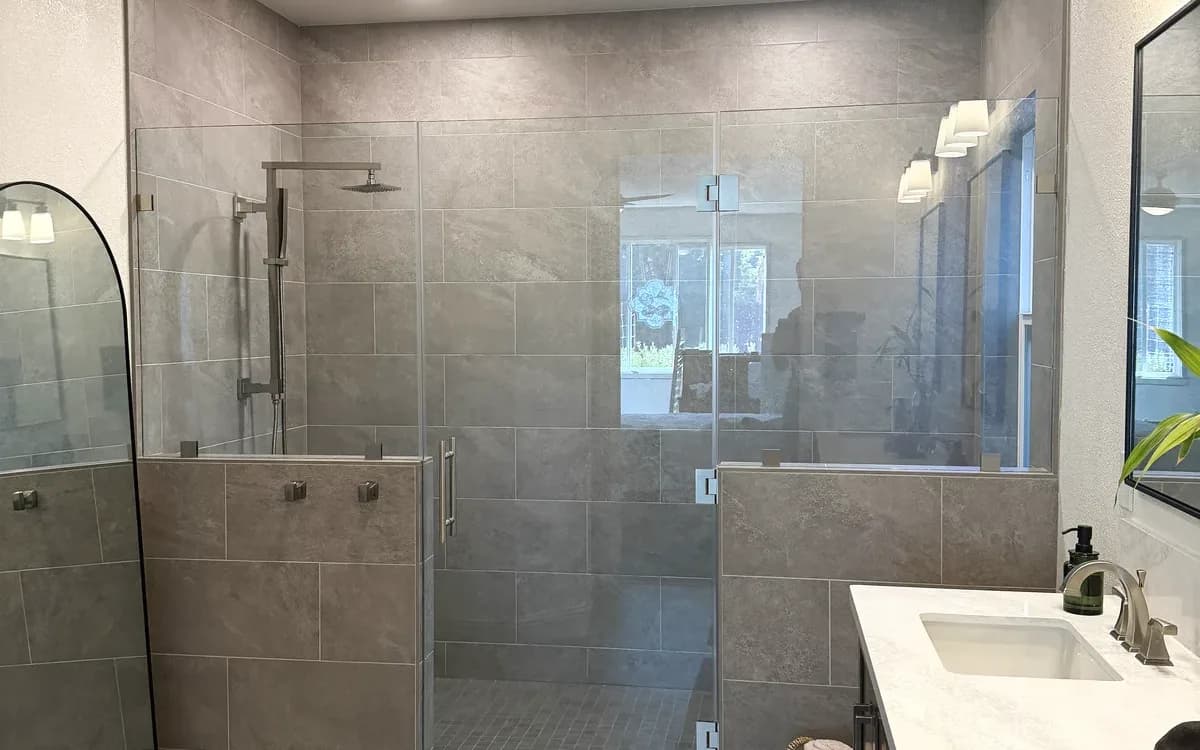
From dated 1950s original to modern comfort — a Sacramento ranch home bathroom transformation
Sacramento's 1950s ranch homes are everywhere. Drive through Pocket-Greenhaven, Tahoe Park, Arden-Arcade, or South Land Park and you will see block after block of single-story ranch-style homes that were mass-built during the post-war housing boom. These homes have served families for over seven decades — but their bathrooms? Those are well past their expiration date.
If you own a 1950s ranch in Sacramento, you already know the frustrations. The single tiny bathroom with the original tub-shower combo. The low water pressure from corroded pipes. The mysterious drain smells. The ventilation fan that either does not exist or barely works. And underneath it all, a slab foundation that makes every plumbing change more complex and expensive than it would be in a home with a crawlspace.
This guide is written specifically for you. As Sacramento bathroom remodeling specialists, we have remodeled dozens of 1950s ranch bathrooms across the metro area. We know what is under those slabs, inside those walls, and behind those fixtures — and this guide shares everything you need to plan your remodel with confidence.
Sacramento's 1950s Ranch Stock — Where They Are and What They Share
The post-World War II housing boom transformed Sacramento from a modest state capital into a rapidly growing suburban metro. Between 1945 and 1965, tens of thousands of ranch-style homes were built across what were then the outer suburbs of the city. Today, these neighborhoods are well-established, centrally located communities with mature trees and strong identities.
Where Sacramento's 1950s Ranches Are
- Pocket-Greenhaven — Built primarily in the 1950s and 1960s along the Sacramento River. Classic ranch layouts on generous lots. Strong family-neighborhood identity.
- Tahoe Park — Mix of late 1940s and 1950s construction. Slightly smaller lots than Pocket but walkable to shops and restaurants on Broadway.
- Arden-Arcade — Vast unincorporated area with heavy 1950s and 1960s ranch construction. Lot sizes and home sizes vary widely.
- Colonial Heights — Compact 1950s ranches near Sacramento City College. Smaller homes (900-1,200 sq ft) with one bathroom.
- South Land Park — Mix of 1950s ranches and later 1960s construction. Proximity to Land Park makes this a desirable remodel market.
- Curtis Park (southern portion) — The 1940s-1950s homes on the southern edge blend into the ranch style, distinct from the older Craftsman stock to the north.
What 1950s Ranches Share in Common
Regardless of which Sacramento neighborhood your ranch is in, the homes share remarkably consistent characteristics:
- Size: 1,000 to 1,400 square feet, single story, three bedrooms
- Bathrooms: One full bathroom (sometimes one full plus one half bath)
- Foundation: Slab-on-grade concrete — no crawlspace, no basement
- Water supply: Galvanized steel pipes (pre-PEX, pre-copper in many cases)
- Drain lines: Cast iron under the slab and through the walls
- Original bathroom layout: 5 feet by 8 feet (40 sq ft), built-in tub/shower combo against the back wall, toilet next to the tub, single vanity on the opposite wall
- Flooring: 12x12 vinyl tile or sheet vinyl over the slab
- Ventilation: None originally — possibly a small window, no exhaust fan
- Electrical: No GFCI outlets, minimal lighting (often a single ceiling fixture)
Understanding these shared characteristics is essential because they define the scope, challenges, and costs of every 1950s ranch bathroom remodel. Every issue on this list will come up in your project.
Slab Foundation Plumbing — The Biggest Cost Variable
The slab foundation is the single most important factor that distinguishes a 1950s ranch bathroom remodel from any other bathroom remodel. In a home with a crawlspace or basement, your plumber can access drain lines from below — running new pipes, rerouting drains, and making connections without touching the floor. In a slab home, all drain lines are cast into or run underneath the concrete. You cannot reach them without cutting through the slab.
This matters most when you want to change the bathroom layout. Moving a toilet, converting a tub to a walk-in shower with a relocated drain, or adding a new fixture all require access to under-slab plumbing. That means sawcutting concrete, excavating a trench, installing new pipe, backfilling, and re-pouring — a process that adds significant cost and time.
How to Assess Your Under-Slab Plumbing Before You Start
Before committing to a remodel scope, invest in a camera scope inspection of your under-slab drain lines. A licensed plumber inserts a fiber-optic camera through a cleanout to visually inspect the condition of your pipes. This costs $200 to $400 and can save you thousands by identifying problems before construction begins.
A hydrostatic test is another option: the plumber plugs the drain system, fills it with water, and monitors for pressure loss over several hours. If the system loses pressure, there is a leak somewhere under the slab. This test costs $250 to $500.
Warning Signs of Under-Slab Plumbing Failure
- Slow drains in multiple fixtures simultaneously — not just one clogged drain, but system-wide sluggishness
- Sewer smell in the bathroom — especially when drains haven't been used recently
- Foundation cracks near bathroom fixtures — a leaking under-slab pipe can erode soil and cause settlement
- Wet spots or discoloration on the slab surface — visible where floor covering has been removed
- Unexplained increases in water bill — a supply line leak under the slab wastes water continuously
Common under-slab failures in 1950s homes: Orangeburg pipe (a wood-fiber pipe that was briefly popular in the 1950s — it literally collapses over time), clay tile sewer laterals with root intrusion, and corroded cast iron with joint separation. For a deeper dive into plumbing systems, see our complete plumbing rough-in guide.

What lies beneath — corroded cast iron drain lines exposed during a slab sawcut in a Pocket-area ranch home
Galvanized Pipe Replacement: When to Patch vs Full Replacement
Galvanized steel was the standard material for water supply lines in homes built from the 1930s through the 1960s. In your 1950s Sacramento ranch, the galvanized pipes are now 70 to 75+ years old — well past the 40-to-60-year useful life of the material.
The problem with galvanized steel is that it corrodes from the inside out. Over decades, mineral scale builds up on the interior walls of the pipe, gradually reducing the water flow diameter. A pipe that started with a 3/4-inch opening may now have an effective opening of 1/4 inch or less. This is why your water pressure drops to a trickle when someone flushes the toilet while you are showering.
Symptoms of Galvanized Pipe Failure
- Low water pressure — especially noticeable at fixtures farthest from the water main
- Rusty or brown water — typically when first turning on a faucet after it has been idle
- Pinhole leaks — small leaks that appear at joints or along pipe runs, often behind walls
- Visible corrosion — white or green mineral buildup at exposed joints and connections
Patch or Replace? The Decision Framework
Patch (spot repair) when: less than 20% of accessible pipe shows corrosion, the leak is isolated to one joint, and you are doing a cosmetic-only remodel that does not open walls. Cost: $300 to $800 per repair.
Replace (full repipe) when: more than 50% of pipe shows corrosion, water pressure is noticeably low, you are already opening walls for a remodel, or your insurance company has flagged galvanized pipes. Cost: $1,500 to $3,000 for bathroom-only, $4,000 to $8,000 for whole-house repipe.
Our recommendation: If you are doing any remodel that opens walls, replace all accessible galvanized with PEX. The labor for demolition and wall repair is already in your budget — adding the repipe at this stage costs a fraction of what it would cost as a standalone project later. For material comparisons, see our PEX vs copper bathroom plumbing comparison.

The difference is clear — a corroded galvanized pipe vs a new PEX line ready for decades of reliable service
Cast Iron Drain Lines: Lifespan, Inspection, and Replacement
Cast iron was the standard drain pipe material from the early 1900s through the 1970s. In your 1950s ranch, the cast iron drain lines handle all the wastewater from your bathroom — toilet, shower, and sink — and connect to the main sewer lateral that runs under the slab to the street.
Cast iron has a typical lifespan of 50 to 75 years. At 70+ years old, the cast iron in your home is at or past its expected service life. That does not mean it has necessarily failed — some cast iron holds up remarkably well. But it does mean you should inspect before you remodel, not discover problems after you have already torn out the old fixtures.
How Cast Iron Fails
- Internal corrosion: The interior walls of the pipe roughen and thin over time, eventually developing holes or weak spots that leak
- Hub joint separation: Older cast iron used lead-and-oakum joints at each connection. These joints can loosen over decades, allowing water to seep out
- Root intrusion: Tree roots seek out moisture and can infiltrate joints in horizontal under-slab runs, causing blockages and eventually pipe damage
- Bellying: Soil settlement under the slab can cause horizontal pipe sections to sag, creating a low spot where waste accumulates and flow slows
Replacement Costs
Main stack replacement (vertical pipe in the wall): $2,000 to $5,000. This is relatively straightforward because the pipe is accessible through the wall. Connection from cast iron to PVC uses fernco couplings or banded fittings.
Under-slab drain replacement: $4,000 to $10,000. This requires sawcutting the slab, excavating, removing old pipe, installing new PVC, backfilling, and re-pouring concrete. Cost varies with the length of pipe being replaced and depth of the run.
For more on drain systems and how they work, see our complete guide to bathroom drain systems.
Small Original Layouts — Opening Up Without Full Demo
The typical 1950s ranch bathroom is 5 feet by 8 feet — just 40 square feet. Some are slightly larger at 6x8 (48 sq ft), but rarely more. The standard layout is universal: a built-in tub/shower combo along the back wall, the toilet beside the tub, and a single vanity on the opposite wall. It is functional but cramped, and it feels even more cramped by modern standards.
The good news is that you can make a 40 square-foot bathroom feel significantly more open without expanding the room. Here are proven strategies:
Remove the Tub, Add a Walk-In Shower
The single most impactful change in a small ranch bathroom is replacing the tub/shower combo with a walk-in shower. A tub with a shower curtain creates a visual wall that divides the room. A walk-in shower with a frameless glass panel opens up sightlines and makes the room feel twice as large. A curbless (zero-threshold) entry adds even more visual flow and provides accessibility benefits.
Go Floating
A floating vanity (wall-mounted, legs off the floor) exposes floor space underneath, making the room feel larger. The continuous floor tile visible under the vanity creates an unbroken visual plane. Pair this with a wall-mounted toilet for even more floor visibility — though wall-mount toilets require a carrier frame inside the wall and are more expensive to install.
Borrow Space from Adjacent Areas
Many 1950s ranches have a hallway linen closet directly adjacent to the bathroom. Removing the closet wall and incorporating that 4 to 6 square feet into the bathroom can be transformative — enough to add a wider shower, a double vanity, or simply breathing room. Similarly, a bedroom closet that backs up to the bathroom wall may offer expansion potential if the homeowner is willing to sacrifice closet space.
Critical check: Before removing any wall, confirm whether it is load-bearing. In a single-story ranch, most interior walls are non-load-bearing partitions — but verify with a structural assessment. Removing a load-bearing wall requires a header beam and engineering, adding $2,000 to $5,000.
For more small-space strategies, read our Sacramento small bathroom remodel guide and our tips on maximizing galley bathroom layouts.
Title 24 Compliance Triggers for 1950s Remodels
Here is something many homeowners do not realize: any bathroom remodel that requires a building permit triggers California Title 24 compliance for the work area. Since 1950s homes predate virtually every modern building code, this means your remodel will need to bring the bathroom up to current standards in several categories — and that adds cost.
What Title 24 Requires in Your 1950s Bathroom
Part 6 — Energy Code:
- Insulation in exterior bathroom walls (R-13 minimum for 2x4 walls, R-19 for 2x6) — your 1950s ranch likely has zero insulation in the bathroom walls
- High-efficacy lighting — all bathroom light fixtures must meet minimum lumens-per-watt requirements
- Exhaust ventilation — 50 CFM intermittent or 20 CFM continuous, ducted to the exterior (not the attic)
Part 11 — CalGreen (Mandatory Green Building Standards):
- Toilets: 1.28 gallons per flush maximum
- Showerheads: 1.8 gallons per minute maximum
- Lavatory faucets: 1.2 gallons per minute maximum
- All fixtures must be WaterSense labeled or equivalent
Part 2 — Building Code:
- GFCI protection on all bathroom outlets (your 1950s home has none)
- Moisture barriers behind all shower and tub walls
- Proper ventilation ducting (not just a fan exhausting into the attic space)
- Adequate clearances around fixtures
The cost of compliance: Bringing a 1950s ranch bathroom up to Title 24 standards typically adds $1,500 to $3,000 to your remodel. This covers insulation, new electrical circuits, exhaust fan installation, and low-flow fixture upgrades. It sounds like a lot, but these upgrades improve comfort, reduce utility bills, and are legally required — there is no opting out.
For the full California code breakdown, read our 2026 California bathroom building codes guide. For ventilation specifics, see our Northern California ventilation and mold prevention guide.
Reroute vs Sawcut vs Above-Slab — Plumbing Options Compared
When your remodel requires moving drain lines on a slab foundation, you have three primary approaches. Each has different costs, disruption levels, and best-use scenarios. Understanding these options before you talk to contractors will help you evaluate bids and make informed decisions.
| Method | Cost | Best For | Drawbacks |
|---|---|---|---|
| Sawcut & Reroute | $3,000–$8,000 | Moving drains, layout changes, replacing failed under-slab pipes | Dusty, disruptive, 2-3 days for slab work alone, concrete patch visible |
| Above-Slab Reroute | $2,000–$5,000 | Minor layout changes, when slab work is impractical or too expensive | Pipes visible in walls/ceiling of room below (if two-story), limited by gravity slope |
| Raised Floor Platform | $1,500–$3,000 | Avoiding slab work entirely, budget-conscious projects | Creates a 3-4 inch step-up into the bathroom (not ADA-friendly), reduces ceiling height |
| Macerating System | $1,000–$2,000 (equipment) | Adding a half bath where gravity drain access is impossible | Mechanical noise, requires maintenance, not ideal for primary bathrooms |
Sawcut: The Most Common Approach
Sawcutting is the standard method for moving drain lines on a slab. A diamond-blade concrete saw cuts a clean line through the slab, a jackhammer breaks out the concrete between cuts, the trench is excavated, new PVC pipe is laid at the correct slope (1/4 inch per foot for horizontal drain runs), the trench is backfilled with clean fill and compacted, and fresh concrete is poured to close the slab.
When to choose sawcut: You are moving a toilet, relocating a shower drain, or the existing under-slab drain is damaged and needs replacement. This is the gold-standard approach — it gives you full flexibility to put fixtures wherever you want them.
Above-Slab Reroute: The Less-Invasive Alternative
When sawcutting is overkill or the budget does not support it, an above-slab reroute runs new drain lines through walls and ceilings to exit above the slab level, connecting to the existing vent stack higher up. This works well for minor changes — like shifting a vanity a few feet — but has limitations. Drain pipes need gravity slope, so you cannot run them horizontally for long distances above the slab without losing too much elevation.
Raised Floor Platform: The Budget Compromise
A raised floor platform builds a 3 to 4-inch elevated floor over the slab, creating space to run drain lines on top of the concrete rather than cutting into it. This avoids all slab work but creates a visible step-up at the bathroom door. It is not ADA-friendly and may feel awkward in a single-story ranch where every other floor is at slab level. However, for a secondary bathroom or a tight budget, it gets the job done.
For more on the structural aspects of bathroom remodeling, see our guide on framing and subfloor issues found during remodels.

Precision sawcutting a concrete slab to relocate drain lines — the most common approach for layout changes in ranch homes
Cost Reality: Budget, Mid-Range, and Premium Tiers
After years of remodeling 1950s ranch bathrooms across Sacramento, here is what each cost tier actually delivers. These numbers include Sacramento labor rates (approximately 12% above the national average), permits, and realistic contingency for hidden conditions.
| Tier | Cost Range | Timeline | What's Included |
|---|---|---|---|
| Budget | $15,000–$25,000 | 2–3 weeks | Cosmetic refresh + infrastructure patches. New vanity, toilet, tub refinish, tile surround, lighting, fan, GFCI. Keeps existing layout. Patches galvanized as needed. |
| Mid-Range | $25,000–$45,000 | 4–6 weeks | Full remodel with galvanized repipe, new shower or tub conversion, full tile, new vanity/countertop, electrical update, Title 24 compliance. May include slab work for drain relocation. |
| Premium | $45,000–$70,000 | 6–8 weeks | Gut remodel with layout change, full repipe, slab plumbing work, premium fixtures, heated floor, frameless glass, custom vanity, expansion into adjacent space. |
Contingency: We recommend budgeting 15 to 20 percent contingency for 1950s ranch homes. That is higher than the standard 10% for newer homes, and it reflects the near-certainty of encountering hidden conditions — corroded pipes, code-deficient wiring, subfloor issues, or all three. A $30,000 budget should have $4,500 to $6,000 set aside for the unexpected.
For a full line-item cost breakdown with Sacramento-specific labor and material pricing, read our Sacramento bathroom remodel cost guide. And if you are working on a tight budget, our budgeting guide for Sacramento homeowners can help you prioritize where to invest and where to save.
Before-and-After Project Walkthroughs
These composite walkthroughs represent typical 1950s ranch bathroom remodel projects in Sacramento. The details are drawn from real project patterns to give you a realistic picture of what each type of project involves.
Walkthrough 1: Pocket-Greenhaven Ranch — Budget Refresh ($18,000)
The home: A 1956 ranch in Pocket-Greenhaven with one full bathroom. Original 5x8 layout, built-in tub/shower combo, pedestal sink, vinyl tile floor over the slab.
The goal: Modernize the bathroom without changing the layout. The homeowner wanted a fresh, clean look and reliable plumbing but did not need to rearrange fixtures.
The scope: Professional tub refinishing (the cast iron tub was in excellent condition). New tile surround above the tub. New 30-inch vanity with solid surface countertop. New comfort-height toilet (1.28 GPF). Replaced galvanized supply lines to the bathroom with PEX. New GFCI outlets. Installed a 50 CFM exhaust fan venting through the roof. Porcelain tile floor.
Biggest surprise: Subfloor rot under the toilet — the wax ring had been slowly leaking for years, saturating the plywood around the toilet flange. Replaced a 3x3 section of subfloor and sistered one joist. Added $1,200 to the project.
Timeline: 2.5 weeks. Final cost: $18,400.
Walkthrough 2: Tahoe Park Ranch — Mid-Range Tub-to-Shower Conversion ($38,000)
The home: A 1952 ranch in Tahoe Park with one full bathroom and one half bath. The full bathroom had the original built-in tub/shower combo that the homeowner wanted to replace with a walk-in shower.
The goal: Convert the tub to a walk-in shower, modernize the entire bathroom, and replace all aging plumbing.
The scope: Removed tub, sawcut slab to relocate drain from tub position to centered shower drain. Installed 48-inch walk-in shower with Schluter waterproofing, large-format porcelain tile walls, linear drain, and frameless glass panel. Full PEX repipe for bathroom supply lines. New 36-inch floating vanity with quartz countertop. Wall-mounted medicine cabinet. LED recessed lighting. 80 CFM exhaust fan. Porcelain tile floor throughout.
Biggest surprise: The cast iron main stack in the wall showed severe corrosion at the tub drain connection. Rather than patch it, the full stack was replaced from floor to ceiling with PVC. Added $3,800 to the project.
Timeline: 5 weeks. Final cost: $38,200.
Walkthrough 3: Arden-Arcade Ranch — Premium Expansion ($62,000)
The home: A 1954 ranch in Arden-Arcade with one full bathroom for four family members. The homeowner wanted to expand the bathroom by borrowing the adjacent hallway linen closet and create a more luxurious, spa-like space.
The goal: Expand the bathroom from 40 to approximately 65 square feet. Add a dual vanity, curbless walk-in shower, and heated floor.
The scope: Removed the non-load-bearing wall between bathroom and linen closet. Sawcut slab to install new shower drain at the expanded location. Full repipe — PEX supply throughout the bathroom, PVC drain stack replacement. Curbless walk-in shower (48x36) with linear drain, large-format porcelain tile, and frameless glass enclosure. 48-inch double vanity with natural stone countertop. Comfort-height toilet. Electric radiant heated floor system. Two wall sconces plus recessed shower lighting. 110 CFM exhaust fan. Full Title 24 compliance including wall insulation (the exterior wall had zero insulation).
Biggest surprise: No wall insulation whatsoever in the exterior bathroom wall — Title 24 required full cavity insulation (R-13) before closing walls. Also discovered that the original electrical panel did not have capacity for the heated floor circuit — required a subpanel addition. Combined added cost: $4,600.
Timeline: 8 weeks. Final cost: $62,400.

The finished result — a Pocket-area ranch home bathroom transformed with a curbless shower, floating vanity, and modern tile
Frequently Asked Questions
Ready to Remodel Your 1950s Ranch Bathroom?
Your Sacramento ranch home has given your family decades of comfortable living. Now it is time to bring the bathroom up to the same standard as the rest of your life. As Sacramento's bathroom remodeling specialists, we understand the unique challenges of slab foundation plumbing, galvanized pipe replacement, and code compliance in 1950s homes — because we work on them every week.
We handle everything from the initial plumbing assessment through permits, construction, and final inspection. No surprises, no guesswork, no shortcuts.
Call (916) 907-8782 or request your free estimate online to start planning your ranch home bathroom remodel today.
Get Your Free Estimate
Schedule your consultation today
Explore all our bathroom remodeling services in Sacramento.
Related Articles
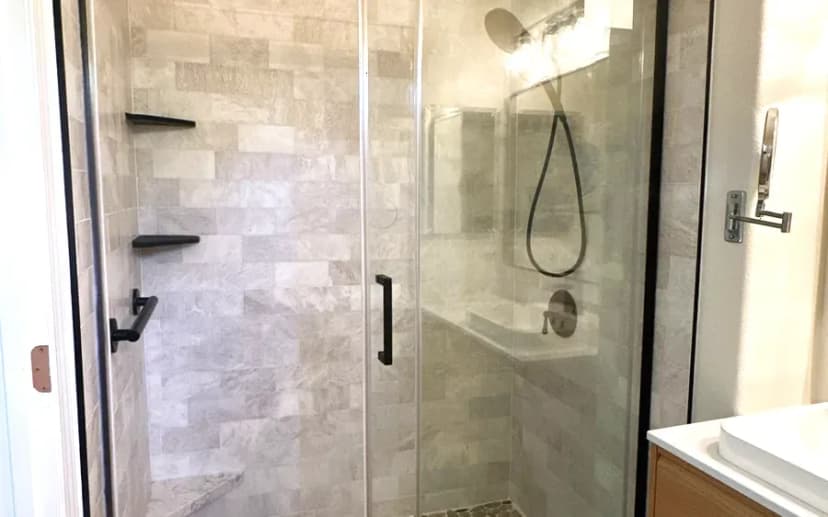
12 Mid-Century Modern Bathroom Ideas for Sacramento Ranch Homes
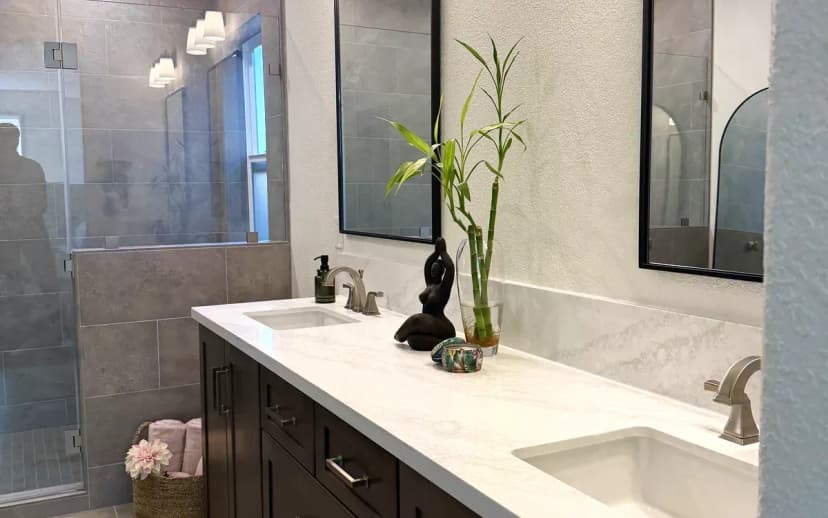
East Sacramento Bathroom Remodel Guide: Craftsman, Tudor & Historic Homes (2026)
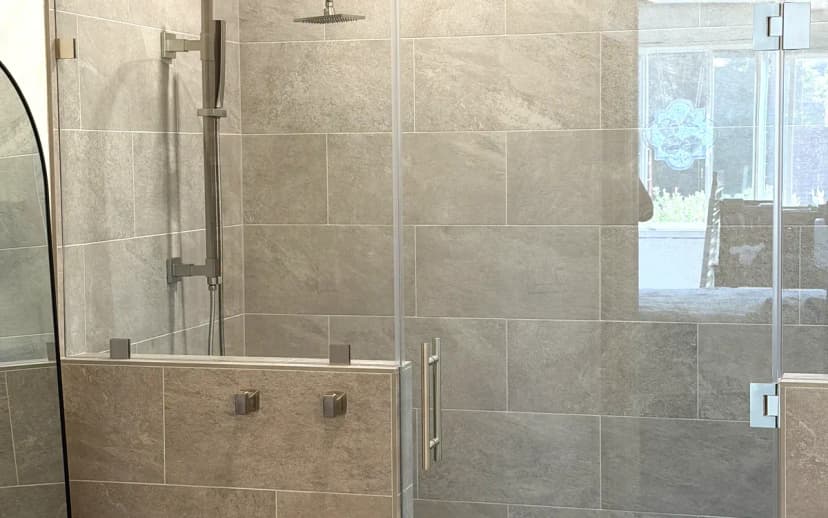
Sacramento ADU Bathroom Addition Guide: Requirements, Costs & Permits (2026)
Get a Free Estimate
Call us at (916) 907-8782 or fill out our contact form.