Roseville Bathroom Permits & Inspections Walkthrough
What needs a permit, what does not, how the inspection process works, and why skipping permits is the most expensive shortcut you can take. A complete walkthrough of Roseville's bathroom remodel permit requirements.
Looking for bathroom remodeling in Roseville? View our Roseville service area page →
Table of Contents
- 1. Why Bathroom Permits Matter in Roseville
- 2. What Bathroom Work Requires a Permit
- 3. What Does Not Require a Permit
- 4. City of Roseville Building Department Overview
- 5. Permit Types for Bathroom Remodels
- 6. The Permit Application Process Step by Step
- 7. Inspection Stages and What Inspectors Look For
- 8. Common Inspection Failures and How to Avoid Them
- 9. Permit Costs and Fee Schedule
- 10. How Permits Affect Your Remodel Timeline
- 11. Risks of Unpermitted Bathroom Work
- 12. Your Contractor's Role in the Permit Process
- 13. Frequently Asked Questions
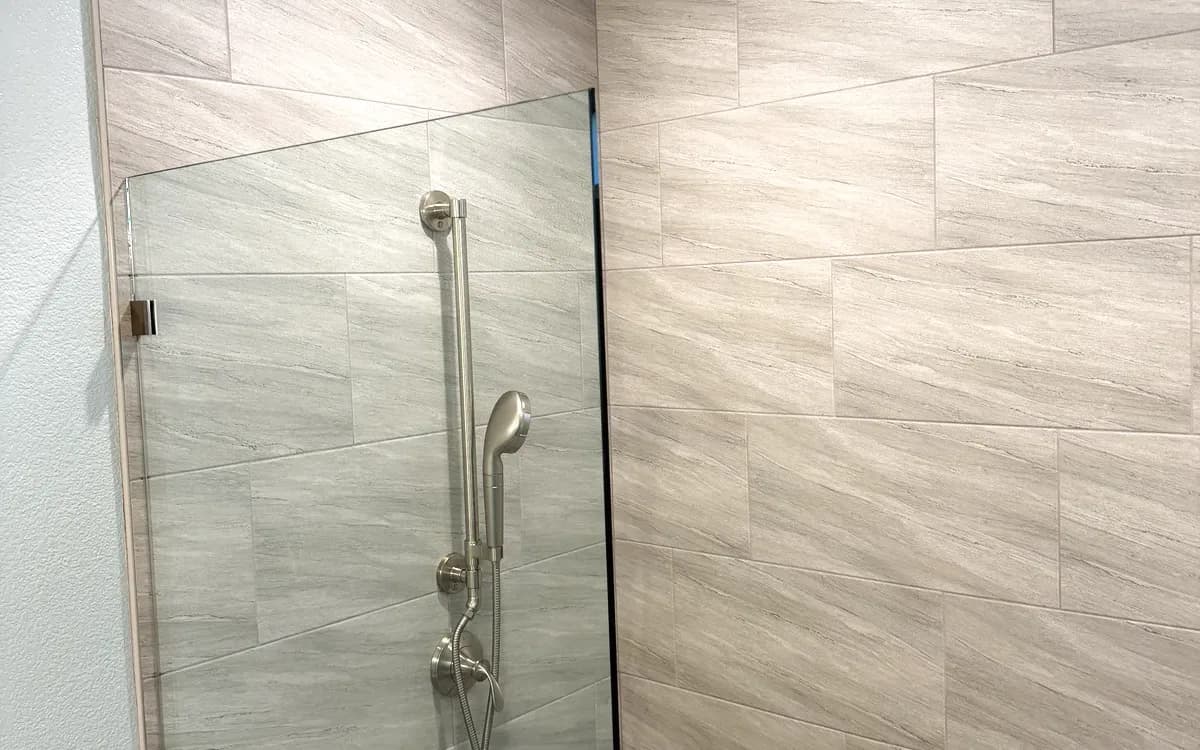
Pictured: a real Oakwood project in Citrus Heights. See the full before & after
Why Bathroom Permits Matter in Roseville
Bathroom permits exist for one reason: to verify that the work behind your walls — the plumbing, electrical, and waterproofing that you will never see once the tile is installed — is done correctly and safely. The City of Roseville Building Department enforces the California Building Code, Plumbing Code, and Electrical Code to protect homeowners from substandard work.
Permits are not bureaucratic red tape. They are a verification system that every reputable bathroom remodeling contractor embraces. An independent city inspector reviews the work at critical stages — before walls are closed, before tile covers the waterproofing, and after final fixtures are installed. This catches problems when they are cheap and easy to fix, rather than after $15,000 in tile covers a plumbing mistake.
For a broader overview of California's building code requirements, see our comprehensive guide to California bathroom building codes for 2026. This article focuses specifically on the Roseville permit and inspection process.
What Bathroom Work Requires a Permit
In Roseville, a building permit is required for any bathroom work that involves changes to mechanical systems or structural elements. Here is a specific breakdown:
Plumbing Work That Requires a Permit
- Moving or adding a toilet, sink, shower, or bathtub to a new location
- Converting a bathtub to a walk-in shower (changes drain configuration)
- Adding a new water supply line or drain line
- Replacing a shower valve (requires anti-scald valve per current code)
- Installing a new water heater or tankless unit
- Rerouting or replacing supply lines (copper to PEX, for example)
Electrical Work That Requires a Permit
- Adding new electrical circuits or outlets
- Moving existing outlets or switches to new locations
- Installing a new exhaust fan or upgrading to a larger unit
- Adding recessed lighting or any new light fixtures with new wiring
- Installing heated floors (requires a dedicated circuit)
- Adding GFCI protection to circuits that lack it
Structural Work That Requires a Permit
- Removing or modifying any wall (load-bearing or not)
- Enlarging a doorway or window opening
- Cutting into or modifying the concrete slab for drain relocation
- Adding or enlarging a shower niche that penetrates wall framing
The neighboring city of Folsom has similar requirements — see our Folsom bathroom permits guide for a comparison of the two cities' processes.
What Does Not Require a Permit
Not every bathroom update requires a trip to city hall. The following cosmetic and like-for-like replacement work does not require permits in Roseville:
- Painting walls and ceilings
- Replacing a faucet or showerhead in the same location (no valve change)
- Swapping a toilet with one that has the same rough-in dimension
- Replacing a vanity countertop without modifying plumbing
- Installing new cabinet hardware, towel bars, or accessories
- Replacing a mirror
- Caulking and re-grouting existing tile
- Replacing a light fixture on an existing circuit (same location, same wattage capacity)
- Installing a new toilet seat, soap dispenser, or similar accessory
The general rule: if the work involves only surfaces and accessories — nothing behind the wall or under the floor — it does not need a permit. The moment you open a wall, move a pipe, or run new wire, you are in permit territory.
City of Roseville Building Department Overview
The City of Roseville Building Division operates under the Development Services Department. They enforce the 2022 California Building Standards Code (CBC), which includes the California Building Code, Plumbing Code, Electrical Code, Mechanical Code, and Energy Code. Here are the key details:
- Location: Roseville Civic Center, 311 Vernon Street, Roseville, CA 95678
- Phone: (916) 774-5332
- Hours: Monday through Thursday, 7:30 AM to 5:30 PM (closed Fridays and alternate Fridays for the 9/80 schedule)
- Online portal: Roseville offers online permit applications through their online permitting system, which allows electronic submission of applications and documents
- Inspection requests: Inspections can be requested online or by phone — typically with 24-hour advance notice
Roseville's building department is generally efficient compared to larger jurisdictions in the Sacramento region. Simple permits are often processed over the counter. More complex projects requiring plan review typically take 1 to 3 weeks. For homeowners in our broader Roseville service area, we handle all interactions with the building department as part of every permitted project.
Permit Types for Bathroom Remodels
A bathroom remodel in Roseville may require one or more of the following permit types, depending on the scope of work:
| Permit Type | When Required | Typical Cost |
|---|---|---|
| Plumbing permit | Any plumbing changes — fixture relocation, new supply lines, drain work, valve replacement | $200 – $350 |
| Electrical permit | New circuits, relocated outlets/switches, new light fixtures with new wiring, exhaust fan changes | $150 – $300 |
| Building permit | Structural changes, wall removal, slab modifications, full bathroom remodel scope | $300 – $600 |
| Mechanical permit | HVAC duct modifications, exhaust fan ducting changes | $100 – $200 |
| Combined permit | Full remodel covering building, plumbing, electrical, and mechanical | $500 – $900 |
Most full bathroom remodels require a combined permit that covers all trades. Your contractor should evaluate the full scope of work and determine exactly which permits are needed before submitting the application.
The Permit Application Process Step by Step
Here is exactly how the Roseville bathroom permit process works from start to finish:
- Scope documentation: Your contractor prepares a detailed scope of work describing every modification — plumbing changes, electrical updates, structural alterations, and materials to be used. For simple projects, this is a written description. For complex projects, it includes floor plan drawings showing existing and proposed layouts.
- Application submission: The contractor submits the permit application to the City of Roseville, either online through the permitting portal or in person at the Development Services counter. The application includes the scope of work, contractor license information, proof of insurance, and property owner authorization.
- Plan review (if required): Simple bathroom remodels — fixture replacements in the same location with minor plumbing and electrical work — are often approved over the counter. Projects with structural changes, layout modifications, or extensive systems work require plan review, which takes 1 to 3 weeks.
- Permit issuance: Once approved, the permit is issued and must be posted visibly at the job site during construction. The permit card lists the required inspections and serves as the inspection record.
- Construction with inspections: Work proceeds with inspections scheduled at required stages (covered in detail in the next section). Work cannot advance past an inspection point until the inspector approves.
- Final inspection and sign-off: After all work is complete and all intermediate inspections have passed, a final inspection verifies everything meets code. The permit is finalized and the record is closed.
Our start-to-finish project guide shows how the permit process integrates with the overall remodel timeline.
Inspection Stages and What Inspectors Look For
Roseville building inspectors verify that work complies with the California Building Standards Code at specific stages. Here are the typical inspections for a bathroom remodel:
Rough Plumbing Inspection
Scheduled after new supply lines, drain lines, and vent pipes are installed but before walls and floors are closed. The inspector verifies proper pipe sizing, slope on drain lines (minimum 1/4 inch per foot), secure connections, vent pipe routing, and compliance with the Uniform Plumbing Code adopted by California. Water supply lines are pressure-tested to verify no leaks.
Rough Electrical Inspection
Scheduled after new wiring, boxes, and circuits are installed but before drywall covers them. The inspector checks wire gauge for the circuit amperage, proper box sizing, GFCI protection on all bathroom circuits (required by the California Electrical Code), dedicated circuits where required (such as for heated floors), and proper grounding. All connections must be accessible and visible during this inspection.
Shower Pan or Waterproofing Inspection
Some inspectors require a shower pan test — the shower base is filled with water and must hold for a specified period (typically 24 hours) without any drop in water level. This verifies the waterproofing integrity before tile is installed. Not all projects require a separate waterproofing inspection, but when the inspector calls for one, no tile work can proceed until it passes.
Final Inspection
The final inspection happens after all fixtures are installed, all tile is complete, and the bathroom is fully functional. The inspector verifies that installed fixtures match the permit scope, all electrical connections are complete and covered, plumbing fixtures operate correctly with no leaks, the exhaust fan functions and is properly ducted to the exterior, and GFCI outlets trip correctly. Once the final passes, the permit is closed.
Common Inspection Failures and How to Avoid Them
Inspection failures add time and cost to your project. Here are the most common reasons bathroom remodel inspections fail in Roseville — and how a qualified contractor prevents each one:
- Missing GFCI protection: Every outlet in a bathroom must be GFCI-protected. This includes outlets inside vanity cabinets and outlets that serve the exhaust fan. Some contractors miss the cabinet outlets. The fix is simple but requires the inspector to return for a re-inspection.
- Incorrect drain slope: Drain lines must maintain a minimum 1/4-inch drop per foot of horizontal run. If a drain line is too flat, waste will not flow properly and the inspection fails. This is corrected by re-routing the drain — which requires opening the slab again if the drain runs under concrete.
- Exhaust fan not ducted to exterior: California code requires bathroom exhaust fans to vent to the outdoors — not into the attic. Inspectors check the termination point. Venting into the attic causes moisture damage to roof sheathing and insulation, and it is a code violation.
- Anti-scald valve not installed: If the shower valve is being replaced, the new valve must have pressure-balancing or thermostatic protection. Installing a standard valve without anti-scald capability fails inspection every time.
- Improper waterproofing: If the shower pan test fails (water level drops), the waterproofing must be redone before tile installation. This is why quality contractors test their own waterproofing before calling for inspection.
- Work exceeding permit scope: If the inspector finds work that was not included in the original permit — such as an added outlet or relocated drain that was not on the plans — the permit must be amended before the inspection can pass.
Experienced contractors know what inspectors look for and build to code the first time. Our contractor evaluation guide covers how to identify contractors who take permits and code compliance seriously.
Permit Costs and Fee Schedule
Permit fees in Roseville are based on the project valuation and the types of permits required. Here are typical costs for bathroom remodel permits:
- Plumbing permit only: $200 to $350 (for projects that only involve plumbing changes)
- Electrical permit only: $150 to $300 (for lighting, circuit, or outlet work)
- Building permit: $300 to $600 (based on project valuation, typically calculated per the ICC Building Valuation Data)
- Combined permit (full remodel): $500 to $900 (covers building, plumbing, electrical, and mechanical)
- Plan review fee: Typically 65% of the building permit fee, added when plan review is required
These fees are current as of early 2026 and are subject to annual adjustment by the City of Roseville. The fees are a small fraction of the total project cost — typically 1% to 3% of the remodel budget. They buy independent verification that the work is done correctly, which protects your investment for decades.
At Oakwood Remodeling Group, permit fees are included in every project proposal. There are no surprise permit costs added after the contract is signed.
How Permits Affect Your Remodel Timeline
Permits add time to your project — but not as much as most homeowners expect. Here is how the permit timeline integrates with the remodel schedule:
| Phase | Timeline | Notes |
|---|---|---|
| Permit application | 1 day | Submitted during design phase |
| Over-the-counter approval | 1 – 3 days | Simple projects without structural changes |
| Plan review approval | 1 – 3 weeks | Complex projects with structural or layout changes |
| Rough inspection scheduling | 24 – 48 hours | Request with 24-hour notice minimum |
| Final inspection scheduling | 24 – 48 hours | After all work is complete |
The key to minimizing permit-related delays is submitting the application early — during the design and material selection phase, not after. We submit permit applications while materials are being ordered, so the permit is in hand before the first day of demolition. Inspection wait times during construction are typically 24 to 48 hours, which we build into the project schedule so they do not add days to the timeline.
Risks of Unpermitted Bathroom Work
Some contractors suggest skipping permits to save time and money. This is a serious red flag. Here is what unpermitted bathroom work can cost you:
- Home sale complications: When you sell your home, the buyer's inspector or appraiser may identify unpermitted work. This can delay closing, reduce the sale price, or require you to bring the work up to code and obtain retroactive permits — which means opening finished walls for inspection.
- Insurance denial: If a plumbing failure or electrical issue causes water damage or a fire, your homeowner's insurance company can deny the claim if the work was unpermitted. You are fully liable for all repair costs.
- Safety hazards: Without inspection, plumbing errors can cause slow leaks that damage framing for years before becoming visible. Electrical errors can create fire hazards. Improper waterproofing leads to mold growth behind walls. These are not hypothetical risks — they are the problems we find regularly when remodeling bathrooms that were previously worked on without permits.
- City penalties: If the City of Roseville discovers unpermitted work (through a neighbor complaint, a subsequent permit application, or a building sale), they can issue stop-work orders, require permits after the fact at increased fees, and require the removal of finished work for inspection access.
- Retroactive permit costs: Getting a retroactive permit for completed work typically costs 2 to 4 times the original permit fee — and may require opening walls, ceilings, and floors to expose the work for inspection. The cost of fixing and re-finishing after retroactive inspection often exceeds the cost of the original remodel.
Your Contractor's Role in the Permit Process
A licensed, reputable contractor handles the entire permit process. Here is what you should expect from your contractor regarding permits:
- Permit determination: Your contractor evaluates the scope of work and determines which permits are required. This should be discussed during the proposal phase, not after the contract is signed.
- Application and documentation: The contractor prepares the scope description, any required drawings, and submits the application under their license. In California, contractors pull permits under their own CSLB license number — they are responsible for the work meeting code.
- Fee inclusion: Permit fees should be included in your project proposal. If permits are listed as an add-on or excluded, ask why — and be cautious.
- Inspection scheduling: The contractor schedules all inspections and is present when the inspector arrives. The inspector interacts with the contractor, not the homeowner — though you are welcome to be present.
- Correction responsibility: If an inspection fails, the contractor is responsible for making corrections and scheduling a re-inspection at no additional cost to you. Failed inspections should not result in change orders or extra charges.
- Final documentation: After the final inspection passes, the contractor provides you with a copy of the signed-off permit card. Keep this with your home records — you will need it if you sell the home or make future modifications.
For a deeper look at what to expect from a professional contractor throughout the entire process, see our start-to-finish remodel process guide and our contractor evaluation guide.
Frequently Asked Questions
Need Help With Roseville Bathroom Permits?
Oakwood Remodeling Group handles every permit and inspection for every bathroom remodel we complete in Roseville. Permit fees are included in your project proposal — no surprises. We know the City of Roseville Building Department process inside and out, and we schedule inspections to minimize delays in your project timeline.
Related Reading
California Bathroom Building Codes 2026
Statewide code requirements for bathroom remodels.
Bathroom Permits in Folsom, CA
Permit guide for neighboring Folsom.
Our Remodel Process Start to Finish
How permits fit into the full project timeline.
Bathroom Remodeling in Roseville
Our full Roseville service area page.
How to Evaluate a Bathroom Contractor
What to look for in a licensed remodeling contractor.
Get Your Free Estimate
Schedule your consultation today

Get a Free Estimate
Call us at (916) 907-8782 or fill out our contact form.