Folsom Aging-in-Place Bathroom: Safety Meets Style
Universal design does not mean institutional design. Here is how Folsom homeowners are building bathrooms that are safe, accessible, and genuinely beautiful — for every stage of life.
Looking for bathroom remodeling in Folsom? View our Folsom service area page →
Table of Contents
- 1. Why Folsom Homeowners Are Planning Ahead
- 2. Universal Design vs. ADA Compliance
- 3. Curbless Showers: The Foundation of Accessible Design
- 4. Grab Bars That Look Like Design Features
- 5. Non-Slip Flooring That Looks Premium
- 6. Comfort-Height Fixtures and Accessible Vanities
- 7. Lighting for Safety and Visibility
- 8. Doorways, Layout, and Clearances
- 9. Smart Technology for Independent Living
- 10. Folsom Neighborhoods and Aging-in-Place Demand
- 11. Cost Ranges and Return on Investment
- 12. Planning Timeline: When to Start
- 13. Frequently Asked Questions
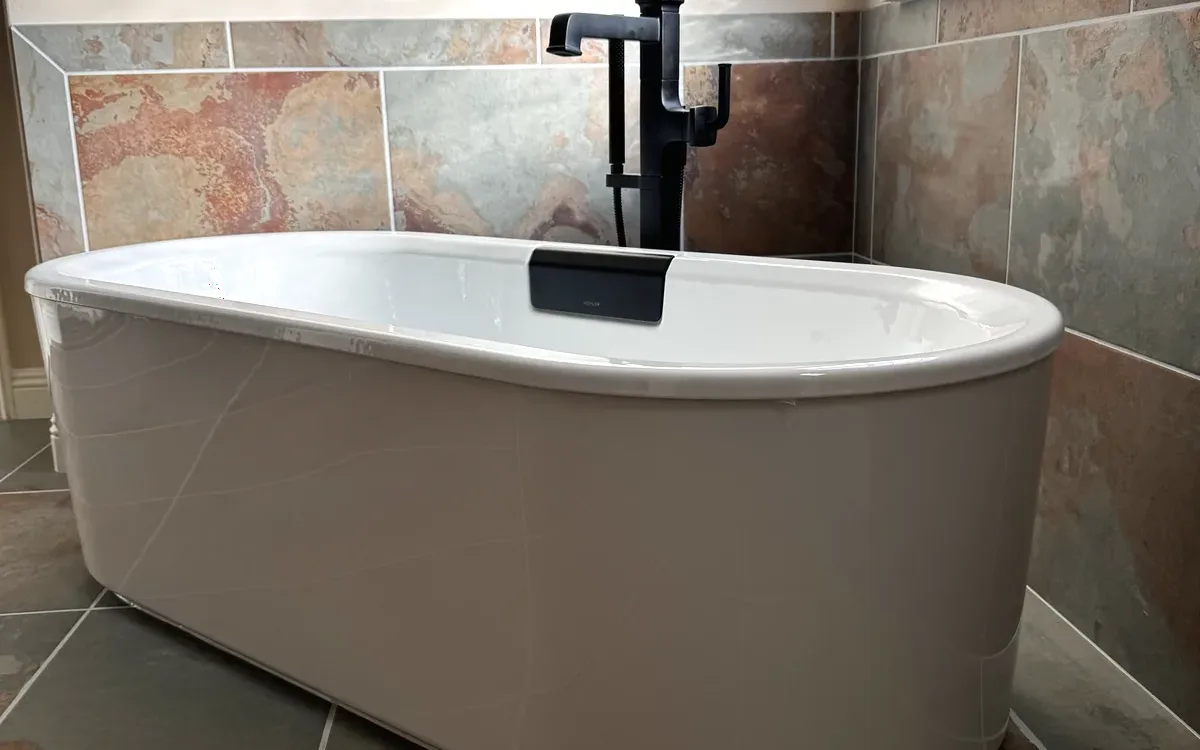
Pictured: a real Oakwood project in Elk Grove. See the full before & after
Why Folsom Homeowners Are Planning Ahead
Folsom is one of the Sacramento region's most desirable communities for long-term homeownership. Neighborhoods like Empire Ranch, Broadstone, Natoma Station, and the Parkway corridor attract buyers who plan to stay for decades — raising families, building equity, and eventually retiring in the same home. The question is whether the home can accommodate that entire lifecycle.
The bathroom is where aging-in-place planning matters most. According to the CDC, more than 80 percent of fall-related injuries among adults over 65 occur in the bathroom. Wet surfaces, high tub walls, low toilets, and poor lighting combine to make standard bathrooms genuinely hazardous as mobility decreases.
The smartest time to address accessibility is before you need it — during a planned remodel when you can design for safety without making emergency compromises. As Folsom's bathroom remodeling specialists, we help homeowners build bathrooms that serve them now and for the next 20 to 30 years.
Universal Design vs. ADA Compliance
These terms are often used interchangeably, but they mean different things. ADA (Americans with Disabilities Act) compliance is a set of strict dimensional standards required in commercial and public buildings — specific grab bar heights, minimum 60-inch wheelchair turning radius, 36-inch minimum door clear width, and standardized fixture heights.
Universal design takes those same safety principles and applies them to residential spaces with more flexibility and aesthetic freedom. A universal design bathroom in Folsom does not need to look like a hospital room. It uses wider doorways because they feel more open, curbless showers because they look modern, comfort-height toilets because they are more ergonomic, and grab bars because they are finished in matte black or brushed nickel and double as towel bars.
The goal is a bathroom that a 30-year-old and a 75-year-old both find comfortable, attractive, and functional. Our guide on aging-in-place design beyond grab bars explores this philosophy in depth.
Curbless Showers: The Foundation of Accessible Design
The single most impactful accessibility upgrade is a curbless walk-in shower. Eliminating the shower curb removes the number one tripping hazard in the bathroom — the 4 to 6-inch step over a traditional threshold. It also creates a seamless, spa-like aesthetic that is one of the most requested features in modern bathroom design.
Building a curbless shower requires precise engineering. The shower floor must slope toward the drain at 1/4 inch per foot while the bathroom floor remains level or slopes slightly toward the shower entry. In Folsom homes with slab-on-grade foundations — common in Empire Ranch, Broadstone, and newer Folsom Ranch subdivisions — this typically involves a recessed shower pan or a linear drain system installed at the shower entry.
A built-in shower bench is essential for curbless designs. Teak fold-down benches save space when not in use. Solid-surface or tiled fixed benches at 17 to 19 inches high provide a stable seating surface that matches the shower walls. A handheld showerhead on a 60-inch slide bar ensures the water reaches a seated user at the right height and angle.
Grab Bars That Look Like Design Features
The biggest objection to aging-in-place design is aesthetics — and grab bars get the most criticism. The institutional stainless-steel grab bars found in hospitals and commercial restrooms have given the entire category a bad reputation. Modern residential grab bars look nothing like that.
Manufacturers like Kohler, Moen, and Delta now produce grab bars in every popular finish — matte black, brushed nickel, brushed gold, polished chrome, and oil-rubbed bronze. Many are designed to serve dual functions: a grab bar that also holds a shower shelf, a grab bar shaped like a towel bar, or a grab bar integrated into a shower niche frame. When matched to your faucet and showerhead finish, they look like coordinated hardware rather than safety equipment.
Placement matters as much as appearance. The key locations are: vertical bar at the shower entry for stability when stepping in, horizontal bar on the long shower wall at 33 to 36 inches high for standing support, angled bar near the shower bench for sit-to-stand assistance, and horizontal bars flanking the toilet at 33 to 36 inches. Every grab bar must be anchored to framing — not just drywall — which means planning for blocking during the framing stage. See our Granite Bay aging-in-place shower guide for more on grab bar integration.
Non-Slip Flooring That Looks Premium
Slip resistance is measured by the Dynamic Coefficient of Friction (DCOF) rating. ADA-compliant surfaces require a minimum DCOF of 0.42. For aging-in-place bathrooms, we recommend 0.50 or higher — especially in shower floors and the area immediately outside the shower where water collects.
Large-format porcelain tile with a matte or textured finish meets these standards while looking modern and clean. Smaller formats like 2x2 mosaic or hexagonal tile provide even better traction because the additional grout lines create a naturally non-slip surface. We avoid polished porcelain, polished marble, and large-format glass tile on floors — they may look beautiful but become dangerously slick when wet.
Radiant floor heating is worth adding to any aging-in-place bathroom in Folsom. Electric mat systems installed under the tile keep the floor at a comfortable 75 to 80 degrees, eliminate the shock of cold tile on bare feet (which can cause a reflexive misstep), and help dry the floor faster after showers. They add $1,500 to $3,000 depending on bathroom size and are controlled by a programmable thermostat.
Comfort-Height Fixtures and Accessible Vanities
Standard toilets sit at 15 inches from floor to seat. Comfort-height toilets (also called ADA-height or right-height) measure 17 to 19 inches — the same height as a standard chair. This seemingly small difference dramatically reduces the effort required to sit down and stand up, which is critical for anyone with knee, hip, or back issues.
Wall-hung toilets allow height adjustment at installation and make floor cleaning easier — both practical benefits for aging in place. Elongated bowl designs provide more seating surface than round bowls. Bidet seats (like Toto Washlet or Brondell) add hygiene and comfort without requiring a separate fixture, and many models include heated seats, warm water wash, and air drying.
Vanity height is equally important. Standard vanities are 30 to 32 inches tall — too low for comfortable standing use and too tall for wheelchair access. A comfort-height vanity at 34 to 36 inches works well for standing users. For wheelchair accessibility, a wall-mounted vanity at 34 inches with open space underneath provides knee clearance. Lever-style faucet handles or touchless faucets eliminate the grip strength needed for traditional knobs.
Lighting for Safety and Visibility
Vision changes are one of the first age-related challenges that affect bathroom safety. A bathroom that felt adequately lit at age 40 can feel dim and hazardous at age 65. The solution is layered lighting with higher overall illumination and specific task lighting where it matters most.
We recommend a minimum of 50 foot-candles of general illumination for aging-in-place bathrooms — compared to the 30 foot-candles typical in standard designs. This is achieved with LED recessed cans on dimmer circuits, allowing brightness adjustment throughout the day. Task lighting at the vanity should include vertical sconces flanking the mirror at eye level, which eliminates the shadows cast by overhead-only lighting.
Night lighting is critical for preventing falls during nighttime bathroom visits. LED strip lights under the vanity cabinet and along the shower bench provide gentle wayfinding illumination without requiring full overhead lights — which can cause temporary blindness when switching from a dark bedroom. Motion-activated night lights built into outlets or baseboards turn on automatically when someone enters the bathroom.
Doorways, Layout, and Clearances
Most Folsom bathrooms have 24 to 28-inch doorways — functional for able-bodied adults but too narrow for walkers, wheelchairs, or even someone using a cane while managing the door. Widening the doorway to 32 inches (minimum) or 36 inches (preferred) is one of the most important accessibility upgrades and one of the least expensive — typically $800 to $2,500 depending on wall conditions.
Door style affects clearance more than people realize. A standard swing door requires 8 to 10 square feet of floor space to operate. A pocket door slides into the wall and requires zero floor clearance. A barn-style sliding door stays outside the room and provides full opening width. For bathrooms where wall depth prevents a pocket door, swing-clear hinges add 2 inches of usable clearance by offsetting the door from the frame when open.
Inside the bathroom, the critical clearance is a 60-inch turning circle — enough space for a wheelchair to make a full rotation. In Folsom master bathrooms that are 8x10 feet or larger, this is achievable with careful fixture placement. In smaller hall bathrooms (5x8 feet), prioritizing clear floor space means choosing a wall-mounted vanity and a curbless shower without a fixed bench to maximize open floor area.
Smart Technology for Independent Living
Technology adds another layer of safety and convenience that supports independent living. Digital shower valves with temperature presets and maximum temperature limits prevent scalding — a real risk for anyone with reduced sensation in their hands or feet. Brands like Kohler DTV+ and Moen U allow water temperature to be set via a digital display or smartphone app, with hard limits that prevent the water from exceeding a safe temperature.
Voice-activated controls are increasingly practical. Smart speakers linked to bathroom lighting, exhaust fans, and even shower valves allow hands-free operation. Motion-sensor faucets turn on automatically, eliminating the need to grip and turn handles. Leak detection sensors under the vanity and behind the toilet send alerts to a smartphone if water is detected — preventing the slow leaks that cause mold and structural damage.
Medical alert integration is the next frontier. Some Folsom homeowners are installing waterproof emergency pull cords or pendant systems in the shower area — discreetly wired to a home monitoring system. These provide peace of mind for independent seniors and their families, especially when the bathroom is the highest-risk room in the home.
Folsom Neighborhoods and Aging-in-Place Demand
Folsom's demographics are driving strong demand for aging-in-place design. The city's 55-plus population has grown steadily as original homeowners in established neighborhoods choose to age in place rather than downsize. Here is where we see the most demand by neighborhood:
- Empire Ranch and Broadstone: Built in the mid-2000s, these homes are 20 years old with original owners now entering their 50s and 60s. Master bathrooms are spacious (80 to 120 square feet) with good bones for universal design conversion. Most have separate tub and shower layouts that convert well to expanded curbless showers.
- Natoma Station and Lexington Hills: Late 1990s to early 2000s construction. Homeowners here are often in their 60s and 70s. Bathrooms are slightly smaller but well-suited to targeted accessibility upgrades like grab bars, comfort-height toilets, and low-threshold showers.
- Folsom Ranch (Russell Ranch, Mangini Ranch): Newer construction (2018-present) with some universal design features already built in. Homeowners here are typically planning ahead — adding blocking for future grab bars, selecting curbless shower designs, and choosing comfort-height toilets during initial construction.
- Historic Folsom and the Parkway: Older homes (1970s-1980s) with the most challenging layouts for accessibility. Smaller bathrooms and narrower hallways require more creative solutions, but the homeowner commitment to staying in these established neighborhoods makes the investment worthwhile.
Cost Ranges and Return on Investment
Aging-in-place bathroom remodels in Folsom typically cost 10 to 20 percent more than a standard remodel of the same scope — the premium covers wider doorways, curbless shower engineering, blocking for grab bars, and specialized fixtures. Here are realistic ranges:
| Project Scope | Cost Range | Timeline |
|---|---|---|
| Basic accessibility retrofit (grab bars, toilet, threshold) | $8,000 -- $15,000 | 3 -- 5 days |
| Hall bath with accessibility upgrades | $22,000 -- $32,000 | 2 -- 3 weeks |
| Master bath full universal design remodel | $35,000 -- $50,000 | 3 -- 5 weeks |
| Master bath with curbless shower + expanded layout | $40,000 -- $60,000 | 4 -- 6 weeks |
The ROI calculation for aging-in-place remodels includes factors beyond resale. The average cost of assisted living in Sacramento County exceeds $5,000 per month. Every year a well-designed bathroom allows someone to remain safely in their home represents $60,000 or more in avoided care costs. When combined with the 70 to 80 percent resale recovery rate for universal design features, the financial case is strong.
Planning Timeline: When to Start
The ideal time to plan an aging-in-place bathroom is 5 to 10 years before you expect to need the features. This allows you to integrate accessibility into a planned remodel rather than making emergency modifications after an injury or fall. It also means you can choose materials and designs you genuinely love rather than settling for whatever is available quickly.
If you are remodeling now and are not sure you need full accessibility, there is a middle ground: install blocking (reinforced framing) behind all shower and toilet walls for future grab bars, choose a comfort-height toilet, and select tile with adequate DCOF ratings. These choices cost little to nothing extra during a remodel but save thousands if you need to add accessibility features later.
For Folsom homeowners ready to move forward, our design process begins with an in-home assessment that evaluates current bathroom conditions, identifies mobility challenges, and develops a plan that balances safety, aesthetics, and budget. We work with occupational therapists when needed to ensure the design meets specific medical requirements.
Frequently Asked Questions
Ready to Design Your Aging-in-Place Bathroom in Folsom?
Oakwood Remodeling Group specializes in universal design bathrooms that combine genuine safety with modern aesthetics. We serve Folsom homeowners in Empire Ranch, Broadstone, Natoma Station, and throughout the city. Every project includes a detailed accessibility assessment, fixed pricing, and a design you will love for decades.
Related Reading
Bathroom Remodeling in Folsom, CA
Our full service area page for Folsom homeowners.
Aging-in-Place Design Beyond Grab Bars
Universal design philosophy for residential bathrooms.
Granite Bay Walk-in Shower Aging-in-Place
Accessible shower design in the Granite Bay area.
Linear Drain vs. Center Drain for Curbless Showers
Drain options for barrier-free shower designs.
Walk-in Shower Remodeling Services
Our walk-in shower installation and design services.
Get Your Free Estimate
Schedule your consultation today
Related Articles
Auburn Aging-in-Place Bathroom Design: Safe, Accessible & Beautiful
El Dorado Hills Aging-in-Place Bathroom Design: Safety Meets Luxury

Aging-in-Place Bathroom Design: The Complete Guide to Safe, Beautiful Bathrooms
Get a Free Estimate
Call us at (916) 907-8782 or fill out our contact form.