El Dorado Hills Aging-in-Place Bathroom Design: Safety Meets Luxury
Your El Dorado Hills home should work for you at every stage of life. Here's how to design a bathroom that's safe, accessible, and beautiful — whether you're planning ahead or adapting now.
Looking for bathroom remodeling in El Dorado Hills? View our El Dorado Hills service area page →
Table of Contents
- 1. Why El Dorado Hills Needs Aging-in-Place Design
- 2. Universal Design vs. ADA: What Applies to Your Home
- 3. Zero-Threshold Showers: The Foundation of Safe Bathing
- 4. Grab Bars That Look Like Design Choices
- 5. Comfort-Height Fixtures and Vanities
- 6. Non-Slip Flooring That Doesn't Look Clinical
- 7. Wider Doorways and Clear Floor Space
- 8. Lighting, Controls, and Smart Technology
- 9. Aging-in-Place by EDH Neighborhood
- 10. Cost of Accessibility Features in El Dorado Hills
- 11. Future-Proofing: What to Install Now vs. Prepare For
- 12. Frequently Asked Questions
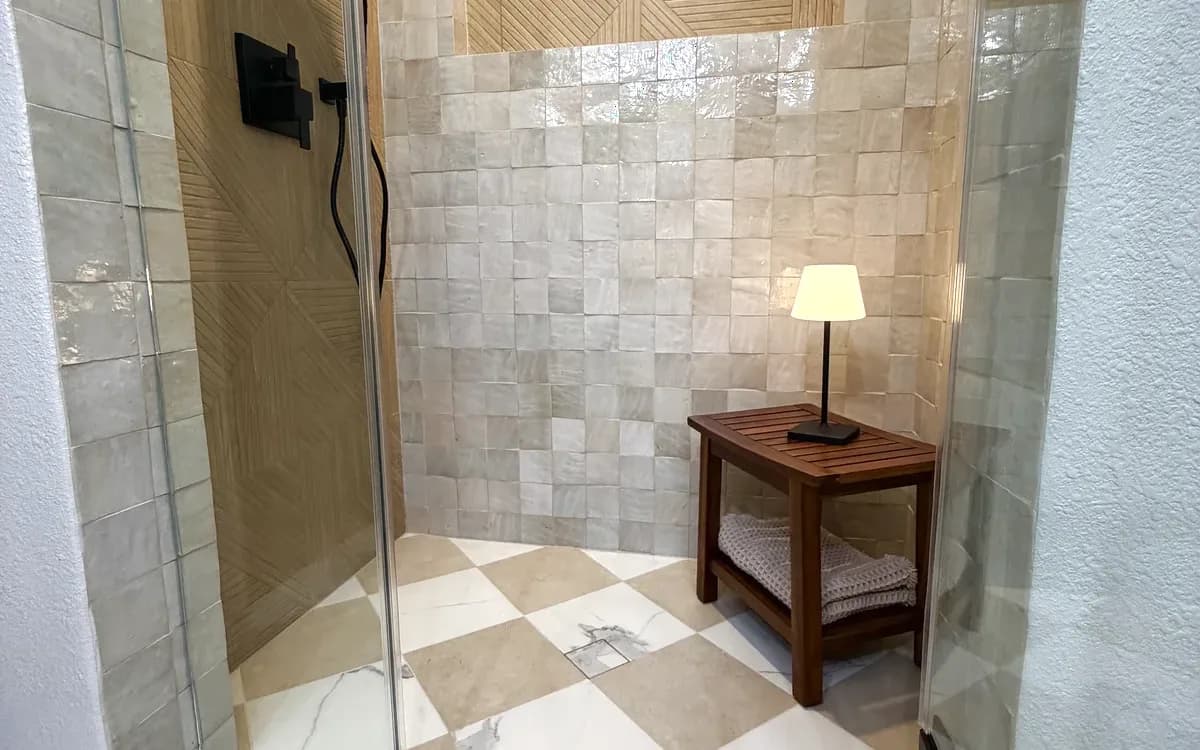
Pictured: a real El Dorado Hills project. See the full before & after
Why El Dorado Hills Needs Aging-in-Place Design
El Dorado Hills is not a community where people leave when they retire. Homeowners in Serrano, Promontory, Blackstone, and Highland Hills built their dream homes in this foothill community precisely because they planned to stay. The oak-studded hills, the access to Folsom Lake, the award-winning schools that attracted them for their children — now those same homeowners want to enjoy their established lives in EDH for decades to come.
The numbers tell the story. El Dorado Hills' 55-plus population has grown steadily over the past decade, and the median home value of $800,000 to $1.2 million means residents have significant equity invested in properties they have no intention of leaving. The question is not whether to age in place — it is how to make the home work safely and comfortably as physical needs evolve.
The bathroom is where this conversation starts. According to the CDC, more than 235,000 Americans over age 15 visit emergency rooms annually for injuries suffered in bathrooms. Falls are the leading cause, and the vast majority happen while entering or exiting the tub or shower, stepping on wet floors, or reaching for fixtures that are positioned too high or too low. Every one of these hazards is preventable through thoughtful design.
But here is the critical distinction that matters for El Dorado Hills: aging-in-place design does not mean your bathroom has to look like a hospital. The days of chrome institutional grab bars and plastic shower chairs are over. Modern universal design integrates safety seamlessly into luxury — and in a community where homes routinely sell for $900,000 to $1.5 million, that aesthetic standard is not optional. It is essential.
Universal Design vs. ADA: What Applies to Your Home
Homeowners often confuse ADA compliance with aging-in-place design, and the distinction matters for both practical and aesthetic reasons. ADA (Americans with Disabilities Act) standards are legal requirements for commercial and public buildings — they dictate exact measurements for grab bar placement, minimum turning radius for wheelchairs, precise fixture heights, and specific clearances. Your El Dorado Hills home is not subject to ADA requirements.
Universal design is the residential counterpart. It borrows the functional principles from ADA standards — safety, accessibility, ease of use — but applies them with design flexibility. Instead of a grab bar at exactly 33 to 36 inches above the finished floor (ADA specification), universal design places grab bars where they are most useful for the specific homeowner in the specific bathroom, then wraps them in finishes that match the overall design. Instead of a clinical 60-inch turning radius, universal design creates generous open floor plans that accommodate mobility aids while looking intentionally spacious and luxurious.
For El Dorado Hills homes, universal design is the standard we recommend. It gives you the safety and functionality of ADA-informed design without the aesthetic constraints that make commercial bathrooms look and feel institutional. Every feature we discuss in this guide follows universal design principles — safety that looks and feels like a deliberate luxury choice.
ADA Compliance
- Required for commercial/public spaces
- Exact measurement specifications
- 60-inch wheelchair turning radius
- Specific grab bar heights and lengths
- Limited flexibility in placement
- Function-first approach
Universal Design (Residential)
- Voluntary for private homes
- Flexible, context-driven placement
- Generous open floor plans
- Designer grab bars and hardware
- Customized to homeowner needs
- Beauty and function together
Zero-Threshold Showers: The Foundation of Safe Bathing
If you do one thing to make your El Dorado Hills bathroom safer for long-term use, convert to a zero-threshold walk-in shower. The traditional bathtub — with its 14 to 16-inch wall that requires stepping over while balancing on a wet surface — is the single greatest fall hazard in any bathroom. A zero-threshold (curbless) shower eliminates that hazard entirely while creating a modern, spa-like aesthetic that happens to be the most requested shower configuration in 2026 regardless of age.
The engineering behind a zero-threshold shower is straightforward but precise. The bathroom floor must be slightly higher than the shower floor, allowing water to drain toward a linear drain (typically installed along the back wall or the entry side). The slope is gentle — roughly 1/4 inch per foot — enough to direct water effectively but barely noticeable underfoot. This requires modifying the subfloor during the remodel, which is standard construction work that adds 1 to 2 days to the timeline.
In Serrano and Promontory homes, where master bathrooms typically range from 80 to 150 square feet, there is ample space for a generous zero-threshold shower. We typically design these at 48 by 60 inches minimum — large enough to include a built-in bench, multiple showerheads, and room to maneuver comfortably. Frameless glass enclosures maintain the open, seamless look while containing water effectively.
Key Zero-Threshold Shower Features
- Linear drain system: Tile-insert models virtually disappear into the floor ($300 to $600)
- Built-in bench: Solid surface or matching tile, 17 to 19 inches high, 15 inches deep ($800 to $2,500)
- Handheld showerhead on slide bar: Adjustable height for seated or standing use ($150 to $500)
- Recessed niches: Positioned at accessible heights, no reaching required ($200 to $400 each)
- Waterproofing: Schluter Kerdi or similar membrane system for complete protection ($500 to $1,200)
The cost for a complete tub-to-shower conversion with zero-threshold design in El Dorado Hills runs $8,000 to $15,000 depending on size, materials, and fixture quality. Within a larger bathroom remodel, the incremental cost of making the shower zero-threshold instead of curbed is typically $1,500 to $3,000 — a modest premium for the most impactful safety feature you can add.
Grab Bars That Look Like Design Choices
The phrase "grab bar" still triggers images of chrome hospital hardware for many homeowners. That association is ten years outdated. The current generation of residential grab bars from brands like Brizo, Kohler, Moen, and Gatco are designed to look like towel bars, shelf supports, and decorative hardware. Your guests will never know they are grab bars unless you tell them.
The key specifications for effective grab bars have not changed: they must support at least 250 pounds of force, be mounted into wall studs or solid blocking (not just drywall), provide a graspable diameter of 1.25 to 1.5 inches, and have a textured finish that does not become slippery when wet. What has changed is that these functional requirements now come wrapped in brushed gold, matte black, champagne bronze, and every other popular finish.
Strategic Placement for EDH Bathrooms
Where you place grab bars matters as much as what they look like. In El Dorado Hills master bathrooms, we recommend grab bars in these locations:
- Shower entry: Vertical bar at 48 inches centered, provides stability when stepping in
- Inside shower, side wall: Horizontal bar at 33 to 36 inches, supports standing and assists with sitting on bench
- Near toilet: One horizontal bar on the side wall, placed 6 to 8 inches above the toilet seat
- At vanity (optional): Integrated into the vanity edge or mounted alongside for balance support
Cost per grab bar ranges from $50 to $150 for the hardware and $150 to $350 for professional installation. If your walls are open during a remodel, we install solid blocking (2x6 lumber between studs) at all potential grab bar locations — even if you are not installing bars now. The cost of blocking during construction is virtually zero ($10 to $30 in lumber), but retrofitting blocking later means cutting into finished walls ($300 to $500 per location for repair).
Comfort-Height Fixtures and Vanities
Standard bathroom fixtures were designed around an average user height that skews younger and more flexible. As we age, the physical demands of using standard-height fixtures become increasingly uncomfortable — and potentially dangerous. Comfort-height fixtures raise the working height by 2 to 4 inches across toilets, vanities, and shower controls, dramatically reducing the bending and strain required for daily use.
Comfort-Height Toilets
A standard toilet seat height is 15 inches from the floor. A comfort-height (also called "right height" or "chair height") toilet sits at 17 to 19 inches — roughly the same height as a dining chair. This 2 to 4-inch difference makes sitting down and standing up significantly easier for anyone with reduced mobility, knee issues, or hip replacements. In El Dorado Hills, comfort-height toilets have become the default specification for all our projects, not just aging-in-place remodels. They are more comfortable for most adults over 5 feet 4 inches tall.
Quality comfort-height toilets from TOTO, Kohler, and American Standard range from $300 to $1,200 for the fixture. The TOTO Drake and Kohler Highline Comfort Height are among the most specified models. Installation runs $200 to $400. Wall-hung models offer adjustable height but cost significantly more ($800 to $2,500) and require a reinforced carrier frame ($300 to $500 additional).
Raised Vanity Heights
Standard bathroom vanities sit at 30 to 32 inches. Comfort-height vanities rise to 34 to 36 inches, matching kitchen counter height and reducing the forward lean required for hand washing, face washing, and grooming. This is particularly important for homeowners with back pain or balance issues. In Promontory and Blackstone homes, where master bathrooms often accommodate double vanities, raised height makes an immediate difference in daily comfort.
A comfort-height vanity does not cost more than a standard-height vanity — it simply requires specifying the taller option during design. Custom vanities are built to any height. Semi-custom lines from Bertch, Wellborn, and Mid Continent all offer 34 and 36-inch options.
Non-Slip Flooring That Doesn't Look Clinical
Bathroom falls on wet floors account for a staggering percentage of in-home injuries, and flooring material selection is the primary defense. The challenge in El Dorado Hills homes is finding flooring that provides genuine slip resistance while maintaining the luxury aesthetic that $800,000 to $1.2 million homes demand. Fortunately, the industry has advanced far beyond the textured institutional tile of decades past.
The key metric is DCOF (Dynamic Coefficient of Friction). The American National Standards Institute recommends a minimum DCOF of 0.42 for wet-area flooring. Look for this rating when selecting any bathroom floor tile — it is typically listed in the manufacturer's technical specifications.
Best Non-Slip Flooring Options for EDH Homes
| Material | DCOF Rating | Cost/Sq Ft | Best For |
|---|---|---|---|
| Matte porcelain (large format) | 0.42-0.60 | $4-$12 | Main floor, universal |
| Honed natural stone | 0.45-0.65 | $10-$30 | Luxury main floor |
| Textured porcelain mosaic | 0.55-0.80 | $8-$18 | Shower floors |
| Luxury vinyl plank | 0.42-0.55 | $3-$7 | Budget-friendly option |
| Penny round mosaic | 0.60-0.80 | $10-$20 | Shower floors, accents |
For Serrano and Promontory master bathrooms, we most frequently specify large-format matte porcelain tile in natural stone looks. A 12x24 or 24x24 honed travertine-look porcelain tile provides excellent slip resistance, minimal grout joints (fewer trip hazards), and the luxury aesthetic that matches the caliber of these homes. For shower floors specifically, small-format mosaic tile (2x2 or penny round) provides the highest grip factor due to the additional grout lines creating natural traction.
One material to avoid in aging-in-place bathrooms: polished marble or polished porcelain. These surfaces, while beautiful when dry, become extremely slippery when wet — DCOF ratings often drop below 0.30. If you love the marble look, specify a honed or matte finish instead. The slip resistance improves dramatically with virtually no change in appearance.
Wider Doorways and Clear Floor Space
Standard bathroom doorways in most El Dorado Hills homes are 24 to 28 inches wide — adequate for able-bodied use but problematic if a walker, wheelchair, or even a caregiver assisting an adult needs to pass through. Universal design recommends a minimum clear opening of 32 inches, with 36 inches being ideal for full wheelchair access.
Widening a doorway during a bathroom remodel is one of the most cost-effective accessibility modifications. In most El Dorado Hills homes, the framing can be modified to accept a wider door within the existing wall — no structural engineering required. The cost runs $800 to $2,000 depending on whether the wall contains plumbing or electrical that needs to be rerouted.
Door Swing Options
Beyond width, how the door swings matters for accessibility. A standard inward-swinging door can block access in an emergency if someone falls against it. Universal design options include:
- Outward-swinging door: Simple, inexpensive, prevents blockage ($0 additional cost, just rehang the door)
- Pocket door: Slides into the wall, reclaiming all swing clearance ($400 to $1,200 installed)
- Barn-style sliding door: Mounts on exterior track, no swing space needed ($300 to $800 for hardware)
- Privacy curtain: For en suite master baths where a door is optional ($50 to $200)
Clear floor space inside the bathroom is equally important. Universal design recommends at least a 60-inch turning radius (5 feet of clear circular floor space) to accommodate a wheelchair. In the generous master bathrooms of Serrano and Promontory homes, this is typically achievable without major layout changes. In smaller secondary bathrooms, creative layout modifications may be needed — repositioning the vanity, replacing a tub with a walk-in shower, or reducing cabinetry to open floor area.
Lighting, Controls, and Smart Technology
Reduced vision is a natural part of aging, and bathroom lighting that was adequate at 40 may feel dim and insufficient at 65. The National Institute on Aging recommends that adults over 60 need roughly twice as much light as younger adults to see clearly. This does not mean installing interrogation-room brightness — it means layering light sources strategically.
Lighting Layers for Aging-in-Place
- Task lighting: Bright, shadow-free illumination at the vanity (LED side-mount sconces at face height)
- Ambient lighting: Overhead recessed cans or flush mount fixtures on dimmer controls
- Night lighting: Motion-activated LED strips at toe-kick level for safe midnight navigation
- Shower lighting: Recessed wet-rated LED fixtures inside the shower enclosure
Motion-activated night lighting is one of the highest-impact, lowest-cost aging-in-place features available. LED strip lights installed beneath the vanity toe kick activate automatically when someone enters the bathroom at night, providing enough illumination to navigate safely without the blinding effect of turning on full overhead lights. Cost: $100 to $300 for a quality motion-activated LED system.
Smart Controls
Rocker-style light switches and lever-handle faucets are universal design basics — they require less grip strength and fine motor control than toggle switches and round knobs. Beyond these basics, smart home technology adds another layer of accessibility. Voice-activated lighting ("Hey Google, turn on the bathroom light"), touchless faucets that activate with hand proximity, and digital shower controls that remember your preferred water temperature all reduce the physical demands of daily bathroom use.
For El Dorado Hills homes already equipped with smart home systems — common in Serrano's newer construction — integrating bathroom controls is straightforward. A Kohler DTV+ digital shower system lets users preset exact water temperature, flow, and steam settings, then activate them with a single touch or voice command. Cost for digital shower controls: $1,500 to $4,000 depending on the system.
Aging-in-Place by EDH Neighborhood
El Dorado Hills' neighborhoods have different home profiles that affect aging-in-place bathroom design. Here is what we typically encounter:
Serrano
Serrano's active adult community (55+) is the epicenter of aging-in-place demand in EDH. Many homes were purchased 15 to 20 years ago, and original master bathrooms have dated fixtures, standard-height toilets, and tub-shower combos that are increasingly difficult to use. The good news: Serrano master bathrooms are typically 100 to 150 square feet with generous layouts that accommodate universal design features without major structural changes. Budget range: $35,000 to $65,000 for a complete aging-in-place master bath remodel.
Promontory
Promontory homes are among EDH's most upscale, with large master suites and high-end original finishes. Homeowners here expect aging-in-place features that match the premium quality of their homes — think Brizo grab bars in Luxe Gold finish, Toto Neorest smart toilets with auto-open lids and integrated bidet functions, and heated Calacatta marble shower floors. Budget range: $45,000 to $85,000 for a luxury aging-in-place remodel.
Blackstone and Highland Hills
These neighborhoods feature slightly newer construction (2000s-2010s) with somewhat more modern bathroom layouts. Many already have walk-in showers rather than tub-shower combos, making the aging-in-place conversion less extensive. Common upgrades include adding grab bars, replacing standard toilets with comfort height, widening doorways, and upgrading to non-slip flooring. Budget range: $15,000 to $35,000 for targeted accessibility upgrades within an existing layout.
Crown Valley, Woodridge, and Stonegate
Homes in these communities range from the mid-1990s to early 2000s. Master bathrooms typically need both cosmetic updating and accessibility improvements. The most common request is a complete remodel that addresses everything simultaneously — replacing dated tile, converting the tub to a curbless shower, installing comfort-height fixtures, and improving lighting. Budget range: $25,000 to $50,000 for a combined update-and-accessibility remodel.
Cost of Accessibility Features in El Dorado Hills
One of the most common questions we hear from EDH homeowners is how much aging-in-place features add to a bathroom remodel. The answer depends on whether you are adding features to a planned remodel or retrofitting them into an existing bathroom. During a planned remodel, most accessibility features add relatively modest incremental cost because the walls are already open and the space is already being redesigned.
| Feature | During Remodel | Retrofit Cost |
|---|---|---|
| Wall blocking for grab bars | $10-$30 | $300-$500/location |
| Designer grab bars (per bar) | $200-$500 | $350-$700 |
| Zero-threshold shower conversion | $1,500-$3,000 add-on | $8,000-$15,000 |
| Comfort-height toilet | $0 (same price as standard) | $500-$1,500 |
| Wider doorway (28 to 36 inch) | $400-$1,000 | $800-$2,000 |
| Non-slip flooring upgrade | $0-$500 (material choice) | $2,000-$5,000 |
| Motion-activated night lighting | $100-$300 | $200-$500 |
| Handheld showerhead on slide bar | $150-$500 | $300-$700 |
| Built-in shower bench | $800-$2,500 | $2,000-$4,000 |
| Lever-handle faucets | $0 (same price as round) | $300-$800 |
The total incremental cost of incorporating comprehensive aging-in-place features during a planned El Dorado Hills bathroom remodel typically ranges from $2,000 to $8,000 on top of the base remodel cost. For a standalone accessibility retrofit without a full remodel, expect $5,000 to $15,000 depending on the scope. The math is clear: if you are remodeling anyway, adding accessibility features now saves 40 to 60 percent compared to retrofitting later.
Future-Proofing: What to Install Now vs. Prepare For
Not every aging-in-place feature needs to be visible in your remodeled bathroom on day one. The smartest approach is to install some features now and prepare the infrastructure for others — so they can be added quickly and inexpensively if and when they are needed.
Install Now (No Aesthetic Compromise)
- Zero-threshold shower (looks luxurious by default)
- Comfort-height toilet (more comfortable for most adults)
- Comfort-height vanity (matches kitchen counter height)
- Non-slip flooring (invisible difference from standard tile)
- Lever-handle faucets (standard in modern designs)
- Handheld showerhead on slide bar (useful for everyone)
- Rocker-style light switches (modern appearance)
- Motion-activated night lighting (convenient for any age)
Prepare Infrastructure Now, Add Later
- Solid blocking in all walls at grab bar locations (hidden, costs $10 to $30)
- Electrical rough-in for future heated floors (add heat later without demolition)
- Wider doorway rough framing (trim can conceal the full width until needed)
- Plumbing rough-in for bidet seat (just an extra water line, $100 to $200)
- Conduit for future smart controls (run empty conduit now, pull wires later)
This two-phase approach gives you a beautiful bathroom today that can adapt in hours rather than weeks if circumstances change. A grab bar can be installed in 30 minutes when the blocking is already in place. Heated floors can be activated by connecting the pre-run electrical. A bidet seat plugs into the pre-installed water line. The total cost of all infrastructure preparation during a remodel adds roughly $200 to $500 — the best insurance policy you will ever buy.
Frequently Asked Questions
Design Your El Dorado Hills Aging-in-Place Bathroom
Oakwood Remodeling Group specializes in aging-in-place bathroom design that balances safety with the luxury aesthetic El Dorado Hills homes demand. Whether you are planning ahead or adapting now, we design universal bathrooms that look beautiful first and happen to be accessible. Every project includes a detailed scope, fixed pricing, and features tailored to your specific needs.
Call (916) 907-8782 or request a free aging-in-place consultation.
Related Reading
Bathroom Remodeling in El Dorado Hills, CA
Our full service area page for El Dorado Hills homeowners.
Walk-In Shower Installation
Zero-threshold and curbless shower conversions.
Tub-to-Shower Conversion
Convert your tub to a safe, accessible walk-in shower.
Bathroom Remodeling Services
Our complete bathroom renovation services.
EDH Luxury Master Bath Guide
Spa-level features for Serrano and Promontory homes.
Get Your Free Estimate
Schedule your consultation today
Related Articles
Auburn Aging-in-Place Bathroom Design: Safe, Accessible & Beautiful

Aging-in-Place Bathroom Design: The Complete Guide to Safe, Beautiful Bathrooms
ADA Bathroom Requirements for California Homes: What Applies to Residential Remodels
Get a Free Estimate
Call us at (916) 907-8782 or fill out our contact form.