10 Primary Bathroom Layouts for a Long Rectangular Room
Ten primary bathroom layout configurations specifically tuned for long rectangular rooms (8x14, 10x16, 12x18, 12x20) — the shape that most Sacramento-region primary bathrooms occupy. Each layout solves the elongation problem differently.
Looking for bathroom remodeling in Folsom? View our Folsom service area page →
In This Guide
- The long-rectangle layout challenge
- 1. Linear single-wall plumbing
- 2. Double-vanity bookend
- 3. Center-tub anchor
- 4. Two-zone wet-dry split
- 5. End-cap walk-in shower
- 6. Parallel walls vanity opposite shower
- 7. Pony-wall divided layout
- 8. Wet room at the end
- 9. Compartmentalized toilet zone
- 10. Closet-adjacent combined suite
- Plumbing strategy and cost implications
- Frequently asked questions
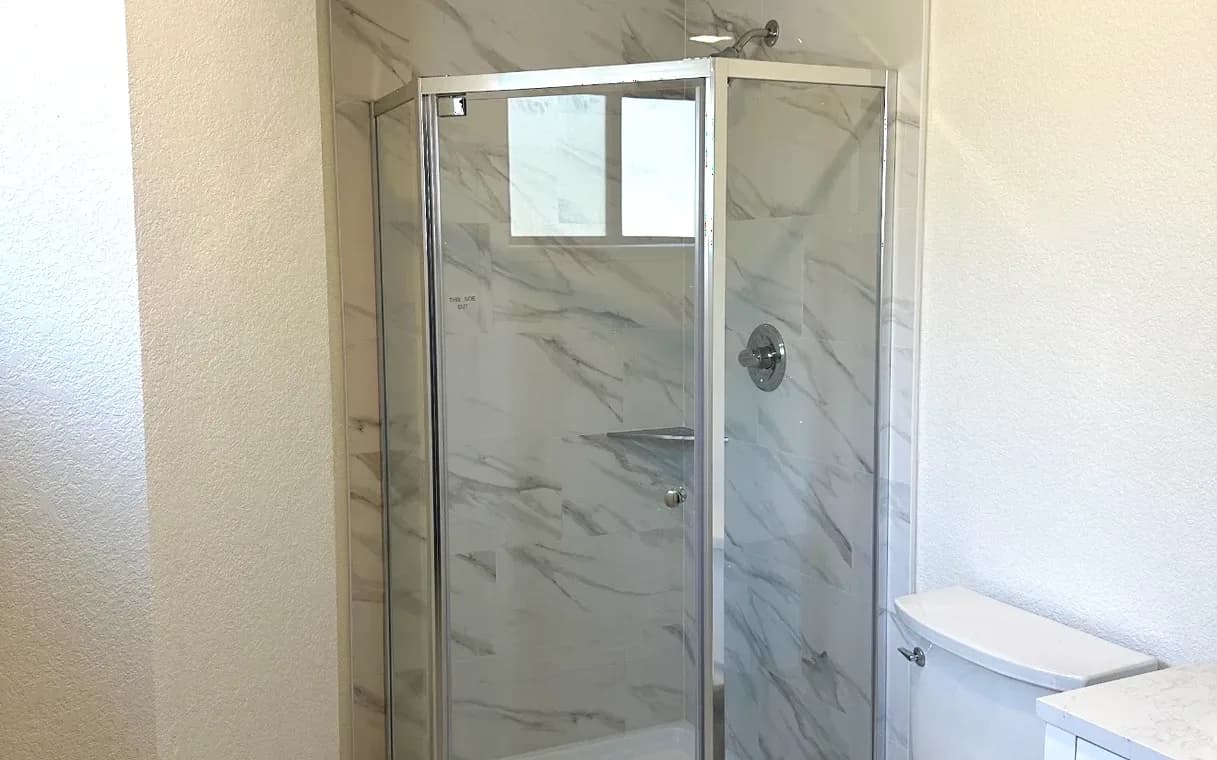
Pictured: a real Folsom project. See the full before & after
Long rectangular bathrooms are the dominant primary bathroom geometry in Sacramento-region homes built between 1990 and 2020. The shape is a product of how primary bathrooms get carved out of new construction — builders allocate a slice of the primary bedroom area that runs along one wall, producing a 10x16, 12x16, or 12x18-foot rectangle that feels luxurious in dimensions but proves harder to lay out than a square of the same square footage. The elongation creates a hallway-like feel without intentional design intervention. Done poorly, the bathroom reads as a corridor with fixtures along one wall. Done well, the rectangle becomes a multi-zone suite that performs better than a comparable square footprint.
These ten layouts are the primary bathroom configurations we install most often in Sacramento-region rectangular primary baths. Each is matched to a specific room width and length combination, with cost implications, plumbing strategies, and design tradeoffs documented. For broader primary bathroom strategy see our master bathroom remodel service and our companion guide on Folsom spa master bath luxury ideas.
The long-rectangle layout challenge
A 12x18-foot primary bathroom contains 216 square feet — enough for double vanity, freestanding tub, separate walk-in shower, water closet enclosure, and substantial storage. The same square footage in a 14x16 footprint works very differently. The 12x18 rectangle has 12-foot short walls (limiting fixture options on those walls) and 18-foot long walls (creating either an over-loaded plumbing wall or expensive distributed plumbing). The 14x16 has more flexibility on every wall.
The fix is to embrace the rectangle's strengths rather than fight them. The long dimension creates natural separation between vanity zone, wet zone, and private zone. The short dimension provides the depth for fixtures while keeping the room from feeling cavernous. Layouts that work with the proportions deliver bathrooms that feel intentional rather than awkward.
1. Linear single-wall plumbing
All fixtures along one long wall: vanity at the door end, toilet in the middle, shower or tub-shower at the far end. The opposite long wall remains free for storage cabinets, a bench, or decorative wall treatment. Lowest plumbing cost — typically 40 to 60 percent less than distributed-plumbing layouts. The trade-off: fixture placement is permanent and the room feels distinctly hallway-like without intervention. Best for primary bathrooms 8x14 to 10x16 feet.
2. Double-vanity bookend layout
Two separate single-sink vanities at opposite ends of the long axis with the wet zone (tub, shower, toilet) between them. Each user gets a private vanity bay accessible from their side of the room. The configuration provides excellent morning workflow for couples — both users can use the bathroom simultaneously without crossing paths. Plumbing cost is moderate (two vanity rough-ins plus wet zone) but lower than fully distributed plumbing. Works in primary bathrooms 12x16 and larger.
3. Center-tub anchor with flanking vanities
A freestanding tub centered on one of the long walls, with vanities flanking it on the same wall (one to each side) or on the opposite wall (parallel to the tub). The tub becomes the visual centerpiece of the room. Best in 12x18 or larger rectangles where the long wall has enough run to accommodate a 60 to 72-inch tub plus 24 to 36-inch vanities on each side. Plumbing cost is moderate; aesthetic impact is high.
4. Two-zone wet-dry split
The room divides into two functional zones: a dry zone (vanity, dressing, makeup application) at the door end, and a wet zone (shower, tub, toilet) at the far end. The two zones can be separated by a half-height pony wall, a glass partition, or a full doorway. The split works exceptionally well in 10x18 and larger rectangles where there is enough length to give each zone genuine space. The dry zone benefits from windows and natural light; the wet zone gets dedicated ventilation.
5. End-cap walk-in shower
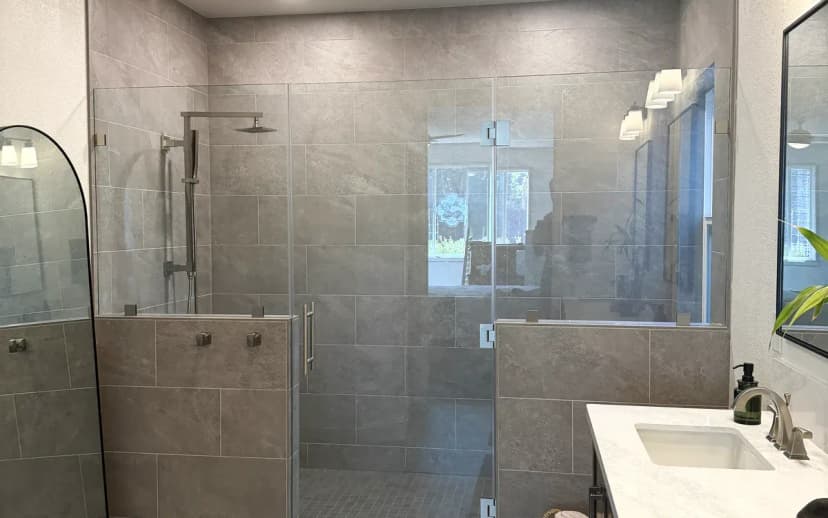
A walk-in shower occupies the entire short wall at the far end of the rectangle — typically 48 to 60 inches deep by 6 to 8 feet wide (the full room width). The glass partition between shower and main bathroom is floor-to-ceiling. The shower becomes a visual destination rather than just a fixture. Best for showering-only bathrooms (no tub) or where the tub is located separately on the long wall. Works in 10x16 and larger rectangles. For curbless wet-room shower detail see our curbless shower installation service.

6. Parallel walls — vanity opposite shower
Vanity along one long wall, shower or shower-tub along the opposite long wall, toilet at the door end. This creates a wide circulation aisle between the two plumbing walls. Best in primary bathrooms 12x16 and larger because the parallel layout requires 6+ feet of width between plumbing walls for comfortable circulation. Plumbing cost is higher because plumbing runs on two walls instead of one — typically 30 to 50 percent above linear single-wall layouts.
7. Pony-wall divided layout
A half-height (4 to 5-foot tall) interior pony wall divides the rectangle into two zones without fully enclosing either. The pony wall provides privacy for the toilet, structural backing for vanity plumbing, and a surface for a deep towel niche or open shelving. The half-height keeps the room feeling open while creating functional separation. Works in rectangles 10x14 and larger.
8. Wet room at the end of the rectangle
The far end of the rectangle becomes a fully tiled wet room with curbless shower and freestanding tub both within the wet zone. A glass partition separates the wet room from the dry zone. The configuration creates a spa-like experience where the user can move between shower and tub without crossing a dry area while wet. Requires substantial waterproofing investment and proper floor slope toward a linear drain. Best in 12x18 and larger rectangles.
9. Compartmentalized toilet privacy zone
The toilet is enclosed inside its own small room (3x5 to 4x6 feet) with a door, accessible from the main bathroom. The enclosed toilet privacy zone allows one partner to use the toilet while another uses the vanity or shower. The enclosure needs separate ventilation (50 CFM minimum) and adequate space (CPC 402.5 requires 30 inches wide and 24 inches front clearance). The configuration is the most- requested upgrade among couples in our primary bathroom remodels.
10. Closet-adjacent combined primary suite
The primary closet and primary bathroom share an open or pocket-door threshold, creating a single morning-routine workflow zone. The closet becomes the dressing area; the bathroom becomes the grooming-and-shower area. The combined configuration feels hotel-suite-like and improves morning workflow significantly. Requires walls coming down — best for new construction or major remodels where structural changes are already in scope.
Plumbing strategy and cost implications
Plumbing distribution is the single biggest cost decision in a long rectangular bathroom. Linear single-wall plumbing costs roughly $4,500 to $9,000 for full primary bathroom rough-in. Distributed plumbing across two opposite walls costs $7,500 to $14,000 — meaningful difference that affects total project budget significantly. For homes where the existing plumbing already runs on multiple walls, distributed layouts have similar cost to linear; for homes with single-wall plumbing currently, switching to distributed adds the full upgrade premium.
Three additional considerations. First, drain stack location: each toilet, sink, and shower needs proximity to the building drain stack. Long rectangular bathrooms in two-story homes often have only one drain stack access — this restricts plumbing flexibility. Second, hot water recirculation: longer plumbing runs waste water waiting for hot water to arrive; consider a recirculating pump for distributed-plumbing layouts. Third, electrical: each plumbing wall needs GFCI protection per California Title 24. Distributed plumbing means more GFCI circuit costs. For broader plumbing strategy see our companion guide on bathroom plumbing rough-in.
Designing a primary bathroom for your rectangular room
Oakwood Remodeling Group specializes in primary bathroom remodels across the Sacramento region — many in the long rectangular configurations common in 1990s through 2020s homes. We will measure your bathroom, assess plumbing options, and recommend the layout that fits your couple workflow, fixture preferences, and budget. Every remodel includes our 3-year workmanship warranty.
Frequently asked questions
Related Reading
Master Bathroom Remodel Services
Full primary bathroom design and construction.
Folsom Spa Master Bath Luxury Ideas
Companion guide for spa-style primary baths.
Curbless Shower Installation
Curbless wet-room shower service for end-cap layouts.
Bathroom Plumbing Rough-In Guide
Plumbing strategy and cost implications by layout.
Galley Bathroom Layout Guide
Companion guide for narrow bathroom layouts.
Get Your Free Estimate
Schedule your consultation today

Get a Free Estimate
Call us at (916) 907-8782 or fill out our contact form.