Hard Water Solutions for Placer County Bathrooms: Protecting Your Investment
Placer County's hard water is the silent enemy of beautiful bathrooms. Those white mineral deposits on your fixtures and glass are not just cosmetic — they are slowly degrading your investment. Here is how to fight back.
Looking for bathroom remodeling in Rocklin? View our Rocklin service area page →
Table of Contents
- Understanding Placer County's Water
- How Hard Water Damages Bathroom Surfaces
- Water Hardness by City: Rocklin, Roseville, Lincoln & More
- Choosing Fixtures That Resist Hard Water
- Shower Glass Coatings and Treatments
- Water Softener Options and Costs
- Tile and Grout Protection Strategies
- Maintenance Tips for Hard Water Areas
- Planning Your Remodel Around Hard Water
- Frequently Asked Questions

Hard water mineral deposits accumulate quickly on bathroom fixtures and glass in Placer County. Without proper protection, new fixtures can show visible buildup within weeks.
You just invested $20,000 or more in a beautiful bathroom remodel. The new frameless glass shower enclosure sparkles. The polished chrome fixtures gleam. The porcelain tile is pristine. Fast forward six weeks, and that glass has a cloudy white film, the fixtures have chalky spots, and the tile grout is developing a rough, mineral-crusted texture. Welcome to life with Placer County water.
Hard water is one of the most persistent challenges for homeowners in Rocklin, Roseville, Lincoln, Granite Bay, and throughout Placer County. The mineral content in our water — primarily calcium and magnesium — is significantly higher than the national average, and those minerals leave visible deposits on virtually every surface they contact. Left unaddressed, hard water does not just look bad — it actively damages fixtures, shortens the lifespan of plumbing components, and can make a brand-new bathroom look years older than it is.
The good news: hard water is a solvable problem. With the right combination of water treatment, material selection, protective coatings, and maintenance practices, you can protect your bathroom investment and keep it looking new for years. This guide covers everything you need to know.
Understanding Placer County's Water
Water hardness is measured in grains per gallon (GPG) or parts per million (PPM). The U.S. Geological Survey classifies water as follows: 0 to 3.5 GPG is soft, 3.5 to 7 GPG is moderately hard, 7 to 10.5 GPG is hard, and above 10.5 GPG is very hard. Most of Placer County falls in the "hard" to "very hard" range.
Placer County Water Agency (PCWA) sources water from the American River and its tributaries, supplemented by groundwater. The surface water tends to be softer (3 to 8 GPG), while groundwater is significantly harder (10 to 20+ GPG). The blend ratio changes seasonally — during wet winters, more surface water is available and hardness decreases. During dry summers, more groundwater is used and hardness increases. This means your water quality is not constant throughout the year.
The minerals responsible for hardness — calcium carbonate and magnesium — are not harmful to drink. In fact, they contribute essential minerals to your diet. But they are devastating to bathroom surfaces because when water evaporates on a surface, those minerals remain behind as a solid deposit. Over time, these deposits build layer upon layer, creating the characteristic white, chalky, crusty buildup that is so difficult to remove.
How Hard Water Damages Bathroom Surfaces
Hard water does not just leave unsightly deposits — it causes real, progressive damage to bathroom components:
- Shower glass: Mineral deposits etch into glass over time. What starts as a removable film becomes a permanent haze that no amount of cleaning can fix. Severely etched glass can only be restored by professional polishing or replacement.
- Fixtures and faucets: Deposits build up inside aerators, restricting flow. Shower cartridges develop mineral buildup that causes dripping or difficulty turning. Chrome and polished finishes lose their luster as mineral layers accumulate.
- Tile and grout: Grout is porous, and minerals penetrate the surface, creating a rough texture that traps more deposits. Textured tile hides deposits initially but becomes increasingly difficult to clean. Natural stone is particularly vulnerable — marble and limestone can be permanently stained by hard water.
- Plumbing: Inside your pipes, hard water creates scale buildup that gradually narrows the pipe diameter and reduces water pressure. Copper pipes are especially susceptible. Over many years, scale buildup can reduce flow by 50 percent or more. See our PEX vs. copper comparison for how material choice affects hard water resistance.
- Water heater: Scale accumulates on the heating element, reducing efficiency and increasing energy costs. A water heater in a hard water area works 20 to 30 percent harder than one supplied with soft water.
Water Hardness by City: Rocklin, Roseville, Lincoln & More
| City | Typical Hardness (GPG) | Classification | Primary Source |
|---|---|---|---|
| Rocklin | 8–14 GPG | Hard to Very Hard | PCWA (mixed surface/ground) |
| Roseville | 7–12 GPG | Hard to Very Hard | City of Roseville (mixed) |
| Lincoln | 10–18 GPG | Very Hard | Primarily groundwater |
| Granite Bay | 6–10 GPG | Hard | SJWD (surface water) |
| Loomis | 8–15 GPG | Hard to Very Hard | PCWA (mixed) |
| Auburn | 4–8 GPG | Moderate to Hard | PCWA (primarily surface) |
Lincoln consistently has the hardest water in Placer County due to its reliance on deep groundwater wells. Homeowners in the Sun City Lincoln Hills and Twelve Bridges communities should treat hard water protection as a priority for any bathroom investment.

The fixture finish you choose makes a dramatic difference in how hard water deposits appear. Brushed finishes with PVD coating (right) hide and resist deposits far better than polished chrome (left).
Choosing Fixtures That Resist Hard Water
The finish you choose for your bathroom fixtures is your first line of defense against hard water. Not all finishes perform equally:
| Finish | Hard Water Resistance | Cleaning Ease | Best For |
|---|---|---|---|
| PVD Brushed Nickel | Excellent | Easy | Best all-around for hard water |
| PVD Brushed Gold | Excellent | Easy | Warm aesthetic with great protection |
| Matte Black | Good | Moderate | Shows white deposits but hides fingerprints |
| Polished Chrome | Poor | Frequent cleaning needed | Only with water softener |
| Polished Nickel | Poor | Frequent cleaning needed | Only with water softener |
We specifically recommend Moen's Spot Resist brushed nickel and Delta's SpotShield technology for Placer County bathrooms. Both use PVD (Physical Vapor Deposition) coatings that create an ultra-hard, nonporous surface that resists water spots and mineral deposits. These fixtures cost 10 to 20 percent more than standard finishes but save significant cleaning effort over their lifetime.
Shower Glass Coatings and Treatments
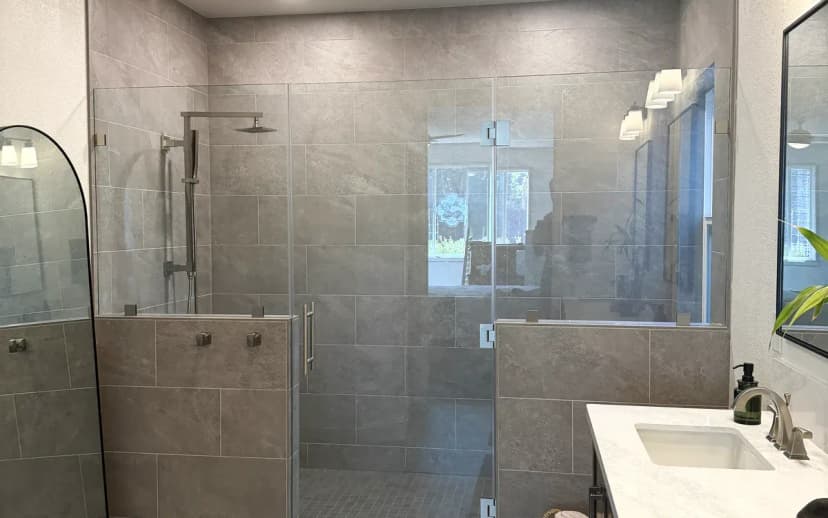
Frameless and semi-frameless glass shower enclosures are the most vulnerable surfaces in a hard-water bathroom. The glass is vertical, water runs down it constantly during showers, and mineral-laden droplets dry in place between cleanings. Without protection, shower glass in Placer County can develop visible haze within weeks of installation.
Professional-grade glass coatings solve this problem by creating a hydrophobic (water-repelling) barrier on the glass surface. Water beads up and sheets off the treated glass rather than spreading into a thin film that evaporates and deposits minerals. The most effective options include:
- EnduroShield: A nano-coating that bonds to the glass at the molecular level. Lasts 3 to 5 years with proper maintenance. Reduces cleaning by up to 90 percent. Applied after installation, costs $200 to $350 for a standard shower enclosure.
- Diamon-Fusion: Another molecular-level coating with excellent durability. Carries a lifetime warranty when applied by a certified installer. Costs $250 to $400 per enclosure.
- ShowerGuard (factory-applied): Guardian Industries offers shower glass with the protective coating baked on during manufacturing. This is the most durable option because the coating is embedded in the glass, not just applied to the surface. Available through glass fabricators — ask your contractor.
- Rain-X for Glass: An affordable consumer-grade option ($10 to $15) that provides 2 to 4 weeks of protection per application. Better than nothing but not a long-term solution for hard water areas.
We recommend EnduroShield or Diamon-Fusion for all frameless glass shower installations in Placer County. The cost is minimal compared to the shower enclosure itself, and the protection is dramatic. Clients who have lived with untreated glass and then upgrade to coated glass consistently report that it is the single most impactful hard-water decision they make.
Water Softener Options and Costs
A whole-house water softener is the most comprehensive solution for hard water. It treats water at the point of entry so every fixture, appliance, and faucet receives soft water. Here are the primary options for Sacramento-area homeowners:
Salt-based ion exchange softeners are the gold standard. They work by exchanging calcium and magnesium ions for sodium ions, effectively removing the minerals that cause hardness. Installation costs $1,500 to $3,500, with annual salt costs of $100 to $200. They produce wastewater during regeneration (about 50 gallons per cycle, 2 to 3 times per week), which is a consideration in drought-prone California.
Salt-free water conditioners do not actually remove minerals — they change the crystal structure of calcium so it does not adhere to surfaces as readily. They are less effective than salt-based softeners but produce no wastewater and require no salt. Installation costs $1,000 to $3,000. They are a reasonable choice for moderate hardness (under 10 GPG) but may not adequately protect fixtures in areas with very hard water like Lincoln.
Reverse osmosis (RO) systems remove virtually all dissolved minerals and are the most thorough treatment option. However, whole-house RO systems are expensive ($3,000 to $8,000) and waste significant water. Point-of-use RO under the kitchen sink is common, but whole-house RO for bathroom protection is usually overkill.
Tile and Grout Protection Strategies
Your tile and grout choices can significantly affect how hard water manifests in your shower remodel:
- Choose porcelain over natural stone: Porcelain tile has a non-porous glazed surface that resists mineral absorption. Natural stone (marble, travertine, limestone) is porous and absorbs minerals, leading to permanent staining. If you love the look of stone, use porcelain tile that mimics natural stone — modern porcelain is remarkably realistic.
- Use epoxy grout: Epoxy grout is non-porous and resists staining from hard water minerals. It costs more than cement-based grout ($5 to $8 per pound vs. $1 to $2) and is more difficult to install, but it eliminates the porous grout surface that traps minerals. Alternatively, use cement grout sealed with a penetrating grout sealer and reseal annually.
- Large-format tile means less grout: Fewer grout lines mean less surface area for mineral accumulation. A 12x24-inch tile has 40 percent less grout exposure than a 6x6-inch tile covering the same area.
- Avoid textured or matte finish tile in the shower: Textured surfaces trap mineral deposits in their micro-grooves. Smooth, polished, or semi-polished tile finishes are much easier to maintain in hard water areas.
Maintenance Tips for Hard Water Areas
Even with a water softener, glass coatings, and PVD fixtures, some maintenance is needed to keep your bathroom looking its best:
- Squeegee after every shower: This is the single most effective habit. A 30-second squeegee of the glass and tile removes water before it can dry and deposit minerals. Keep a squeegee in the shower and make it a family habit.
- Weekly cleaning with white vinegar solution: A 50/50 mixture of white vinegar and water dissolves fresh mineral deposits. Spray on surfaces, let sit for 5 minutes, and wipe clean. For tougher buildup, use undiluted vinegar.
- Monthly deep clean with CLR or Bar Keeper's Friend: For any buildup that vinegar does not remove, use a purpose-made calcium/lime/rust remover. Test in an inconspicuous area first, especially on natural stone or delicate finishes.
- Replace aerators annually: Faucet aerators clog with mineral deposits. Replacement aerators cost $3 to $8 and take 30 seconds to change. Soaking a clogged aerator in vinegar for 2 hours usually restores flow.
- Annual showerhead descaling: Remove the showerhead and soak in vinegar for 4 to 8 hours to dissolve internal mineral deposits.
Planning Your Remodel Around Hard Water
When we consult with homeowners in Rocklin, Roseville, Lincoln, and other Placer County communities about a bathroom remodel, we always discuss hard water strategy as part of the design process. Here is our recommended approach:
- Test your water first: Before making fixture and material decisions, test your water hardness. Free test kits are available from water softener companies, or you can purchase a test strip kit for under $15 at any hardware store. Knowing your exact hardness level guides every other decision.
- Install a water softener before the remodel: If you do not already have one and your water tests above 7 GPG, schedule softener installation 2 to 4 weeks before the remodel begins.
- Select PVD-finished fixtures: Choose Spot Resist, SpotShield, or equivalent PVD finishes for all exposed fixtures — faucets, showerheads, shower trim, and towel bars.
- Specify glass coating: Include EnduroShield or Diamon-Fusion application in your shower glass package. Apply it immediately after installation.
- Choose appropriate tile: Glazed porcelain with epoxy grout provides the best combination of aesthetics and hard-water resistance.
Frequently Asked Questions
Remodeling in a Hard Water Area?
We help Placer County homeowners select materials and treatments that stand up to our local water conditions. Call (916) 907-8782 or request a free consultation.
Related Reading
Get Your Free Estimate
Schedule your consultation today
Related Articles
Get a Free Estimate
Call us at (916) 907-8782 or fill out our contact form.