Water-Efficient Bathroom Fixtures for Folsom Homes: Save Water Without Sacrificing Performance
California takes water seriously, and your next bathroom remodel is the perfect time to upgrade to fixtures that cut your water bill without cutting your shower pressure. Here is what actually works — and what to skip.
Looking for bathroom remodeling in Folsom? View our Folsom service area page →
Table of Contents
- 1. The Folsom Water Reality
- 2. California Title 20: What the Law Requires
- 3. High-Efficiency Toilets That Actually Flush
- 4. Low-Flow Showerheads That Feel Full-Pressure
- 5. Bathroom Faucets: Flow Rates and Smart Features
- 6. Eliminating Hot Water Wait Time
- 7. Folsom Hard Water and Fixture Longevity
- 8. Water Savings Calculator: Real Folsom Numbers
- 9. Rebates and Incentive Programs
- 10. Our Top Fixture Recommendations
- 11. Frequently Asked Questions
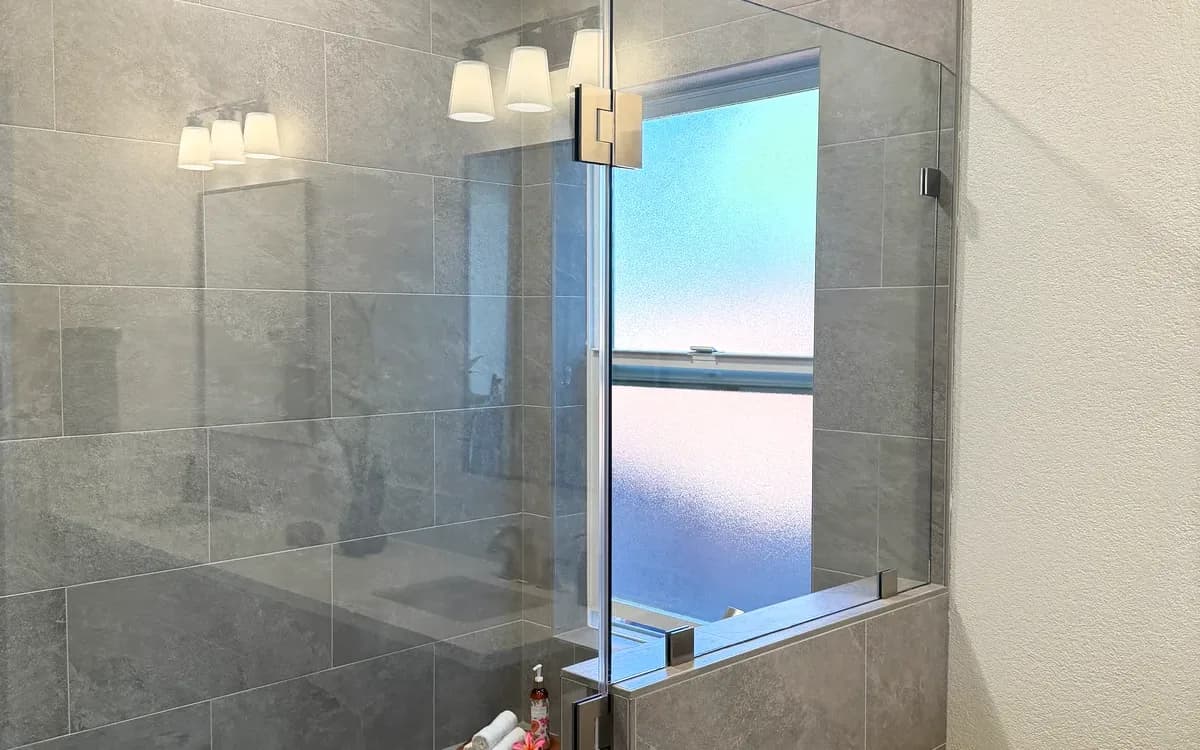
Pictured: a real Oakwood project in Roseville. See the full before & after
The Folsom Water Reality
Folsom sits in the heart of a region that knows water scarcity firsthand. Folsom Lake — the city's namesake and primary water source — has been a visible barometer of California's drought cycles for decades. Even in years with strong snowpack and healthy reservoir levels, water conservation is woven into the culture and the code requirements of building in this region.
The average Folsom household uses approximately 100 to 150 gallons of water per day. Bathrooms account for roughly 50 percent of indoor water use — toilets alone consume about 24 percent, and showers another 20 percent. That makes a bathroom remodel the single highest-impact opportunity to reduce your household water consumption.
Here is the good news: water-efficient fixtures in 2026 are not the anemic trickle-heads and weak-flush toilets of the 1990s. Modern engineering has solved the performance problem. Today's efficient fixtures deliver genuinely satisfying performance while using 20 to 50 percent less water than the fixtures they replace. The only question is which ones to choose — and that is exactly what this guide covers.
California Title 20: What the Law Requires
California's Title 20 appliance efficiency regulations set maximum flow rates for all plumbing fixtures sold in the state. These are stricter than federal EPA WaterSense standards, and they apply to any fixture installed during a remodel. Here are the current maximums:
| Fixture | CA Title 20 Max | Federal WaterSense | Older Fixture (Pre-2000) |
|---|---|---|---|
| Showerhead | 1.8 GPM | 2.0 GPM | 2.5 -- 5.0 GPM |
| Lavatory faucet | 1.2 GPM | 1.5 GPM | 2.2 -- 3.0 GPM |
| Toilet | 1.28 GPF | 1.28 GPF | 1.6 -- 3.5 GPF |
In practice, Title 20 compliance is nearly automatic because major brands (Kohler, Delta, Moen, TOTO, Hansgrohe) have engineered their current product lines to meet or exceed these standards. You would have to go out of your way to find a non-compliant fixture at a legitimate retailer in California. The more meaningful decision is choosing between fixtures that merely meet the standard and those that exceed it — delivering even greater savings with no performance trade-off.
High-Efficiency Toilets That Actually Flush
If your Folsom home was built before 2000, your toilet likely uses 1.6 to 3.5 gallons per flush. Replacing it with a 1.28 GPF or lower model saves 3,000 to 13,000 gallons per year per toilet for a family of four. Modern high-efficiency toilets flush as well or better than the water-guzzling models they replace — the engineering has genuinely caught up.
Single-Flush 1.28 GPF
The standard for new installations and remodels. A quality 1.28 GPF toilet with a well-designed trapway and flush valve clears waste in a single flush consistently. TOTO's Tornado Flush and Kohler's Revolution 360 are two of the best-performing flush systems on the market. These use a powerful centrifugal rinse that cleans the bowl while efficiently evacuating waste. In our experience across hundreds of Folsom installations, callback rates for flush performance are near zero with these systems.
Dual-Flush 0.8 / 1.28 GPF
Offers a light flush (0.8 to 1.1 GPF) for liquid waste and a full flush (1.28 GPF) for solid waste. Since roughly 80 percent of flushes in a residential bathroom are for liquid waste, the water savings add up — an additional 2,000 to 4,000 gallons per year compared to a single-flush 1.28 GPF model. The trade-off is a slightly more complex flush mechanism and a push-button actuator that some homeowners find less intuitive than a traditional lever.
Ultra-High-Efficiency 1.0 GPF
The most efficient single-flush option available. Models like the TOTO UltraMax II at 1.0 GPF use pressure-assisted or gravity-optimized flushing that clears waste reliably at nearly 22 percent less water than the standard 1.28 GPF. These save an additional 1,500 to 2,500 gallons per year per toilet. They cost $50 to $150 more than standard models but the utility savings offset the premium within a year.
What About the MaP Score?
The Maximum Performance (MaP) test measures how many grams of solid waste a toilet can clear in a single flush. The industry standard is 350 grams. Look for toilets rated at 800 grams or higher for confident single-flush performance. TOTO Drake, Kohler Highline, and American Standard Champion all consistently score above 1,000 grams — meaning they handle real-world conditions with margin to spare.
Low-Flow Showerheads That Feel Full-Pressure
The shower is where water efficiency meets the most emotional resistance. Nobody wants a weak, unsatisfying shower. The good news: modern showerheads at 1.8 GPM (California's limit) have become remarkably good at delivering a satisfying experience through three key technologies:
- Air injection: Mixes air into the water stream, making each drop feel larger and the overall spray feel more voluminous. Hansgrohe's AirPower and Kohler's Katalyst technology are industry leaders. The result is a full, soft spray that feels like significantly more water than is actually flowing.
- Pressure-compensating valves: Internal mechanisms that maintain consistent spray force regardless of your home's water pressure. This is especially useful in Folsom's hilly neighborhoods (Lexington Hills, Hillcrest) where elevation can reduce municipal pressure slightly. The showerhead compensates automatically.
- Optimized nozzle design: Precisely engineered spray holes that concentrate water into focused streams rather than a wide mist. Fewer, more concentrated streams feel more powerful even at lower total volume. Delta's H2Okinetic technology sculpts water into a pattern that feels like 2.5 GPM while using only 1.75 GPM.
Rain Showerheads at Low Flow
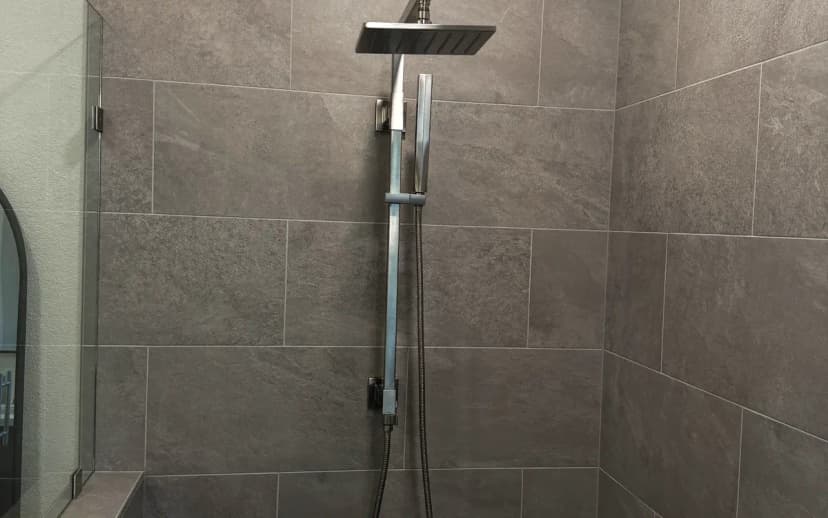
Rain heads present a unique challenge at 1.8 GPM because they distribute water across a wider area. A 12-inch rain head at 1.8 GPM can feel thin. The solution is to pair a rain head with a handheld on a slide bar — the rain head provides the ambiance while the handheld delivers concentrated pressure for rinsing. Multi-function systems from Hansgrohe (Raindance Select) and Kohler (Hydrorail) manage this beautifully while staying within California flow limits. Read more in our luxury shower upgrades guide.
Bathroom Faucets: Flow Rates and Smart Features
California limits bathroom faucets to 1.2 GPM — down from the 2.2 GPM federal standard that many older Folsom homes still have installed. At the faucet, reduced flow rate is barely noticeable because most hand-washing and face-washing activities do not need high volume. The water stream is more than adequate for daily use.
Touchless and Motion-Activated Faucets
Touchless faucets with infrared sensors eliminate the water wasted while your hands are away from the stream — lathering soap, brushing teeth, or reaching for a towel. Studies estimate touchless faucets reduce water use by an additional 30 to 50 percent compared to manual faucets at the same flow rate. Models from Delta (with Touch2O.xt technology), Moen (MotionSense), and Kohler (Touchless) are all available in bathroom-appropriate styles and finishes. They run on batteries (lasting 1 to 3 years) or optional AC adapters.
Aerator Upgrades
If you are keeping your existing faucet, replacing the aerator is the cheapest water savings available. A WaterSense 1.0 GPM aerator costs $5 to $15 and installs in 30 seconds with no tools. It reduces flow by 17 percent compared to California's 1.2 GPM standard while maintaining a full-feeling stream through air mixing. We include aerator upgrades in every faucet installation.
Eliminating Hot Water Wait Time
One of the biggest hidden sources of water waste in Folsom homes: running the shower or faucet for 1 to 3 minutes waiting for hot water to arrive. In a home where the water heater is in the garage and the master bathroom is upstairs — common in Broadstone, Empire Ranch, and Folsom Ranch layouts — that wait wastes 2 to 5 gallons per use. For a family of four using two bathroom sinks and a shower daily, that adds up to 3,000 to 7,000 gallons per year of perfectly clean water going straight down the drain.
Hot Water Recirculation Pumps
A recirculation pump keeps hot water circulating through your pipes so it is available instantly at the fixture. There are two approaches:
- Dedicated return line system: A separate pipe carries cooled water back to the water heater. Most effective but requires a return line (easiest to install during a remodel when walls are open). Cost: $800 to $1,500 for the pump and piping.
- Demand pump (under-sink): Installed at the farthest fixture, it uses the cold water line as the return path. No new piping required — just a pump under the sink and a crossover valve. Activated by a button, timer, or motion sensor. Cost: $200 to $500 installed. Brands like Watts and Grundfos offer reliable residential models.
A recirculation pump also saves energy by reducing the volume of water your water heater needs to heat (the water is recycled, not wasted). For larger Folsom homes with long pipe runs, this is one of the highest-ROI upgrades we recommend during a bathroom remodel.
Folsom Hard Water and Fixture Longevity
Folsom's water supply from Folsom Lake carries moderate to high mineral content — typically 150 to 250 parts per million (ppm) total dissolved solids. This mineral load (primarily calcium and magnesium) creates the white, chalky buildup you see on fixtures, showerheads, and faucet aerators. Left unchecked, mineral deposits restrict flow through the small orifices in low-flow fixtures, gradually reducing their effective flow rate and spray quality.
Strategies to protect your investment:
- Choose silicone-nozzle showerheads: Flexible silicone spray nozzles (standard on Hansgrohe, Delta, and most modern heads) allow mineral deposits to be rubbed off with a thumb. This 10-second maintenance prevents buildup from becoming a problem.
- Soak aerators quarterly: Remove faucet aerators every 3 to 6 months and soak in white vinegar for 30 minutes. This dissolves mineral buildup and restores full flow.
- Consider a water softener: A whole-house water softener reduces mineral content, protecting all fixtures, glass enclosures, and tile from buildup. If you already have one, ensure it is properly maintained with salt and annual service. If you do not, a bathroom remodel is a natural time to add one — the plumber is already on site.
- Use glass coatings: Factory-applied or aftermarket hydrophobic coatings on shower glass (EnduroShield, ShowerGuard) dramatically reduce hard water spot formation. This keeps glass looking clean with less effort and less chemical cleaner use.
Water Savings Calculator: Real Folsom Numbers
Here is what a typical four-person Folsom household saves by upgrading bathroom fixtures from pre-2000 models to current WaterSense certified options:
| Fixture Upgrade | Old Usage | New Usage | Annual Savings |
|---|---|---|---|
| Toilet (1.6 GPF to 1.28 GPF) | 25,600 gal/yr | 20,480 gal/yr | 5,120 gal |
| Toilet (3.5 GPF to 1.28 GPF) | 56,000 gal/yr | 20,480 gal/yr | 35,520 gal |
| Showerhead (2.5 to 1.8 GPM) | 14,600 gal/yr | 10,512 gal/yr | 4,088 gal |
| Faucet (2.2 to 1.2 GPM) | 6,400 gal/yr | 3,500 gal/yr | 2,900 gal |
| Total (from 1.6 GPF toilet) | 46,600 gal/yr | 34,492 gal/yr | 12,108 gal saved |
At the City of Folsom's current Tier 2 water rate of approximately $0.0078 per gallon (combined water and sewer), a full fixture upgrade from a 1.6 GPF toilet home saves roughly $94 per year. From a 3.5 GPF toilet home, savings jump to over $330 per year. Factor in reduced water heating costs for the shower and faucet, and annual savings reach $150 to $450 depending on your starting point. The fixtures typically pay for themselves in 2 to 4 years.
Rebates and Incentive Programs
Several programs help offset the cost of water-efficient upgrades for Folsom homeowners:
- City of Folsom Water Conservation Rebates: The city periodically offers rebates for WaterSense toilets ($75 to $125 per toilet) and high-efficiency clothes washers. Availability varies by drought status and budget allocation. Check the city's water conservation page for current offerings.
- Regional Water Authority (Water Wise): The Sacramento region's umbrella water conservation program offers seasonal rebates and free water-saving devices. Past programs have included free low-flow showerheads and faucet aerators distributed at community events.
- SMUD Energy Rebates: While SMUD focuses on electricity, their rebates for heat pump water heaters and tankless water heaters indirectly support bathroom efficiency by reducing the energy cost of heating less water.
- Federal Tax Credits: High-efficiency water heaters that meet Energy Star criteria may qualify for federal tax credits under the Inflation Reduction Act. This applies when you upgrade your water heater as part of a bathroom remodel.
Our project coordinators track current rebate availability and help Folsom homeowners apply for applicable programs during the planning phase. Rebates change frequently, so we verify availability before recommending specific fixtures.
Our Top Fixture Recommendations
Based on hundreds of installations across the Folsom area, here are the water-efficient fixtures we recommend most:
Best Toilet: TOTO Drake II (1.28 GPF)
Tornado Flush system, 1,000+ gram MaP score, CeFiONtect glaze that resists buildup, and a proven track record in hard-water environments. The comfort-height elongated bowl is the most comfortable option for daily use. Budget alternative: American Standard Champion 4 Max.
Best Showerhead: Hansgrohe Raindance Select S (1.75 GPM)
AirPower technology for a voluminous feel, Select button to switch between spray modes without reaching for a diverter, and silicone QuickClean nozzles that combat Folsom's hard water deposits. Also excellent: Delta In2ition with H2Okinetic technology.
Best Faucet: Delta Broadmoor Centerset (1.2 GPM)
Available in all current finish trends (champagne bronze, matte black, brushed nickel, chrome). WaterSense certified. Metal construction with Diamond Seal valve that lasts the life of the faucet. Touch2O.xt touchless option available. Budget alternative: Moen Ashville.
Frequently Asked Questions
Upgrade to Water-Efficient Fixtures in Your Folsom Remodel
Oakwood Remodeling Group includes WaterSense certified fixtures in every Folsom bathroom project. We help you select toilets, showerheads, and faucets that save water and money without sacrificing the performance you expect. Every project includes plumbing permits, code compliance, and fixture warranty documentation.
Related Reading
Bathroom Remodeling in Folsom, CA
Our full service area page for Folsom homeowners.
Bathroom Remodeling Services
Our complete bathroom renovation services.
Folsom Bathroom Remodel Cost 2026
Detailed cost breakdown for Folsom projects.
Folsom Luxury Shower Upgrades
Premium shower features and flow requirements.
Folsom Ventilation Guide
Ventilation for valley climate humidity.
Get Your Free Estimate
Schedule your consultation today
Get a Free Estimate
Call us at (916) 907-8782 or fill out our contact form.