Folsom Bathroom Ventilation: Valley Heat and Humidity
Sacramento Valley summers hit 110 degrees. Winter mornings bring damp cold and fog. Here is how Folsom bathrooms need to handle moisture — and what happens when they do not.
Looking for bathroom remodeling in Folsom? View our Folsom service area page →
Table of Contents
- 1. The Sacramento Valley Climate Challenge
- 2. How Bathroom Moisture Causes Damage
- 3. Fan Sizing: CFM Calculations for Folsom Bathrooms
- 4. Fan Types and Recommended Models
- 5. Humidity-Sensing Controls: Set It and Forget It
- 6. Duct Routing: Getting the Air Outside
- 7. Attic Venting Problems in Folsom Homes
- 8. Mold Prevention Beyond Ventilation
- 9. Energy Efficiency and Ventilation Balance
- 10. Warning Signs of Poor Ventilation
- 11. Ventilation Upgrade Costs in Folsom
- 12. Ventilation During a Bathroom Remodel
- 13. Frequently Asked Questions
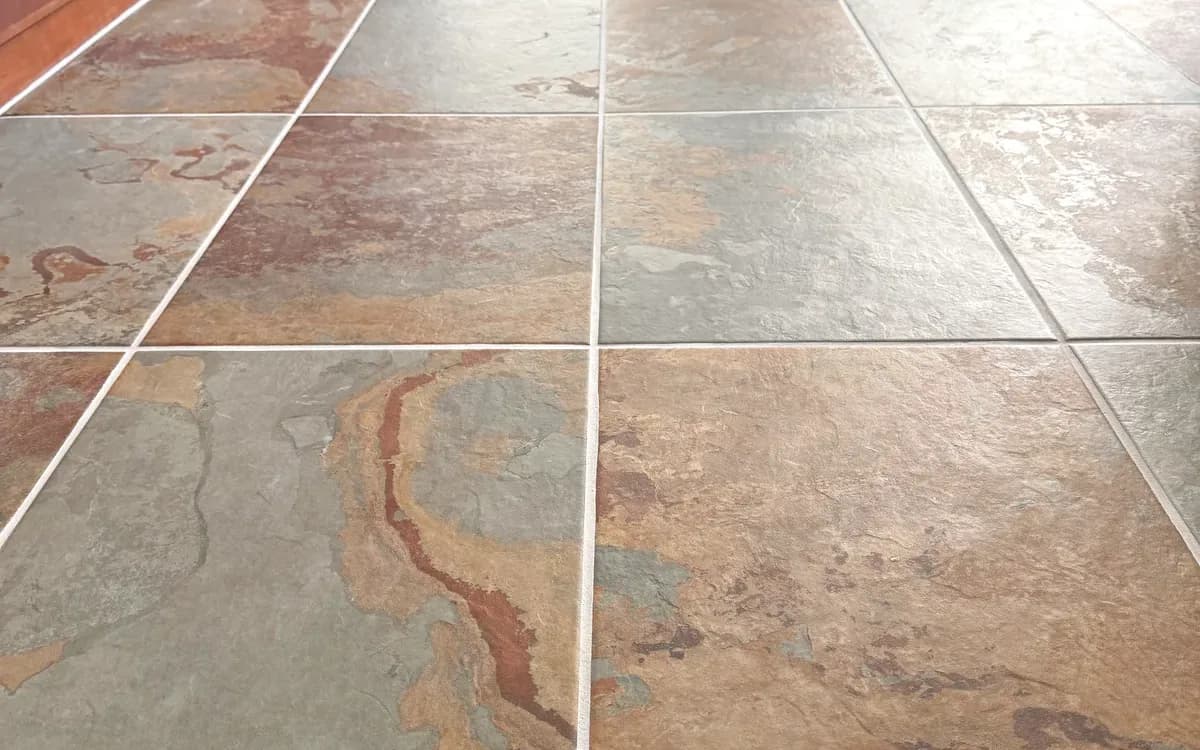
Pictured: a real Oakwood project in Elk Grove. See the full before & after
The Sacramento Valley Climate Challenge
Folsom sits in the eastern Sacramento Valley at the transition point between the valley floor and the Sierra foothills. This location creates a climate with extreme seasonal swings — summer temperatures regularly exceed 100 degrees with single-digit relative humidity, while winter brings temperatures in the 30s and 40s with fog, rain, and relative humidity above 80 percent.
Most homeowners think of Folsom as a dry climate, and outdoors it often is. But inside a bathroom, the climate is always humid. A single 10-minute hot shower produces 0.5 to 1.0 pints of moisture — the equivalent of pouring half a pint of water onto the floor, walls, and ceiling. Without proper exhaust, that moisture has nowhere to go except into wall cavities, ceiling drywall, and the framing behind your tile.
The seasonal extremes make ventilation more critical in Folsom than in consistently humid or consistently dry climates. Summer air conditioning creates cold wall surfaces that attract condensation. Winter cold exterior walls do the same. The result is year-round condensation risk inside bathroom wall cavities — where you cannot see the damage until it becomes a structural problem. Our Northern California ventilation guide covers regional patterns in detail.
How Bathroom Moisture Causes Damage
Understanding the damage pathway explains why ventilation is not optional. Here is the sequence that occurs in an under-ventilated Folsom bathroom:
- Moisture production: Hot water from showers, baths, and faucets evaporates into the air, raising the bathroom's relative humidity to 80 to 100 percent within minutes.
- Condensation: Warm humid air contacts cooler surfaces — mirrors, windows, exterior walls, ceiling drywall — and water vapor condenses into liquid droplets.
- Absorption: Porous materials absorb the liquid water. Drywall, grout, wood trim, and paper-faced tape are all absorbent. Even painted surfaces absorb moisture through micro-cracks and unsealed edges.
- Biological growth: Mold spores — which are always present in indoor air — germinate on damp surfaces within 24 to 48 hours. The EPA notes that mold requires only moisture and organic material (paper, wood, drywall) to colonize.
- Structural damage: Repeated wet-dry cycles weaken drywall, soften framing, corrode fasteners, and delaminate tile from substrate. By the time you see staining or bubbling paint, months or years of hidden damage have accumulated.
Proper ventilation interrupts this sequence at step one — removing moisture-laden air before it has time to condense. The faster and more completely the exhaust system removes humid air, the less opportunity moisture has to cause damage. For more on hidden moisture damage, see our post on hidden leak signs in Roseville bathrooms.
Fan Sizing: CFM Calculations for Folsom Bathrooms
CFM (cubic feet per minute) is the measure of how much air an exhaust fan moves. The Home Ventilating Institute (HVI) recommends 1 CFM per square foot of bathroom floor area, with a minimum of 50 CFM for any bathroom. Here is how that applies to typical Folsom bathroom sizes:
| Bathroom Type | Typical Size | Minimum CFM | Recommended CFM |
|---|---|---|---|
| Powder room | 15 -- 20 sq ft | 50 CFM | 50 -- 80 CFM |
| Hall bathroom | 40 -- 50 sq ft | 50 CFM | 80 -- 110 CFM |
| Master bathroom | 80 -- 120 sq ft | 80 -- 120 CFM | 110 -- 150 CFM |
| Large master with steam shower | 120 -- 160 sq ft | 120 -- 160 CFM | 150 -- 200 CFM |
For Folsom specifically, we recommend oversizing by 10 to 20 percent above the HVI minimum. The valley climate creates larger temperature differentials between indoor and outdoor air, which means more condensation potential and a greater need for rapid moisture removal. An oversized fan that runs quietly on a humidity sensor is far better than an undersized fan that runs constantly.
Fan Types and Recommended Models
Not all exhaust fans are created equal. The fans installed in most Folsom homes during original construction were chosen for cost — not performance, noise level, or energy efficiency. Here is what to look for in a replacement:
- Panasonic WhisperGreen Select: Our most-installed fan in Folsom remodels. Available in 50 to 150 CFM models, ECM motor for energy efficiency, humidity and motion sensor options, and operates at 0.3 to 0.7 sones. ENERGY STAR certified. Price: $150 to $350 for the unit.
- Panasonic WhisperCeiling DC: Ultra-quiet (0.3 sones at low speed) with variable-speed operation from 50 to 110 CFM. Built-in condensation sensor. Ideal for master bathrooms where noise matters. Price: $200 to $400.
- Broan-NuTone InVent Series: Budget-friendly option with ENERGY STAR certification. Available in 80 to 110 CFM. Operates at 0.8 to 1.5 sones — noticeably louder than Panasonic but still a major upgrade from original builder fans. Price: $80 to $180.
- Inline fans (Fantech, Panasonic): Mounted in the attic or between joists rather than in the ceiling. Move 100 to 300 CFM and can serve multiple intake points. Virtually silent in the bathroom because the motor is remote. Best for large master baths or multi-bathroom solutions. Price: $250 to $600 plus ductwork.
Humidity-Sensing Controls: Set It and Forget It
The single best ventilation upgrade for Folsom bathrooms is a humidity-sensing control. Standard exhaust fans rely on the occupant to turn them on — and most people either forget, turn them off too early, or never use them because the fan is too loud. Humidity-sensing fans solve this problem by automating the decision.
A built-in humidity sensor detects relative humidity levels in the bathroom. When humidity rises above a set threshold — typically 50 to 60 percent RH — the fan activates automatically. It continues running until humidity returns to the ambient level, then shuts off. This ensures the fan runs during and after every shower, bath, and even hand washing without requiring manual intervention.
Many Panasonic models include an adjustable sensitivity dial that lets you fine-tune the activation threshold. In Folsom's dry summer months, the ambient humidity in a home is typically 30 to 40 percent, so the sensor activates quickly when shower steam raises the level. In winter, ambient indoor humidity is higher (40 to 50 percent), and the fan responds accordingly. This seasonal self-adjustment is why humidity sensors outperform simple timers that run for a fixed duration regardless of conditions.
Duct Routing: Getting the Air Outside
The exhaust fan is only half the system — the duct that carries humid air to the exterior is equally important. In many Folsom homes, we find ductwork that was incorrectly installed during original construction or has deteriorated over time. Here are the rules for proper duct routing:
- Always terminate outside: The duct must exit through the roof or an exterior wall. Never into the attic, soffit, crawl space, or garage. Attic-terminated ducts are the single most common ventilation defect in Folsom homes.
- Use rigid or semi-rigid duct: Smooth-wall 4-inch or 6-inch metal duct provides the least airflow resistance. Flex duct is acceptable for short runs (under 6 feet) but its corrugated interior creates friction that reduces effective CFM by 20 to 40 percent on longer runs.
- Minimize bends: Each 90-degree turn reduces effective airflow by 10 to 15 CFM. Keep duct runs as straight as possible, and use 45-degree elbows instead of 90-degree turns where feasible.
- Slope toward the exterior: The duct should slope slightly downward toward the outside to allow condensation to drain out rather than pooling inside the duct or dripping back toward the fan.
- Insulate in unconditioned spaces: In Folsom attics that reach 140 degrees in summer, uninsulated ductwork causes warm moist exhaust air to condense inside the duct. R-6 duct insulation prevents this.
A roof cap with a spring-loaded damper prevents outside air from entering through the duct when the fan is off. Wall caps with backdraft dampers serve the same function for wall-terminated runs. Both should be checked annually — wasps and birds frequently nest in unprotected exhaust terminations in the Folsom area.
Attic Venting Problems in Folsom Homes
The most common ventilation defect we find during Folsom bathroom remodels is exhaust ducts that terminate inside the attic rather than outside the building. This practice — while never code-compliant — was widespread in production homes built through the early 2000s, including many homes in Empire Ranch, Broadstone, and Natoma Station.
An attic-terminated exhaust duct dumps warm, moist bathroom air directly into the attic space. In summer, this moisture quickly evaporates due to extreme attic heat (often 130 to 150 degrees). But in winter, the attic is cold — and moisture condenses on roof sheathing, rafters, and insulation. Over years, this creates mold growth on the underside of the roof deck, deterioration of plywood sheathing, compressed insulation that loses R-value, and visible water staining on ceiling drywall below the duct termination.
During every bathroom remodel in Folsom, we inspect the existing exhaust duct routing. If it terminates in the attic, we re-route it to a proper exterior termination point as part of the project — this is not an optional upgrade, it is a code requirement and a long-term protection measure for the home's structure. Learn more in our Newcastle bathroom ventilation guide.
Mold Prevention Beyond Ventilation
While proper exhaust ventilation is the primary defense against bathroom mold, a complete moisture management strategy includes additional layers:
- Waterproof substrate: Cement backer board or foam panel systems (like Schluter Kerdi-Board) behind all tile in wet areas. These materials do not support mold growth even if moisture reaches them. Standard drywall and greenboard — still found in many Folsom bathrooms — are mold food when wet.
- Mold-resistant paint: Bathroom ceilings and any painted wall surfaces should use paint with antimicrobial additives. Benjamin Moore Aura Bath and Spa and Sherwin-Williams Emerald are formulated for high-humidity environments.
- Grout sealing: Sanded and unsanded cementitious grout is porous and absorbs moisture. Sealing grout annually prevents water infiltration. Alternatively, epoxy grout is non-porous and never needs sealing — though it costs more and is harder to work with during installation.
- Caulk maintenance: Silicone caulk at all change-of-plane joints (wall-to-floor, wall-to-wall, around fixtures) prevents water from reaching behind tile. Cracked or separated caulk should be replaced immediately — it is the first line of defense at every seam.
Energy Efficiency and Ventilation Balance
There is an inherent tension between ventilation and energy efficiency. Every cubic foot of conditioned air exhausted from the bathroom must be replaced by outdoor air — which in Folsom means 105-degree summer air or 35-degree winter air that your HVAC system must then condition. Here is how to balance these competing needs:
Modern ECM (electronically commutated motor) exhaust fans use 3 to 15 watts during operation — compared to 30 to 80 watts for the permanent split capacitor (PSC) motors in older fans. This represents an 80 to 90 percent reduction in electrical consumption. ENERGY STAR certified fans must meet minimum efficiency standards for both airflow and energy use.
Humidity sensors minimize unnecessary runtime. A humidity-sensing fan in a Folsom bathroom typically runs 15 to 25 minutes per shower — long enough to clear the moisture, short enough to minimize conditioned air loss. Compare this to a timer-based system that might run for 30 to 60 minutes regardless of actual moisture levels, or a manually switched fan that either runs all day or never runs at all.
For homeowners particularly concerned about energy loss, heat recovery ventilators (HRVs) capture heat from exhaust air to pre-warm incoming replacement air. These units are more common in whole-house ventilation systems but are available in bathroom-specific configurations from Panasonic and Broan. They recover 60 to 80 percent of the heat from exhaust air.
Warning Signs of Poor Ventilation
If your Folsom bathroom shows any of these signs, ventilation is likely inadequate:
- Mirror stays foggy more than 15 minutes after a shower: A properly ventilated bathroom should clear mirror fog within 5 to 10 minutes of the shower ending.
- Ceiling paint is peeling, bubbling, or discolored: This indicates moisture is condensing on the ceiling surface repeatedly. The drywall above may be saturated.
- Black or pink mold at grout lines: Mold in shower grout corners, ceiling-to-wall transitions, and around fixtures indicates chronic moisture that is not being exhausted.
- Musty smell: A persistent musty or earthy odor, even when surfaces look dry, suggests mold growth behind walls or under flooring where ventilation cannot reach.
- Window condensation: Moisture between dual-pane window glass or heavy condensation on window frames indicates the bathroom air is too humid for the window to handle.
- Loud exhaust fan: If your fan sounds like a jet engine, it is likely an old model with worn bearings. Ironically, the loudest fans often move the least air because bearing friction consumes energy that should be moving air.
Ventilation Upgrade Costs in Folsom
Ventilation upgrades are one of the most cost-effective improvements in a bathroom remodel. Here are typical costs for Folsom projects:
| Upgrade | Cost Range (installed) |
|---|---|
| Fan replacement (same location, existing duct) | $250 -- $500 |
| Fan upgrade with new duct run to exterior | $500 -- $1,200 |
| Re-route attic-terminated duct to roof cap | $400 -- $800 |
| Inline fan system (remote motor, multiple intakes) | $800 -- $1,800 |
| Fan with integrated LED light and humidity sensor | $350 -- $700 |
When ventilation is upgraded as part of a larger bathroom remodel, the labor cost is significantly lower because the ceiling is already open and electrical work is already scheduled. This is why we include ventilation assessment and upgrade in every Folsom bathroom remodeling project — it is the most cost-effective time to get it right.
Ventilation During a Bathroom Remodel
A bathroom remodel is the ideal time to address ventilation because the ceiling, walls, and attic access are already open. Here is what we do on every Folsom bathroom remodel:
- Inspect existing ductwork: We trace the exhaust duct from the fan housing to its termination point. If it ends in the attic, it gets re-routed.
- Evaluate fan capacity: We measure the bathroom square footage and compare it to the installed fan's CFM rating. Undersized fans get replaced.
- Check duct condition: Crushed flex duct, disconnected joints, and uninsulated runs in the attic are repaired or replaced with rigid metal duct.
- Install new fan: We install a properly sized, ENERGY STAR certified fan with humidity sensing as standard. The fan is wired to a dedicated switch (or operates automatically via sensor).
- Verify performance: After installation, we test airflow with an anemometer to confirm the fan delivers its rated CFM through the actual installed ductwork. A fan rated at 110 CFM might only deliver 70 CFM through a long, bent duct run — testing catches this before the ceiling is closed.
This ventilation protocol is included in every Folsom bathroom remodel we perform. It is not an add-on or an upgrade tier — it is a fundamental part of building a bathroom that will last 20 to 30 years without moisture damage.
Frequently Asked Questions
Need Better Ventilation in Your Folsom Bathroom?
Oakwood Remodeling Group includes ventilation assessment and upgrade in every Folsom bathroom remodel. We inspect ductwork, size fans properly for your bathroom, install humidity-sensing exhaust systems, and verify performance with airflow testing. Protect your remodel investment with ventilation done right.
Related Reading
Bathroom Remodeling in Folsom, CA
Our full service area page for Folsom homeowners.
Bathroom Ventilation & Mold Prevention in NorCal
Regional ventilation and mold strategies.
Ventilation 101: Newcastle Bathroom Mold
Ventilation failures and fixes in the foothills.
Roseville Shower Hidden Leak Signs
Spotting moisture damage before it spreads.
Bathroom Remodeling Services
Our full bathroom remodeling services.
Get Your Free Estimate
Schedule your consultation today
Get a Free Estimate
Call us at (916) 907-8782 or fill out our contact form.