Folsom Bathroom Lighting Design: Vanity, Shower and Ambient Layers
The right lighting transforms a Folsom bathroom from functional to exceptional. Here is how to layer vanity task lights, shower fixtures, and ambient ceiling lighting for a space that looks stunning and works perfectly every day.
Looking for bathroom remodeling in Folsom? View our Folsom service area page →
Table of Contents
- 1. Why Bathroom Lighting Gets Overlooked in Folsom Remodels
- 2. The Three Layers of Bathroom Lighting
- 3. Vanity Task Lighting: Getting It Right
- 4. Shower and Tub Lighting: Wet-Rated Requirements
- 5. Ambient Ceiling Lighting and Recessed Layout
- 6. LED Color Temperature: What Looks Best
- 7. Dimmer Controls and Lighting Zones
- 8. California Title 24 and Electrical Code
- 9. Natural Light: Windows, Skylights, and Solar Tubes
- 10. Lighting Challenges in Folsom Neighborhoods
- 11. Bathroom Lighting Cost Guide
- 12. Frequently Asked Questions
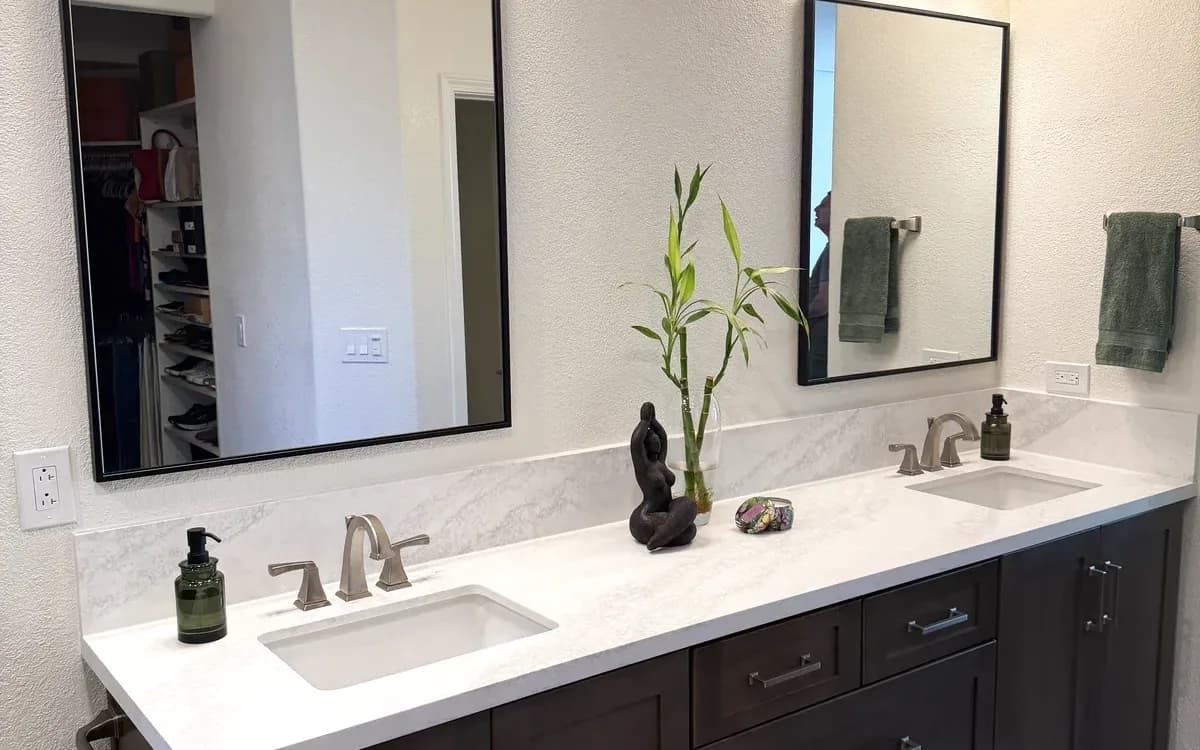
Pictured: a real Oakwood project in Roseville. See the full before & after
Why Bathroom Lighting Gets Overlooked in Folsom Remodels
Here is what we see constantly: a Folsom homeowner invests $25,000 or more into gorgeous tile, a frameless glass shower, new vanity, and premium fixtures. Then the lighting plan gets about three minutes of thought. A single overhead fixture goes in, the old vanity bar stays, and the shower gets one builder-grade can light. The result? A bathroom that photographs beautifully in daylight and looks flat, shadowy, and uninspiring by 6 AM when you actually use it.
Lighting is the single most impactful element per dollar spent in a bathroom remodel. It affects how colors read on your tile and countertop, whether you can see clearly at the mirror, how spacious the room feels, and whether the overall atmosphere is warm and inviting or cold and clinical. And unlike tile or fixture choices that are locked in once installed, a well-designed lighting plan with dimmers gives you the flexibility to change the mood of the room in seconds.
As Folsom's bathroom remodeling specialists, we design lighting into every project from day one — not as an afterthought. This guide walks through exactly how we approach bathroom lighting for Folsom homes, from vanity task layers to shower fixtures to the ambient glow that ties the whole room together.
The Three Layers of Bathroom Lighting
Professional lighting designers work in three layers, and bathrooms are no exception. Each layer serves a specific purpose, and a well-lit bathroom needs all three working together.
Task Lighting
Focused, bright light directed at specific work areas. In a bathroom, this means vanity lighting for grooming and makeup, and potentially a reading light near the tub. Task lighting needs to be shadow-free, well-positioned, and bright enough for detail work — typically 300 to 500 lux at the mirror surface.
Ambient Lighting
General overhead illumination that fills the room with even, comfortable light. Recessed ceiling fixtures on a dimmer are the most common approach. This layer provides safe navigation, overall brightness control, and the foundational light level that task and accent layers build upon.
Accent Lighting
Decorative or architectural lighting that adds depth, visual interest, and mood. LED strip lighting under a floating vanity, a backlit mirror, toe-kick lights for nighttime navigation, or a lighted niche in the shower. Accent lighting is what elevates a bathroom from functional to luxurious.
The mistake most builder-grade bathrooms make is relying on one or two fixtures to handle all three layers. A single vanity bar and an overhead fan-light combo cannot do the job. During a remodel, we have the opportunity to wire for dedicated circuits and separate switches or dimmers for each layer — giving you complete control over the room's atmosphere.
Vanity Task Lighting: Getting It Right
The vanity is where lighting quality matters most. Poor vanity lighting creates unflattering shadows that make grooming difficult and makeup application unreliable. Here is how to get it right.
Side-Mounted Sconces: The Gold Standard
Two sconces mounted on either side of the mirror at eye level — approximately 65 inches from the floor to the center of the fixture — provide the most even, flattering light. The light hits both sides of your face simultaneously, eliminating the harsh shadows that overhead lighting creates under the chin, nose, and eyes. Space them 36 to 40 inches apart for a standard single-sink vanity, or one sconce per mirror section for double vanities.
Overhead Vanity Bars
When the mirror is too wide for side sconces — common with double vanities that use a single continuous mirror — a horizontal light bar mounted 78 to 80 inches from the floor directly above the mirror is the next best option. Choose a bar that spans at least 75 percent of the mirror width for even coverage. Multi-light bars with individual shades diffuse light better than exposed-bulb Hollywood-style bars.
Backlit and Lighted Mirrors
LED-backlit mirrors have become one of the most requested upgrades in Folsom bathroom remodels. They combine a soft ambient glow around the mirror perimeter with front-facing LED task light. Higher-end models include built-in dimmers, color temperature adjustment (warm to cool), and anti-fog heating elements. They eliminate the need for separate vanity fixtures, creating a clean, modern look. Models from brands like Kichler, Electric Mirror, and Robern range from $400 to $2,500 depending on size and features.
Pro Tip: CRI Matters More Than Brightness
Color Rendering Index (CRI) measures how accurately a light source reveals colors. For vanity lighting, choose LED fixtures with a CRI of 90 or higher. A high-CRI light at moderate brightness will look significantly better than a low-CRI light at maximum output. Most quality bathroom LED fixtures list their CRI on the packaging — look for "90+ CRI" or "high CRI."
Shower and Tub Lighting: Wet-Rated Requirements
Lighting inside a shower enclosure or directly above a tub operates in what the National Electrical Code classifies as a "wet location." This distinction determines exactly which fixtures are safe and legal to install.
Wet-Location Zones
- Inside the shower enclosure (walls and ceiling): Requires wet-rated fixtures with an IP65 or higher ingress protection rating. These fixtures are sealed against direct water contact. Recessed LED can lights with wet-rated IC (insulation contact) housings are the standard choice.
- Within 3 feet of the shower or tub edge: Requires damp-rated fixtures. These handle humidity and occasional splash but are not designed for direct water spray.
- Beyond 3 feet: Standard dry-rated fixtures are acceptable, though we recommend damp-rated throughout the bathroom given the humidity levels during and after showering.
Shower Recessed Lighting
The most popular shower lighting is a 4-inch recessed LED fixture with a wet-rated trim and IC-rated housing. For a standard 36x48-inch shower, one centered fixture provides adequate coverage. For larger walk-in showers common in Folsom master baths — 48x60 inches or larger — two recessed lights spaced evenly provide better coverage without dark corners. Opt for 3000K color temperature and a 40 to 60-degree beam angle for a warm, diffused wash of light.
Shower Niche Lighting
LED strip lighting inside a shower niche is both functional and dramatic. A waterproof LED strip (IP67 rated) installed at the top of the niche illuminates your shampoo and soap while creating a beautiful accent glow. This requires a low-voltage driver installed outside the wet zone with only the sealed LED strip inside the shower. Cost is $200 to $500 for the strip, driver, and installation during a remodel.
Ambient Ceiling Lighting and Recessed Layout
Recessed LED ceiling lights provide the ambient foundation for the entire bathroom. The key is getting the number, spacing, and placement right for even coverage without hot spots or dark zones.
How Many Recessed Lights?
| Bathroom Size | Square Footage | Recessed Lights (4-inch) |
|---|---|---|
| Powder room / half bath | 20 -- 30 sq ft | 1 -- 2 |
| Standard secondary bath | 40 -- 60 sq ft | 2 -- 3 |
| Standard master bath | 80 -- 120 sq ft | 3 -- 5 |
| Large master bath | 120 -- 180 sq ft | 5 -- 7 |
Position recessed lights with their centers at half the ceiling height from each wall. In a bathroom with 8-foot ceilings, that means 4 feet from the walls. Space lights evenly within the room, avoiding placement directly above the vanity mirror (where dedicated vanity fixtures handle task lighting) and inside the shower (where dedicated wet-rated shower lights belong).
Recessed Light Sizing
Four-inch recessed housings are ideal for bathrooms. Six-inch cans can feel oversized in a standard bathroom ceiling and produce a wider, less controlled beam. Four-inch housings with a 40-degree beam angle provide a focused yet comfortable pool of light. For a modern, minimal look, choose ultra-thin LED wafer lights that mount flush to the ceiling without a traditional can housing — they require only a 4-inch hole and a junction box above.
LED Color Temperature: What Looks Best
Color temperature — measured in Kelvin (K) — determines whether light feels warm and golden or cool and blue-white. This choice dramatically affects how your tile, paint colors, countertop, and skin tones appear.
- 2700K (Warm White): The warmest option. Creates a cozy, golden atmosphere similar to incandescent bulbs. Best for accent lighting, under-vanity LED strips, and bathrooms with warm-toned tile or stone. Can make the room feel slightly dim if used for all layers.
- 3000K (Soft White): Our most recommended temperature for Folsom bathrooms. Warm enough to feel inviting, bright enough for task work. Flattering to skin tones, works well with both warm and cool tile colors. This is the sweet spot for vanity, ambient, and shower lighting.
- 3500K (Neutral White): Balanced between warm and cool. Works in contemporary bathrooms with gray or white tile where you want clean, neutral light without warmth. Less flattering at the vanity than 3000K.
- 4000K+ (Cool White / Daylight): Clinical and stark. We generally advise against 4000K or higher in residential bathrooms. It creates a commercial feel and is unflattering at the vanity. The exception is a dedicated task light for detailed medical or cosmetic work.
The critical rule: keep all fixtures in the bathroom at the same color temperature. Mixing 2700K accent lights with 4000K vanity lights creates a disjointed, uncomfortable look where different surfaces appear to be different colors depending on which light hits them.
Dimmer Controls and Lighting Zones
Dimmers transform a bathroom from a single-setting space into one that adapts to the moment. A bright, fully-lit bathroom at 6 AM for getting ready is very different from a softly-lit bathroom during a late-night soak or a midnight trip.
Recommended Lighting Zones
For a Folsom master bathroom, we recommend wiring for three to four independent lighting zones, each on its own switch or dimmer:
- Vanity zone: Sconces or lighted mirror on a dedicated dimmer. Full brightness for grooming, dimmed for evening ambiance.
- Ambient zone: Recessed ceiling lights on a dimmer. Full brightness for cleaning, 30 to 50 percent for general use, 10 percent for nighttime navigation.
- Shower zone: Shower recessed light(s) on a separate switch or dimmer. Independent control so the shower can be lit while the rest of the bathroom is dim for a spa-like feel.
- Accent zone: Under-vanity LEDs, niche lighting, and any decorative fixtures on a dedicated switch. These create mood lighting when ambient fixtures are dimmed low.
Use LED-compatible dimmers — standard incandescent dimmers cause LED fixtures to flicker, buzz, or fail to dim smoothly. Lutron Caseta and Lutron Diva CL are the two most reliable LED dimmer lines we install. They pair with smart home systems if desired and handle the low-wattage loads of LED fixtures without the minimum load issues that plague cheaper dimmers.
California Title 24 and Electrical Code
Any permitted bathroom remodel in Folsom must comply with California's Title 24 energy code and the California Electrical Code (based on the NEC). Here is what this means for your lighting plan:
- High-efficacy requirement: At least 50 percent of bathroom lighting wattage must be high-efficacy (LED qualifies). In practice, every fixture we install is LED, so this is automatically met.
- Occupancy/vacancy sensors: Title 24 requires automatic shut-off controls in bathrooms. A vacancy sensor (manual-on, auto-off) is preferred over an occupancy sensor (auto-on, auto-off) because it prevents the light from triggering when someone walks past the open doorway. The sensor must turn lights off within 20 minutes of the room being vacated.
- GFCI protection: All bathroom circuits — lighting and receptacles — must be GFCI-protected. This can be at the breaker panel (GFCI breaker) or at the first receptacle in the circuit.
- Exhaust fan interlock: California requires bathroom exhaust fans to be connected to the light switch or an occupancy sensor to ensure ventilation runs whenever the bathroom is in use. A humidistat override is the most effective approach — the fan runs with the light and continues running until humidity drops below a set threshold.
We handle all Title 24 compliance documentation as part of the permit process. Our electricians pull lighting permits, install to code, and schedule inspections so everything is documented for your records and future resale.
Natural Light: Windows, Skylights, and Solar Tubes
Folsom averages 269 sunny days per year — well above the national average of 205. That abundant natural light is a significant asset in bathroom design, and maximizing it reduces daytime reliance on artificial lighting while making the space feel larger and more connected to the outdoors.
Window Strategies
Many Folsom bathrooms, especially in Empire Ranch and Broadstone homes built in the mid-2000s, have small, high-mounted windows designed for privacy but not necessarily for light. During a remodel, we can often enlarge the window opening, add a second window, or replace a small window with a larger frosted or textured glass unit that maintains privacy while tripling the natural light entering the room.
Skylights and Solar Tubes
For interior bathrooms or those without exterior wall space for a window, a tubular skylight (solar tube) channels natural light from the roof through a reflective tube and into the bathroom through a ceiling-mounted diffuser. Solatube and Velux models are available in 10 and 14-inch diameters — the 14-inch model delivers natural light equivalent to a 300-watt incandescent bulb on a sunny day. Installation during a remodel is straightforward since the ceiling is typically open. Cost runs $800 to $1,800 installed depending on roof complexity and tube length.
Lighting Challenges in Folsom Neighborhoods
Different eras of Folsom construction create different lighting challenges and opportunities:
- Historic Folsom (pre-1980s homes): Older wiring that may lack dedicated bathroom circuits. These homes often need a new circuit from the panel to support modern LED dimmers, GFCI outlets, and exhaust fan requirements. The upside: many have charming window placements that bring in excellent natural light.
- Natoma Station and Lexington Hills (1990s -- early 2000s): Typically have a single overhead light-fan combo and a basic vanity bar. The wiring infrastructure is adequate but single-circuit, meaning all fixtures run on one switch. A remodel gives us the opportunity to split into multiple zones with dedicated dimmers.
- Empire Ranch and Broadstone (mid-2000s): Larger master bathrooms with more existing fixtures, but often all on one or two switches with no dimmers. The spacious layouts are ideal for a full three-zone or four-zone lighting design. These homes have panel capacity for additional circuits without an upgrade.
- Folsom Ranch (2015+): Newer homes with LED-ready wiring and often pre-wired for dimmers. The primary upgrade is replacing builder-grade fixtures with higher-quality options and adding accent layers (niche lighting, under-vanity LEDs) that builders skip to stay within budget.
Bathroom Lighting Cost Guide
Bathroom lighting is one of the highest-impact, lowest-cost upgrades available during a remodel. Here is what typical components cost when installed as part of a larger bathroom remodel (labor for wiring is significantly cheaper when walls and ceilings are already open):
| Lighting Component | Typical Cost (Installed) |
|---|---|
| Recessed LED can light (4-inch, per fixture) | $150 -- $250 |
| Vanity sconces (pair) | $300 -- $1,200 |
| LED vanity light bar | $200 -- $800 |
| Backlit LED mirror (24x36 to 36x48 inch) | $500 -- $2,500 |
| Wet-rated shower recessed light | $200 -- $400 |
| Shower niche LED strip (waterproof) | $200 -- $500 |
| Under-vanity LED strip | $150 -- $400 |
| Dimmer switch (Lutron Caseta, per zone) | $80 -- $150 |
| Vacancy sensor switch | $60 -- $120 |
| Solar tube / tubular skylight | $800 -- $1,800 |
A complete lighting upgrade for a Folsom master bathroom — 4 recessed ceiling lights, vanity sconces or lighted mirror, shower recessed light, accent LEDs, dimmers, and vacancy sensor — typically runs $1,500 to $3,500 when done as part of a larger master bathroom remodel. That is roughly 5 to 10 percent of the total project cost for an element that affects how every other material in the room looks and feels.
Frequently Asked Questions
Ready to Design Your Folsom Bathroom Lighting?
Oakwood Remodeling Group designs layered lighting into every Folsom bathroom project — from Empire Ranch master suites to Natoma Station secondary baths. We coordinate vanity, shower, ambient, and accent lighting with your tile, color, and fixture selections so everything works together beautifully. Every project includes electrical permits and Title 24 compliance.
Related Reading
Bathroom Remodeling in Folsom, CA
Our full service area page for Folsom homeowners.
Bathroom Remodeling Services
Our complete bathroom renovation services.
Folsom Luxury Shower Upgrades
Premium shower features including rain heads and steam.
Folsom Bathroom Ventilation Guide
Ventilation design for valley humidity.
Bathroom Permits in Folsom, CA
Permit requirements for Folsom bathroom remodels.
Get Your Free Estimate
Schedule your consultation today
Related Articles
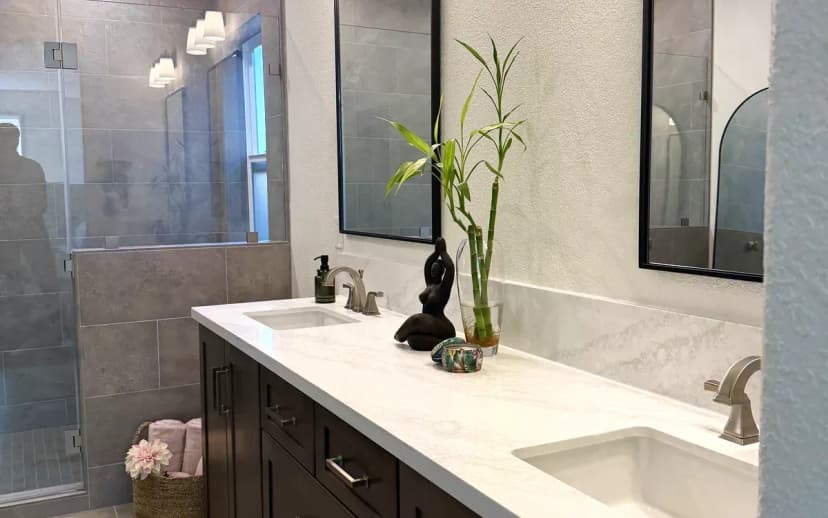
Bathroom Design Trends Folsom Homeowners Are Choosing in 2026
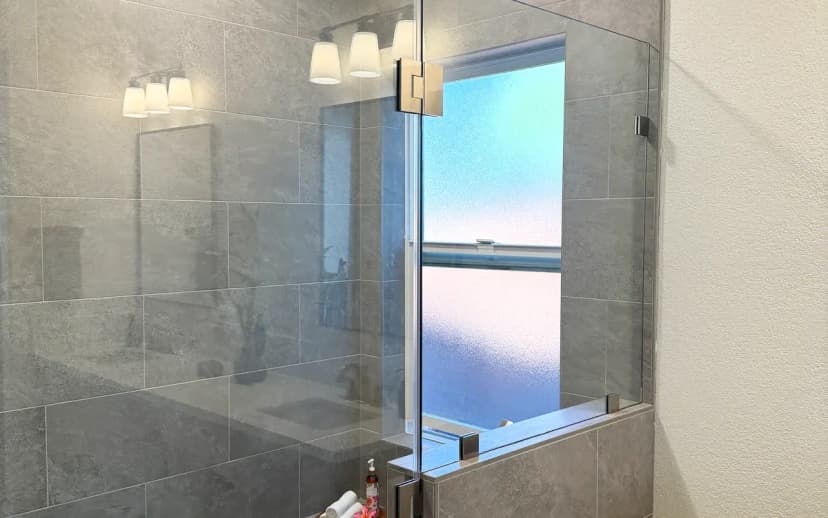
Water-Efficient Bathroom Fixtures for Folsom Homes: Save Water Without Sacrificing Performance
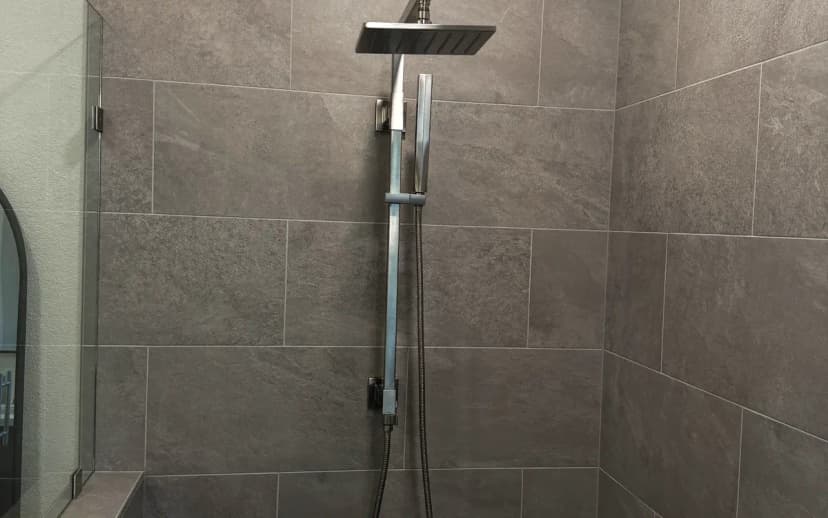
Folsom Bathroom Vanity Replacement: Styles, Sizes & Storage That Actually Work
Get a Free Estimate
Call us at (916) 907-8782 or fill out our contact form.