Best Shower Tile for Roseville Homes: A Durability Guide
Hard water, temperature swings, and daily use put Roseville shower tile to the test. Here is what performs best and what to avoid based on real project experience.
Looking for bathroom remodeling in Roseville? View our Roseville service area page →
Table of Contents
- 1. Why Tile Choice Matters More in Roseville
- 2. Porcelain vs. Ceramic: The Performance Difference
- 3. Large Format Tile for Shower Walls
- 4. Mosaic Tile for Shower Floors
- 5. Natural Stone: Beauty vs. Maintenance
- 6. DCOF and Slip Resistance Ratings
- 7. Grout Options for Roseville Hard Water
- 8. Hard Water Performance: What Holds Up
- 9. Tile Patterns and Layout Strategies
- 10. Waterproofing and Substrate Under the Tile
- 11. Cost Comparison by Material Type
- 12. Grout-Free and Low-Maintenance Alternatives
- 13. Frequently Asked Questions
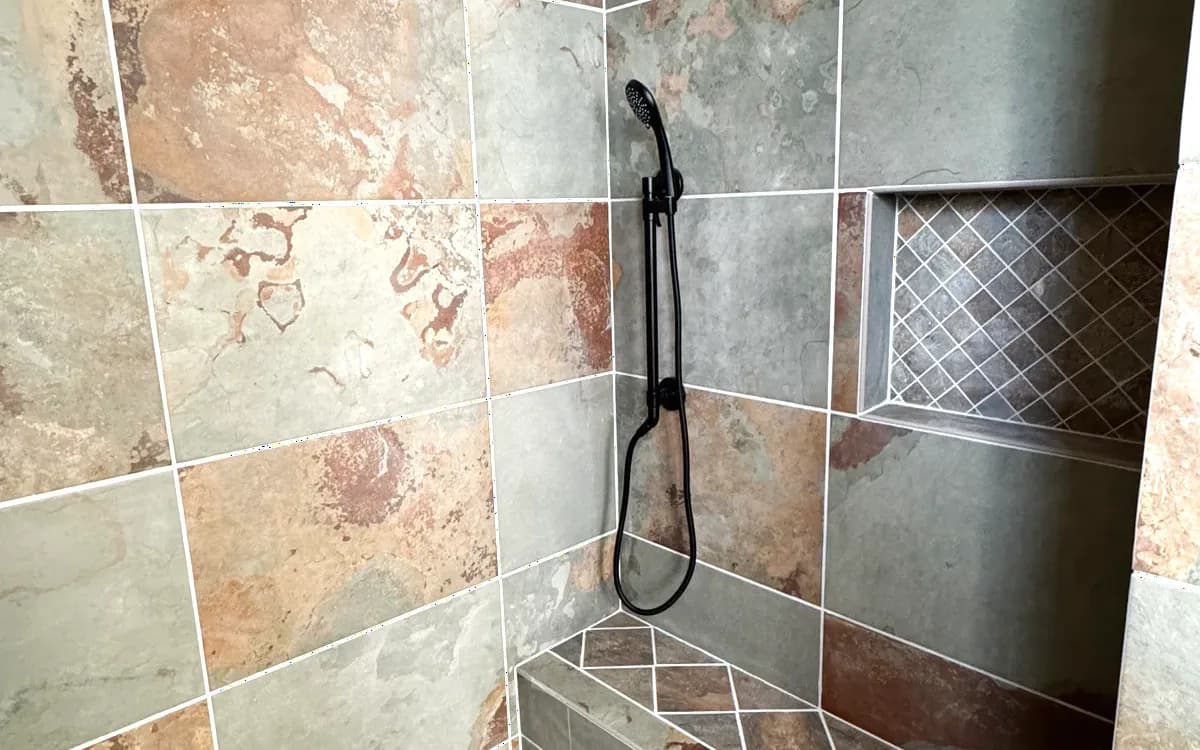
Pictured: a real Oakwood project in Elk Grove. See the full before & after
Why Tile Choice Matters More in Roseville
Roseville's Sacramento Valley location creates specific conditions that test shower tile in ways that other climates do not. Summer temperatures regularly exceed 100 degrees, winter nights drop into the 30s, and the municipal water supply carries mineral content that ranges from moderate to hard depending on the source and season. These factors mean that tile selection is not just an aesthetic decision in Roseville — it is a durability decision that determines how your shower looks and performs five, ten, and twenty years from now.
The wrong tile choice in a Roseville shower leads to predictable problems: mineral staining that resists cleaning, grout lines that discolor within months, surfaces that become slippery when wet, and materials that absorb water and deteriorate from the inside out. The right tile choice eliminates these issues entirely.
As Roseville's bathroom remodeling specialists, we have installed thousands of square feet of shower tile in local homes. This guide shares what we have learned about which materials perform best in Roseville conditions — and which ones we no longer recommend based on long-term performance data. For broader tile comparisons, see our guide to porcelain vs. natural stone tile for Northern California bathrooms.
Porcelain vs. Ceramic: The Performance Difference
Porcelain and ceramic tile are both made from clay fired in a kiln, but the similarities end there. The differences in raw materials, firing temperature, and density create two fundamentally different products — and in a Roseville shower, those differences matter significantly.
Porcelain Tile
Porcelain is made from refined kaolin clay mixed with feldspar and fired at 2,200 to 2,500 degrees Fahrenheit. This high-temperature firing produces a tile body that is extremely dense, with a water absorption rate below 0.5 percent as classified by the Tile Council of North America (TCNA). In practical terms, this means porcelain tile does not absorb water — mineral deposits, soap residue, and mold spores sit on the surface where they can be cleaned off rather than penetrating into the tile body.
Full-body porcelain (also called through-body) carries its color and pattern all the way through the tile, meaning that chips or edge wear are less visible. This is particularly valuable on shower floor tiles and at transition edges where foot traffic concentrates.
Ceramic Tile
Ceramic tile uses coarser clays fired at lower temperatures (1,800 to 2,000 degrees Fahrenheit), resulting in a more porous body with water absorption rates of 3 to 7 percent. While a glazed surface provides some protection, the tile body behind the glaze absorbs water at edges, cut lines, and any point where the glaze is compromised. Over time in a Roseville shower, this absorption leads to mineral staining at grout lines and tile edges that cannot be cleaned because the discoloration is inside the tile body.
For Roseville showers, we recommend porcelain over ceramic in every application. The cost difference is $2 to $5 per square foot — a modest investment that pays for itself in longevity and reduced maintenance. For a complete comparison, see our guide on tile vs. acrylic for Rocklin shower remodels.
Large Format Tile for Shower Walls
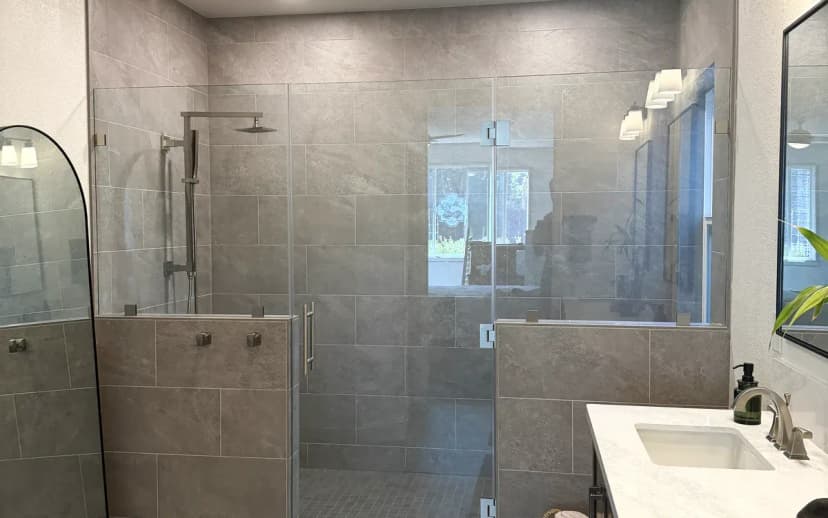
Large format tile — defined as any tile with at least one edge 15 inches or longer — has become the standard for shower walls in Roseville homes, and the reasons are both aesthetic and practical.
A standard 12x24-inch tile installed on a 60-inch wide shower wall requires only 2 to 3 horizontal grout joints and 5 vertical joints per wall section. Compare that to traditional 4x4-inch tile, which requires 15 horizontal joints and 15 vertical joints in the same space. Each grout joint is a potential maintenance point — a place where hard water minerals accumulate, where mold can grow, and where sealant degrades over time.
The larger tile format also creates a cleaner, more contemporary visual line that makes bathrooms feel larger. Popular large format sizes for Roseville shower walls include:
- 12x24 inch: The most versatile size. Installs horizontally or vertically. Works in showers of any size and is available from every major tile manufacturer.
- 24x48 inch: Creates a dramatic, slab-like appearance with minimal grout lines. Requires precise waterproofing and substrate preparation due to the tile weight and lippage tolerance.
- 12x48 inch (plank format): A popular choice for accent walls. The elongated shape creates a modern, linear look when installed horizontally. Often used to create a feature wall behind the showerhead.
- 24x24 inch: A square format that provides excellent coverage with few grout lines. Works particularly well when the same tile is used on both walls and floors for a seamless look.
Large format tile requires a flatter substrate than smaller tiles because any substrate irregularity becomes visible across the larger tile face. We use a combination of cement board and thin-set leveling to achieve the flatness tolerance specified by the TCNA Handbook — 1/8 inch in 10 feet for tiles with any edge longer than 15 inches. The Porcelain Tile Certification Agency (PTCA) certifies porcelain tiles that meet rigorous performance standards for these installations.
Mosaic Tile for Shower Floors
Shower floors require smaller tile for a technical reason: the floor must slope toward the drain at approximately 1/4 inch per foot, and larger tiles cannot conform to this slope without creating lippage (uneven tile edges) or requiring excessive cuts. Mosaic tile — typically 2x2-inch squares, 1-inch hexagons, or penny rounds — provides the flexibility to follow the floor slope while maintaining a flat walking surface.
For Roseville shower floors, we recommend unglazed porcelain mosaics. The unglazed surface provides natural texture for slip resistance, and the dense porcelain body resists water absorption and mineral staining. Mesh-mounted mosaic sheets speed installation and ensure consistent spacing.
One consideration specific to Roseville's hard water: mosaic tile means more grout lines per square foot than any other tile format. On a 36x60-inch shower floor with 2x2-inch mosaics, there are roughly 270 tiles and corresponding grout joints. This is where grout selection becomes critical — and why we strongly recommend epoxy grout for shower floors in Roseville homes, as discussed in the grout section below.
An alternative to traditional mosaic tile is a linear drain system, which allows the shower floor to slope in one direction rather than four — enabling the use of slightly larger tile (up to 4x4 inches) while still maintaining proper drainage.
Natural Stone: Beauty vs. Maintenance
Marble, travertine, limestone, and slate each bring a natural beauty that porcelain cannot fully replicate. However, natural stone requires a fundamentally different maintenance commitment in Roseville showers — and homeowners need to understand this before committing to the material.
Marble
Marble is the most popular natural stone for showers and the most demanding to maintain. It is calcium carbonate — meaning it etches (loses its polish) when exposed to acidic substances, including many bathroom cleaners, shampoos, and body washes. Roseville's hard water compounds the issue because mineral deposits require acidic cleaners to remove, but those cleaners damage the marble surface. Marble shower walls must be sealed every 12 to 18 months and cleaned exclusively with pH-neutral, stone-safe products.
Travertine
Travertine is another calcium carbonate stone with the same acid sensitivity as marble. Filled and honed travertine performs better in showers than polished or unfilled varieties, but it still requires regular sealing. The natural pits and voids in travertine — even when filled — can trap moisture and harbor mold growth over time. We advise against travertine for shower floors in Roseville homes.
Slate
Slate is more durable than marble or travertine in shower environments because it is not calcium-based. It handles acidic cleaners without etching and provides excellent natural slip resistance on shower floors. The trade-off is that slate has a limited color palette (primarily grays, greens, and dark earth tones) and a rustic texture that does not suit every bathroom design. Slate still requires sealing in Roseville showers but is more forgiving of maintenance lapses than marble.
For homeowners who want a natural stone look with porcelain durability, modern porcelain tile now replicates marble, travertine, and slate patterns with remarkable accuracy — including realistic vein patterns, surface texture, and color variation. These tiles deliver the aesthetic without the maintenance burden, which is why they have become the most popular choice in our Roseville shower installations.
DCOF and Slip Resistance Ratings
Safety on wet shower floors is not a matter of guesswork — it is measurable. The Dynamic Coefficient of Friction (DCOF) test, standardized in ANSI A137.1, measures the force required to slide a weighted test foot across a wet tile surface. The minimum acceptable DCOF for wet areas is 0.42.
Tile manufacturers publish DCOF ratings for their products, and these ratings should be a primary selection criterion for shower floor tile. Here is how common tile surfaces perform:
- Unglazed porcelain mosaic: DCOF 0.55 to 0.75 — exceeds the minimum by a wide margin. The textured, unglazed surface provides consistent traction when wet.
- Matte-glazed porcelain: DCOF 0.42 to 0.60 — meets the minimum. Performance varies by manufacturer and specific glaze formula.
- Polished porcelain: DCOF 0.25 to 0.40 — typically does not meet the minimum for wet areas. Not recommended for shower floors.
- Honed marble: DCOF 0.30 to 0.45 — borderline. Some products meet the minimum; many do not. Test data should be verified before specifying for shower floors.
- Natural slate: DCOF 0.50 to 0.70 — naturally textured surface provides good wet traction.
When we specify shower floor tile for Roseville projects, we verify the DCOF rating from the manufacturer's technical data sheet — not from the product description or sales materials, which sometimes omit or generalize this information. The TCNA maintains the standards for DCOF testing protocols.
Grout Options for Roseville Hard Water
Grout selection is arguably as important as tile selection in Roseville showers. The best tile in the world looks bad with discolored, crumbling, or mold-stained grout lines. Here are the three main grout categories and how they perform in local conditions:
Epoxy Grout (Our Recommendation for Showers)
Epoxy grout is a two-part resin system that cures to a non-porous, waterproof joint. It does not absorb water, does not require sealing, resists mold and mildew growth, and maintains its color indefinitely. For Roseville homes with hard water, epoxy grout is the clear winner because mineral deposits cannot penetrate the grout surface. Cleaning is straightforward — hard water residue wipes off the non-porous surface with a standard bathroom cleaner.
The downsides of epoxy grout are limited: it costs roughly twice as much as cement grout, it has a shorter working time during installation (requiring an experienced installer), and color options are somewhat more limited than cement grout — though major brands now offer 40+ colors. For shower installations, the performance advantages outweigh these trade-offs. For more low-maintenance options, see our guide on grout-free shower alternatives.
Polymer-Modified Sanded Cement Grout
If epoxy grout is not in the budget, high-quality polymer-modified sanded cement grout is the next-best option. The polymer modification reduces porosity compared to traditional cement grout, improving stain and water resistance. However, it still requires a penetrating sealer applied after the grout has fully cured (typically 28 days), and re-sealing every 12 to 18 months in a shower environment.
Unsanded Cement Grout
Unsanded grout is used only for grout joints 1/8 inch or narrower — primarily for natural stone installations where wider joints would look inappropriate. It is more porous than sanded grout and more susceptible to hard water staining. We use unsanded grout only when the tile design requires narrow joints and recommend pairing it with a premium penetrating sealer and a commitment to regular re-sealing.
Hard Water Performance: What Holds Up
Roseville's water hardness varies by source and season but generally ranges from 120 to 200+ parts per million (ppm) of dissolved calcium and magnesium. This mineral content creates the white, chalky deposits that appear on shower surfaces — and different tile materials handle these deposits very differently.
Here is how common shower tile materials perform with Roseville hard water, based on our experience across hundreds of local projects:
- Glazed porcelain (smooth finish): Excellent. Hard water deposits sit on the glaze surface and wipe off with a squeegee or standard cleaner. The non-porous surface prevents mineral penetration.
- Matte porcelain (textured finish): Good. Slightly more effort to clean than glossy finishes because the texture traps deposits in micro-valleys. Regular cleaning prevents buildup.
- Polished marble: Poor. Hard water deposits etch the polished surface, and the acidic cleaners needed to remove mineral deposits further damage the stone. Creates a cycle of deterioration.
- Honed marble: Fair. The matte surface hides mineral deposits better than polished marble, but the stone still absorbs minerals through the porous surface over time.
- Ceramic tile: Fair. The glazed surface resists deposits, but moisture absorption at grout lines and cut edges causes mineral staining that cannot be cleaned.
- Glass tile: Excellent. Non-porous surface resists all mineral buildup. However, every water spot is visible on a reflective glass surface, requiring frequent cleaning to maintain appearance.
Tile Patterns and Layout Strategies
Tile pattern selection affects both the visual impact and the long-term maintenance of a Roseville shower. Here are the patterns we install most frequently and why they work:
- Stacked horizontal (12x24): Clean, modern look with grout lines aligned in a grid. Emphasizes width and creates a contemporary aesthetic. Best for minimalist and transitional designs.
- Staggered brick pattern (12x24): Tiles offset by one-third or one-half on each row. Creates visual interest without complexity. The most popular pattern in our Roseville projects because it hides minor substrate irregularities and forgives slight tile size variations.
- Vertical stack (4x12 or 4x16 subway): Subway tile installed vertically instead of horizontally draws the eye upward and makes ceilings feel taller. Particularly effective in standard-height (8-foot) hall bathrooms.
- Herringbone accent: A herringbone pattern on a single accent wall or in the shower niche adds a focal point without overwhelming the space. Works best with smaller format tile (3x6 or 4x12) against larger format field tile.
- Floor-to-ceiling continuous: Using the same tile from floor to ceiling with no horizontal breaks creates a seamless, spa-like environment. This is the most popular configuration in our master bathroom projects.
One layout strategy that improves both aesthetics and maintenance: extend the same wall tile into the shower niche. This eliminates the transition joint between niche and wall tile, reducing grout maintenance and creating a built-in look. For more tile design inspiration specific to our area, check out our Newcastle bathroom tile guide.
Waterproofing and Substrate Under the Tile
The most expensive tile in the world fails if the substrate and waterproofing underneath it are inadequate. In Roseville homes — especially those built in the 1980s through 2000s — the original tile substrate was typically greenboard or paper-faced drywall, neither of which meets current waterproofing standards.
Every shower tile installation we complete in Roseville includes a complete waterproofing system:
- Cement backer board: Durock, HardieBacker, or equivalent cement-based backer board replaces any drywall or greenboard in wet areas. This substrate is dimensionally stable when wet and provides an ideal bonding surface for thin-set and waterproofing membranes.
- Waterproofing membrane: Either Schluter Kerdi sheet membrane or a liquid-applied membrane (RedGard, Hydroban) covers every square inch of the wet area before any tile is installed. Seams, corners, and penetrations receive additional reinforcement.
- Proper thin-set selection: Large format porcelain requires a medium-bed or large-format thin-set mortar that supports the tile weight and compensates for any minor substrate irregularities. Standard thin-set is insufficient for tiles larger than 12x12 inches.
For comprehensive information on waterproofing systems and tile substrate options, visit our bathroom tile and waterproofing material guide.
Cost Comparison by Material Type
Here are realistic installed costs for shower tile in Roseville, based on our actual project data. These prices include tile material, thin-set, grout, and installation labor:
| Tile Material | Material Cost/SF | Installed Cost/SF | Maintenance Level |
|---|---|---|---|
| Ceramic tile | $2 – $6 | $10 – $16 | Moderate |
| Porcelain tile (standard) | $4 – $10 | $12 – $20 | Low |
| Large format porcelain (24x48) | $6 – $14 | $16 – $25 | Low |
| Porcelain mosaic (shower floor) | $8 – $16 | $18 – $28 | Moderate (more grout) |
| Natural marble | $10 – $25 | $22 – $35 | High |
| Glass mosaic (accent) | $12 – $30 | $25 – $45 | Low (material), High (visibility) |
For a typical Roseville master shower (approximately 80 to 100 square feet of tile area including walls and floor), total tile installation costs range from $1,200 to $3,500 depending on material selection. This does not include waterproofing, substrate preparation, or shower accessories — those are separate line items in a complete remodel budget.
Grout-Free and Low-Maintenance Alternatives
For Roseville homeowners who want to minimize maintenance entirely, there are grout-free alternatives to traditional tile showers. While tile remains the gold standard for durability and design flexibility, these options have their place:
- Solid surface panels: Materials like Corian or Swanstone provide a seamless, grout-free shower surface that resists hard water buildup and never needs sealing. Available in stone-look patterns. The trade-off is a less authentic appearance and limited ability to create custom designs.
- Porcelain slab panels: Large-format porcelain slabs (up to 5x10 feet) are installed like countertop material, with virtually no grout lines. These deliver the look and durability of porcelain tile with slab-like simplicity. Cost is higher than standard tile but maintenance is minimal.
- Cultured stone panels: Engineered stone panels that install over the existing substrate with adhesive. Seams are minimal and sealed with color-matched silicone. Good for renovations where minimizing demolition is a priority.
Each of these alternatives eliminates grout maintenance but introduces different trade-offs in cost, design flexibility, and repairability. We walk through the full comparison in our guide to low-maintenance grout-free shower options.
Frequently Asked Questions
Ready to Choose Shower Tile for Your Roseville Bathroom?
Oakwood Remodeling Group helps Roseville homeowners select shower tile that looks beautiful and performs in local conditions. We bring tile samples to your home, explain the performance differences, and install every project with proper waterproofing and substrate preparation. No shortcuts, no surprises.
Related Reading
Porcelain vs. Natural Stone Tile in NorCal
Head-to-head comparison for Northern California bathrooms.
Tile or Acrylic for Rocklin Shower Remodels
Comparing tile and acrylic shower options.
Bathroom Tile & Waterproofing Guide
Complete material guide for tile and waterproofing systems.
Low-Maintenance Grout-Free Shower Options
Alternatives to traditional tile showers.
Newcastle Bathroom Tile Guide
Tile selection for foothills homes.
Get Your Free Estimate
Schedule your consultation today
Related Articles
Get a Free Estimate
Call us at (916) 907-8782 or fill out our contact form.