Aging-in-Place Bathroom Remodel in Sacramento: Safe, Accessible, and Stylish
How to adapt Sacramento's character homes for accessibility without losing the charm that made you fall in love with them.
Looking for bathroom remodeling in Sacramento? View our Sacramento service area page →
Table of Contents
- Sacramento's Aging-in-Place Demographics
- Adapting Sacramento's Older Home Stock
- Land Park, East Sacramento, and Curtis Park
- Raised Foundation Advantage
- Small Bathroom Accessibility Solutions
- Older Plumbing and Electrical Considerations
- City of Sacramento Permit Process
- Financial Assistance Programs
- Sacramento Aging-in-Place Costs
- Frequently Asked Questions
Sacramento's Aging-in-Place Demographics
Sacramento is experiencing the same national aging trend at an accelerated pace. The Sacramento metro area's 65-and-older population has grown by over 35% in the last decade, and projections indicate that by 2030, one in five Sacramento County residents will be 65 or older.
What makes Sacramento unique is its housing stock. Unlike newer suburbs where homes were built with wider hallways and larger bathrooms, much of Sacramento's core was built between the 1920s and 1970s. These homes have character, mature landscaping, established neighborhoods, and strong community bonds — all the things that make people want to stay. But they also have small bathrooms, narrow doorways, tubs without showers, and plumbing that's 50 to 80 years old.
The result is enormous demand for aging-in-place bathroom remodeling — particularly accessible walk-in shower installations — in Sacramento's established neighborhoods. Homeowners who bought in Land Park, East Sacramento, Curtis Park, or Pocket-Greenhaven decades ago need their bathrooms to evolve with them. The homes are worth modifying — and the homeowners are committed to staying.
Adapting Sacramento's Older Home Stock
Sacramento's older homes present specific challenges — and specific advantages — for aging-in-place bathroom remodeling:
1930s-1940s homes (Land Park, Curtis Park, Oak Park): Typically Craftsman or Colonial Revival style with one full bathroom (often 40 to 55 square feet). Bathrooms feature a built-in cast iron tub, pedestal sink, and tile floors. The raised foundation (18 to 24 inches) provides excellent access for plumbing modifications. The primary challenge is size — these are small bathrooms that require creative solutions to accommodate accessibility features.
1950s-1960s homes (East Sacramento, Arden-Arcade, Carmichael): Ranch-style homes with slightly larger bathrooms (55 to 80 square feet), typically featuring a tub/shower combination, vanity with storage, and vinyl or linoleum flooring. These homes offer the best balance of modifiable space and raised foundation access. Many have two bathrooms, allowing one to be optimized for accessibility while the other retains its original configuration.
1970s homes (Pocket-Greenhaven, South Sacramento, Elk Grove): Larger homes with master bathrooms, often including a separate tub and shower stall. Foundation types begin transitioning from raised to slab-on-grade in this era. These homes have more space but may require different zero-threshold shower techniques depending on foundation type.
Pre-remodel assessment essentials: Every older Sacramento home should be assessed for lead paint (homes built before 1978), asbestos (floor tiles, pipe insulation, wall texture), galvanized plumbing (corrodes from inside, restricting flow), knob-and-tube wiring (fire hazard, cannot be concealed in insulation), and structural integrity of the subfloor (older homes may have dry rot, especially in bathrooms with moisture issues).
Land Park, East Sacramento, and Curtis Park
These three neighborhoods represent Sacramento's highest concentration of aging-in-place remodeling demand. Here's what we typically encounter:
Land Park: A mix of 1930s Tudors, 1940s Colonials, and 1950s ranches with an aging-in-place homeowner population that fiercely loves the neighborhood. The typical Land Park bathroom is 45 to 65 square feet with a built-in tub, minimal vanity, and a 24-inch door. Our most common project here is removing the bathtub, installing a zero-threshold shower in the reclaimed space, widening the doorway to 32 inches (36 inches when wall geometry allows), and upgrading all fixtures to comfort height. Average project cost: $25,000 to $40,000.
East Sacramento: Fabulous Forties, 40s-era bungalows, and mid-century ranches. Slightly larger bathrooms than Land Park in the ranch-style homes, with more two-bathroom configurations. Many East Sac homeowners are doing proactive aging-in-place remodels in their 50s, incorporating universal design principles while maintaining the home's mid-century character. Average project cost: $28,000 to $45,000.
Curtis Park: Similar to Land Park with Craftsman bungalows and early ranch homes. Many Curtis Park homes have only one bathroom, making the accessibility remodel particularly critical — there's no alternative bathroom if this one doesn't work. We prioritize maximum accessibility in single-bathroom homes because every feature must serve every need. Average project cost: $22,000 to $38,000.

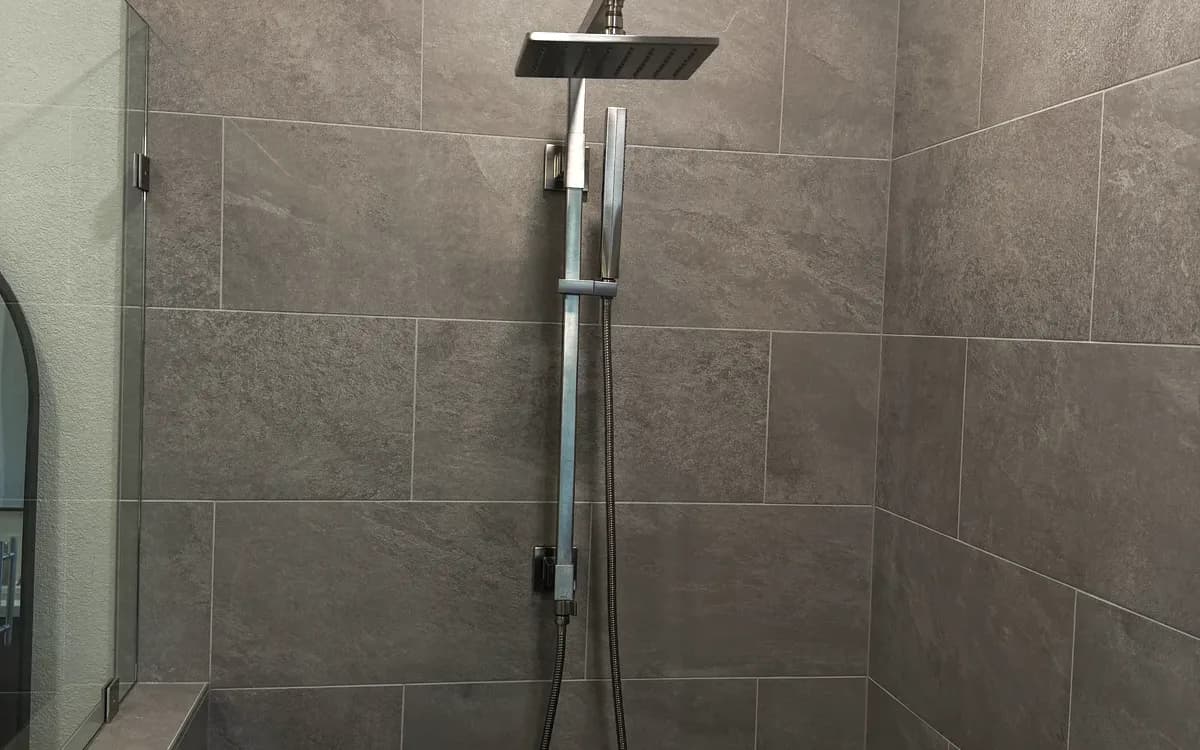
A 1950s Sacramento home transformed: the original tub was removed and replaced with a spacious zero-threshold shower with grab bars, fold-down bench, and non-slip tile.
Raised Foundation Advantage
Sacramento's older homes sit on raised foundations with 18 to 36 inches of crawl space beneath the floor. This is a significant advantage for aging-in-place remodeling that homeowners often don't realize:
- Zero-threshold shower installation: The crawl space allows us to lower the shower subfloor, creating the slope needed for a curbless shower without modifying the bathroom floor level. This is simpler, less expensive, and produces a cleaner result than slab-on-grade techniques.
- Plumbing relocation: Moving drain and supply lines is far easier from beneath the floor through the crawl space than through a concrete slab. This flexibility allows layout changes that would be prohibitively expensive in slab homes.
- Structural assessment: The crawl space provides visual access to the subfloor, joists, and plumbing — allowing us to identify issues like dry rot, water damage, or inadequate structural support before opening any walls.
- Future modifications: Running additional plumbing or electrical for future modifications (heated floors, bidet, additional fixture) is straightforward from the crawl space.
Cost impact: The raised foundation advantage typically saves $2,000 to $5,000 on a zero-threshold shower installation compared to the same work on a slab foundation.
Small Bathroom Accessibility Solutions
The biggest challenge in Sacramento's older homes is space. A 45-square-foot bathroom requires creative problem-solving to incorporate accessibility features. Here are proven strategies:
- Remove the tub entirely: A standard bathtub consumes 13 to 15 square feet. Removing it and building a zero-threshold shower in the same footprint reclaims that space while eliminating the step-over hazard. The shower can extend wall-to-wall for maximum usable area.
- Wall-mounted vanity: A wall-mounted vanity at comfort height (34-36 inches) provides storage above and clear floor space below — usable for wheelchair footrests or simply creating a sense of openness in a small room.
- Pocket door: Replacing a swing door with a pocket door reclaims the 7 to 9 square feet consumed by the door arc. In a 45-square-foot bathroom, that's 15 to 20% of the total floor space — a significant gain.
- Corner fixtures: Corner toilets and corner sinks can reclaim a few critical inches in tight layouts. A corner toilet can save 4 to 6 inches of wall space compared to a standard installation.
- Fold-down features: Fold-down shower bench, fold-down grab bars, and retractable features maximize usability when needed while minimizing space consumption when not in use.
Older Plumbing and Electrical Considerations
Sacramento homes built before 1970 often have plumbing and electrical systems that need attention during any remodel:
Galvanized steel pipes: Common in homes built before 1960, galvanized pipes corrode internally over 40 to 60 years, restricting water flow and potentially contaminating water with rust and lead. During a bathroom remodel, we recommend replacing all accessible galvanized supply lines with PEX or copper. Cost: $1,500 to $4,000 for the bathroom run.
Cast iron drain lines: Functional but aging. Cast iron drains in 60+ year-old homes may have internal corrosion, root intrusion, or bellied sections. A camera inspection of the drain line during remodel ($150 to $300) identifies issues before they become emergencies. Replacement cost if needed: $1,000 to $3,000.
Electrical capacity: Older homes often lack dedicated bathroom circuits, GFCI protection, and adequate amperage for modern loads (heated floors, exhaust fans, hair dryers, lighting). Bringing the bathroom electrical up to current code during a remodel typically costs $800 to $2,000 and is required for permit compliance.
Lead paint and asbestos: Homes built before 1978 may have lead paint on walls and trim. Floor tiles (particularly 9x9-inch tiles) installed before 1985 may contain asbestos. Professional testing ($200 to $500) should precede any demolition. Abatement costs vary: $1,000 to $3,000 for a typical bathroom if hazardous materials are confirmed.
City of Sacramento Permit Process
The City of Sacramento Community Development Department handles building permits for all properties within city limits. Sacramento County handles permits for unincorporated areas (Arden-Arcade, Carmichael).
Permit requirements: Any bathroom remodel involving plumbing changes, electrical modifications, or structural work requires a permit. Simple fixture replacement (same-location toilet swap, faucet change) typically does not.
Fees: City of Sacramento building permit fees for bathroom remodeling range from $500 to $1,500 based on project valuation. Plumbing sub-permits: $150 to $300. Electrical sub-permits: $150 to $300. Plan review fee: typically equal to the building permit fee.
Timeline: Standard plan review: 2 to 3 weeks. Expedited review (additional fee): 5 to 7 business days. Over-the-counter permits for simple projects: same day. Sacramento's online permitting system allows application submission and status tracking electronically.
Historic district considerations: Some Sacramento neighborhoods (parts of Land Park, Curtis Park, Oak Park) fall within historic preservation zones. Exterior modifications may require Preservation Commission review. Interior-only bathroom remodels are generally not affected, but always confirm with the planning department if your home is in a designated historic district.
At Oakwood Remodeling Group, permit management is included in every project. We handle application, plan submission, fee payment, and all inspections so you don't have to navigate the bureaucracy yourself.
Financial Assistance Programs
Several programs may help Sacramento homeowners fund aging-in-place bathroom modifications:
- Sacramento Housing and Redevelopment Agency (SHRA): Offers home repair and rehabilitation loans for qualifying low-to-moderate-income homeowners, including seniors. Loans can cover accessibility modifications.
- VA Specially Adapted Housing (SAH) Grant: Up to $109,986 (2026) for veterans with qualifying service-connected disabilities. Covers home modifications including bathroom accessibility.
- VA Special Housing Adaptation (SHA) Grant: Up to $44,299 (2026) for veterans with specific service-connected disabilities.
- California Department of Rehabilitation: May fund home modifications for individuals with disabilities who are working or seeking employment.
- Rebuilding Together Sacramento: Nonprofit providing free home modifications for qualifying low-income seniors and people with disabilities.
- Property tax exemption: California allows a property tax exclusion for home modifications made for persons with disabilities. The modification value does not increase the assessed value of the home.
Additionally, some Medicare Advantage plans now cover limited home modifications as supplemental benefits. Check with your specific plan for coverage details. While original Medicare (Parts A and B) does not cover home modifications, the landscape is evolving.
Sacramento Aging-in-Place Costs
| Project Scope | Sacramento Cost Range |
|---|---|
| Basic safety package (grab bars, toilet, lighting) | $4,000 - $10,000 |
| Mid-range accessibility remodel | $18,000 - $32,000 |
| Comprehensive master bath remodel | $30,000 - $50,000 |
| Older home with plumbing/electrical upgrade | $35,000 - $55,000 |
| Bathroom expansion (borrowing adjacent space) | $40,000 - $65,000 |
Older Sacramento homes sometimes require additional investment for plumbing replacement, electrical upgrades, or hazardous material abatement — costs that wouldn't apply to newer homes. However, the raised foundation advantage often offsets some of these costs by simplifying shower pan and plumbing work. For itemized feature costs, see our bathroom safety features cost guide.
Frequently Asked Questions
Sacramento's Aging-in-Place Bathroom Experts
Oakwood Remodeling Group understands Sacramento's older homes — the raised foundations, the character details, the plumbing challenges, and the deep attachment homeowners have to their neighborhoods. We'll help you stay in the home you love with a bathroom that works beautifully at every age.
Schedule Your Free In-Home Assessment
Or call us directly at (916) 907-8782 — License #1125321
Related Reading
Aging-in-Place Bathroom Complete Guide
The comprehensive pillar guide to safe, beautiful bathrooms.
Aging-in-Place Bathroom El Dorado Hills
EDH-specific aging-in-place solutions.
Grab Bar Placement Guide
Where and how to install grab bars properly.
Comfort-Height Fixtures Guide
Toilets, vanities, and showers at the right height.
Accessible Bathroom Remodeling Services
Our full-service accessibility remodeling.
Get a Free Estimate
Call us at (916) 907-8782 or fill out our contact form.