Whitney Ranch Bathroom Remodel: What These 1990s Homes Actually Need
Builder-grade fixtures, outdated layouts, and 30-year-old plumbing. Here is what we find behind the walls in Whitney Ranch bathrooms and what it takes to bring them up to 2026 standards.
Looking for bathroom remodeling in Rocklin? View our Rocklin service area page →
Table of Contents
- 1. Why Whitney Ranch Bathrooms Need Special Attention
- 2. What We Find Behind the Walls
- 3. Common Whitney Ranch Bathroom Layouts
- 4. Master Bathroom Upgrade Options
- 5. Hall and Guest Bathroom Updates
- 6. Plumbing Realities in 1990s Construction
- 7. Waterproofing: The Most Critical Upgrade
- 8. Tile and Material Choices for Rocklin Homes
- 9. Ventilation Upgrades for Valley Climate
- 10. Cost Breakdown by Project Type
- 11. Permits, Timeline, and What to Expect
- 12. ROI: What Whitney Ranch Remodels Return
- 13. Frequently Asked Questions

Why Whitney Ranch Bathrooms Need Special Attention
Whitney Ranch is one of Rocklin's most established neighborhoods. Built primarily between 1988 and 1998, these homes were constructed during a period when production builders prioritized speed and cost efficiency over material quality. The bathrooms reflect that era — fiberglass tub-shower combos, cultured marble vanity tops, brass fixtures, and tile patterns that have not aged well.
After 25 to 35 years of daily use, these bathrooms are not just cosmetically outdated. The materials behind the walls — the waterproofing, the substrate, the plumbing — have reached or exceeded their expected service life. A surface-level update that ignores what is behind the tile is a temporary fix that creates long-term problems.
As Rocklin's bathroom remodeling specialists, we have worked in dozens of Whitney Ranch homes. This guide covers exactly what these bathrooms need — based on what we actually find during demolition, not marketing generalizations.
What We Find Behind the Walls
Every Whitney Ranch bathroom remodel starts with demolition — and demolition reveals the truth about what the original builder installed. Here is what we consistently find:
Substrate and Waterproofing
Most 1990s Whitney Ranch bathrooms used paper-faced drywall or greenboard as the tile backer in wet areas. Greenboard was considered acceptable at the time, but it is not waterproof — it is moisture-resistant at best. The Tile Council of North America (TCNA) stopped recommending greenboard for wet areas years ago. When we remove tile from these walls, we frequently find mold growth, softened drywall, and compromised framing behind it.
Modern standards require cement backer board (like Durock or HardieBacker) or foam board panels (like Schluter Kerdi-Board) with a waterproof membrane system. This is the single most important upgrade in any Whitney Ranch bathroom remodel — and it is invisible once the tile goes on. Learn more about waterproofing systems in our Schluter vs. traditional pan comparison.
Plumbing
Whitney Ranch homes typically have copper supply lines, though some earlier phases used polybutylene (poly-B) — a gray plastic pipe that was subject to a class-action settlement due to premature failure. If your home has polybutylene, a bathroom remodel is the right time to replace it. Drain lines are typically ABS plastic, which generally holds up well after 30 years.
Original shower valves in these homes are single-handle designs without pressure-balancing or thermostatic protection. Current California Plumbing Code requires anti-scald protection on all shower valves — meaning every shower valve gets replaced during a permitted remodel, regardless of whether you planned for it.
Framing and Subfloor
Framing is standard 2x4 construction on 16-inch centers. Subfloors are 3/4-inch plywood over engineered floor trusses. In most Whitney Ranch bathrooms, the subfloor is in good condition unless there has been a long-term leak — usually at the toilet flange or the tub drain. We check every subfloor during demolition and repair or replace any compromised sections before new tile goes down. For more on what we uncover during demo, read our post on framing and subfloor issues found during remodels.
Common Whitney Ranch Bathroom Layouts
Whitney Ranch homes typically have two to three bathroom types, depending on the floor plan:
- Master bathroom (en suite): Usually the largest, featuring a separate tub and shower stall, dual-sink vanity, and a private toilet compartment. The shower is often a 36x36-inch neo-angle or 36x48-inch alcove with a fiberglass base and glass block or framed glass door.
- Hall bathroom: Shared between bedrooms, with a standard 30x60-inch tub-shower combo, single-sink vanity (typically 36 inches wide), and a toilet. These bathrooms are compact — usually 5x8 or 5x9 feet.
- Powder room (half bath): First-floor vanity and toilet only. Usually 3x5 or 4x5 feet with a pedestal sink or small vanity.
Understanding the existing layout is critical because it determines what can be changed within the existing footprint versus what requires moving walls or plumbing — which significantly affects cost and timeline.
Master Bathroom Upgrade Options
The master bathroom is where most Whitney Ranch homeowners invest the most. Here are the upgrades that deliver the biggest impact:
Tub-to-Shower Conversion
The most popular upgrade in Whitney Ranch master baths is removing the rarely-used soaking tub and converting it to an expanded walk-in shower. This reclaims 15 to 20 square feet of usable space and transforms the bathroom from a compartmentalized 1990s layout into an open, modern design. We cover the full conversion process in our tub-to-shower conversion service page.
Shower Expansion
If keeping the tub, the existing 36x36 or 36x48-inch shower stall can often be expanded by removing the half-wall or pony wall that separates it from the tub area. This creates a more generous shower without changing the bathroom footprint. Frameless glass panels replace the old framed glass door, and the enlarged shower floor allows for a linear drain system with large-format tile.
Vanity and Storage
Original Whitney Ranch vanities are typically 60-inch double-sink designs with cultured marble tops and framed mirrors. Modern replacements use quartz or solid-surface countertops, undermount sinks, and floating or furniture-style vanity cabinets. Storage improvements include full-extension soft-close drawers, built-in organizers, and medicine cabinets with integrated lighting. For countertop comparisons, see our guide to quartz vs. marble countertops for Rocklin homes.
Lighting and Electrical
Original lighting is typically a single vanity bar light with exposed bulbs and one recessed can in the shower. Modern master baths need layered lighting: LED recessed cans on a dimmer for general illumination, sconces flanking the mirror for task lighting, and a dedicated waterproof fixture in the shower. All electrical work must meet current California Electrical Code — including GFCI protection on every bathroom circuit, which is already required but may not have been properly installed in the original construction.
Hall and Guest Bathroom Updates
Hall bathrooms in Whitney Ranch homes are compact — typically 5x8 or 5x9 feet with a tub-shower combo, single vanity, and toilet. The limited footprint means every design decision matters more. Here is what works best in these smaller spaces:
- Keep the tub: Hall baths should retain a bathtub for families with young children — and for resale value. Replace the fiberglass combo with a new alcove tub and tile surround.
- Upgrade the vanity: A 36-inch vanity with a single undermount sink and quartz top maximizes counter space. Wall-mounted faucets free up even more surface area.
- Tile to the ceiling: Floor-to-ceiling tile on the tub surround walls eliminates the drywall-to-tile transition where mold often grows, and makes the room feel taller.
- Replace the mirror: Swap the builder-grade plate glass mirror for a framed mirror with integrated LED lighting — it functions as both a mirror and a light source.
For more space-saving strategies, see our guide on small bathroom remodeling.
Plumbing Realities in 1990s Construction
Whitney Ranch homes sit on concrete slab foundations. This means drain lines run under or through the slab — and relocating them requires cutting concrete. Here is how this affects your remodel:
- Keeping existing drain locations: The most cost-effective approach. New fixtures install directly over existing drain connections. This eliminates slab work entirely.
- Moving a drain 2 to 4 feet: Requires cutting a trench in the slab, extending or rerouting the drain line, and patching the concrete. Adds $2,000 to $4,000 to the project.
- Moving a drain across the room: Requires a longer trench, proper slope maintenance (1/4 inch per foot minimum), and potentially connecting to a different branch line. Adds $3,500 to $6,000.
Supply lines (hot and cold water) are much easier to relocate because they run through the walls, not the slab. Adding or moving a showerhead, hand shower, or body spray typically costs $300 to $800 per connection point. For more on what to expect with plumbing work, see our water pressure guide.
Waterproofing: The Most Critical Upgrade
If there is one thing every Whitney Ranch bathroom remodel must get right, it is waterproofing. The original construction relied on greenboard and grout to keep water out — a strategy that works for a few years but eventually fails. Modern waterproofing systems create a continuous barrier behind the tile that prevents water from reaching the framing.
We use two proven systems depending on the project:
- Schluter Kerdi membrane: A bonded polyethylene sheet applied over cement board with thin-set mortar. Creates the waterproof barrier at the tile surface. Best for showers with complex geometry or curbless designs.
- Liquid-applied membrane (RedGard or Hydroban): A paint-on waterproofing applied directly to cement board. Two coats minimum, with reinforcing fabric at seams and corners. Cost-effective and reliable for standard shower configurations.
Both systems meet or exceed TCNA and IAPMO standards. The key is 100% coverage — every square inch of wet-area wall and floor must be protected before any tile is installed. Read the full comparison in our waterproofing systems guide.
Tile and Material Choices for Rocklin Homes
Material selection for Rocklin bathrooms needs to account for local conditions — particularly hard water and seasonal temperature extremes. Here is what performs best:
Floor Tile
Large-format porcelain (12x24, 24x24, or 24x48) is the top performer. Porcelain has near-zero water absorption (under 0.5%), handles Rocklin's 30 to 110-degree temperature range, and resists hard water mineral buildup better than natural stone. For shower floors, 2x2 mosaic porcelain provides the small tile size needed for proper slope to the drain while maintaining a slip-resistant DCOF rating of 0.42 or higher.
Wall Tile
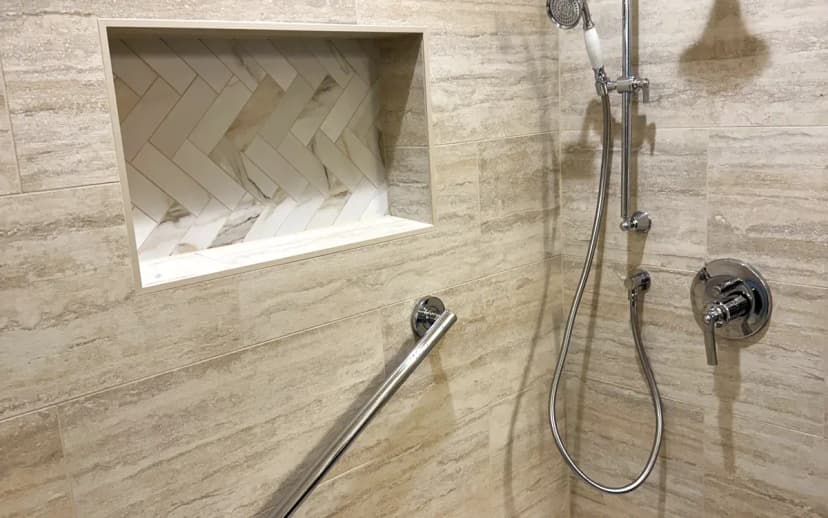
The same large-format porcelain used on floors works on walls — and using the same tile creates visual continuity that makes the bathroom feel larger. Accent strips or niche liners in contrasting mosaic add detail without overwhelming the space. Subway tile remains a solid choice for hall bathrooms where timeless appeal matters more than trend-forward design.
Countertops
Quartz dominates Whitney Ranch bathroom remodels for good reason — it requires zero sealing, resists staining from hard water deposits, and is available in patterns that convincingly mimic marble, concrete, and natural stone. Genuine marble is beautiful but requires annual sealing and etches from acidic products. For more on this decision, see our quartz vs. marble comparison.
Fixtures
Brushed nickel and matte black are the most popular fixture finishes in current Whitney Ranch remodels, replacing the original brass. Both finishes hide water spots and fingerprints better than polished chrome. Look for fixtures labeled WaterSense certified — they reduce water usage by 20% or more without sacrificing performance, which matters in drought-prone Northern California.
Ventilation Upgrades for Valley Climate
Original Whitney Ranch bathroom exhaust fans are typically 50 CFM units — undersized by today's standards. The Home Ventilating Institute (HVI) recommends 1 CFM per square foot of bathroom floor area, with a minimum of 50 CFM. A typical Whitney Ranch master bathroom (80 to 120 square feet) needs an 80 to 120 CFM fan.
Rocklin's climate makes proper ventilation especially important. Summer humidity is low, but hot showers still produce significant moisture. Winter brings cold nights and damp mornings that slow drying. Without adequate exhaust, moisture condenses on cooler surfaces — behind mirrors, inside wall cavities, and on ceiling drywall — creating conditions for mold growth.
We install Panasonic WhisperGreen or WhisperCeiling fans with built-in humidity sensors that run automatically when moisture levels rise. The fan turns off when humidity returns to normal — no timer needed, no forgetting to turn it on. These fans operate at 0.3 to 0.5 sones, which is virtually silent compared to the 3+ sone fans from the 1990s. Read more in our Northern California ventilation guide.
Cost Breakdown by Project Type
Here are realistic cost ranges for Whitney Ranch bathroom remodels, based on our actual project data in the Rocklin area:
| Project Type | Cost Range | Timeline |
|---|---|---|
| Hall bath full remodel | $18,000 – $25,000 | 2 – 3 weeks |
| Master bath remodel (same layout) | $28,000 – $38,000 | 3 – 4 weeks |
| Master bath with tub-to-shower conversion | $32,000 – $45,000 | 3 – 5 weeks |
| Powder room update | $8,000 – $14,000 | 1 – 2 weeks |
| Guest bath with accessibility features | $22,000 – $32,000 | 2 – 3 weeks |
These ranges include materials, labor, permits, demolition, and disposal. They do not include upgrades that fall outside the bathroom scope (such as replacing the water heater or running a new electrical panel circuit). For detailed pricing, see our Rocklin bathroom remodel cost guide and our Northern California cost guide.
Permits, Timeline, and What to Expect
The City of Rocklin Building Department requires permits for any bathroom remodel that involves plumbing changes, electrical work, or structural modifications. Here is what the typical process looks like:
- Design and planning (1–2 weeks): Material selection, layout finalization, and scope documentation.
- Permit application (1–2 weeks): We submit plans to the City of Rocklin and schedule inspections. Processing time varies but averages 5 to 10 business days.
- Demolition (1–2 days): Remove existing fixtures, tile, drywall, and inspect framing, plumbing, and subfloor.
- Rough plumbing and electrical (2–3 days): Relocate or upgrade supply lines, drains, wiring, and exhaust ductwork. Schedule rough inspection.
- Waterproofing and substrate (2–3 days): Install cement board, apply waterproof membrane, and allow cure time.
- Tile installation (3–5 days): Floor tile, wall tile, shower floor, and niches. Includes setting, grouting, and caulking.
- Fixture installation (1–2 days): Vanity, toilet, shower glass, mirrors, lighting, and accessories.
- Final inspection and walkthrough (1 day): City inspector verifies code compliance. We walk you through everything.
Total construction time averages 2 to 4 weeks depending on scope. Learn more about our process in our start-to-finish project guide and review California bathroom building codes for permit requirements.
ROI: What Whitney Ranch Remodels Return
According to the National Association of Realtors 2025 Remodeling Impact Report, a midrange bathroom remodel recovers 73.7% of cost at resale nationally. In the Rocklin and South Placer County market, recovery rates tend to be higher — especially in established neighborhoods like Whitney Ranch where updated bathrooms stand out against original-condition comparables.
Beyond resale numbers, there is a practical ROI that matters more to most homeowners: daily quality of life. A bathroom you use twice a day, 365 days a year, should function well and feel good. A 1990s builder bathroom with yellowed fiberglass, dripping fixtures, and mold in the grout lines delivers neither.
Whitney Ranch homes currently sell in the $550,000 to $750,000 range. A $30,000 to $45,000 master bathroom remodel is a 4% to 8% investment relative to home value — well within the range that appraisers recognize and buyers expect in this price bracket. View more ROI data for the area in our Sacramento region ROI analysis.
Frequently Asked Questions
Ready to Remodel Your Whitney Ranch Bathroom?
Oakwood Remodeling Group has completed dozens of bathroom remodels in Whitney Ranch and throughout Rocklin. We know what these 1990s homes need — from the waterproofing behind the walls to the fixtures you see every day. Every project includes a detailed scope, fixed pricing, and a timeline you can count on.
Related Reading
Bathroom Remodeling in Rocklin, CA
Our full service area page for Rocklin homeowners.
Rocklin Bathroom Remodel Cost Guide
Detailed pricing for Rocklin projects.
Schluter vs. Traditional Pan Waterproofing
Deep dive on waterproofing systems.
Framing & Subfloor Issues in Remodels
What we find behind the walls.
California Bathroom Building Codes 2026
Permit and code requirements.
Get Your Free Estimate
Schedule your consultation today
Related Articles


Get a Free Estimate
Call us at (916) 907-8782 or fill out our contact form.