Tub to Shower Conversion Cost in 2026: The Complete Pricing Breakdown
Real pricing from $5,000 to $25,000+ based on 127+ Sacramento-area projects — with cost tiers, line-item breakdowns, and a day-by-day timeline
Looking for bathroom remodeling in Sacramento? View our Sacramento service area page →
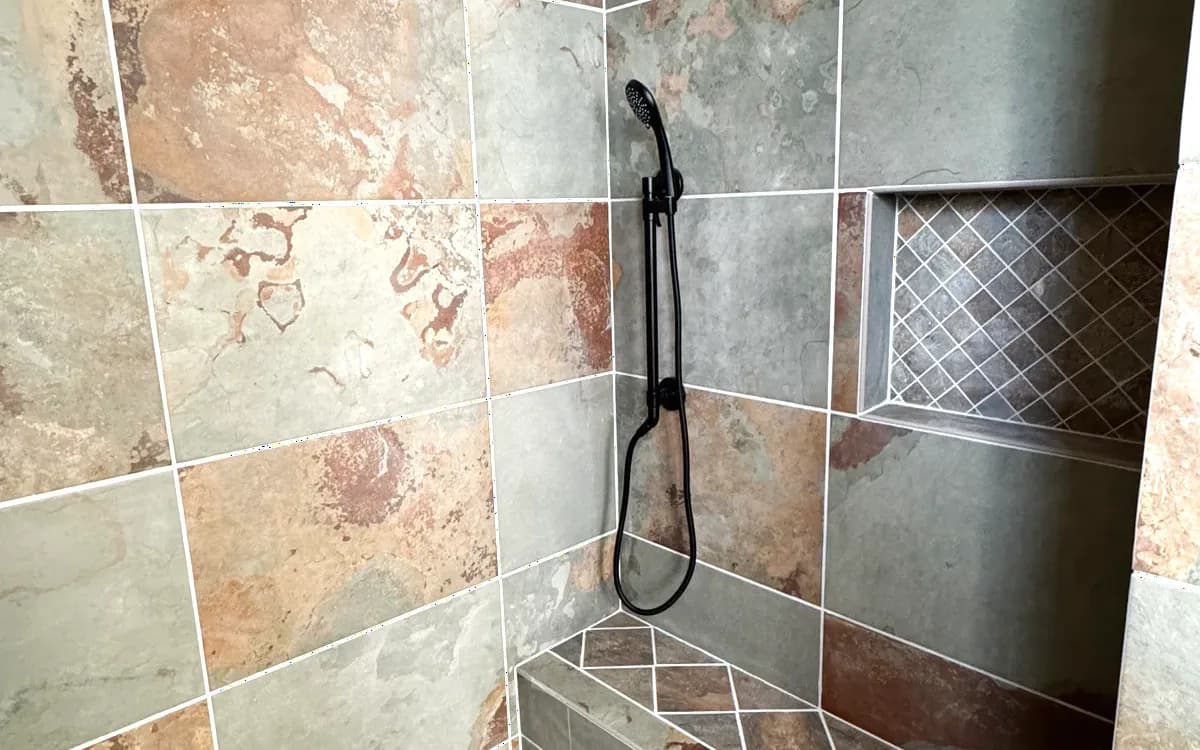
A mid-range tub to shower conversion in a Sacramento-area home — the most popular bathroom upgrade we perform
Average Tub to Shower Conversion Cost in 2026
Let's get straight to it.
The average tub to shower conversion cost in the Sacramento area in 2026 is $9,500 to $14,000 for a standard tiled conversion with frameless glass. That's the range where most homeowners land after choosing mid-grade materials and keeping the plumbing footprint roughly the same.
But "average" is a wide net. Your actual bathtub to shower conversion cost depends on three things: the materials you choose, whether the plumbing needs to move, and the condition of what's behind your existing tub walls.
Here's the full range we see across our Sacramento, Placer County, and El Dorado County projects:
- Budget conversion (prefab surround): $5,000 to $8,000
- Standard conversion (ceramic tile + glass): $7,500 to $12,000
- Premium conversion (porcelain tile + linear drain): $12,000 to $18,000
- Luxury conversion (natural stone + body sprays): $18,000 to $25,000+
Those numbers include demolition, tub removal, plumbing modifications, waterproofing, new shower base or tile floor, wall treatment, glass enclosure, fixtures, and all labor. Permits are included in every Oakwood Remodeling Group project.
The cost to convert a tub to a walk-in shower has increased about 6 to 8 percent since 2024, driven primarily by glass enclosure pricing (up 12 percent) and labor rate increases across the Sacramento metro. Material costs have actually stabilized for most tile categories.
Tub to Shower Conversion Cost by Type: Budget Through Luxury
Not every conversion needs to be a $15,000 project. And not every homeowner wants the cheapest option either. Here's what each tier actually gets you.
| Tier | Cost Range | What You Get |
|---|---|---|
| Budget | $5,000 - $8,000 | Prefab acrylic base + acrylic surround panels, standard chrome fixtures, hinged glass door, existing drain location |
| Standard | $7,500 - $12,000 | Ceramic or porcelain tile walls, tile-ready shower pan, frameless glass door, brushed nickel fixtures, recessed niche |
| Premium | $12,000 - $18,000 | Large-format porcelain tile, linear drain, full frameless glass enclosure, matte black or gold fixtures, built-in bench, multiple niches |
| Luxury | $18,000 - $25,000+ | Natural stone or designer porcelain, curbless/zero-threshold entry, body sprays + rain head + handheld, heated floor, smart valve, custom glass |
Budget Tier: $5,000 to $8,000
This is the "get it done clean and functional" tier. You're removing the tub, installing a prefab acrylic shower base, and covering the walls with acrylic surround panels. No tile. No custom glass. A standard hinged door with a chrome frame.
It works. It looks modern. And it's a massive upgrade over a stained, rarely-used bathtub from 1994. If this is a rental property, a hall bathroom your family barely uses, or you're on a strict budget — this is a smart move.
Standard Tier: $7,500 to $12,000
This is where about 55 percent of our clients land. Ceramic or porcelain tile on the walls and floor. A frameless glass door or panel. Brushed nickel or matte black fixtures. A recessed shampoo niche. Clean, modern, and built to last 20+ years.
The standard tier is the sweet spot for most Sacramento-area homeowners. It delivers a dramatic visual transformation, adds genuine resale value, and uses materials that won't need replacing for decades.
Premium Tier: $12,000 to $18,000
Large-format porcelain tile (think 24x48-inch slabs) with minimal grout lines. A linear drain that disappears into the floor. A full frameless glass enclosure, not just a door. Built-in bench for shaving or relaxing. Multiple niches for storage. This is where a tub-to-shower conversion starts feeling like a spa.
Luxury Tier: $18,000 to $25,000+
Natural stone like marble or quartzite. A curbless, zero-threshold entry for a seamless look (and aging-in-place accessibility). Multiple shower heads — rain head overhead, handheld on a slide bar, body sprays in the walls. Heated tile floor. A thermostatic smart valve. Custom glass fabricated to your exact dimensions.
We see this tier most often in Granite Bay, El Dorado Hills, and the Land Park/East Sacramento neighborhoods where home values support the investment.
Detailed Tub to Shower Conversion Cost Breakdown by Component
National averages are useless. Here's what each component actually costs in the Sacramento market in 2026, based on real project invoices.
| Component | Budget | Mid-Range | Premium |
|---|---|---|---|
| Tub demolition & removal | $500 - $800 | $500 - $800 | $500 - $800 |
| Plumbing rough-in & drain | $800 - $1,200 | $1,200 - $2,000 | $2,000 - $3,500 |
| Shower base / pan | $300 - $600 | $600 - $1,200 | $1,200 - $2,500 |
| Waterproofing system | $400 - $600 | $600 - $900 | $900 - $1,400 |
| Wall treatment (surround or tile) | $600 - $1,200 | $1,500 - $3,000 | $3,000 - $6,000 |
| Floor tile (if applicable) | Included in base | $500 - $1,000 | $1,000 - $2,000 |
| Glass enclosure | $700 - $1,200 | $1,500 - $2,500 | $2,500 - $4,500 |
| Fixtures (valve, head, handheld) | $200 - $500 | $500 - $1,200 | $1,200 - $3,000 |
| Cement board / backer board | $200 - $400 | $300 - $500 | $400 - $700 |
| Permits & inspections | $250 - $600 | $250 - $600 | $250 - $600 |
| Labor (all trades) | $1,800 - $2,500 | $2,500 - $4,000 | $4,000 - $6,500 |
| Total | $5,000 - $8,000 | $7,500 - $12,000 | $12,000 - $25,000+ |
The biggest variable? Glass. Frameless glass enclosures have jumped 12 percent year-over-year in the Sacramento market. A simple frameless door panel runs $1,500 to $2,200 installed. A full 90-degree frameless enclosure with a return panel costs $2,500 to $4,500. Custom neo-angle or curved glass can exceed $5,000.
The second-biggest variable is tile labor. A straightforward subway tile layout costs far less to install than a herringbone pattern with accent bands and multiple niches. The tile itself might cost the same per square foot — but the labor hours double.
What's Included in a Tub to Shower Conversion
A complete tub to shower conversion is more than pulling out a tub and sticking in a shower head. Here's exactly what goes into a professional conversion:
- Tub demolition and removal: Disconnecting plumbing, cutting the tub free from wall flanges, removing the tub (cast iron tubs often need to be broken apart in place), hauling debris
- Subfloor inspection and repair: Checking for water damage, rot, or mold underneath the old tub — and repairing anything found
- Plumbing modifications: Relocating the drain to match the new shower layout, adjusting water supply lines for proper shower valve height, adding a mixing valve if needed
- Framing adjustments: The area behind a tub typically has different stud spacing than what's needed for a shower wall — framing may need adjustment for proper backer board attachment
- Cement board installation: Moisture-resistant backer board on all shower walls, properly screwed and taped at seams
- Waterproofing membrane: A liquid-applied or sheet membrane system (like Schluter DITRA or RedGard) that creates a watertight barrier behind the tile
- Shower base or mud bed: Either a prefab shower pan or a custom-sloped mortar bed for tile floor installation
- Tile installation: Walls and floor (for tiled conversions), including cut pieces around niches, benches, and fixtures
- Glass enclosure: Measured after tile is complete, fabricated to exact dimensions, and professionally installed
- Fixtures: Shower valve, shower head, handheld, diverter, and any body sprays or rain heads specified
- Finish work: Caulking, grout sealing, trim around glass hardware, and final cleanup
- Permits and inspections: Building permit, plumbing rough-in inspection, and final inspection
Any contractor who quotes you a conversion without mentioning waterproofing or subfloor inspection is someone you should walk away from. Those are non-negotiable steps that protect you from thousands of dollars in water damage down the road.
The Tub to Shower Conversion Process: Day-by-Day Timeline
Knowing what happens each day takes the stress out of a conversion project. Here's the standard timeline for a mid-range tiled tub to shower remodel:
| Day | Work Performed | What to Expect |
|---|---|---|
| Day 1 | Demolition & tub removal | Loudest day. Tub cut out, old tile removed, debris hauled. Subfloor exposed and inspected. Water shut off to that bathroom. |
| Day 2 | Plumbing rough-in | Drain relocated, supply lines adjusted, new valve installed. Subfloor repaired if needed. Framing adjustments made. Plumbing inspection scheduled. |
| Days 3-4 | Waterproofing & backer board | Cement board installed on all walls. Waterproofing membrane applied in layers with 24-hour cure time between coats. Shower pan or mud bed set. |
| Days 5-7 | Tile installation | Floor tile first, then walls. Niche tiled. Bench tiled (if included). Accent rows installed. Grout applied on the final tile day. 24-hour cure before next step. |
| Days 8-10 | Glass, fixtures & final details | Glass enclosure installed and siliconed. Shower head, valve trim, and accessories mounted. Caulking completed. Grout sealed. Final inspection. Walkthrough with homeowner. |
Total timeline: 8 to 10 working days for a standard tiled conversion. Budget conversions with prefab surrounds can finish in 3 to 5 days. Luxury conversions with natural stone, heated floors, and custom glass may take 12 to 15 days.
Add 7 to 14 business days before Day 1 for permit processing. In Sacramento County, permits typically process in 7 to 10 days. Placer County averages 10 to 14 business days. Glass fabrication takes 2 to 3 weeks after final measurements, so we order glass early and schedule the installation to align with tile completion.
During the conversion, that bathroom is completely out of service. Plan to use another bathroom in the house. If it's your only bathroom, we prioritize getting the plumbing functional as quickly as possible and can sometimes provide a temporary shower solution.
7 Factors That Affect Your Tub to Shower Conversion Cost
Two homes on the same street can get quotes $5,000 apart. Here's why.
1. Drain Location
Keeping the drain where it is saves $800 to $1,500. Moving it to the opposite end of the shower (for a linear drain, for example) requires cutting into the subfloor and extending the drain line. That's plumber time, and plumber time is the most expensive line item in a conversion.
2. Glass Enclosure Style
A single frameless door panel: $1,500 to $2,200. A full frameless enclosure with a return panel: $2,500 to $3,800. A 90-degree corner enclosure: $3,200 to $4,500. Low-iron (ultra-clear) glass adds 15 to 20 percent. Specialty hardware finishes like brushed gold or matte black add 10 to 15 percent over chrome.
3. Tile Selection and Pattern
Ceramic subway tile at $3 to $5 per square foot installed in a straight stack pattern is the most affordable tiled option. Large-format porcelain at $8 to $15 per square foot in an offset pattern costs more but creates a sleek, modern look with minimal grout lines. Natural stone at $15 to $30 per square foot looks stunning but requires sealing and more careful installation.
4. Shower Size
A standard 60-inch tub alcove converts to a 60x32-inch or 60x36-inch shower — the most economical option because the footprint stays the same. Expanding the shower beyond the original tub footprint (borrowing space from an adjacent closet, for example) adds $2,000 to $5,000 for framing, additional waterproofing, and more tile.
5. Subfloor Condition
If the subfloor under your tub is damaged — and after 20 to 30 years, it often is — repair costs $500 to $2,000 depending on the extent. We won't know the full picture until the tub is removed on Day 1, which is why good contractors build a contingency allowance into their quotes.
6. Accessibility Features
A curbless (zero-threshold) entry adds $1,000 to $3,000 because the entire bathroom floor needs to be sloped toward the drain, and waterproofing extends beyond the shower area. Grab bars, fold-down benches, and handheld shower heads on slide bars add $300 to $1,200 for aging-in-place conversions.
7. Fixture Tier
A single-function chrome shower head and basic valve costs $200 to $400. A multi-function system with rain head, handheld, and thermostatic valve in a designer finish costs $800 to $2,000. Add body sprays and a digital/smart valve, and you're looking at $1,500 to $3,000+ for fixtures alone.
Tub Removal Challenges in Older Sacramento-Area Homes
Sacramento has a lot of homes built between the 1950s and 1980s. And those homes present specific challenges that newer construction doesn't.
Cast Iron Tubs
Homes built before 1975 frequently have cast iron bathtubs. These weigh 300 to 500 pounds and cannot be carried out in one piece without risking damage to hallways, doorframes, and the backs of your demo crew. We break them apart in place using a sledgehammer and heavy blankets to contain fragments. This adds $200 to $400 to demolition costs compared to a standard steel or fiberglass tub.
Galvanized Drain Pipes
Pre-1970 homes often still have galvanized steel drain lines. When you're connecting new PVC plumbing to old galvanized, the transition needs to be handled properly to avoid leaks and corrosion. In some cases, we recommend replacing the drain line all the way to the main stack while the wall is open. That adds $400 to $1,200 but prevents a much more expensive repair later.
Asbestos Concerns
Homes built before 1980 may have asbestos in old wall texturing, flooring adhesive, or even the original tub surround compound. California law requires testing before demolition if asbestos is suspected. Testing costs $200 to $400. If asbestos is confirmed, abatement by a licensed contractor adds $800 to $3,000 depending on the scope.
Non-Standard Framing
Older homes don't always follow modern framing standards. You might find studs at 20-inch spacing instead of 16, or horizontal blocking that complicates backer board installation. These aren't deal-breakers — they just require additional framing work that adds $300 to $800 to the project.
Sacramento-Specific Tub to Shower Conversion Considerations
Tub to shower remodel cost in Sacramento is shaped by local factors that national cost guides completely miss. Here's what matters in our market.
Permit Requirements by Jurisdiction
Sacramento is a patchwork of jurisdictions, and each one has different permit timelines and fees:
- Sacramento County: $250 to $500 permit fee, 7 to 10 business day processing
- City of Sacramento: $300 to $600, 5 to 10 business days
- Placer County (Roseville, Rocklin, Lincoln, Auburn): $400 to $900, 10 to 14 business days
- City of Folsom: $300 to $550, 7 to 12 business days
- El Dorado County (El Dorado Hills, Cameron Park): $350 to $700, 10 to 14 business days
Hard Water Impacts
Sacramento and Placer County have moderately hard water. That means glass enclosures show water spots fast, and chrome fixtures develop mineral buildup over time. We recommend PVD-coated fixtures (brushed nickel, matte black, or brushed gold) and suggest homeowners apply a glass coating treatment like EnduroShield to extend cleaning intervals. These aren't upgrades for aesthetics — they're practical decisions for our water quality.
Neighborhood-Specific Pricing
Where you live affects what you should invest:
- East Sacramento, Land Park, Curtis Park: Older homes (1920s-1950s) with cast iron tubs and galvanized plumbing. Budget an extra $1,000 to $3,000 for plumbing updates. Homes here support premium conversions.
- Natomas, Elk Grove, Rancho Cordova: Newer tract homes (1990s-2010s) with standard fiberglass tubs and PVC plumbing. Straightforward conversions. Standard tier is the best value play.
- Granite Bay, El Dorado Hills, Folsom: Higher home values justify premium and luxury conversions. These neighborhoods expect updated master bathrooms when homes are listed.
- Roseville, Rocklin, Lincoln: Mix of established and newer homes. Standard to premium tier matches the market. Sun City Lincoln Hills is a hotspot for accessibility-focused conversions.
- Auburn, Loomis, Newcastle: Foothill premium applies — add 5 to 12 percent for access logistics and older plumbing. See our Auburn tub-to-shower guide for foothill-specific details.
Contractor Market Conditions
Sacramento's remodeling market is competitive. In 2026, licensed bathroom remodeling contractors in the metro area have lead times of 3 to 6 weeks. Peak season (May through September) can push that to 6 to 10 weeks. Pricing is firmest during peak season. For the best availability and potentially flexible pricing, book your conversion for March, April, October, or November.
Will Converting Your Tub to a Shower Hurt Home Value?
This is the question every homeowner asks. And the answer depends on one thing: how many bathtubs your home has after the conversion.
The One-Tub Rule
Real estate agents in the Sacramento market consistently say the same thing: keep at least one bathtub in the home. Removing the only tub reduces your buyer pool by 10 to 15 percent — primarily families with young children who need a tub for baths.
If your home has two or more bathrooms with tubs, converting one (especially the master bath tub) to a walk-in shower is almost always a positive move for resale. Today's buyers — particularly in the 35-to-55 age bracket that dominates Sacramento's move-up market — strongly prefer walk-in showers over master bath tubs.
The ROI Numbers
Based on Sacramento-area resale data:
- A standard tub-to-shower conversion ($7,500 to $12,000) in a home with 2+ bathrooms typically returns 65 to 80 percent of its cost at resale
- A premium conversion ($12,000 to $18,000) in a higher-value neighborhood returns 55 to 70 percent
- Converting the only tub in a home can actually reduce perceived value by $3,000 to $8,000, wiping out your investment
The smart play: convert the master tub to a gorgeous walk-in shower, and keep a simple tub in the hall or guest bathroom. That combination gives you the best of both worlds — a spa-like daily experience and maximum resale appeal.
When Removing the Only Tub Makes Sense
There are exceptions. If you're aging in place and never plan to sell, accessibility matters more than resale. A curbless walk-in shower with grab bars and a fold-down bench is life-changing for mobility-limited homeowners. In a one-bathroom home where the tub is the only showering option, the safety and accessibility benefits outweigh the resale consideration.
Financing Your Tub to Shower Conversion
A $10,000 to $15,000 conversion doesn't have to come out of your savings account in one lump sum. Here are your best options in 2026:
- Home equity line of credit (HELOC): Current rates 7.5 to 9.5 percent. Interest may be tax-deductible since the loan is for home improvement. Best option for conversions over $10,000.
- Home improvement personal loan: Fixed rates 8 to 15 percent. No equity required. Approval in 1 to 3 days. Best for projects under $15,000 where you want predictable monthly payments.
- 0% promotional credit card: If you have strong credit and can pay off the balance within 12 to 18 months, a 0% APR card effectively makes your conversion interest-free. Just pay it off before the promotional period ends.
- Contractor financing: Oakwood Remodeling Group works with lending partners to offer competitive financing options with monthly payments as low as $150 to $250 for a standard conversion.
- Cash savings: No interest, no application, no monthly payments. If you've budgeted for this project, paying cash is always the most cost-effective approach.
For Sacramento homeowners with strong equity — and most have significant equity after the appreciation since 2020 — a HELOC is typically the smartest financing choice. The interest rate is lower than personal loans, the interest is potentially deductible, and the flexible draw structure means you only borrow what you need.
How to Get an Accurate Estimate for Your Conversion
Online cost calculators can give you a ballpark. But your actual tub to shower conversion cost depends on variables that only an in-person assessment can evaluate: the condition of your subfloor, the type of tub you have, the plumbing configuration behind the wall, and the specific materials you choose.
Here's how to get the most accurate quote:
- Schedule an in-home consultation. A qualified estimator needs to see the bathroom, check access, measure the space, and discuss your goals. Remote quotes based on photos are unreliable for conversions because so much depends on what's behind the walls.
- Get at least two quotes. But don't just chase the cheapest number. Compare what's included — does the quote cover waterproofing? Permits? Subfloor repair allowance? Glass? A low bid that excludes critical items isn't a deal — it's a change order waiting to happen.
- Ask about contingency allowances. Reputable contractors include a 10 to 15 percent contingency for unforeseen conditions (water damage, plumbing issues, asbestos). If a contractor quotes a flat price with no contingency, ask how they handle surprises.
- Verify licensing and insurance. In California, any contractor performing work over $500 must hold an active CSLB license. Oakwood Remodeling Group operates under License #1125321 — you can verify it at cslb.ca.gov.
- Check the timeline. A 3-day quote for a tiled conversion is either unrealistic or cutting corners on waterproofing cure times. Proper waterproofing and tile work takes time — there are no shortcuts that don't create problems later.
Oakwood Remodeling Group provides detailed, itemized quotes for every tub to shower conversion. No surprises. No hidden costs. Every quote includes permits, waterproofing, glass, fixtures, and a clear contingency allowance for older homes.
Ready to get your number? Check out our detailed tub to shower conversion cost guide for even more pricing details, or contact us directly for a free in-home estimate.
Frequently Asked Questions About Tub to Shower Conversion Costs
Get Your Free Tub to Shower Conversion Estimate
Every bathroom is different. The only way to get an accurate number for your specific conversion is a free in-home consultation with Oakwood Remodeling Group. We'll assess your existing tub, check the plumbing, discuss your design preferences, and provide a detailed, itemized quote — usually within 48 hours of your visit.
Call us at (916) 907-8782 or request your free estimate online.
Oakwood Remodeling Group • CSLB License #1125321 • Serving Sacramento, Placer County, and El Dorado County
Related Reading
Tub to Shower Conversion Services
Our complete tub-to-shower conversion service overview.
Tub to Shower Cost Guide
Detailed pricing page with interactive cost estimator.
Walk-In Shower Installation
Custom walk-in shower design and installation.
Bathroom Remodeling Services
Full bathroom renovation from design to completion.
Financing Options
Flexible payment plans for your bathroom project.
Get Your Free Estimate
Schedule your consultation today
Get a Free Estimate
Call us at (916) 907-8782 or fill out our contact form.