Small Bathroom Syndrome: Folsom Space-Saving Secrets
Looking for bathroom remodeling in Folsom? View our Folsom service area page →
Table of Contents
A small bathroom doesn't have to feel small. Smart design choices can transform even the most compact Folsom bathrooms into functional, luxurious spaces.
If your Folsom bathroom feels more like a closet than a retreat, you're not alone. Many Folsom homes—especially those built in the 1980s-1990s in neighborhoods like Broadstone, Lexington Hills, and American River Canyon—feature secondary bathrooms in the 5x8 to 7x9 range. These compact spaces were considered adequate when they were built, but modern expectations for bathroom functionality and aesthetics have raised the bar considerably.
The good news? Small bathrooms don't have to feel small. Through strategic design choices, smart material selection, and clever space optimization, even the most compact bathroom can feel surprisingly spacious and function beautifully. We've transformed hundreds of small bathrooms across the Sacramento region, and the results consistently amaze homeowners who thought their small bathroom was a permanent limitation.
Here are the space-saving secrets that make the biggest difference in small Folsom bathroom remodels.
The Small Bathroom Challenge in Folsom
Folsom's housing development history explains why so many homes have small bathrooms. During the building boom of the 1980s-2000s, builders maximized the number of bedrooms and living spaces while keeping secondary bathrooms to minimum code requirements. The result: homes with generous living rooms and bedrooms but bathrooms that feel like afterthoughts.
Common small bathroom challenges in Folsom homes include:
- The tub that dominates: A standard 60-inch bathtub consumes nearly half the floor space in a 5x8 bathroom, leaving barely enough room for a vanity and toilet
- No visual depth: Short sight lines and walls in every direction create a closed-in feeling
- Storage desert: Small bathrooms rarely include adequate storage, leading to cluttered counters and improvised shelving
- Dark and enclosed: Many Folsom secondary bathrooms have small windows or no windows at all, making them feel cave-like
- Dated fixtures that waste space: Builder-grade pedestal sinks provide no storage, oversized vanities consume precious floor area
Visual Tricks That Multiply Space
The most impactful space-saving strategies don't add square footage—they change how your brain perceives the existing space. These visual tricks create the illusion of a larger bathroom without moving a single wall:
Continuity of Materials
Use the same tile on both the floor and shower walls. When the eye doesn't encounter a material change, it reads the space as continuous and larger. A 5x8 bathroom with matching floor and shower tile feels measurably more spacious than the same bathroom with different floor and wall materials. Extend the floor tile into the shower (with proper waterproofing) and up the shower walls for maximum effect.
The Color Rule
Light colors make spaces feel larger; dark colors make them feel smaller. For small Folsom bathrooms, stick to a light, neutral palette—whites, light grays, soft beiges, and pale blues. Use the same or similar colors on walls, tile, and ceiling to eliminate visual boundaries. A monochromatic bathroom where walls, floor, and ceiling blend together feels significantly larger than one with contrasting colors.
Eliminate Visual Clutter
Every item visible on the counter, every product on a shower shelf, and every towel hanging from a hook adds visual noise that makes the space feel smaller. Design your small bathroom with hidden storage so daily items disappear when not in use. Recessed medicine cabinets, vanity drawers with organizers, and closed shower niches keep the visual field clean and open.
The Floating Vanity Revolution
If there's one single change that transforms a small bathroom more than any other, it's replacing a floor-mounted vanity with a wall-mounted floating vanity. The impact is dramatic and immediate.

A floating vanity exposes the floor beneath, creating the visual illusion of more space while providing efficient storage in a compact Folsom bathroom.
Why Floating Vanities Work
- Visible floor space: Exposing the floor beneath the vanity adds 4-6 square feet of visible floor area. The eye reads continuous floor as more space.
- Cleaning accessibility: No awkward gaps between vanity base and floor means easier mopping and no dust collection along baseboards.
- Adjustable height: Wall-mounted vanities install at any height, allowing you to set the perfect ergonomic height for your household rather than accepting the standard 32-inch builder height.
- Modern aesthetic: Floating vanities immediately modernize a bathroom, creating a clean, contemporary look that lifts the entire design.
Sizing Tips
In a small bathroom, choose a 24-30 inch floating vanity with deep drawers rather than a wider vanity with shallow cabinets. Deep drawers provide more usable storage than traditional cabinet doors with a single shelf. Consider a vanity with an integrated top-mount storage tray for daily essentials—it keeps items accessible but organized.
Shower Strategies for Compact Spaces
The shower decision is often the most impactful choice in a small bathroom remodel. Here's how to maximize your shower while preserving space:
Tub-to-Shower Conversion
If your small bathroom has a bathtub, converting it to a walk-in shower is the most space-efficient move. A standard tub is 60 inches long but you may only need a 48-inch shower, freeing up 12 inches of floor space. Even keeping the same footprint, replacing the tub with a shower and frameless glass makes the room feel dramatically more open.
Frameless Glass Is Non-Negotiable
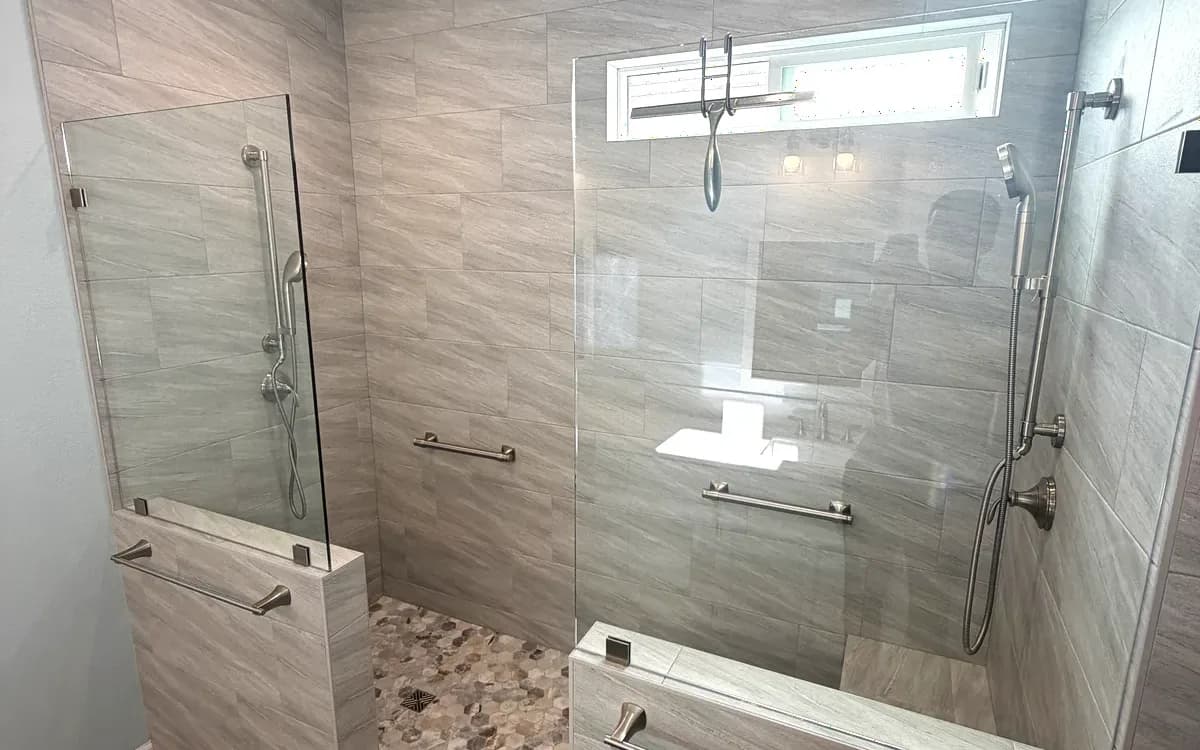
In a small bathroom, a frameless glass shower enclosure is the single most important space-saving investment. Framed shower doors with thick metal and opaque glass create a visual wall that chops the bathroom into smaller zones. Frameless clear glass allows the eye to travel through the shower space, visually incorporating the shower area into the overall bathroom volume.
Curbless Shower Design
A curbless (zero-threshold) shower eliminates the step-over curb, creating a seamless floor transition from bathroom to shower. This not only looks stunning but eliminates a visual break that makes the bathroom feel segmented. Curbless showers require careful floor slope engineering and a linear drain, but the result is worth the investment in small spaces.
Smart Storage That Doesn't Steal Space
Small bathrooms need storage—they just need it delivered differently than large bathrooms:
- Recessed medicine cabinet: A recessed medicine cabinet sits inside the wall cavity, adding 4-6 inches of storage depth without projecting into the room. Choose a model with mirrored doors to double as your vanity mirror.
- Recessed shower niches: Built into the shower wall between studs, niches provide shampoo and soap storage without protruding into the shower space. A double-height niche provides twice the storage in the same wall space.
- Over-toilet cabinet: The wall space above the toilet is often unused. A slim, wall-mounted cabinet or floating shelves add storage without consuming floor space.
- Towel hooks instead of bars: Towel bars require 20-24 inches of wall space. Individual hooks use 3-4 inches each and can be placed on the back of the door, behind the toilet, or on any small wall surface.
- Vanity drawer organizers: Custom drawer inserts maximize every inch of vanity drawer space, preventing the jumbled mess that makes drawers feel full when they're only half-used.
Tile Strategies for Small Bathrooms
Tile selection profoundly affects spatial perception in small bathrooms:
Go Large-Format
Large tiles (12x24 inches or bigger) dramatically reduce grout lines, creating a cleaner visual plane that makes spaces feel larger. A 5x8 bathroom floor covered in 12x24 tiles has 60% fewer grout lines than the same floor in 6x6 tiles. The continuous surface reads as more spacious and more polished.
Floor-to-Ceiling Tile
Running tile from floor to ceiling on at least one wall eliminates the horizontal line where tile meets paint. This vertical continuity draws the eye upward and makes the ceiling feel taller. In small Folsom bathrooms with standard 8-foot ceilings, floor-to-ceiling tile can make the room feel 10-12 feet tall.
Horizontal Orientation
Installing rectangular tiles horizontally (with the long edge running side to side) creates a sense of width. This is particularly effective on shower walls and accent walls where you want the room to feel wider.

A frameless glass shower enclosure with a curbless entry is the ultimate space-saving feature for small Folsom bathrooms—it makes the shower visually disappear into the room.
Lighting and Mirror Tricks
The Oversized Mirror Strategy
Mirrors literally double the visual depth of a room. In small bathrooms, install the largest mirror the wall can accommodate—preferably edge-to-edge above the vanity. A frameless mirror that extends from the countertop to the ceiling creates a dramatic sense of depth. For even more impact, mirror an entire wall (if layout permits). The reflection doubles the perceived room size.
Layered Lighting
Dark corners make small rooms feel claustrophobic. Layered lighting—ambient ceiling light plus task lighting at the vanity—eliminates shadows and makes every corner visible. Recessed can lights are ideal for small bathrooms because they don't hang below the ceiling plane. LED strip lighting under a floating vanity creates a glow effect that visually lifts the vanity off the floor.
Natural Light Maximization
If your Folsom bathroom has a window, maximize its impact. Replace frosted glass with clear glass and a privacy film on the lower portion. Consider adding a skylight or solar tube—natural overhead light makes any space feel larger and more inviting. In bathrooms without windows, a solar tube (like Solatube) can bring natural light through the roof without a full skylight installation.
Layout Optimization Ideas
Sometimes the biggest space gains come from rethinking the layout entirely:
- Pocket door: A standard swing door steals 9 square feet of usable floor space. A pocket door slides into the wall, reclaiming that entire area. In a 40-square-foot bathroom, that's a 22% increase in usable space.
- Corner shower: A neo-angle or corner shower uses diagonal entry to fit a comfortable shower in a corner footprint, leaving more open floor space.
- Wall-mounted toilet: A wall-hung toilet saves 8-10 inches of floor depth compared to a standard toilet. The concealed tank sits in the wall cavity, and the exposed floor beneath makes cleaning easier.
- Compact fixtures: Compact toilets (24-26 inch depth versus the standard 28-30 inch), narrow vanities, and wall-mount faucets all reclaim inches that add up to significant space in a small bathroom.
| Space-Saving Feature | Space Gained | Typical Cost |
|---|---|---|
| Pocket door | 9 sqft usable area | $500–$1,200 |
| Floating vanity | 4–6 sqft visible floor | $800–$2,000 |
| Tub-to-shower conversion | Up to 12" floor space | $5,000–$12,000 |
| Frameless glass enclosure | Visual expansion | $1,200–$3,000 |
| Recessed medicine cabinet | 4–6" depth saved | $300–$800 |
| Wall-mounted toilet | 8–10" floor depth | $800–$2,500 |
| Large-format tile | Visual expansion | $0–$500 premium |
Frequently Asked Questions
Transform Your Small Folsom Bathroom
Oakwood Remodeling Group specializes in making small bathrooms feel spacious and luxurious. Our space-saving design expertise helps Folsom homeowners get the most out of every square inch.
Get a Free Estimate
Call us at (916) 907-8782 or fill out our contact form.