Roseville Tub-to-Shower Conversion: Complete Guide
The soaking tub in your master bathroom has not been used in years. Here is exactly what it takes to convert it into a walk-in shower you will use every day — with Roseville-specific costs, timelines, and design options.
Looking for bathroom remodeling in Roseville? View our Roseville service area page →
Table of Contents
- 1. Why Roseville Homeowners Are Converting Tubs
- 2. When to Keep the Tub
- 3. The Conversion Process Step by Step
- 4. Same-Footprint Conversions
- 5. Expanded Footprint Conversions
- 6. Plumbing Changes and Drain Considerations
- 7. Waterproofing and Substrate Requirements
- 8. Design Options for the New Shower
- 9. Tile and Glass Selection
- 10. Cost Breakdown by Scope
- 11. Resale Impact in the Roseville Market
- 12. Permits, Timeline, and What to Expect
- 13. Frequently Asked Questions
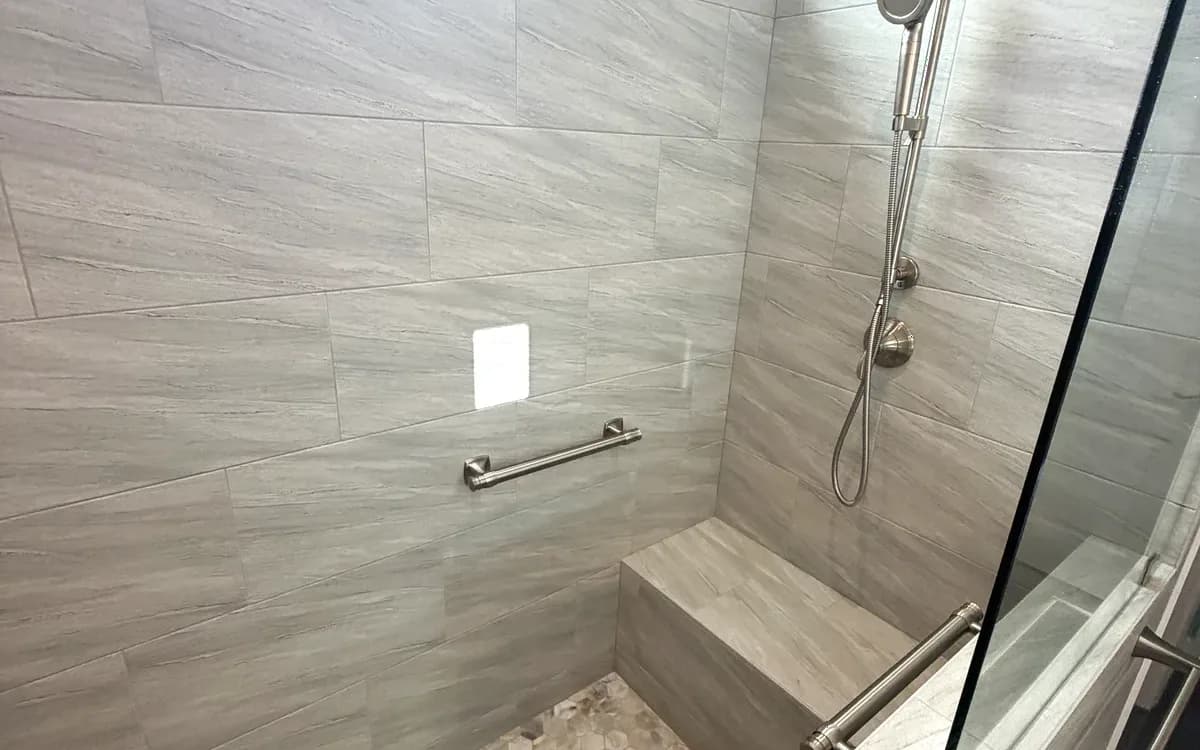
Pictured: a real Oakwood project in Citrus Heights. See the full before & after
Why Roseville Homeowners Are Converting Tubs
Tub-to-shower conversions are the single most requested project in Roseville master bathrooms. The pattern is consistent across every neighborhood — from Sun City Roseville to West Park to Sierra Vista: the master bathroom soaking tub goes unused while the undersized shower stall gets daily use. The math is straightforward — convert the space you do not use into space you use every day.
Roseville homes built from the 1990s through the 2010s almost universally feature a separate soaking tub and shower stall in the master bathroom. The soaking tub takes up 15 to 20 square feet of floor space and weighs 300+ pounds when filled — consuming both space and hot water. The adjacent shower stall is typically 36x36 or 36x48 inches — barely large enough to turn around in. Converting the tub area into an expanded walk-in shower solves both problems.
As Roseville's tub-to-shower conversion specialists, we complete these projects across every Roseville neighborhood. This guide covers the full process — from the initial decision through design, construction, and final walkthrough. For a broader overview of our conversion services, visit our tub-to-shower conversion service page.
When to Keep the Tub
Not every bathtub should be converted. There are specific situations where keeping the tub is the smarter choice:
- It is the only tub in the home: This is the most important consideration. Homes with zero bathtubs face a measurable resale disadvantage in the Roseville market. Families with young children need at least one tub — and they will skip your listing if there is not one. If your master bath has the only tub, keep it and upgrade the shower stall instead, or add a tub to a hall bathroom before converting the master tub.
- You actually use the tub: Some homeowners genuinely use their soaking tubs regularly. If you take baths multiple times a week and would miss the tub, a conversion does not make sense. Consider upgrading the tub instead — a freestanding soaking tub in a modern design can anchor a master bathroom beautifully.
- The master bathroom is very small: In compact master bathrooms (under 60 square feet), removing the tub may not free enough space for a significantly better shower. If the result is a marginally larger shower in an awkward layout, the investment may not be worthwhile.
- You plan to sell within 12 months: If a near-term sale is planned, consult with a Roseville real estate agent about whether the conversion adds or subtracts value at your home's price point. In most cases, a well-done conversion adds value — but in lower price ranges with family-heavy buyer pools, the math can shift.
For more on the resale considerations, read our detailed analysis on how tub-to-shower conversions affect home value.
The Conversion Process Step by Step
Every tub-to-shower conversion in Roseville follows a defined sequence. Understanding the process helps you prepare for what happens in your home and why each step matters:
- Tub removal: The existing tub is disconnected from the drain and supply lines, then removed. Standard alcove tubs can usually be removed in one piece. Garden tubs and jetted tubs may need to be cut in sections. The tub surround (tile, acrylic, or fiberglass) is removed down to the studs.
- Inspection: With the tub and surround removed, we inspect the framing, subfloor, plumbing connections, and any waterproofing. In Roseville homes over 15 years old, we frequently find moisture damage at the tub drain connection, mold behind tile surrounds installed over greenboard, and corroded supply valves.
- Framing modifications: If expanding the shower footprint, the tub-end wall or pony wall is removed and the framing is reconfigured. Blocking is added for grab bars, shower glass, and shower niche locations. Any damaged framing or subfloor is repaired or replaced.
- Plumbing rough-in: The tub drain is converted to a shower drain connection. Supply lines are repositioned for the new shower valve and showerhead location. If the tub had a separate filler, those supply lines are capped.
- Substrate installation: Cement backer board (Durock or HardieBacker) is installed on all shower walls and the shower floor area. This replaces whatever was behind the original tub surround — typically drywall, greenboard, or minimal cement board.
- Waterproofing: A complete waterproofing system is applied over the cement board — either Schluter Kerdi membrane or liquid-applied membrane (RedGard/Hydroban). This creates a continuous water barrier from shower floor to ceiling.
- Tile installation: Shower floor tile (mosaic for center drain, larger format for linear drain), wall tile, niche tile, and bench tile are installed. Grouting and caulking follow after the tile sets.
- Glass installation: Shower glass is measured and templated after tile is complete, then fabricated and installed. Typical lead time: 5 to 10 business days after template.
- Fixture trim: Shower valve trim, showerhead, handheld, accessories, and any remaining finishes are installed. Final inspection is scheduled.
For a step-by-step overview with timeline details, see our 3-week tub-to-spa conversion guide.
Same-Footprint Conversions
The simplest and most cost-effective tub-to-shower conversion keeps the new shower within the existing tub alcove — typically a 30x60-inch space defined by three walls. This approach avoids moving walls, minimizes plumbing changes, and eliminates slab work in most cases.
A 30x60-inch shower is a generous size — larger than most builder shower stalls. It accommodates a single showerhead with a handheld, a built-in niche, and either a small bench or a corner seat. The existing tub drain location can often be reused for the shower drain with an adapter fitting, saving the cost and disruption of cutting into the slab.
Same-footprint conversions are ideal for hall bathrooms (where the tub-to-shower change is the primary upgrade), secondary master baths, and budget-conscious projects. In Roseville, same-footprint conversions run $8,500 to $14,000 including all labor, materials, and permits. This is the most popular conversion type in Roseville neighborhoods like Woodcreek Oaks, Maidu, and the older areas near Cirby Hills.
Expanded Footprint Conversions
The most dramatic tub-to-shower conversions expand beyond the original tub alcove. In Roseville master bathrooms, this typically means removing the half-wall or pony wall that separates the tub area from the shower stall — combining both spaces into one large walk-in shower. The result is a shower that can be 48x60, 60x60, or even larger.
Expanded conversions are common in Roseville's 1990s and 2000s-era homes where the original layout places the soaking tub and the shower stall side by side, separated by a pony wall. Removing that wall and the tub creates a single, open shower space that feels like a different room. These conversions typically include:
- Pony wall removal and framing: The half-wall is removed, and new framing defines the shower boundaries. If the pony wall was load-bearing (rare but possible), a header is installed.
- New drain location: With the expanded footprint, the drain is typically repositioned — either centered in the new shower area or as a linear drain along the back wall. This may require slab work, adding $2,000 to $5,000.
- Multiple shower outlets: The expanded space allows for a rain showerhead over the center and a handheld on the wall, or dual showerheads for two users.
- Built-in bench: A full-length or corner bench seat adds comfort and accessibility.
- Frameless glass enclosure or fixed panel: Large walk-in showers often use a fixed glass panel at the entry rather than a door — creating an open, spa-like feel.
Expanded conversions in Roseville typically run $14,000 to $25,000 depending on final size, materials, and whether slab work is required. These projects are most common in Highland Reserve, Diamond Creek, and the larger floor plans in Sierra Vista and Olympus Pointe.
Plumbing Changes and Drain Considerations
Every tub-to-shower conversion involves plumbing modifications. The extent depends on whether you are keeping the drain in the same location or relocating it. Here is what each scenario involves in a typical Roseville home:
Keeping the Existing Drain Location
The existing tub drain uses a 1-1/2 inch P-trap connection. A shower drain typically requires a 2-inch connection per current California Plumbing Code. In many cases, the tub drain fitting can be adapted to accept a 2-inch shower drain without cutting into the slab — the plumber removes the tub overflow and drain assembly and installs a new shower drain adapter over the existing connection. This saves significant cost and disruption. However, if the existing drain piping is corroded or undersized, replacement is required.
Relocating the Drain
If the shower design calls for a centered drain, a linear drain along a wall, or a curbless configuration where the existing tub drain position does not work, the drain must be relocated. In Roseville homes with slab foundations, this means cutting a trench in the concrete, running new drain pipe to the desired location, and patching the slab. Drain relocation adds $2,000 to $5,000 depending on distance and complexity.
Post-tension slab foundations (common in newer West Roseville homes) require extra caution — the tensioned cables within the slab must be identified and avoided during any cutting. A post-tension slab survey may be required before work begins, adding $300 to $500 to the project.
Supply Line Changes
The tub's hot and cold supply lines run through the wall and can be repositioned for the new shower valve location without slab work. The tub filler supply lines are capped, and a new shower valve (pressure-balancing or thermostatic per code) is installed at the correct height — typically 48 inches from the shower floor for the valve and 78 to 80 inches for a fixed showerhead.
Waterproofing and Substrate Requirements
The area behind a bathtub surround is almost never properly waterproofed to shower standards. Tub surrounds rely on gravity — water runs down into the tub and out the drain. Showers are different — water is sprayed at pressure directly onto the walls and floor, requiring a complete waterproof barrier behind every tiled surface.
During a tub-to-shower conversion, all wall surfaces in the shower area receive new cement backer board and a waterproofing membrane. This is not optional — it is the difference between a shower that lasts 30 years and one that develops mold and substrate failure within 5 to 10 years. The Tile Council of North America requires waterproofing on all shower wall and floor surfaces, and the California Contractors State License Board holds contractors liable for installations that do not meet industry standards.
For tub-to-shower conversions, we typically recommend the Schluter Kerdi system because the conversion involves complex transitions — the shower floor meeting the walls, the curb (if present), and the drain connection. Schluter's pre-formed components (inside corners, outside corners, curb covers, and Kerdi-Drain) create watertight connections at every transition point. Read more in our waterproofing systems comparison.
Design Options for the New Shower
Converting a tub to a shower opens up significant design possibilities. Here are the most popular configurations we install in Roseville homes:
Curbed Walk-In with Glass Door
The most practical option for same-footprint conversions. A 3 to 4-inch curb contains water, and a frameless glass door provides entry. This works in any size from 30x60 to 48x60 inches and is the most water-tight configuration. Ideal for hall bathrooms and compact master baths.
Walk-In with Fixed Glass Panel
For expanded-footprint conversions (48 inches wide or more), a fixed glass panel at the entry — with no door — creates an open, accessible design. The showerhead is positioned to spray away from the opening, and the shower's width prevents water from escaping. This is the most popular option in Roseville master bathroom conversions.
Curbless Entry with Linear Drain
The premium option: a zero-threshold entry where the bathroom floor transitions directly into the shower floor. Requires a linear drain along the back wall and precision subfloor sloping. Best for large master bath conversions and essential for wheelchair accessibility. See our curbed vs. curbless comparison for details.
Spa Features
The new shower can include features the old tub/shower arrangement never had: a rain showerhead, handheld on a slide bar, built-in bench seat, double niches for storage, body sprays, and even a steam generator. Each feature adds to the cost but creates a daily experience that justifies the investment. The most popular combination in our Roseville projects: rain head, handheld, one niche, and a corner bench.
Tile and Glass Selection
Tile and glass define the visual character of your converted shower. Here is what works best in Roseville homes:
Wall tile: Large-format porcelain (12x24 or larger) in a vertical or horizontal stack pattern is the dominant trend in 2026 Roseville conversions. Larger tiles mean fewer grout lines, which reduces maintenance — especially important given Roseville's moderately hard water that deposits minerals in grout joints. For a warmer look, wood-look porcelain planks on accent walls create a spa-like aesthetic without the moisture vulnerability of actual wood.
Floor tile: Mosaic porcelain (2x2, hexagonal, or penny round) with a high DCOF slip-resistance rating is standard for curbed showers with center drains. For curbless showers with linear drains, the single-direction slope allows larger floor tiles (up to 12x24) that match the walls for visual continuity. For tile selection guidance, see our post on tile options for shower remodels.
Glass: Frameless glass (3/8 or 1/2-inch tempered) is the most requested option for tub-to-shower conversions in Roseville. It showcases the tile work and makes the bathroom feel larger. For same-footprint conversions, a single frameless glass door and fixed panel work well. For expanded footprint, a fixed glass panel (no door) at the entry is the most popular choice. Roseville glass fabricators typically need 5 to 10 business days from template to installation. For details, see our shower glass comparison.
Cost Breakdown by Scope
Here are realistic cost ranges for tub-to-shower conversions in Roseville, based on our actual project data:
| Conversion Type | Cost Range | Timeline |
|---|---|---|
| Same footprint, standard tile, semi-frameless glass | $8,500 – $14,000 | 10 – 14 days |
| Same footprint, premium tile, frameless glass, niche | $12,000 – $17,000 | 12 – 16 days |
| Expanded footprint, custom tile, bench, frameless glass | $14,000 – $20,000 | 14 – 18 days |
| Expanded, curbless, linear drain, dual showerheads | $18,000 – $25,000 | 16 – 21 days |
These ranges include tub removal and disposal, all plumbing modifications, waterproofing, tile, glass, fixtures, and permits. They do not include upgrades to other bathroom elements (vanity, flooring, toilet, lighting) — those are separate line items if included in a larger bathroom remodel. For a complete cost comparison, see our tub-to-shower conversion cost guide.
Resale Impact in the Roseville Market
The resale impact of a tub-to-shower conversion in Roseville depends on two factors: whether the home retains at least one bathtub, and the quality of the conversion.
According to Roseville-area real estate professionals and the National Association of Realtors Remodeling Impact Report, a well-executed tub-to-shower conversion in a master bathroom adds perceived value — buyers increasingly prefer a generous walk-in shower over a soaking tub that collects dust. In Roseville's $500,000 to $850,000 home market, the walk-in shower is now an expected feature, not a luxury upgrade.
The critical rule: keep at least one tub in the home. The hall bathroom tub serves this purpose. Roseville agents report that homes with zero tubs sit 15 to 30 days longer on market than comparable homes with at least one. Converting the master tub while keeping the hall tub is the standard approach that satisfies both buyer groups — those who want a spa shower and families who need a place to bathe kids.
For a deeper analysis, read our post on how tub-to-shower conversions affect home value.
Permits, Timeline, and What to Expect
Every tub-to-shower conversion in Roseville requires a plumbing permit because the drain configuration changes. The City of Roseville Building Division processes residential plumbing permits in 5 to 15 business days depending on complexity.
Here is a realistic timeline for a typical Roseville tub-to-shower conversion:
| Phase | Duration | What Happens |
|---|---|---|
| Design and material selection | 1 – 2 weeks | Finalize tile, glass, fixtures, and layout |
| Permit processing | 1 – 2 weeks | City reviews scope and issues permit |
| Demo and plumbing | 2 – 3 days | Remove tub, rough plumbing, inspection |
| Substrate and waterproofing | 2 – 3 days | Cement board, membrane, cure time |
| Tile installation | 3 – 5 days | Floor, walls, niche, bench, grout, caulk |
| Glass fabrication and install | 5 – 10 days | Template, fabricate, deliver, install |
| Fixture trim and final | 1 day | Install trim, accessories, final inspection |
Total construction time from demolition to usable shower is 10 to 14 days for same-footprint conversions and 14 to 21 days for expanded conversions. The shower is functional (with a temporary curtain) before glass installation, so you are not without a shower for the full project duration.
Frequently Asked Questions
Ready to Convert Your Roseville Bathtub?
Oakwood Remodeling Group has converted hundreds of bathtubs to walk-in showers across Roseville. We know the plumbing layouts, the foundation types, and the building requirements specific to every Roseville neighborhood. Every conversion includes proper waterproofing, custom tile, premium glass, and a timeline you can rely on.
Related Reading
Tub-to-Shower Conversion Services
Our tub-to-shower conversion service page.
Tub-to-Shower Conversions and Home Value
How conversions affect resale value.
Convert Your Bathtub to a Modern Spa
Step-by-step conversion timeline.
Tub-to-Shower Conversion Cost Guide
Detailed cost breakdown for conversions.
Bathroom Remodeling in Roseville, CA
Our full Roseville service area page.
Get Your Free Estimate
Schedule your consultation today
Related Articles

Get a Free Estimate
Call us at (916) 907-8782 or fill out our contact form.