Fiddyment Farm & West Park Bathroom Remodel Ideas
Family-focused bathroom designs for Roseville's fastest-growing neighborhoods. Kid-friendly features, durable materials, and layouts that grow with your family without needing a second remodel.
Looking for bathroom remodeling in Roseville? View our Roseville service area page →
Table of Contents
- 1. Why Fiddyment Farm and West Park Bathrooms Need a Different Approach
- 2. The Builder-Grade Reality in Newer Subdivisions
- 3. Kid-Friendly Bathroom Design That Lasts
- 4. Hall Bathroom Ideas for Families with Young Kids
- 5. Master Bathroom Upgrades for Busy Parents
- 6. Storage Solutions That Actually Work for Families
- 7. Materials That Survive Kids and Still Look Good
- 8. Safety Features Every Family Bathroom Needs
- 9. Designing Bathrooms That Grow With Your Family
- 10. Cost Ranges for Fiddyment Farm and West Park Remodels
- 11. Timeline and Living Through a Family Bathroom Remodel
- 12. ROI for Family Home Bathroom Remodels
- 13. Frequently Asked Questions
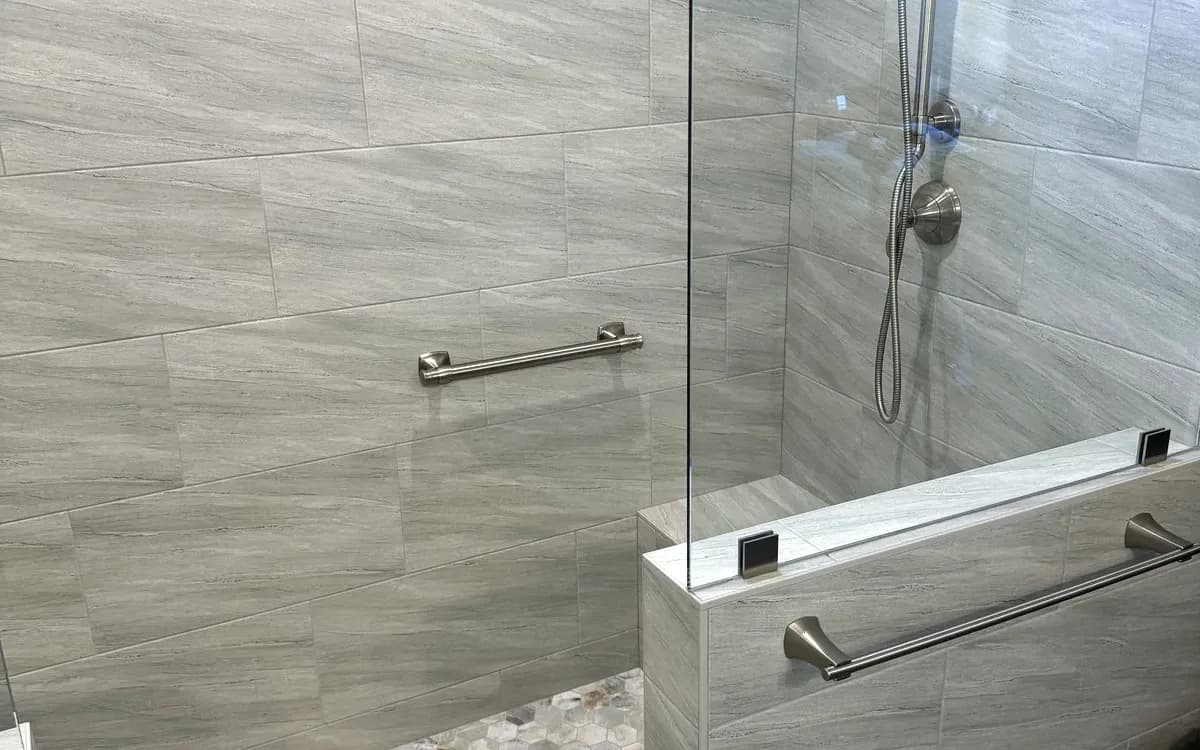
Pictured: a real Oakwood project in Citrus Heights. See the full before & after
Why Fiddyment Farm and West Park Bathrooms Need a Different Approach
Fiddyment Farm and West Park are two of Roseville's most popular family neighborhoods. Built primarily between 2005 and 2020 by production builders like Lennar, Meritage, Taylor Morrison, and KB Home, these subdivisions were designed for growing families — 3 to 5 bedrooms, open floor plans, and 2 to 3 bathrooms per home.
The challenge is that production builders install bathrooms to a price point, not to a quality standard. The tile is basic, the vanities are laminate-wrapped MDF, the mirrors are unframed plates glued to the wall, and the fixtures are the cheapest models that meet code. These bathrooms function, but they were not designed for the daily demands of family life — or for the way families actually live.
As Roseville's bathroom remodeling specialists, we work in Fiddyment Farm and West Park homes regularly. This guide covers bathroom remodel ideas designed specifically for families in these neighborhoods — practical upgrades that handle the reality of bath time with toddlers, mornings with teenagers, and everything in between.
The Builder-Grade Reality in Newer Subdivisions
Even though Fiddyment Farm and West Park homes are relatively new, the builder-grade materials show their limitations quickly — especially with kids in the house. Here is what we typically find:
Vanities and Countertops
Builder-installed vanities are usually thermofoil or laminate-wrapped MDF cabinets with cultured marble or basic laminate tops. The thermofoil peels at the edges within 5 to 8 years, especially in bathrooms with high humidity. Cultured marble stains and dulls from toothpaste, soap, and hard water. The cabinet hardware is minimal — usually a single pull per door with no soft-close hinges, meaning doors slam constantly.
Tile and Flooring
Most builder bathrooms in these neighborhoods have 12x12 or 13x13-inch ceramic tile on the floor and a fiberglass tub-shower surround or 4x4 ceramic wall tile in wet areas. The floor tile shows dirt quickly, the grout lines are wide (3/16 to 1/4 inch), and the tub surrounds yellow and scratch within a few years. Many homes have vinyl plank flooring in the bathroom — which looks decent initially but warps at the edges near the tub and toilet over time.
Fixtures and Hardware
Standard builder fixtures are polished chrome in the most basic design available. Showerheads are fixed-mount, single-spray units at a standard 80-inch height. Towel bars are lightweight chrome that loosens from drywall anchors within a few years. The toilet is typically a builder-grade round-front model — functional but not comfortable, and often not WaterSense certified for water efficiency.
Kid-Friendly Bathroom Design That Lasts
The biggest mistake families make is designing a bathroom that only works for kids at their current age. A 3-year-old needs bath time with rubber ducks. A 13-year-old needs a shower that does not embarrass them when friends come over. The goal is a bathroom that serves both stages without requiring another remodel in between.
Kid-friendly design is not about cartoon-themed tile or primary-color paint. It is about practical features that make daily routines easier now and still make sense in 10 years. Here is what that looks like in practice, and our kid-proof bathroom guide goes deeper on each of these elements:
- Adjustable-height showerhead: A hand-held showerhead on a slide bar lets you spray a toddler at waist height today and serves as a full-height shower for a teenager later. This single feature eliminates the most common frustration parents report with bathroom design.
- Single-lever faucets: Easy for small hands to operate, and no risk of the burning-hot side that two-handle faucets create. Choose a lever style rather than a knob — kids under 5 can operate levers but struggle with knobs.
- Step stool integration: Instead of a plastic step stool that slides around the floor, build a pull-out step into the vanity toe kick. It tucks flush when not in use and pulls out when a child needs to reach the sink.
- Soft-close everything: Soft-close toilet seats, drawer slides, and cabinet hinges are inexpensive upgrades that prevent smashed fingers — and the noise of slamming doors during morning routines.
Hall Bathroom Ideas for Families with Young Kids
The hall bathroom is the workhorse of family homes in Fiddyment Farm and West Park. It serves the kids, overnight guests, and anyone who needs a bathroom without walking through the master suite. Here is how to make it work harder:
Keep the Bathtub — But Upgrade It
This is non-negotiable for families with children under 8. Replace the builder-grade fiberglass tub-shower combo with a quality alcove tub (Kohler Bellwether or similar) and a floor-to-ceiling tile surround. Add a hand-held shower on a slide bar for rinsing hair and cleaning the tub after bath time. The tile surround eliminates the fiberglass seams where mold collects and looks dramatically better than the original unit.
Double Up on the Vanity
Many Fiddyment Farm hall bathrooms have a 48 or 60-inch vanity with a single sink — but the countertop has space for two. Upgrading to a double-sink vanity eliminates the morning bottleneck when two kids need to brush teeth at the same time. If the space does not accommodate two sinks, a trough-style single basin is wide enough for two kids to use simultaneously. For more on maximizing compact bathroom layouts, see our small bathroom remodel service.
Waterproof the Entire Floor
Kids flood bathrooms. It is not a question of if but how often. Builder-grade tile installation in these homes typically has grout joints and a basic moisture barrier under the tile — which works until a 4-year-old decides to recreate a swimming pool on the bathroom floor. A continuous waterproof membrane (Schluter Ditra or liquid-applied RedGard) under the floor tile protects the subfloor from the inevitable water events that come with young children.
Master Bathroom Upgrades for Busy Parents
The master bathroom in Fiddyment Farm and West Park homes is typically the largest bathroom in the house — but it rarely feels like a retreat. Builder master baths have the space but not the finishes. Here are the upgrades that make the biggest daily impact for parents:
- Walk-in shower with a bench: Replace the rarely-used soaking tub with an expanded walk-in shower. Include a built-in bench for shaving legs, a hand-held shower, and multiple showerheads. The bench also serves as a seat when bathing younger kids who have graduated from the hall bath tub.
- Dual vanity with real storage: Replace builder vanities with furniture-quality cabinets featuring full-extension drawers, built-in electrical outlets inside drawers for charging devices, and a dedicated hair tool compartment with a heat-resistant lining.
- Upgraded lighting: Layered LED lighting with a dimmer — bright for morning routines, dim for evening showers. Backlit mirrors provide even, shadow-free lighting for grooming that the original single vanity bar cannot match.
- Locking door hardware: This seems basic, but many builder-installed master bath doors have privacy locks that a toddler can pop open with a coin. Upgrading to a proper privacy lockset gives parents the 15 minutes of uninterrupted shower time they need.
Storage Solutions That Actually Work for Families
Builder bathrooms in Fiddyment Farm and West Park homes have minimal storage — a vanity with doors (not drawers), a plate glass mirror with no medicine cabinet behind it, and maybe a towel bar. For a family of four or five, this is not enough. Our bathroom storage solutions guide covers this topic in detail, but here are the highlights for family bathrooms:
- Drawers over doors: Drawers are more accessible and organized than cabinet doors with open shelving behind them. A vanity with three full-width drawers holds more and stays neater than a two-door cabinet. Stack items vertically with drawer dividers.
- Recessed medicine cabinet: Replace the flat mirror with a recessed medicine cabinet. The wall cavity between studs provides 3.5 inches of depth — enough for medicine, toothbrushes, and daily products. Keep the mirror surface but gain significant hidden storage.
- Dual-height shower niches: Build two niches in the shower — one at adult height (60 inches) for shampoo and one at kid height (30 inches) for their bath products. Both niches should be waterproofed and tiled to match the surround.
- Over-toilet cabinet: The wall space above the toilet is wasted in almost every builder bathroom. A shallow cabinet or open shelving unit stores towels, extra toilet paper, and bathroom supplies without taking floor space.
- Pull-out hamper: A tilt-out or pull-out hamper built into the vanity cabinet captures dirty towels and clothes at the point of use — instead of on the floor where kids typically leave them.
Materials That Survive Kids and Still Look Good
Family bathrooms take more abuse than any other room in the house. The materials you choose need to handle water, soap, toothpaste, bath crayons, dropped toys, and the general chaos of daily life with children. Here is what holds up:
Porcelain Tile Over Everything Else
Porcelain tile is the most durable flooring and wall surface for family bathrooms. It handles water, resists scratches, does not stain from bath products, and cleans easily. Large-format (12x24) porcelain on the floor minimizes grout lines where dirt and mildew collect. Choose a matte or textured finish — polished porcelain becomes dangerously slippery when wet, which is a real concern with kids running in and out of the tub.
Quartz Countertops
Quartz is the clear winner for family bathroom countertops. It does not need sealing (unlike marble or granite), resists staining from hair dye and toothpaste, and handles the hard water mineral deposits common in Roseville without etching. A light-colored quartz with subtle veining hides water spots between cleanings — practical for a surface that gets splashed multiple times per day.
Epoxy Grout
Standard cement grout in family bathrooms is a maintenance headache — it absorbs water, stains from colored bath products, and requires annual sealing. Epoxy grout costs more per square foot but is virtually maintenance-free. It does not absorb water, resists staining, and does not need sealing. For a family bathroom that will be used hard for the next 15 to 20 years, epoxy grout pays for itself in reduced cleaning and maintenance.
Safety Features Every Family Bathroom Needs
Bathroom injuries are among the most common household accidents for children. The remodel is the opportunity to address safety proactively rather than reactively. These features protect kids now and serve the household for decades:
- Anti-scald valve: California plumbing code already requires pressure-balancing or thermostatic shower valves, but verify that yours is set to a maximum of 120 degrees Fahrenheit. A thermostatic valve maintains water temperature regardless of pressure changes elsewhere in the house — no sudden cold or hot surges when someone flushes a toilet or starts the dishwasher.
- Slip-resistant flooring: Choose tile with a Dynamic Coefficient of Friction (DCOF) rating of 0.42 or higher. This is the industry standard for wet-area slip resistance. Matte and textured porcelain tiles naturally meet this threshold. Polished tile typically does not.
- GFCI protection: All bathroom outlets must be GFCI-protected per California Electrical Code. During a remodel, verify that every circuit in the bathroom is properly protected — builder installations sometimes miss outlets inside cabinets or behind the toilet.
- Rounded countertop edges: Square-edge countertops at toddler head height are a trip to the emergency room waiting to happen. Choose an eased or bullnose edge profile that eliminates sharp corners without looking outdated.
- Grab bars that do not look institutional: Modern grab bars from brands like Moen and Delta are designed to look like towel bars or shower shelves. Installing them during the remodel means they are anchored into blocking behind the tile — not surface-mounted to drywall, which fails when weight is applied.
Designing Bathrooms That Grow With Your Family
The smartest investment in a Fiddyment Farm or West Park bathroom remodel is thinking 10 to 15 years ahead. A bathroom designed for a toddler that stops working for a teenager is a failed design. Here is how to plan for the full family lifecycle:
Toddler to Elementary (Ages 2 to 10)
This stage needs a bathtub, accessible storage at low heights, a step stool solution, and water-resistant everything. The pull-out step drawer, dual-height shower niches, and hand-held shower on a slide bar all serve this age range. Choose neutral tile and fixtures — no themed designs that will embarrass a 9-year-old.
Tweens and Teens (Ages 10 to 18)
This stage needs counter space for hair products, adequate lighting for grooming, a shower with good water pressure, and enough storage for each child's products. The slide bar showerhead adjusts to full adult height. The dual-sink vanity eliminates morning conflicts. The step stool drawer stops being used and tucks away permanently. Nothing needs to change structurally — only the accessories on the counter.
After the Kids Leave
When children move out, the hall bathroom becomes a guest bath. The quality tile, quartz countertop, and timeless fixtures look appropriate for guests. The bathtub still has resale value for the next family. The storage accommodates guest towels and supplies instead of kids' bath toys. A well-designed family bathroom transitions seamlessly to its next purpose without any modifications. Check out our Roseville bathroom remodeling trends for more ideas on timeless design choices.
Cost Ranges for Fiddyment Farm and West Park Remodels
Here are realistic cost ranges for bathroom remodels in Fiddyment Farm and West Park, based on our project experience in these Roseville neighborhoods:
| Project Type | Cost Range | Timeline |
|---|---|---|
| Kids/hall bath full remodel | $16,000 – $24,000 | 2 – 3 weeks |
| Master bath remodel (same layout) | $26,000 – $36,000 | 3 – 4 weeks |
| Master bath with tub-to-shower conversion | $30,000 – $42,000 | 3 – 5 weeks |
| Powder room update | $8,000 – $14,000 | 1 – 2 weeks |
| Two-bathroom package (hall + master) | $38,000 – $55,000 | 5 – 7 weeks |
These ranges include materials, labor, permits, demolition, and disposal. Two-bathroom packages offer a cost advantage because mobilization, permit, and project management costs are shared. The savings typically run 8% to 12% compared to doing each bathroom as a separate project.
Timeline and Living Through a Family Bathroom Remodel
Remodeling a bathroom in a home with young children requires more logistical planning than the construction itself. Here is how to manage it:
- Bathroom rotation plan: If remodeling the hall bath, the family uses the master bath temporarily. If remodeling the master, parents share the hall bath with the kids. Map this out before demolition day — not the morning of.
- Child safety during construction: We seal off the work area with plastic sheeting and lock doors to prevent curious kids from accessing the construction zone. Dust, sharp tile edges, and power tools are real hazards. Communicate with your contractor about daily schedules so you know when the front door will be propped open.
- Nighttime routines: If the only other bathroom is across the house from the kids' bedrooms, set up a temporary nighttime station with a portable nightlight path. Kids who are used to a bathroom next door may need a few nights to adjust.
- Sequence two-bathroom projects carefully: If remodeling both the hall bath and master bath, always complete the hall bath first. This gives kids their bathroom back quickly, then parents can manage with the hall bath while the master is under construction.
For a detailed walkthrough of the entire remodel timeline, see our Roseville bathroom remodeling guide.
ROI for Family Home Bathroom Remodels
Fiddyment Farm and West Park homes typically sell in the $550,000 to $800,000 range. In a market where most competing listings still have original builder-grade bathrooms, updated bathrooms are a genuine differentiator. According to the National Association of Realtors, a midrange bathroom remodel recovers approximately 74% of cost at resale nationally — and in competitive Roseville subdivisions, recovery tends to be higher.
But the real return on a family bathroom remodel is not measured in resale percentages. It is measured in eliminated morning conflicts, safer bath times, reduced cleaning effort, and a space that does not feel like a compromise every time you walk into it. A $20,000 hall bath remodel used twice daily for 10 years costs roughly $2.74 per day. That is the actual cost of living with quality versus builder-grade.
Families who remodel both bathrooms at once see the best combination of cost efficiency and daily impact. The shared project costs bring per-bathroom pricing down, and the entire home benefits immediately rather than having one updated bathroom next to one that reminds you what you are still living with.
Frequently Asked Questions
Ready to Remodel Your Family Bathroom?
Oakwood Remodeling Group works with families throughout Fiddyment Farm, West Park, and greater Roseville. We design bathrooms that handle the demands of daily family life — from toddler bath time to teenage morning routines — with durable materials, smart storage, and timeless design that does not need updating in five years. Every project includes a detailed scope, fixed pricing, and a timeline you can count on.
Related Reading
Kid-Proof Bathroom Design Guide
Detailed guide to child-friendly bathroom features.
Bathroom Remodeling Services
Our full bathroom remodeling service page.
Roseville Bathroom Remodeling Trends
Current trends and ideas for Roseville homeowners.
Creative Bathroom Storage Solutions
Smart storage ideas for any bathroom layout.
Small Bathroom Remodel Services
Maximizing compact bathroom spaces.
Get Your Free Estimate
Schedule your consultation today
Related Articles
Get a Free Estimate
Call us at (916) 907-8782 or fill out our contact form.